To avoid these ads, REGISTER NOW!

Rebel Pioneer Mini Split Install

OP
J

jonathan75

Well-known member
Joined
Mar 27, 2013
Messages
1,451
Location
NC
Resurrecting this thread just to say “thank you”. I used this thread to make the decision on whether or not DIY’ing a pioneer mini split install was within the realm of my skills. Thankfully, your thread convinced me I could do it and I installed and connected everything. I did have an AC tech I know come out and put pressure in the line to check for leaks, pull a vacuum, and release the refrigerant, which cost me a hundred bucks. Partly thanks to this thread, I saved at LEAST $1k if not 2k. My AC guy said I stole the unit for what I paid. Now hopefully it lasts many years : )
Happy to hear that. Congratulations!

Sent from my Pixel 4 using Tapatalk
 
To avoid these ads, REGISTER NOW!

joshhouse

Well-known member
Joined
Apr 28, 2011
Messages
47
Same for me. I vacuumed and leak checked myself though. Worst part of the whole install was the lineset bending.
I dont regret doing it all.

It really was much easier than I originally thought it would be. I know it’s a day late and dollar short, but for anyone considering this, I bought a tube bending tool from Home Depot and it made the bends a breeze.

Here’s a link to the tool:
https://www.homedepot.com/p/Husky-Tube-Bending-Tool-80-535-111/304505604
 

driftpin

Well-known member
Joined
Dec 22, 2016
Messages
11,190
Location
Miami-Dade/Broward Co. Florida
The Pioneer distributor is in Doral FL, a suburb of Miami. I bought a Pioneer for my small 200 sq ft garage, yes, a 1-car, I want the AC primarily for humidity-reduction for tool storage. This isn't a garage in which I park, it's only storage, and away from my primary residence. My friend who is a HVAC master-license holder helped me to buy it under his license, so he got the jobber pricing. I'll report back once I install it. I did have my other friend heliarc some heavy-duty aluminum brackets to mount the unit on the side of the building. I think the distance spacing from the wall is 12", and the brackets allow that easily. I'm wondering about what-type of cushion insulator I can incorporate into the wall hanger brackets for the outside unit? My thought is to use the rubber insulator on the wall brackets, at the point of attachment to the wall. Instead, should I mount some rubber insulators to the unit to wall bracket? Or should I use insulators for both the through-wall fasteners, and the unit on the brackets, both? If so, what type of insulators at each place? I suppose that insulators in two places would provide the maximum amount of vibration/noise reduction.

The wall is Hardi-Board and 3/4" plywood, w/a galvanized steel frame. Here are some pads that I could use, though I wonder if over-time the blue closed-cell foam would UV-deteriorate, and then the bracket would be loose. I'm thinking something like hard rubber, 3/8"-1/2" thick. I'm sure that McMaster-Carr could supply something, though I haven't looked, yet.
 

Attachments

  • rubber pad.jpg
    rubber pad.jpg
    57.1 KB · Views: 16

Terry D

Well-known member
Joined
Mar 25, 2015
Messages
2,202
Location
St. Louis, MO.
The Pioneer distributor is in Doral FL, a suburb of Miami. I bought a Pioneer for my small 200 sq ft garage, yes, a 1-car, I want the AC primarily for humidity-reduction for tool storage. This isn't a garage in which I park, it's only storage, and away from my primary residence. My friend who is a HVAC master-license holder helped me to buy it under his license, so he got the jobber pricing. I'll report back once I install it. I did have my other friend heliarc some heavy-duty aluminum brackets to mount the unit on the side of the building. I think the distance spacing from the wall is 12", and the brackets allow that easily. I'm wondering about what-type of cushion insulator I can incorporate into the wall hanger brackets for the outside unit? My thought is to use the rubber insulator on the wall brackets, at the point of attachment to the wall. Instead, should I mount some rubber insulators to the unit to wall bracket? Or should I use insulators for both the through-wall fasteners, and the unit on the brackets, both? If so, what type of insulators at each place? I suppose that insulators in two places would provide the maximum amount of vibration/noise reduction.

The wall is Hardi-Board and 3/4" plywood, w/a galvanized steel frame. Here are some pads that I could use, though I wonder if over-time the blue closed-cell foam would UV-deteriorate, and then the bracket would be loose. I'm thinking something like hard rubber, 3/8"-1/2" thick. I'm sure that McMaster-Carr could supply something, though I haven't looked, yet.

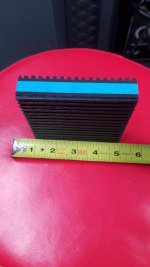
I used these

https://www.amazon.com/gp/product/B07D8FZPZC/?tag=atomicindus08-20
 
To avoid these ads, REGISTER NOW!

ticklechicken

Well-known member
Joined
Apr 25, 2016
Messages
110
Location
Florida
I also used this thread years ago to help with my decision. I'm about 3 years in on my install, and everything is working great. I had never done any a/c work before, yet the installation was fairly easy. The only additional cost beyond the units themselves was $100 for someone to pull a vacuum.

These systems are a great value, and they appear to be reliable.

https://www.highseer.com/


The Pioneer distributor is in Doral FL, a suburb of Miami. I bought a Pioneer for my small 200 sq ft garage, yes, a 1-car, I want the AC primarily for humidity-reduction for tool storage. This isn't a garage in which I park, it's only storage, and away from my primary residence. My friend who is a HVAC master-license holder helped me to buy it under his license, so he got the jobber pricing. I'll report back once I install it. I did have my other friend heliarc some heavy-duty aluminum brackets to mount the unit on the side of the building. I think the distance spacing from the wall is 12", and the brackets allow that easily. I'm wondering about what-type of cushion insulator I can incorporate into the wall hanger brackets for the outside unit? My thought is to use the rubber insulator on the wall brackets, at the point of attachment to the wall. Instead, should I mount some rubber insulators to the unit to wall bracket? Or should I use insulators for both the through-wall fasteners, and the unit on the brackets, both? If so, what type of insulators at each place? I suppose that insulators in two places would provide the maximum amount of vibration/noise reduction.

The wall is Hardi-Board and 3/4" plywood, w/a galvanized steel frame. Here are some pads that I could use, though I wonder if over-time the blue closed-cell foam would UV-deteriorate, and then the bracket would be loose. I'm thinking something like hard rubber, 3/8"-1/2" thick. I'm sure that McMaster-Carr could supply something, though I haven't looked, yet.

I used rubber mounts between the unit and the wall bracket. My brackets are rigidly mounted to my structure. This is working well for me. I don't feel or hear any vibrations.
 

yeldogt

Well-known member
Joined
Jan 2, 2012
Messages
18,184
Those who can get the lines attached and pump down for $100 bucks -- even $300 shoudl regard as lucky.

No way around me .....
 

KenC

Well-known member
Joined
Dec 20, 2009
Messages
2,577
The Pioneer distributor is in Doral FL, a suburb of Miami. I bought a Pioneer for my small 200 sq ft garage, yes, a 1-car, I want the AC primarily for humidity-reduction for tool storage. This isn't a garage in which I park, it's only storage, and away from my primary residence. My friend who is a HVAC master-license holder helped me to buy it under his license, so he got the jobber pricing. I'll report back once I install it. I did have my other friend heliarc some heavy-duty aluminum brackets to mount the unit on the side of the building. I think the distance spacing from the wall is 12", and the brackets allow that easily. I'm wondering about what-type of cushion insulator I can incorporate into the wall hanger brackets for the outside unit? My thought is to use the rubber insulator on the wall brackets, at the point of attachment to the wall. Instead, should I mount some rubber insulators to the unit to wall bracket? Or should I use insulators for both the through-wall fasteners, and the unit on the brackets, both? If so, what type of insulators at each place? I suppose that insulators in two places would provide the maximum amount of vibration/noise reduction.

The wall is Hardi-Board and 3/4" plywood, w/a galvanized steel frame. Here are some pads that I could use, though I wonder if over-time the blue closed-cell foam would UV-deteriorate, and then the bracket would be loose. I'm thinking something like hard rubber, 3/8"-1/2" thick. I'm sure that McMaster-Carr could supply something, though I haven't looked, yet.


I have a Pioneer 12k unit. Self installed about 2 years ago. The indoor fan motor failed in a week or so. I emailed the seller and they shipped a motor without any issue.

So one of my questions was answered: Warranty parts and assistance is available, at least that one time, for self installed Pioneer units. Once I got it and read the directions it was clear that they were planning on owner installs just from the wording.

But to answer your question above: Mine came with the rubber isolators to place under the feet. So their install plan is to isolate the unit from the bracket not the bracket from the wall. There is almost no vibration or noise anyway. Mine is mounted on the wall outside our bedroom and can't be heard at all inside.
 
Last edited:

driftpin

Well-known member
Joined
Dec 22, 2016
Messages
11,190
Location
Miami-Dade/Broward Co. Florida
KenC & ticklechicken, thanks for the comments on the mounts. I was planning to use the included rubber mounts for the unit, I just presumed that an additional rubber isolation from the wall would help too. I may-not need it, as it's a stand-alone building, and not something where I'm living on the other side of the wall-mount unit. The L-brackets for mounting the unit are very-overbuilt, but I'm a mile from the Atlantic Ocean and I didn't want to-see rust on them from a year's use, that's why I had my friend heliarc them from aluminum structural material. I was going to through-bolt them to the wall, and use plates on the inside to spread the load.
 

yeldogt

Well-known member
Joined
Jan 2, 2012
Messages
18,184
I have never seen any isolation at the mounting point on the wall/ bracket. That may be problematic.

With the smaller units I don't think it's as much of an issue -- I did a 30k and the isolation pads were installed under the unit after I understood the vibration transfer issue ... they do help.

That said -- Wall mounting ended for me at that point.
 
To avoid these ads, REGISTER NOW!
Top Bottom