To avoid these ads, REGISTER NOW!

Rebuilding a monarch 10ee lathe

To avoid these ads, REGISTER NOW!
OP
G

Grant Gunderson

Well-known member
Joined
May 17, 2013
Messages
2,320
Location
Bellingham, WA
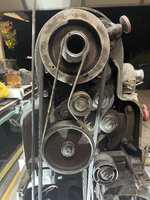
The 10EE is driven by 3 belts on the headstock end, two V belts that connect directly to the spindle (one was missing) and a flat belt that connects to the feed / threading gears.
IMG_0642.jpeg
Those all came off quite easily as none seemed to be properly tensioned. The sole V belt was also on its last legs to.
IMG_0664.jpeg
I believe the replacements are either A-90 or AP-90 belts. Will have to check. Luckily the flat belt is in good shape and the machine came with a new spare as well.
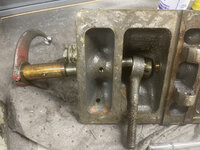
The lathe was missing one of the belt tensioners. I did find the missing one in the box of random stuff that came with the lathe.
IMG_0663.jpeg
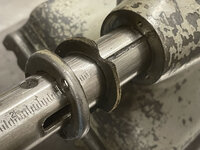
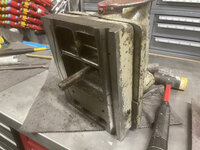
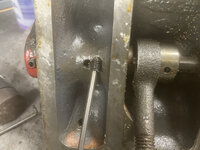
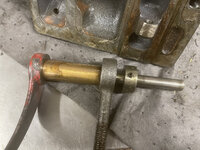
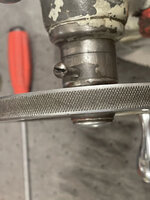
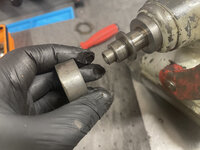
The bearings for the belt tensioners are a very light press fit, and easily press out. However, the center shaft did not want to come off of the bearings. So I used a set of chuck wedges from my Albright chuck to get the separation going.
IMG_0673.jpeg
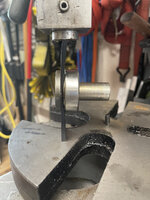
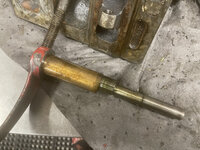
I then used a ⅞" end mill on the Bridgeport to make a drift out of some scrap aluminum angle and they then pressed right off.
IMG_0677.jpeg
All of the bearings seem to be in good shape. I then tossed the parts in the ultrasonic cleaner to clean them up.
IMG_0730.jpeg
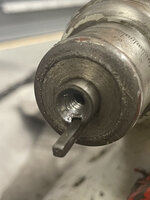
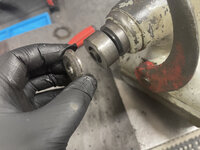
Turns out the one was not installed on the machine due to a broken shaft. I'll have to give Monarch a call to order one when I order new felt. Worse case it will be an easy part to make on the lathe once I get it running again.

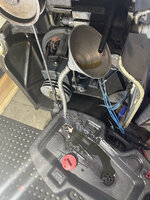
Next step is to drain the oil form the spindle and the gear box. There are two pipe plugs at the base of each section to do this.
IMG_0696.jpeg
IMG_0693.jpeg
I used a zip tie to hold the funnel in place while it drained. The spindle had a fair amount of oil in it. However the gear box only had a small trickle. I suspect all of the oil on the inside of the machine base came from a bad gasket on the gear box. That will have to get dealt with.

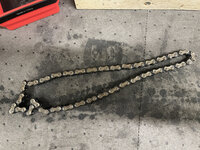
I then removed the chain from the speed selector shaft that connects to the gear on the speed pots.
IMG_0682.jpeg
A quick soak in the ultrasonic cleaner and it looks like new!
IMG_0731.jpeg
I then lubed the chain with Boeshield. Thats the best chain lube I've ever found.
 
OP
G

Grant Gunderson

Well-known member
Joined
May 17, 2013
Messages
2,320
Location
Bellingham, WA
Now its time to remove the speed pots. They are held in by two hex head socket screws that mound to the bottom of the gear box. So its good that I drained that first. The pots where filthy, especially the 625 ohms one, as apparently the oil form the gear box has been dripping on it for quite some time, and has even baked on, obscuring the label for the middle connection.
IMG_0699.jpeg

I removed the sprocket and the mounting bracket and gave them both a good cleaning with degreaser.
IMG_0728.jpeg
While the degreaser was doing its work, I tested both pots on my Fluke meter.
First, I checked the resistance between both ends of the coil with the pots wiper at either end.


IMG_0719.jpeg
641.2 and 602.9 with the wipers on either end of the scale. So thats with in 6% of the stated value. I think thats good enough, but I am no expert with electronics.

IMG_0720.jpeg

I then left one lead on an end of the coil, and attached the other lead to the wiper, and checked the resistance at both ends of the wipers range. 602.9 with the wiper at one end, and .4 on the other end, so it is working!
IMG_0721.jpeg
IMG_0720.jpeg
I did the same with the 375 ohms pot as well and got, 366.3 and 386.7 between the coil with the wiper at each end. Then testing the wiper to coil I got .2 and 278.8 on either end, so its working, but it was interesting to see its in the opposite direction as the other pot.

I then cleaned the pots up using some electrical cleaner and large cotton swabs and got the majority of the dried oil residue off of them.

It's also nice that the connections on the pots are labeled exactly the same as the connections on the control panel! That will make re-wiring it easy.
 
OP
G

Grant Gunderson

Well-known member
Joined
May 17, 2013
Messages
2,320
Location
Bellingham, WA
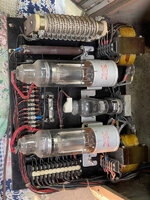
The control panel has 13 wire terminals on it. I will update this as I trace the wires.

They connect to the lathe as follows:

F2: has two leads, one connects to the 375Ω pot coil. The other connects to F2 on the DC motor. I believe this is the field winding.

A2: Connects to the A2 terminal on the DC motor.

A1: Connects to the A1 terminal on the DC motor.

GS1: connects to GS1 on the AC motor panel.

GF2: has two leads, one connects to the 625Ω pot wiper. The other lead connects to GF2 on the AC motor panel.

E2 : has 3 leads, one connects to the 625Ω pot coil,
Note, one was originally labeled F1. That one connects to F1 on the DC motor. I believe it’s the field winding.
The third lead connects to GF1 on the AC motor panel and has a jumper that also connects it to E2 on the AC motor panel

E1: connects to the 375Ω pot wiper

E1-2: wire had two factory E-1 tags on it. not, a E1-2 tag. It connects to E1 on the AC motor panel.

GR1: connects to the 625Ω pot coil

C1:

C2:

C3:

GA2: connects to GA2 on the AC motor Panel.

note: C1,C2,C3 use the same conduit as others to the Start/ Stop switch panel. From there they enter the upper conduit with the Switch wires and MPT1,2,3 wires from the AC panel. That conduit then goes to the Main Conductor / reset switch panel on the back of the machine. These wires are all in good shape, as is the main conductor panel, so I am planing on leaving them in place unless I find a compelling reason not to.
 
Last edited:

ez-duzit

Well-known member
Joined
Jun 24, 2013
Messages
5,101
Location
Marina del Rey
...
The spindle had a fair amount of oil in it. However the gear box only had a small trickle. I suspect all of the oil on the inside of the machine base came from a bad gasket on the gear box...
Don't jump to conclusions.

My back gear box oil level did not show on the sight gauge when I took delivery. And only a few tablespoons came out when I drained it. When I began adding the 3 pints the manual called for, it began running out from behind the lower sheave. So I stopped and re-drained it, thinking there was a bad shaft seal. Pulled the belts and sheave off only to discover there was no shaft seal, only an oil slinger.

So I much more carefully began refilling to discover that it takes only 0.3 pints, not 3 pints (DTE oil heavy medium). The oil level in the sight gauge is lower than the hole through which the shaft protrudes.
 
OP
G

Grant Gunderson

Well-known member
Joined
May 17, 2013
Messages
2,320
Location
Bellingham, WA
Don't jump to conclusions.

My back gear box oil level did not show on the sight gauge when I took delivery. And only a few tablespoons came out when I drained it. When I began adding the 3 pints the manual called for, it began running out from behind the lower sheave. So I stopped and re-drained it, thinking there was a bad shaft seal. Pulled the belts and sheave off only to discover there was no shaft seal, only an oil slinger.

So I much more carefully began refilling to discover that it takes only 0.3 pints, not 3 pints (DTE oil heavy medium). The oil level in the sight gauge is lower than the hole through which the shaft protrudes.
That makes me feel a lot better. When so little oil came out based upon the fill amounts from the manufacture I was quite worried it had been run with a low oil level.
 
Last edited:
OP
G

Grant Gunderson

Well-known member
Joined
May 17, 2013
Messages
2,320
Location
Bellingham, WA
AC motor panel wire connections left side.

E2: connects to GF1 via a jumper wire.

E1: connects to E1-2 on the control panel.

GF2: connects to GF2 on the control panel.

GF1: connects to E2 via a jumper wire. Connects to E2 on the control panel.

GS2: connects to GA1 via a jumper wire.

GS1: connects to GS1 on the control panel.

GA2: connects to GA2 on the control panel.

GA1:connects to GS2 via a jumper wire.

T4: Not Used.

T3: connects to main conductor / reset switch panel via start stop switch housing. I put a black zip tie on this wire in case the label becomes unreadable.

T2:connects to main conductor / reset switch panel via start stop switch housing. I put a yellow zip tie on this wire in case it becomes unreadable

T1:connects to main conductor / reset switch panel via start stop switch housing. I put a red zip tie on this wire in case it becomes unreadable.

T1~T3 where are in really good shape as is the panel the connect to, so plan is to leave these alone for now.

AC motor panel wire connections Right side.

E2:

E1:

GF2:

GF1:

GS2:

GS1:

GA2:

GA1:

T4: not used

T3:

T2:

T1:
 
Last edited:
OP
G

Grant Gunderson

Well-known member
Joined
May 17, 2013
Messages
2,320
Location
Bellingham, WA
Next on our wiring adventure was tracing the control panels to the DC motor.

F2: connects to F2 on the DC motor. I believe this is the field winding.

A2: Connects to the A2 terminal on the control panel.

A1: Connects to the A1 terminal on the control panel.

GF2: connects to GF2 on th control panel. I believe this is the field winding.
IMG_0734.jpeg
The leads that connect to the DC motor seem to be in good shape. I'll get a better look at those when I pull the motor.

I then opened the start / stop switch panel to get a look at what wires went into what conduit.
IMG_0751.jpeg
IMG_0757.jpeg
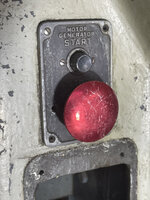
The stop switch has been replaced with a modern, Normally Closed switch. All of the wires from the switches trace to the main contractor / reset switch panel on the back of the machine. They are all in good shape with modern insulated wires, so I plan to leave those intact. The stop switch had a bunch of swarf behind the red metal button, so I took it apart and put it and the switch plate in the ultrasonic cleaner. I had thought the button was anodized red, but thats not the case as soon as it contacted the simple green solution in the ultrasonic cleaner all of the red dye came right off of it!IMG_0818.jpeg

C1,C2,C3 use the same conduit as others to the Start/ Stop switch panel. From there they enter the upper conduit with the Switch wires and MPT1,2,3 wires from the AC panel. That conduit then goes to the Main Conductor / reset switch panel on the back of the machine. These wires are all in good shape, as is the main conductor panel, so I am planing on leaving them in place unless I find a compelling reason not to. That concludes the control panel wiring trace.

I then traced all of the wires on the left side the AC motor's panel. (see post above).
T1, T2, T3 on that panel where in really good shape and also connect to the main contractor / reset switch panel, so plan to leave those intact. I did add a color zip tie to them, so that if my label becomes unreadable, I will still be able to identify them.
IMG_0760.jpeg
I then unhooked both conduits on the left side of the AC motor panel.IMG_0759.jpeg
Those where really sung, so I used a conduct ring wrench to get them loose... thats I tool I bought for wiring the sub panel in my garage that powers all of my machine tools... never thought it would get used again.

I then removed the linkage between the back gear box and the hi-low shaft. This just connects with two small shafts that use two cotter pins on each side to hold it in.
IMG_0772.jpeg
IMG_0773.jpeg

The DC motor, and the inline AC motor / Generator with the Exciter piggy backed on top of it can all be pulled from the machine now. I'll have to wait till the first of the week to do this, when people are back in town from vacation and can give me a hand. All of those units are most likely very heavy!
 
OP
G

Grant Gunderson

Well-known member
Joined
May 17, 2013
Messages
2,320
Location
Bellingham, WA
Next, I drained the back gear housing. There wasn't enough heigh to get my oil pan under it, so I used a few old photo developing trays. These are old ceramic coated cast iron trays, and I've kept them around for parts disassembly trays, and they work great for that, and in this case oil catch pans too.
IMG_0793.jpeg

I need to pull the sheave from the back gear box. It had a ton of belt residue that had glued its self in. There also spears to be an oil leak coming from behind it.

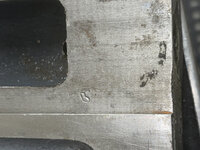
It is held on by the small circular panel on the front of the sheave with 4 small soft head heat bolts. It was also slightly glued on by the remnants of what appeared to be a waxed paper seal. I was able to get it loose by using a spudger pry tool. Note the 4 half moon, marks stamped on the sheave. These align with the keyway for the sheave.
IMG_0796.jpeg
With the circular retainer off, you can now see where someone used a chisel before to remove it. There are also hammer marks, from where it appears to have been hammered back on. Too bad they didn't use a soft blow hammer!
IMG_0797.jpeg
I then used a 3 jaw puller to remove the sheave. It was firm press fit, but removed easily with the puller. Since there was no center to the shaft for the puller to press on, I used an old craftsman socket.
IMG_0800.jpeg

Damnit. This is why you dont just hammer a sheave on to a key way shaft. The sheave is pretty severely cracked. So thats another part I need to see if I can get from Monarch. Hey, thats also another one of those half-moon stamps right next to the crack.
IMG_0806.jpeg

Behind the sheave is a circular retainer that is held on by 4 socket head hex bolts. Stuck to it is the paper gasket that was leaking. The gasket doesn't look to be in horrible shape, so I'm guessing the leak was mostly due to the 4 hex bolts not being very snug. I'm going to replace the gasket regardless. I'm hoping to order all new gaskets from Monarch for the machine if they are reasonably priced. If not, I will make my own. I'll have quite the list when I call them next week.
IMG_0817.jpeg
 
Last edited:
OP
G

Grant Gunderson

Well-known member
Joined
May 17, 2013
Messages
2,320
Location
Bellingham, WA
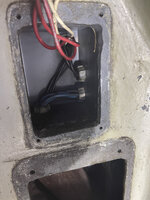
The main contractor / reset switch panel on the back of the machine is under a nice cast iron cover. I have no idea what the 25-3-38 number is thats written on it means. There is the normal EE number stamped on it as well.
IMG_0764.jpeg
And another peculiar looking stamp where the casting meets the machine casting. I'm guessing this is from them hand fitting it to the machine. When I strip the main casting for paint, I'll have to keep and eye out for these marks.
IMG_0767.jpeg

The main contactor panel was in good shape, other then a bit of oil residue on the boots. This cleaned up easily. I then noticed what appears to be two drain holes that where fully clogged.
IMG_0763.jpeg
I used a pick, and then pipe cleaners to clean the swarf out of both of them. Looking at the casting, I noticed there is two more of these on the other side of the machine bellow the gear box that will most likely need cleaning when I pull the gear box.

Up next is to pull the blocks that hold the belt tensioners. There is one on each side of the belts. The left one is simple, while the right one has the speed control shaft that goes through it. IMG_0775.jpeg
The socket hex heads where packed full of swarf. I dont want to strip them, so used a dental pick to clean them out. I bought a set of USA made Hu Friedy medical grade ones a while back. I use them more than I thought I would as these are very sharp, the tips are very strong, and I didn't know this before getting this set, but true dental pics, (or I guess they are actually called scalers) have a small cutting edge on them. That cutting edge is great for removing dried up swarf, grease etc from small areas.
IMG_0784.jpeg

The speed control shaft on the other side, is held in place by a tapper pin that holds the handle on, and a straight pin that holds on the sprocket on the other side. I tried tapping both pins out at they wouldn't budge. So soaked them in PB blaster and left them for the night.
IMG_0790.jpeg
 

LXCam

ALLIANCE MEMBER
Joined
Apr 23, 2013
Messages
19,147
Location
AZ
What a journey Grant. When I decided to step up and get what would be my third lathe, my retired machinist buddy tried talking me into a couple different EE's that were for sale but obviously needed some major love. Knowing I didn't need any new projects and wanting a turn key lathe, I passed. Now after following your story boy oh boy am I glad I didn't go down that road. My hats off to you bud, please keep up this exemplary effort. :thumbup:
 

DocsMachine

Well-known member
Joined
Sep 16, 2006
Messages
1,864
I had thought the button was anodized red, but thats not the case as soon as it contacted the simple green solution in the ultrasonic cleaner all of the red dye came right off of it!

-One of the primary components of Simple Green (and many other cleaners) is lye, or sodium hydroxide. A sodium hydroxide bath is how commercial anodizers strip the plating off of aluminum parts, before re-coloring them.

Simple Green likely wouldn't have hurt the knob if you'd just wiped it down with a cloth or something, but immersed for a half an hour or more in a warm bath stripped it off.

Buff it up and have it reanodized. :)

Doc.
 
OP
G

Grant Gunderson

Well-known member
Joined
May 17, 2013
Messages
2,320
Location
Bellingham, WA
The lathe has a lot of tapered pins that hold shafts, knobs on etc. So figured I would spend a little time today on building a tool that will hopefully save me a ton of time on the rest of the project.

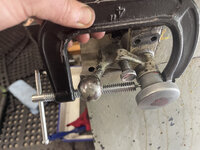
The best way to remove these pins is to press them out with an arbor press. Sure you can drive them out with a drive punch, but the brass ones are usually too soft, and the steel ones can image the machine if you miss. Since most of the time I can't take the part to the arbor press to get it off of the machine, I figured why no bring a press to the lathe. C-clamps are a really effective, and cheap way of generating quite a bit of pressing power.

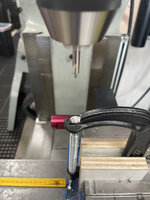
I happened to have a cheap C-clamp laying around, so I chucked it in the mill vice and and machined a slight curve on the fixed jaw of the clamp using a 2" mill.
IMG_0837.jpeg

I then flipped the C-clamp vertically and used wood blocks on either side to clamp it, and machined a small step in the bottom of the fixed jaw, so I would have a flat for drilling. I then drill the center with a center drill. I used the clamps own pressure to help keep it form vibrating in the mill for these two steps. It was slow going as anything but a light cut would cause the clamp to want to tilt. In hindsight, it would have been more efficient to get out the 90 degree clamping plates I have for the mill and set them up, but they are buried behind a bunch of skis, so didn't feel like doing it.
IMG_0840.jpeg
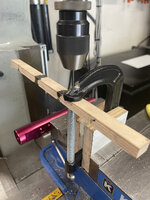
Next I cut the pivot off of the bottom of the dynamic jaw, and then ground it flat. I then put it back in the clamp and clamped a piece of wood in the c-clamp. This is to help keep it from vibrating, but it will also serve to help aline the hole for the .120 drill bit. I then drilled the fixed jaw with a .250 drill bit, then used the .120 bit drilling threw the wood into the shaft of the c-clamp.
IMG_0844.jpeg
I then removed the shaft, clamped it vertically in a Vblock and took it over to my arbor press. I added a few drops of retaining compound and then pressed in a .125 steel down pin.
IMG_0845.jpeg
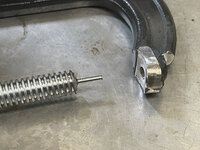
I cleaned up the end of the shaft on the grinder, and then ground the fixed jaw of the clamp down to be a narrow profile and debuted it with a file so it will fit in tighter spots.
IMG_0849.jpeg
It ain't pretty, but it works.
IMG_0851.jpeg
A better quality C-clamp that distorts less, would be better for it, but chances are I'll only need it for the lathe project.

With the pin out, I could then use a small soft blow hammer to tap the knob off of the speed control shaft.
IMG_0880.jpeg
Well, that didn't quite work as planned the shaft hits the other side of the casting, and it turns out there is a second larger shaft that this one rotates inside of.
IMG_0883.jpeg
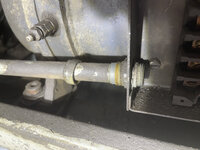
It then dawned on me, that I can just unbolt the 4 bolts that hold the whole assembly in place, and unscrew the drain pipe for the gear box, and remove it whole. Sometimes the most obvious solution right before your eyes goes unnoticed until after plan A, doesn't work.
IMG_0890.jpeg
 

Attachments

  • IMG_0847.jpeg
    IMG_0847.jpeg
    207.3 KB · Views: 14
Last edited:
OP
G

Grant Gunderson

Well-known member
Joined
May 17, 2013
Messages
2,320
Location
Bellingham, WA
Turns out the drain pipe is bent on my lathe... if that wasn't the case, probably could have removed the assembly without removing it.
IMG_0887.jpeg
That will be easy to fix. I think I even have the right size pipe laying around and I have a full set of pipe dies too.
I put the speed control assembly in my vice and tapped the high / low gear lever off. Was going to do it in the arbor press, but there was no way to hold it properly. I should make some blocks of various size for odd size stuff at some point.
IMG_0898.jpeg
I then removed the key from the shaft and slid off the mounting bracket, and the right side belt tensioner mount.
IMG_0900.jpeg
My plan was to then start working on re-wiring the control panel, but fate had other ideas today.

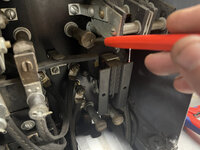
I started by using a fiberglass contact brush to clean all of the contacts of the forward / reverse contactors.
IMG_0855.jpeg
This next shot, you can see the two fixed contacts on top that I cleaned and the first one that I did on the moveable portion of it.
IMG_0832.jpeg
I bet that will make a bit of a difference when I power the machine back up.

I then started to replace the wires behind the contactors, since I had them out for access. All of the sudden I noticed a bunch of smoke coming from my heat gun, and then no more heat...uh oh... So I opened it up, hoping it was just a bad thermal switch. Nope the damn coil burned its self out. Argh. Top center in the pic bellow, you can see where the coil gave out. That heat gun was only a few years old.. So time to get a new one, hopefully I can find something of a bit better quality than the one I got from Lowes.
IMG_0863.jpeg
 
Last edited:
OP
G

Grant Gunderson

Well-known member
Joined
May 17, 2013
Messages
2,320
Location
Bellingham, WA
What a journey Grant. When I decided to step up and get what would be my third lathe, my retired machinist buddy tried talking me into a couple different EE's that were for sale but obviously needed some major love. Knowing I didn't need any new projects and wanting a turn key lathe, I passed. Now after following your story boy oh boy am I glad I didn't go down that road. My hats off to you bud, please keep up this exemplary effort. :thumbup:
Thanks! I thought pretty hard about getting a newer import lathe, but all of the ones around here selling used, all seem to need some work, and where all priced way more than what I picked the 10ee up for. I like to do one or two big projects each summer. My work keeps me busy mid November til May1, but then for the most part I have summers off. Plus what plans we did have for summer this year, are on indefinite hold until more countries open back up for international travel. So the lathe will be my big summer project this year. I was hoping to also build all new cabinetry for my office, but thats on hold until wood prices get back to normal.
-One of the primary components of Simple Green (and many other cleaners) is lye, or sodium hydroxide. A sodium hydroxide bath is how commercial anodizers strip the plating off of aluminum parts, before re-coloring them.

Simple Green likely wouldn't have hurt the knob if you'd just wiped it down with a cloth or something, but immersed for a half an hour or more in a warm bath stripped it off.

Buff it up and have it reanodized. :)

Doc.
Interesting. I just learned something new Doc. Thanks! I always thought of simple green as a pretty mild cleaner as we have been using it to wash our high-end mountian bikes for the last 20+ years. I've even used it in the ultrasonic cleaner regularly with my bike parts with no issues as well for the last 5 years. Then again, now that I think of it, most of my bike parts that I put in the ultrasonic cleaner are titanium, so maybe that has something to do with it.

Do you have any suggestions for a better solution for aluminum parts? Thanks!
 
Last edited:

DocsMachine

Well-known member
Joined
Sep 16, 2006
Messages
1,864
Do you have any suggestions for a better solution for aluminum parts?

-Dawn dish soap works pretty well. Really, unless you have a specific kind of gunk you're trying to remove, you really just need a soap to break the surface tension and help the dirt float away.

Personally, for non-aluminum parts, I'll use the same Simple Green or Purple Power or whatever "shop cleaner" they have on sale at the local auto parts store. That stuff works great in an ultrasonic.

For aluminum- and I do a lot of small aluminum parts- as well as pot metals like carburetor parts, I've rarely run across something where Dawn didn't work. My timer only goes up to 30 minutes, and usually if the first cycle hasn't done much, fresh water, a little more heat and more Dawn will usually do the trick.

I'll also admit I haven't done a lot of exhaustive research, and tend to use what I have on hand. :D

Doc.
 
OP
G

Grant Gunderson

Well-known member
Joined
May 17, 2013
Messages
2,320
Location
Bellingham, WA
-Dawn dish soap works pretty well. Really, unless you have a specific kind of gunk you're trying to remove, you really just need a soap to break the surface tension and help the dirt float away.

Personally, for non-aluminum parts, I'll use the same Simple Green or Purple Power or whatever "shop cleaner" they have on sale at the local auto parts store. That stuff works great in an ultrasonic.

For aluminum- and I do a lot of small aluminum parts- as well as pot metals like carburetor parts, I've rarely run across something where Dawn didn't work. My timer only goes up to 30 minutes, and usually if the first cycle hasn't done much, fresh water, a little more heat and more Dawn will usually do the trick.

I'll also admit I haven't done a lot of exhaustive research, and tend to use what I have on hand. :D

Doc.
It’s interesting you mentioned Dawn. It had crossed my mind to use it as it seems to cut grease better than a lot of degreasers. In fact I ditched the orange hand soap in favor of it years ago as it just works better. I’ll give it a try in the ultrasonic. You have many issues with it creating too many suds in the ultrasconic?
 
OP
G

Grant Gunderson

Well-known member
Joined
May 17, 2013
Messages
2,320
Location
Bellingham, WA
After taking the family mountain biking today, I went by Lowes and Home Depot in search of a new heat gun. All they had was the same **** that I've bene buying and that just doesn't last. So ordered a new one, and will have to wait till it arrives on Thursday to get back to the wiring projects.

As far as I can tell the lathe uses two different spacing of ⅛ pin spanners for the fasteners on the tailstock feed, the cross feed, etc. I have a set of adjustable bike pin spanners, and those things pretty much ****. They are only good for very low torque applications, and on anything that is even remotely stuck, they cam out and usually end up scratching the **** out of the work piece. So I figured it was worth a few minutes to make some custom ones for the task.

I had a couple of drops left over from a previous project of 1.25" aluminum rod. I put this in the mill, and faced an end on each piece.
IMG_0937.jpeg
I then measured the width of the pin holes on the lathe. I found the easiest way to do this, is measure the distance between the narrowest portion of the hole, then add the diameter of one pin to it to get the distance between centers.
IMG_0948.jpeg
On the lathe the two sizes have a spacing center to center of .6875 and .4531. My measurements where a hair off of that due to dirt and grime in the holes but those are the two closest fractional dimensions, and I am sure monarch didn't do them to a non fractional value.

I then used an edge finder to center my DRO. First I found the Y center, and then locked the table of the mill in the Y dimension as thats not going to change for the rest of the process. For the two work pieces I then just had to find the x center for each one.
Once Iahd the X center It was just a matter of halfing the pin hole center with on the DRO.
IMG_0943.jpeg
And then drilling two holes in each piece of rod.
IMG_0942.jpeg
A dab of retaining compound and then press the two pins in. Its important to note here, metal down pins have a slight taper on one end. Its important for this project that end gets pressed in. Otherwise, they will tend to cam out of your work piece.
IMG_0944.jpeg
I then cross drilled the rods with a ⅜ bit so that I could put a screw driver handled threw them if I need more leverage.
IMG_0951.jpeg
I then used a counter sink to debur each side of the holes, and an aluminum file to take care of any sharp edges. I keep a separate set of labeled files special made for aluminum and other soft metals. These dont clog up as bad as a standard file, and I found it keeps all of my files lasting longer. Especially if I stay on top of cleaning them after each use.
IMG_0952.jpeg
Here is the two finished pin drives. If I had a working lathe at the moment, it would have been nice to turn a nice shape for the handles, but these are good enough to do the job at hand.
IMG_0954.jpeg
And they fit perfectly!
IMG_0947.jpeg
 
OP
G

Grant Gunderson

Well-known member
Joined
May 17, 2013
Messages
2,320
Location
Bellingham, WA
Next up is to disassembly the tail stock. It won't fully retract, but it is working other than that. So hopefully its just packed full of chips.

IMG_0902.jpeg
The top handle just screws off. Its missing two oil fill caps, so hopefully I can track those down.
Those nose cover for the front felt comes right off with 3 small screws. With a bit of a tug while feeding it forward the shaft just pulls right out.
IMG_0907.jpeg
The front and back corners for the way wipers unscrew with two small screws. The front is stamped EE1682 and the back is EE1583. They look identical, so not sure if they are interchangeable, but they do have different part numbers, so need to keep track of which is which.
IMG_0909.jpeg
The main nut on the bottom just unscrews.
IMG_0914.jpeg
You can then pull the bridge piece right off.
IMG_0916.jpeg
There is two pins with springs on them under it. Remove the springs and then unscrew the two pins.
IMG_0919.jpeg
The lever arm, shown at the top of the above photo, then just unscrews form the casting.

Next, on either side of the casting there is two adjustment bolts for the side to side alignment of the tail stock. These need to be removed.
IMG_0923.jpeg
The base of mine had been pained in place and was totally frozen up. It took tapping it side to side to get it loose. Once loose I could tap it right off.
IMG_0994.jpeg
Underneath the main casing there is two set screws that need to be removed, once in the casing and one on the retaining bushing.
IMG_0999.jpeg
The entire shaft can then be pulled straight out.
IMG_1003.jpeg
 
OP
G

Grant Gunderson

Well-known member
Joined
May 17, 2013
Messages
2,320
Location
Bellingham, WA
When you rotate the lever, the locking bolt rides on a cam that raises / lowers it. The bushing just keeps it in place.
IMG_1006.jpeg
IMG_1007.jpeg
Next the locking screw on the shaft feed needs to get removed. BTW thats not an original screw.
IMG_0965.jpeg
I then used the tool I just made to remove the screw that holds the handle on.
IMG_0960.jpeg
The handle is on a key, and just slide out. The key then needs to get removed.
IMG_0970.jpeg
The beveled washer comes off next.
IMG_0972.jpeg
Then the dial pulls off.
IMG_0975.jpeg
I believe the tail piece is supposed to unscrew from the casting, but its fully stuck. Hopefully some degreaser and scrubbing will free it as it looks like it got painted while on the machine. Looking at the manual that came with the lathe, it appears to be threaded, but its really tough to see its its a pretty bad copy.

So to remove the main screw shaft, the key in the front of the tailstock must be removed.. Its a bit tricky as there is an angled pin that holds it in place.
IMG_0980.jpeg
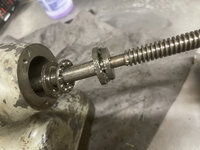
The screw shaft just pulls right out the front, thrust bearings and all.
IMG_0981.jpeg
 

Attachments

  • IMG_0964.jpeg
    IMG_0964.jpeg
    313.5 KB · Views: 15
Last edited:
To avoid these ads, REGISTER NOW!
OP
G

Grant Gunderson

Well-known member
Joined
May 17, 2013
Messages
2,320
Location
Bellingham, WA
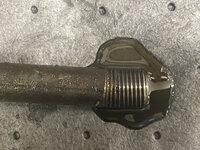
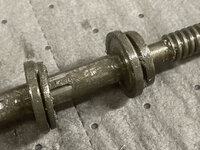
I'm no bearing expert, but I dont think the two raceways for the thrust bearing are supposed to be separated by a keyway. This has clearly been assembled incorrectly, but it might explain why I am not getting full retraction from the quill. Now the question is, what side of that keyway do they belong on...
IMG_0990.jpeg

I tossed everything into the ultrasonic, and then started to scrub down the two castings with degreaser and a bras brush. I used a pipe cleaner to make sure that both the internal and the coper oil passage where not clogged. It looks like they used some sort of white paint / sealant around the copper oil line, The basin that holds the oil on the other side of the casting is also painted with it, while the rest of the internal casting is pained dark grey... I am pretty sure thats the original color of the machine. Edit: Apparently that white stuff they sued was molten sulfur. Interesting.
IMG_1014.jpeg
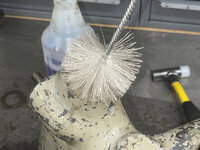
I used a large bottle brush to clean the inside of the quill and the locking shafts.
IMG_1026.jpeg
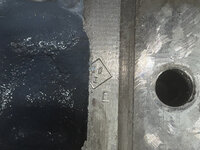
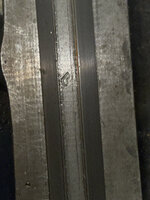
Remember that triangle with the 35 in it stamped on the ways that I was curious about? Well, I found another one on the tailstock, so I think that is an assembly mark, maybe thats how they confirmed this tail stock was matched to this machine?
IMG_1019.jpeg
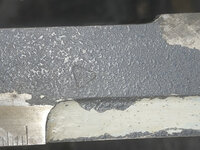
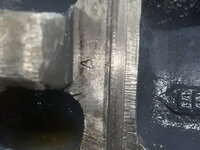
I also found a bunch of other marks, that I am guessing are from the craftsman that did the final fitting of the ways.
IMG_1029.jpeg
IMG_1024.jpeg
IMG_1021.jpeg
IMG_1031.jpeg
So far I have seen half-moons, a boot, one that looks like the state of UT, and now one looks like an alien spaceship... those boys or ladys had some creative stamps.
 
Last edited:
OP
G

Grant Gunderson

Well-known member
Joined
May 17, 2013
Messages
2,320
Location
Bellingham, WA
It's been a bit of slow going. I only like to have two Componets on the work bench at a time. Ideally one set in the ultrasonic and the second being disassembled. That way I can methodically take it all apart, analyze it, and make sure I can put it all back together later. After I clean each component, it goes in ziplock bags to keep all of the parts organized.

I decided to have a look under the chip pan tonight... and really wish I hadn't. It was completely full of chips, and old cutting fluid. It made cleaning out the knee of my Bridgeport when I got it, look fun.

IMG_1128.jpeg
This was especially fun to deal with, as neither side of the sump had any drain as far as I could tell. It took almost half a roll of pig mats to get it all soaked up and out. I then sprayed it down with degreaser, and left it to soak. It's going to take a few good soaks of degreaser to get most of the remnants out.

While the last of the tail stock parts where in the ultrasonic, I took the compound off of the lathe. It's just held on by two very thin nuts. My 9/16 wrenches where all took thick, so ended up using a 14mm Snapon slimline wrench, as they have a super thin profile. Luckily they where not on there very tight. I dont use those wrenches very often other than suspension rebuilds on the mountian bikes but when you need them you need them.

Once on the work bench, I flipped the compound over, and removed the screw with one of the pin spanners I made. This screw holds the brass nut for the shaft in place.
IMG_1089.jpeg
Next, I removed the 4 hex socket head screws from the end by the handle.
IMG_1090.jpeg
The entire assembly then pulls right out.
IMG_1100.jpeg
A non factory screw holds the handle on, once thats removed the handle pulls right off, then Used the mounting plate on the shaft as a slide hammer to get the beveled retainer plate off, The rest of the components just slid right off.
Here is a shot of them all laid out.
IMG_1125.jpeg
There is a thrust bearing sandwiched between two washers on either side of the mounting plate. To reassembly this all goes on the shaft first, then the woodruff key gets installed, then the rest side on. There is a locking screw for the dial indicator, and its held captive by a very small set screw. It took me a while to find it, it was so small!

Two separate the two halves of the casting, the gib screw needs to be removed.
IMG_1103.jpeg
IMG_1104.jpeg
Once thats out, the gib will pull right out, and you can slide it all apart.
IMG_1109.jpeg
Them just pull upwards to remove the brass nut. Here is a shot of its orientation, not sure that matters, but probably a good idea to keep the wear pattern the same. I will probably replace the brass nut while its out depending on costs, but the backlash isnt too horrible.
IMG_1111.jpeg


I am quickly approaching the time where I need to decide what to do about paint for the lathe. I can use the same hardhat rustolem I used on my Bridgeport, or a local automotive paint supply and mix a polyurethane paint for me and put it into spray cans. That runs about $150 for the paint, plus $30 a can for 12 cans.... ouch. Plus once you activate a can you can't re-use it once it cures. So that will make it way more expensive to paint as I go. If anyone has experience with the polyurethane and cutting fluids, I would love some input. I only use minimal cutting fluid, as I apply it with an acid brush and have no plans to use flood coolant. That being said, I would rather spend a bit more upfront to do a really good paint job and not have to paint it again!
 

DocsMachine

Well-known member
Joined
Sep 16, 2006
Messages
1,864
Almost all the machines I've painted I used an alkyd enamel, often over spray self-etching primer. The alkyd cures slowly enough, especially in cooler weather, that it "self levels" nicely. I use a 4" detail roller from Homey-Dee, and get a pretty decent finish.

Before:

HSL-003.jpg

And after:

HSL-046.jpg

It's proven quite resistant to typical dings and scratches in use, as well as most chemicals it'll see, like way oils, cutting oils, Tap Magic, WD-40, etc.

I will admit a nicely sanded and polished automotive urethane looks great, and I've seen tome top-notch jobs done on big Pacemakers and DSGs, but that sort of thing also takes a great deal of extra work, and requires more care in use. The alkyd enamel touches up easily.

Doc.
 
OP
G

Grant Gunderson

Well-known member
Joined
May 17, 2013
Messages
2,320
Location
Bellingham, WA
Almost all the machines I've painted I used an alkyd enamel, often over spray self-etching primer. The alkyd cures slowly enough, especially in cooler weather, that it "self levels" nicely. I use a 4" detail roller from Homey-Dee, and get a pretty decent finish.

Before:

HSL-003.jpg

And after:

HSL-046.jpg

It's proven quite resistant to typical dings and scratches in use, as well as most chemicals it'll see, like way oils, cutting oils, Tap Magic, WD-40, etc.

I will admit a nicely sanded and polished automotive urethane looks great, and I've seen tome top-notch jobs done on big Pacemakers and DSGs, but that sort of thing also takes a great deal of extra work, and requires more care in use. The alkyd enamel touches up easily.

Doc.
Doc, that works great. Another option I guess would be enamel with a polyurethane clear coat top.
 
OP
G

Grant Gunderson

Well-known member
Joined
May 17, 2013
Messages
2,320
Location
Bellingham, WA
I went and checked out the Benjamin Moore Super spec paint today. Going to have them order a pint of it for me to test before I fully commit to it. The sales guy says it will brush or roll on quite well, so we will see. The sherwin Williams store recommended Sher-Kem with seems similar to super spec, but can only be sprayed. It seems like those two options and the tried and true rustoluem hardhat are the best options, for durability, being able to be touched up, and with out the headache of a two part poly and its nasty chems and all that goes with handling that safely. All three of the paints mentioned above seem to be a single part high-solids, Alkyd enamel urethane.
 

ez-duzit

Well-known member
Joined
Jun 24, 2013
Messages
5,101
Location
Marina del Rey
...it will brush or roll on quite well...

Those are important qualities for a machine paint.

There is a technique we use on yachts called "rolling and tipping", where you very lightly brush the paint immediately as it is rolled on, creating a finish which looks superior to spraying (because there is zero orange peel).
 
OP
G

Grant Gunderson

Well-known member
Joined
May 17, 2013
Messages
2,320
Location
Bellingham, WA
Ok, after way too many delays, finally got back to sorting out the DC control panel. A bunch of stuff that I ordered from Amazon got completely screwed up as they shipped the wrong heat gun and the wrong heat shrink labels. Once everything showed up, we where dealign with a record head wave, so no way was I going to work in the garage in 110 degree temps while running a heat gun.

I ended up upgrading to a Variable temp heat gun from Master Appliance.
IMG_1246.jpeg
It wasn't cheap, but its built like a tank, and all of the parts are available for it at reasonable prices, so no more buy and toss heat guns. Plus this thing gets to temp and seems to maintain the set temp way better than the ones I've had in the past.

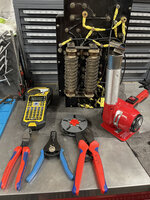
I've found when working on wring projects, It pays dividends to invest in the correct tools to do the job right the first time. Especially with crimp connections as nothing is more frustrating than having to chase down a bad connections latter. So here is my setup, A Brady 21 Plus label maker for labeling each connection with heat shrink, ideal wire strippers, and most importantly the Knipex ratcheting crimpers with a full set of dies. Ratcheting crimpers are essential as they will not release until you achieve a perfect crimp, Every time!
IMG_1260.jpeg
For the connectors, I only use the marine grade ones with solder in them. These create the best connection possible, and when done right are 100% trouble free. They cost a bit more than cheap connectors, but are worth every cent.

First step is make sure you strip the correct amount of insulation. You want to strip about half an inch. Too much and you will not get a good bond to the wire insulation, too little and you will not get a good electrical connection.
IMG_1262.jpeg
Next, insert wire into the connector, and crimp it with the proper sized die.
IMG_1263.jpeg
The Knipex are color coded, so it makes using the correct die easy.
IMG_1261.jpeg
Generally on crimps you want to insert them face up in the crimper for the best crimps. However I found with the solder filled crimps, it actually works best to crimp them 90 degrees to the top.
IMG_1265.jpeg
I then give the wire a light tug, to make sure its a strong connection. I then heat the crimp with the heat gun set to 1000 degrees. These marine connectors need a lot of heat!
IMG_1270.jpeg
When its heating, the glue in the connector will first glue itself to the wire insulation. On most heat shrink crimps, you stop there. With these solder filled ones, you keep heating them until you see the solder start to flow. It will then fill the rest of the connector, and fully solder the wire into it.

I like to use a curved attachment for the heat gun when doing these. It ensures that you get even heat all the way around without having to keep moving the wire.
IMG_1272.jpeg

I then print a label for the connection, and slide it over and then heat shrink it on.
 
Last edited:
OP
G

Grant Gunderson

Well-known member
Joined
May 17, 2013
Messages
2,320
Location
Bellingham, WA
With so many wires and connections, I simply went through the entire panel and replaced one wire at a time to ensure there was no mistakes. Here is a shot of the finished DC panel. 1944 circuit board tech at its finest.
IMG_1320.jpeg
Here is the before shot.
IMG_0607.jpeg
On the inside of the panel, any wire connectors to the components that where not replaceable got a coat of liquid tape.
IMG_1256.jpeg
The resistors on the board, where very corroded.
IMG_1299.jpeg
So I had ordered replacements without even checking them, as they are only $10 or so apiece.

Out of curiosity when I removed them from the board, I checked them to see how bad they where.
The first one, a 2K resistor actually checked out fine. I was a bit surprised!
IMG_1300.jpeg
The other two resistors are 1600K a piece in series. So should check out to be about 3200K
IMG_1305.jpeg
1.9M, so at least one of them was clearly bad.
IMG_1307.jpeg
And one was actually still good.
IMG_1308.jpeg
Prior to installing the new ones I checked them. Its always nice to verify any component you are installing, so you dont go chasing other problems, when in fact you could be dealing with a defective part.
IMG_1303.jpeg
 

Attachments

  • IMG_1309.jpeg
    IMG_1309.jpeg
    438.3 KB · Views: 18
Last edited:
OP
G

Grant Gunderson

Well-known member
Joined
May 17, 2013
Messages
2,320
Location
Bellingham, WA
Since they do not make 1600K resistors in this style anymore, I ordered a 3K and a 200 one and wired them in series to give me the factory 3200K.
IMG_1311.jpeg
These resistors install by sliding over the metal mounting post, that also serves as one of the connectors for them. So there is an insulating washer on each end of them.
IMG_1301.jpeg
And here is a shot of them installed on the panel.
IMG_1316.jpeg

So that concludes all of the major electrical for the machine. While it was tedious, and initially appeared overwhelming, taking it one component / wire at a time, it was not that bad or difficult to fully rewire. This was what I thought was going to be the most intimidating part of the rebuild, so I am glad its done!

I can now start to turn my focus to the mechanics of the lathe / painting, etc.
 

APEowner

Well-known member
Joined
Oct 2, 2009
Messages
4,164
Location
Sunny, New Mexico
I'm enjoying this thread. It's also making me glad that I passed on the EE I was looking at a while ago. I'd love to do a rebuild like this but I just need a working lathe to get projects done. Not another project.
 

paul.t.readel

New member
Joined
Jan 30, 2018
Messages
2
Grant, just found this thread and I’m quite intrigued. I’m actually doing a full rebuild (everything short of regrinding and scraping the ways) of my own 10EE though just a couple years younger (‘47) and a square dial model.

Mine is currently torn down to individual components with the only remaining assembled parts being the ways bolted to the base casting, was afraid I’d twist the ways trying to bolt them back to the base if I loosened that connection.

I‘m no expert in paint myself but researched all kinds of machine rebuild posts across the internet forums. I used Scherwin Williams Kem-Kromik primer (extremely happy with this product) brushed on the interior and HVLP sprayed on the exterior, top coat painted the interior with rustoleum rattle can (only cuz I didn’t want to lay inside with a brush any longer after learning what that was like after priming, also figured the HVLP with its air hose would be a bear to maneuver around given all the weird angles and surfaces inside), on the exterior I applied two top coats of SW Pro Industrial Urethane Alkyd Enamel (oil based not the water based variant to make it easier to spray). The top coat went on great and I’m really happy with how it turned out. I don’t have the lathe in service yet to know how it holds up to the wear and tear but it cured rock hard after about 3 weeks, sounds like a long time but if you rebuild as slow as I do the next assembly is barely cleaned by the time the previous one cures.

Prior to paint I stripped my machine back to bare metal with Jasco Paint Stripper which after letting do its work for 15mins I then followed with a 3200 psi pressure washer to remove the loosened paint and blast away any other stubborn portions below. I followed this with a wet abrasive blasting attachment on the pressure washer using 40/80 coal slag abrasive, not sure this was absolutely necessary but it definitely made for a better surface for the primer to adhere to. After all the water washing I had some issues with flash rusting but just prior to painting I used Klean Strip Concrete and Metal Prep and this worked wonders for that flash rust.

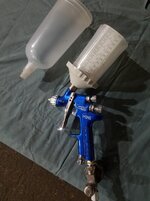
The HVLP gun I used was the purple special from Harbor Freight worked well enough for a first time HVLP user after performing the well document nozzle mod. I drilled mine out to 2.0mm and it performed acceptably with the heavy bodied paints I mentioned above. The gun is so cheap that every time I clean it up after using it I am always asking myself “Is this really worth it or should i just buy another one?”
https://www.harborfreight.com/20-oz-hvlp-gravity-feed-air-spray-gun-62300.html

Let me know if you want any further details on the paint process, I’d be happy to write up more or pass along additional pics.

Cant write a post this long without any pictures right?

Stripping the paint
E01DF3FC-84DB-4D60-BC0B-C3F897E29A08.jpeg

Flash Rust 😳
A87CF2CA-919E-4BE1-9A13-E66E3EDB428F.jpeg

Concrete & Metal Prep
736DE46D-5DB7-47CD-8362-E5CCC02E26D0.jpeg

Primed
44CD1E06-032D-4FAE-B39E-B740113F8EF5.jpeg

Top Coat
300C9005-8322-4AA6-B4B1-7D8732E25F23.jpegDBD2B01E-F594-4622-BEF5-4D2C029986D1.jpeg
 
Last edited:
OP
G

Grant Gunderson

Well-known member
Joined
May 17, 2013
Messages
2,320
Location
Bellingham, WA
Grant, just found this thread and I’m quite intrigued. I’m actually doing a full rebuild (everything short of regrinding and scraping the ways) of my own 10EE though just a couple years younger (‘47) and a square dial model.

Mine is currently torn down to individual components with the only remaining assembled parts being the ways bolted to the base casting, was afraid I’d twist the ways trying to bolt them back to the base if I loosened that connection.

I‘m no expert in paint myself but researched all kinds of machine rebuild posts across the internet forums. I used Scherwin Williams Kem-Kromik primer (extremely happy with this product) brushed on the interior and HVLP sprayed on the exterior, top coat painted the interior with rustoleum rattle can (only cuz I didn’t want to lay inside with a brush any longer after learning what that was like after priming, also figured the HVLP with its air hose would be a bear to maneuver around given all the weird angles and surfaces inside), on the exterior I applied two top coats of SW Pro Industrial Urethane Alkyd Enamel (oil based not the water based variant to make it easier to spray). The top coat went on great and I’m really happy with how it turned out. I don’t have the lathe in service yet to know how it holds up to the wear and tear but it cured rock hard after about 3 weeks, sounds like a long time but if you rebuild as slow as I do the next assembly is barely
Paul Nice job on the strip and paint! I've been meaning to up date this thread for a while, but ended up super busy with starting a new company in stealth mode, and now I am on Heli bike trip for work... so hope to get back to the lath next week. I have actually been doing a bunch of paint testing, and finally decided on what I am going to do with the lathe. I ended up using the Sherwin Williams Alkyd for the DC control panel as its a perfect match to the factory color that was on the inside of my lathe. All of the internal paint on my lathe is in really good condition, so I am going to leave it.

I ended up purchasing an IWATA LPH80 spray gun. This thing is amazing. It works great with my little makkita air compressor, and the quality I get spraying with it is phenomenal. I have been using it to test different paints on a ton of other projects, and have found a system I really like. I recently picked up two VIDMAR cabinets that I fully stripped down and reconditioned. On those I used a PPG epoxy primer, then did the body work followed by a high build 2K primer, than the PPG paint followed by a two part Poly clear top coat. That system is tough as nails. Only issue is making sure the top coat is thick enough, so need to do at least 3 coats of it. I'll post some pics of the cabinets when I get back from this trip, but suns up and I got get the bike ready for the day.
 

paul.t.readel

New member
Joined
Jan 30, 2018
Messages
2
I like the sound of your paint system Grant. I will definitely be trying it out on my next restoration.

I’ve also been looking to upgrade my spray gun too but didn’t know where to go next lots of options and none of them cheap. I think your testimonial is enough to sell me on your mentioned device.

Are any of your paints two part mixes with a pot life?

How much did you get your vidmars for? I live in the Midwest (Iowa) and used heavy duty cabinets are pretty much nonexistent here. Cheapest I’ve seen sell for 800-1000.

Lastly, not sure on forum etiquette first time poster. So sorry if I’m high jacking your thread. I can message privately if that’s what should be done here. Though in my mind a question asked in public allows everyone else to learn along the way too.
 

loganb

ALLIANCE MEMBER
Joined
Dec 29, 2011
Messages
5,539
Location
Omaha, NE
Paul-neighbor to the west(Omaha) chiming in on the cabinets....its just a matter of luck. $100 or so a drawer seems to be normal rate for vidmars or lista type cabinets in decent shape. I have more success just being patient and lucky with saved searches in Craigslist and other sites. Sometimes .gov surplus auctions or small manufacturers liquidating equipment or closing a facility can be a source but if the factory auction gets too big it brings in the professional resellers and bargains will not be had
 
OP
G

Grant Gunderson

Well-known member
Joined
May 17, 2013
Messages
2,320
Location
Bellingham, WA
No matter how hard I try to only have one project going at a time, it always seems to be that soon as I start a big project, 2 or 3 others tend to pop up unexpectedly that all need to get done with priority over the big project that I just started. This lathe is no different.

I had been looking for the Vidmar's for a while so when two came up on Craigslist for $250 I jumped on them and picked them up within an hour of the listing. I really didn't want to take this project on as I already had my hands full with everything else and the lathe.... but it was too good of a deal to pass on, and it was an excuse to practice with the paint system I decided on for the lathe. They where in good shape, minus whatever the guy had spilled on them eating away at the paint. So I removed the handles, and sanded everything down.

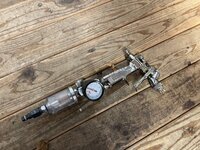
I painted them using my Iwata LPH80. When I ordered the LPH80 I purchased it with a stainless steel cup. That was a mistake. I would have been better off just ordering the gun and the 3M pressure valve plus water trap. I have found that its way easier to use the disposable mixing cups from 3M or SATA that then connect directly to the gun. Its less messy, waists less paints and makes cleanup a bit easier. The cups also have a filter built into them, so no need to filter the paint. You could probably get by without the 3M cheater valve as the gun has its own pressure adjustment, but having the pressure guage makes it easier to get consistent results. I keep it set to 20PSI or so.
The only issue I have had with this setup, is forgetting to open the air valve on the disposable cups, but thats user error on my part, and after a minute of wondering why the gun is acting like it is clogged, is easy fixed by popping that valve open. I use a 1:2 combination on the pattern adjustment and fluid adjustment which gets me in the ball park for most paints once they have been thinned a bit. Once dialed it this gun produces some of the best finishes I have done painting... something that I have always struggled with, but am now quite happy with the results I can get. I think a lot of it has to do with how finely this gun can mix the paint particles into a mist. With most things good technique goes a long ways, but in this case, the quality of the tool has a big, direct impact on the end result as well.
IMG_1768.jpg
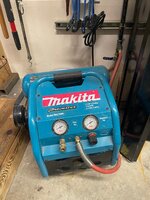
This gun works great with my tinny Makita nailing compressor. I leave it set at max pressure and then just use the pressure regulator at the gun. You wouldn't want to paint a car in one shot with this setup, but if you where just doing body panels, or in my case tool boxes / the lathe its the perfect combination.
IMG_1767.jpg

Here is the paint that I have decided on for the lathe. Its the same stuff I used on the Vidmar's.
IMG_1766.jpg
It is Lumabase by PPG. This is an automotive paint system. You want to use a Epoxy primer on bare metals, then do any body filler, followed by a 2K primer. The epoxy primer goes on very thin and won't cover even minor scratches. Think if it as really just being a sealer to prevent rust on the metals. The 2K primer is what you want to fill any small scratches / smooth things out. I then spray the single stage paint. For those not familiar with automotive paint descriptions, that is basically what is referred to as a color coat and what most people think of as paint. In my case I am using a metallic midnight blue. I buy that premixed with the correct amount of reducer. That also goes on very thin and in this case is just covering the item you are painting with color, but its self it isn't very durable. Finally I spray on at least 3 coats of the 2K polyurethane top coat. This is mixed 4:1 with the catalyst that then creates an extremely strong, durable, chemical resistant clear top coat for the paint. The catalyst is very toxic, so you need to wear a respirator with organic filters at a minimum plus you want all of your skin covered as your body can absorb the toxins by simply touching the airborne paint particles. This stuff is a sensitizer. The more you are exposed to it the more likely you are to have a severe reaction. The importance of proper ventilation should go without saying.

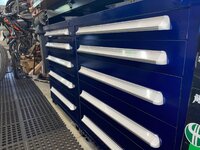
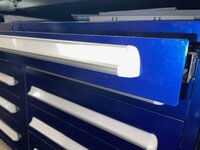
Here is a shot of the Vidmars after I painted them and replaced the door pulls with new ones. FYI Vidmar sells new door pulls for $50 for a set of 10.
IMG_1764.jpg
IMG_1763.jpg
Part of the reason you need to apply 3 thick coats of the clear coat, is you need to sand it down after its cured overnight to remove the orange peel from the sprayer. I start with 500 grit and work all the way up to a 4000 grit. I find the Abralon pads from Mirka work best and use them on my Festool sanders. I then use 3M machine polish, to get the final sheen. You want to use both the #1 and #2 compounds changing your buffing pads for each compound.

After I painted the cabinets / drawer fronts, I masked the front of the doors off, and the sprayed the drawers with grey POR15. FYI the grey POR15 paint is a perfect match to the factory grey. I am starting to become a really big fan of this stuff. It seems to be as durable as powder coat, and when sprayed with a very minimal dilution with Acetone, gives a very good high gloss finish. The POR15 stuff will change color a bit if exposed to UV light, so its not ideal for outdoor applications, but that wont be an issue with the drawers of the Vidmar's. Its funny when I tried brushing on the POR15 for the lathe's feet I absolutely hated working with it, as it was near impossible to get a good finish. Luckily you can't see those under the lathe, so no big deal. After using the POR15 on a bunch of other projects, I am now convinced that stuff is really good, but has to be sprayed on. This just goes to show, the importance of testing and then practicing when trying a new material / technique.
IMG_1765.jpg
I need to order new custom foam for my tools that are going in these from toolbed.com but I gotta get this bike shoot I just got back form edited and out the door first. Not to mention I need to work on revising a bunch of cad files for some prototype parts I need to get laser cut for the other project I am working on.... once thats done I can finally get back to working on the lathe.
 
Last edited:
OP
G

Grant Gunderson

Well-known member
Joined
May 17, 2013
Messages
2,320
Location
Bellingham, WA
I like the sound of your paint system Grant. I will definitely be trying it out on my next restoration.

Are any of your paints two part mixes with a pot life?

Lastly, not sure on forum etiquette first time poster. So sorry if I’m high jacking your thread. I can message privately if that’s what should be done here. Though in my mind a question asked in public allows everyone else to learn along the way too.
The epoxy primer, 2K primer and the 2K poly top coat all are two part mixes with a pot life. Even taking my time working slowly, the pot times are more than adequate, but I wouldn't want to let them sit before cleaning the gun.

I dont see your posts as hijacking the thread at all. Its all part of the conversation, and I have learned a lot from those posts in many threads on here over the years.
 
Last edited:

Steve from Socal

Well-known member
Joined
Jan 27, 2009
Messages
3,499
Location
Hutchinson Ks.
Grant,

I have a spray gun that is about the size of yours, my disposable cups are small and limit the gun to small sections. I have some Harbor Freight disposables that I bought and made an adaptor for the gun. These cups hold at least twice the volume.

Steve20210831_234318.jpg
 
OP
G

Grant Gunderson

Well-known member
Joined
May 17, 2013
Messages
2,320
Location
Bellingham, WA
So after a crazy busy summer with my day job, and a bunch of time testing different paint systems, I am finally able to concentrate on the lathe again. For paint I ended up deciding on a PPG poly paint system that I can spray really well with the Iwata Lph80 gun I bought. For the recored that gun does a great job, even with my tiny nailing compressor.

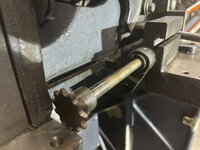
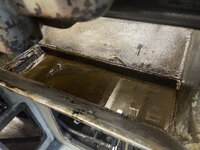
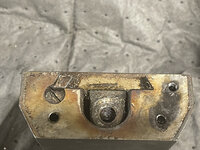
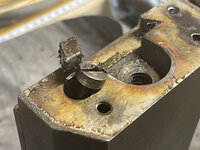
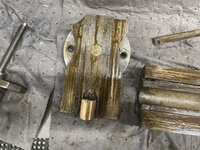
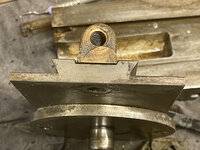
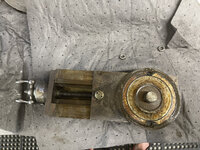
Working on the tail stock, does anyone have a tip for removing this stud?
IMG_1935.jpg
I've tried placing a nut on it and using a wrench under it to tap it out, but it seems to be fully seized in there.

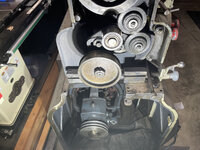
I took the cover off of the head stock today to have a look inside, It actually looks to be in really good shape. Despite, pulling the drain plugs there is still enough oil in there to keep the gears lubricated when turning, so thats a really good sign.IMG_1928.jpg

When I bought the machine I put a thousands dial indicator on the headstock and got no movement when I had it running... impressive. The bearings feel incredibly smooth when turning it by hand. Looking at the inside, it appears that a previous owner rebuilt the head and replaced the bearings.... despite the obvious hack job to remove them, it feels and indicates as new. So that will save a bunch of work in the rebuild.IMG_1930.jpg
 
To avoid these ads, REGISTER NOW!
Top Bottom