To avoid these ads, REGISTER NOW!

Recommendations for Concrete Sealer for Driveway

freedom561

Active member
Joined
Jul 20, 2022
Messages
39
Location
Clermont, FL
Looking for recommendations on a budget friendly sealer that would be resistant to oil drippings from vehicles and of course UV friendly. Typical rough finish with a mix of new and old concrete. Located in Central Florida so freeze/salt is not a concern.

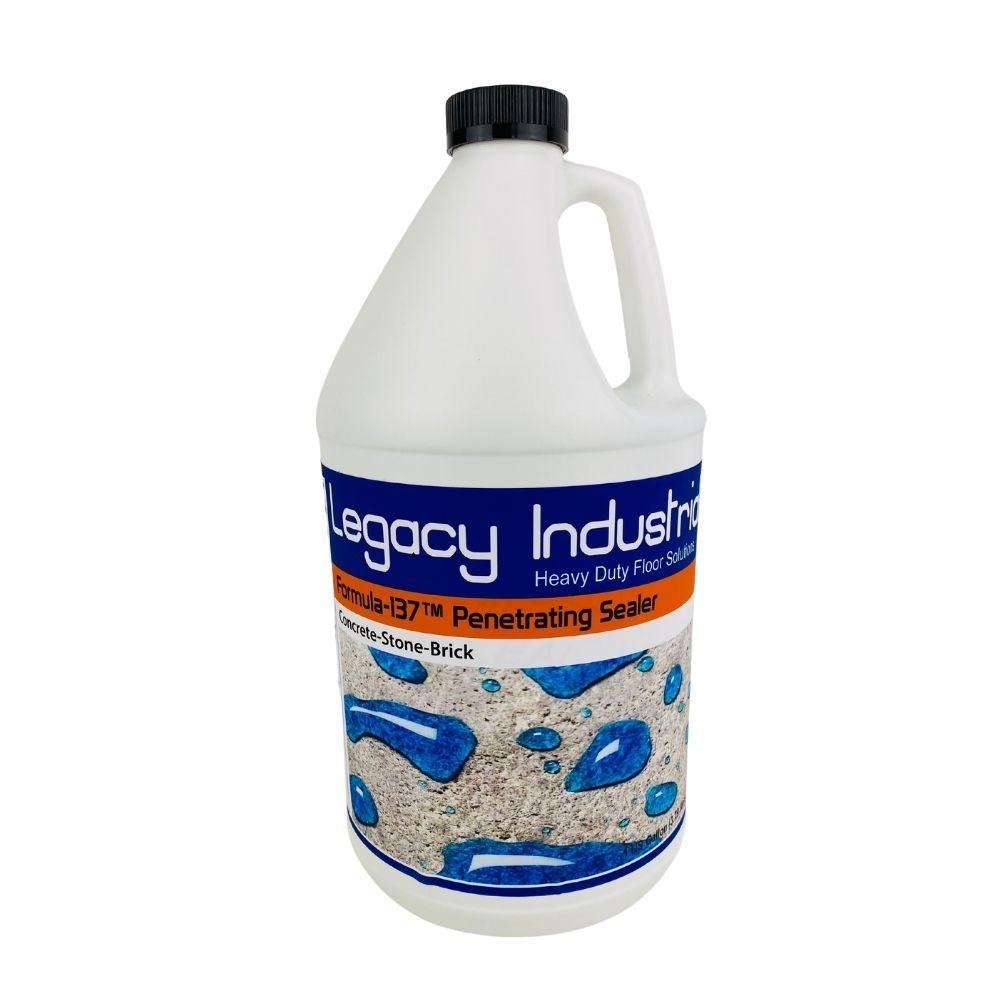
This product appears to check all the boxes, but open to any other suggestions.
Thanks
 
To avoid these ads, REGISTER NOW!

Shea

Well-known member
Joined
Sep 19, 2012
Messages
2,867
Location
California
Looking for recommendations on a budget friendly sealer that would be resistant to oil drippings from vehicles and of course UV friendly. Typical rough finish with a mix of new and old concrete. Located in Central Florida so freeze/salt is not a concern.

This product appears to check all the boxes, but open to any other suggestions.

Thanks
Formula 137 from Legacy would work well for your requirements.
 
OP
F

freedom561

Active member
Joined
Jul 20, 2022
Messages
39
Location
Clermont, FL
I found this Ghostshield product that looks like it would work: Siloxa-Tek 8510.

I've been researching old threads and found that most options are quite expensive. I was hoping to find a newer more affordable product, but haven't had any luck so far. I have a 1300 sq. ft. concrete apron that I want to protect from oil drips, but I can't justify spending over $1,000 on a sealer, especially if it needs to be reapplied eventually.

Thanks!
 

Armorpoxy

Well-known member
Joined
Aug 18, 2013
Messages
3,735
Location
NJ
Coval or Ballistix are next generation sealers that will outperform any traditional acrylic sealer. We carry both.
 

67King

Well-known member
Joined
Nov 14, 2014
Messages
580
Location
Friendsville, TN (Knoxville area)
Formula 137 from Legacy would work well for your requirements.

Shae, I just watched a long video from you about densifiers, resulting from some recommendations from another member here to use a densifier before using this sealer. Everything I had seen about densifiers previously was within the context of their use on smooth floors like garage or whatever. However, I have a fair amount of concrete that is brushed.....driveway, sidewalks, patio. Have covered my main area of concern with the 137, but it didn't give me the coverage I was expecting so I have more work to do.

What is your take on using a densifier, then the 137 on top of a densifier? Do you think a densifier is important for these areas (should note, this is new construction, it was poured probably 6 weeks ago)? If so, would you recommend both as separate products, or just use the PS104 you seem to think so highly of? Again, this is all outdoor, so like the OP in this thread, UV protection is probably my top priority. The only vehicle that will be parked in any of these areas regularly is an EV, so no oil leaks to deal with.
 

DaChev

Well-known member
Joined
Dec 10, 2015
Messages
61
I've been down this path. 137 will not go very far on untreated brushed concrete. It will be all but gone within 3 years and at $100 per gallon, you will go broke. Start with a densifier.

After you densify, there will not be much need for a 2 in 1. Then you can save a lot of money on the sealer. Your sealer will go a lot further if the concrete is densified.
 
To avoid these ads, REGISTER NOW!

Shea

Well-known member
Joined
Sep 19, 2012
Messages
2,867
Location
California
Shae, I just watched a long video from you about densifiers, resulting from some recommendations from another member here to use a densifier before using this sealer. Everything I had seen about densifiers previously was within the context of their use on smooth floors like garage or whatever. However, I have a fair amount of concrete that is brushed.....driveway, sidewalks, patio. Have covered my main area of concern with the 137, but it didn't give me the coverage I was expecting so I have more work to do.

What is your take on using a densifier, then the 137 on top of a densifier? Do you think a densifier is important for these areas (should note, this is new construction, it was poured probably 6 weeks ago)? If so, would you recommend both as separate products, or just use the PS104 you seem to think so highly of? Again, this is all outdoor, so like the OP in this thread, UV protection is probably my top priority. The only vehicle that will be parked in any of these areas regularly is an EV, so no oil leaks to deal with.
Broom finished concrete acts like a sponge with penetrating sealers and dramatically reduces coverage rates. PS104 is a great product because it densifies the upper concrete surface and includes the added protection of a siliconate sealer. Siliconate works well at resisting freeze-thaw damage from moisture and deicing salt. However, the coverage rates will still be reduced due to the broomed finish.

Penetrating sealers have rarely been stacked successfully with a densifier. The only exception to that is when using newer oil-repelling sealers, such as GhostShield 8510 and, sometimes, PS100 by Concrete Sealers USA. Field studies have shown that applying a densifier first allows the oil-repelling tendencies to work more effectively, since most of the sealer is confined to the uppermost surface layer. However, if the surface was fairly tight (doesn't absorb much water) to begin with, the densifier will tend to reject the oil-repelling sealer upon application.

A product I would consider for your project is PS102 by Concrete Sealers USA. It's a siliconate sealer designed for broom-finished and rougher finished concrete surfaces. It contains minimal amounts of acrylic polymers in the formulation to help bridge the porous gaps in such concrete and provide better surface protection. The coverage rate for broom-finished concrete is 200-250 square feet per gallon. You can price it here.

If you read the product description and recommended uses, I think it will better fit your requirements.
 

67King

Well-known member
Joined
Nov 14, 2014
Messages
580
Location
Friendsville, TN (Knoxville area)
A product I would consider for your project is PS102 by Concrete Sealers USA. It's a siliconate sealer designed for broom-finished and rougher finished concrete surfaces. It contains minimal amounts of acrylic polymers in the formulation to help bridge the porous gaps in such concrete and provide better surface protection. The coverage rate for broom-finished concrete is 200-250 square feet per gallon. You can price it here.

If you read the product description and recommended uses, I think it will better fit your requirements.

Thanks so much, Shae! I went to your site, and ordered it there, hoping/assuming you'd get some sort of affiliate kickback. Regardless, a question for you. Mentioned in the thread I started that I had a bit of the concrete that only had some fo the 137, not two coats. Can tell when it rains, as well. Is there any risk that if I put down this PS102 and overlap that area, there may be some reaction between the two that would cause any harm? I went ahead and got 5 gallons, so I can use it in some of the patio areas, as well, hopefully to cut down on the maintenance needs.
 

ericm

Well-known member
Joined
Apr 17, 2016
Messages
1,963
Location
Southern Oregon
Penetrating sealers have rarely been stacked successfully with a densifier. The only exception to that is when using newer oil-repelling sealers, such as GhostShield 8510 and, sometimes, PS100 by Concrete Sealers USA. Field studies have shown that applying a densifier first allows the oil-repelling tendencies to work more effectively, since most of the sealer is confined to the uppermost surface layer. However, if the surface was fairly tight (doesn't absorb much water) to begin with, the densifier will tend to reject the oil-repelling sealer upon application.

My shop has two rooms. I applied PS103 to the farm equipment storage side a few days ago with the plan of applying PS100 after a week. I was trying to apply all the concrete would take without puddling. I got about 450 sq ft per gallon. I was planning on doing the same PS103 then PS100 on the workshop side. It's concrete is finished a little smoother. Does this sound like it's tight enough that I should skip the PS103 and just do PS100?
 

Shea

Well-known member
Joined
Sep 19, 2012
Messages
2,867
Location
California
Thanks so much, Shae! I went to your site, and ordered it there, hoping/assuming you'd get some sort of affiliate kickback. Regardless, a question for you. Mentioned in the thread I started that I had a bit of the concrete that only had some fo the 137, not two coats. Can tell when it rains, as well. Is there any risk that if I put down this PS102 and overlap that area, there may be some reaction between the two that would cause any harm? I went ahead and got 5 gallons, so I can use it in some of the patio areas, as well, hopefully to cut down on the maintenance needs.
You won't have any adverse reaction. Just apply it sparingly in the area that you overlap. Otherwise, it may puddle slightly and dry to a white haze that needs to be scrubbed hard to remove.
 

Shea

Well-known member
Joined
Sep 19, 2012
Messages
2,867
Location
California
My shop has two rooms. I applied PS103 to the farm equipment storage side a few days ago with the plan of applying PS100 after a week. I was trying to apply all the concrete would take without puddling. I got about 450 sq ft per gallon. I was planning on doing the same PS103 then PS100 on the workshop side. It's concrete is finished a little smoother. Does this sound like it's tight enough that I should skip the PS103 and just do PS100?
It really depends on how much moisture it will currently absorb. PS100 was first developed without the intent of applying a densifier first. It was only after they received field reports from contractors applying to both densified and non-densified concrete surfaces that they learned that it performed even better. If your surface readily absorbs a shot glass full of water within a few minutes in various areas, then a densifier applied first will help. However, if the water takes longer than that to absorb, you should be just fine without the densifier.
 

DaChev

Well-known member
Joined
Dec 10, 2015
Messages
61
Looking for recommendations on a budget friendly sealer that would be resistant to oil drippings from vehicles and of course UV friendly.

Thanks

Funny thing. I missed this part in your first post.

Whatever you choose, know this. Formula 137 will not protect your driveway from oil drippings.

No matter what any vendor on this site says, 137 will not do this.
 
To avoid these ads, REGISTER NOW!
Top Bottom