To avoid these ads, REGISTER NOW!

Recommendations for ignition scope?

Skyman

Well-known member
Joined
Nov 9, 2021
Messages
1,170
Location
Central Maryland
Hi, all.

I'm interested in acquiring an oscilloscope for test/diagnosis of automotive ignition systems. Various old-school, CRT models pop up on Ebay, and they're under consideration, however I'd be keen to hear of any modern units that are out there, and the pros/cons of what might be available. Ability to view a secondary pattern parade is an absolute requirement.

TIA for any and all insights.
 
To avoid these ads, REGISTER NOW!

2ndGearRubber

Well-known member
Joined
Mar 24, 2014
Messages
14,185
Location
Pittsburgh
Hi, all.

I'm interested in acquiring an oscilloscope for test/diagnosis of automotive ignition systems. Various old-school, CRT models pop up on Ebay, and they're under consideration, however I'd be keen to hear of any modern units that are out there, and the pros/cons of what might be available. Ability to view a secondary pattern parade is an absolute requirement.

TIA for any and all insights.

I assume by mentioning parade, you're talking distributor ignition systems?

Parade can be done with any 2 channel scope. Trigger on cylinder 1 wire as channel 1, channel 2 is the main wire off the coil to see all the cylinders. Channel 1 will then stabilize your waveform, and channel 2 will show you all of the cylinders.


The giant ignition analyzers are worthless compared to even a basic digital storage oscilloscope. The latter can record and replay the data. It can also scale and offset the data relative to other signals. Finally it can be used for any other scope based testing. The "big box" style are not capable of anything above that of a basic digital scope.
 

dcg9381

Well-known member
Joined
Jun 20, 2018
Messages
11,748
Location
Austin, TX
I have an old CRT scope. It was given to me by an engineer. The damn thing has more bells and whistles on it (probably 1980s era) and every time I need to use it, I have to start over with the basics that I've forgotten. They're going to be expensive to ship and may need to be calibrated.

I've replaced it with a $40 LCD scope from Amazon that fits my hand. That's good enough for what I do. Way easier.

Older scopes may require probes that aren't exactly inexpensive..$70 or so.
 

isb cornbinder

Well-known member
Joined
Nov 3, 2010
Messages
7,073
Location
Pacific South West, BC, Canada
About 20 years ago, I somehow became the place to drop off these machines for re-homing. I never kept one of the 20 or so that passed this way.
They are obsolete in 2024. Modern ignitions call for modern test equipment. A points in the distributor starts to wear out in the first turn and will need service soon. Electronic conversions will not change in 100,000 miles.
A conversion to an electronic ignition is easy and very reliable.
The second last of these that passed this way went to a man has part of his business rebuilding Old Ford Flathead ignitions. the machine has a distributor machine on it.
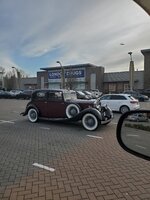
The last of these units went to a guy with a 1935 Rolls Royce
I nearly got an ALLEN SYNCHROGRAPH from a local shop. One of the employees chucked it in a scrap bin and that was the end of it, sadly.
 

Attachments

  • allen syncrograph 1.jpg
    allen syncrograph 1.jpg
    80.2 KB · Views: 159
  • Rolls 1935.jpg
    Rolls 1935.jpg
    670.2 KB · Views: 67
OP
S

Skyman

Well-known member
Joined
Nov 9, 2021
Messages
1,170
Location
Central Maryland
I assume by mentioning parade, you're talking distributor ignition systems?

Parade can be done with any 2 channel scope. Trigger on cylinder 1 wire as channel 1, channel 2 is the main wire off the coil to see all the cylinders. Channel 1 will then stabilize your waveform, and channel 2 will show you all of the cylinders.


The giant ignition analyzers are worthless compared to even a basic digital storage oscilloscope. The latter can record and replay the data. It can also scale and offset the data relative to other signals. Finally it can be used for any other scope based testing. The "big box" style are not capable of anything above that of a basic digital scope.
Yes, all of my vehicles have distributors. What are you using for probes to connect a typical bench scope to secondary ignition? Storage and replay have appeal for sure.
 
OP
S

Skyman

Well-known member
Joined
Nov 9, 2021
Messages
1,170
Location
Central Maryland
I have an old CRT scope. It was given to me by an engineer. The damn thing has more bells and whistles on it (probably 1980s era) and every time I need to use it, I have to start over with the basics that I've forgotten. They're going to be expensive to ship and may need to be calibrated.

I've replaced it with a $40 LCD scope from Amazon that fits my hand. That's good enough for what I do. Way easier.

Older scopes may require probes that aren't exactly inexpensive..$70 or so.
Same question for you: What are you using for pickup probes for high-voltage ignition secondaries?
 
OP
S

Skyman

Well-known member
Joined
Nov 9, 2021
Messages
1,170
Location
Central Maryland
About 20 years ago, I somehow became the place to drop off these machines for re-homing. I never kept one of the 20 or so that passed this way.
They are obsolete in 2024. Modern ignitions call for modern test equipment. A points in the distributor starts to wear out in the first turn and will need service soon. Electronic conversions will not change in 100,000 miles.
A conversion to an electronic ignition is easy and very reliable.
The second last of these that passed this way went to a man has part of his business rebuilding Old Ford Flathead ignitions. the machine has a distributor machine on it.
The last of these units went to a guy with a 1935 Rolls Royce
I nearly got an ALLEN SYNCHROGRAPH from a local shop. One of the employees chucked it in a scrap bin and that was the end of it, sadly.
I have no points in any of my distributors. There's still value in being able to view secondary waveforms.

Sounds as though you've had some pretty cool vintage equipment pass through your hands.
 

dcg9381

Well-known member
Joined
Jun 20, 2018
Messages
11,748
Location
Austin, TX
Same question for you: What are you using for pickup probes for high-voltage ignition secondaries?
To be honest, most of my use is around digital signals and EFI. Think ignition triggers in the 0-5V range. I've also used it to "debug" the realities of modern vehicles funky "trailer controls" and things like that. It ain't just 12V analog anymore.

I don't own a high voltage probe, but realize one would be required if I was doing what you're doing. For me, I assume the "high voltage" side does it's job, all the drama is in getting ignition input translated to the correct signal type to be read by the EFI system, then getting the right output to trigger the ignition system.
 

isb cornbinder

Well-known member
Joined
Nov 3, 2010
Messages
7,073
Location
Pacific South West, BC, Canada
I have no points in any of my distributors. There's still value in being able to view secondary waveforms.

Sounds as though you've had some pretty cool vintage equipment pass through your hands.
I have been lucky. I never made any money on this time consuming venture. I have no regrets.
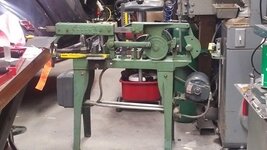
The newest of my machines is 30 years old. Everything else is more than 50 years. Mu biggest drillpress is nearly 125 yo.
 

Attachments

  • WF AND J BARNES SIDE TOOL TRAY.jpg
    WF AND J BARNES SIDE TOOL TRAY.jpg
    88.8 KB · Views: 59
  • WF & John barnes.jpg
    WF & John barnes.jpg
    44 KB · Views: 51

isb cornbinder

Well-known member
Joined
Nov 3, 2010
Messages
7,073
Location
Pacific South West, BC, Canada
That's a beautiful looking death trap!
At 1100# I think it could hold it's own in a disagreement. I was driving a 3/4" shank drill bit in the WF when the New Cleveland bit caught and was twisted off.
Locally, I found a fantastic US BURKE VICE. I is a good match tor the DP.
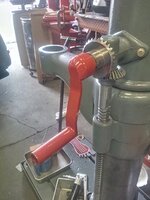
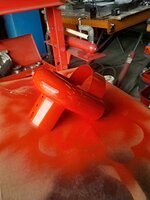
I made a few replacement pieces. The top gear cover was at the perfect height to grab hair or a cap.
 

Attachments

  • USA BURKE VICE 4.jpg
    USA BURKE VICE 4.jpg
    47.7 KB · Views: 39
  • WF SHOP BUILT GEAR GUARD.jpg
    WF SHOP BUILT GEAR GUARD.jpg
    44.4 KB · Views: 26
  • WF CRANK.jpg
    WF CRANK.jpg
    35.4 KB · Views: 24
  • WF and J Barnes gear guard home made.jpg
    WF and J Barnes gear guard home made.jpg
    65.6 KB · Views: 39

richfinn

Well-known member
Joined
Jan 29, 2011
Messages
4,814
Location
Leeds, Yorkshire, England
Hi, all.

I'm interested in acquiring an oscilloscope for test/diagnosis of automotive ignition systems. Various old-school, CRT models pop up on Ebay, and they're under consideration, however I'd be keen to hear of any modern units that are out there, and the pros/cons of what might be available. Ability to view a secondary pattern parade is an absolute requirement.

TIA for any and all insights.

It just depends exactly what you want and how much you want to spend.

I have a Pico 2 channel Automotive scope and a GTC 505 (small handheld ignition scope with a selection of probes for COP and conventional systems)


Capacitive probes for secondary ignition are pretty cheap, paddle probes for COP are more expensive, you might want an attenuator if you want to look at primary ignition.

Picos are great and can do a lot of other testing and the software is very well thought out/intuitive

ROTKEE in Ukraine are definitely worth a look for good value for money well made scope accessories (he will ship anywhere and is a clever guy).

 
Last edited:

2ndGearRubber

Well-known member
Joined
Mar 24, 2014
Messages
14,185
Location
Pittsburgh
Yes, all of my vehicles have distributors. What are you using for probes to connect a typical bench scope to secondary ignition? Storage and replay have appeal for sure.

No bench tops, you want a laptop based solution.

You can buy BNC terminated secondary ignition leads. Mine are NOS picoscope I got a good deal on. Even a $250 digital storage oscilloscope will do what you're asking. The only thing it won't have is an ability to convert space between two ignition events into dwell in degrees. You'd need to measure the time of two ignition events, and work backwards for dwell in degrees.

If you want primarily ignition, you'd need to attenuate/reduce input voltage into the scope. Voltage spikes can be 100+ volts. Secondary ignition probes are usually attenuated 1000/1 so you don't need to fear input voltage.


People saying secondary ignition is dead/outdated, are misinformed. I use it on late model engines.
 

no704

Well-known member
Joined
Apr 27, 2016
Messages
5,215
Lots of little inexpensive scope units available for your phone or laptop.
 

theoldwizard1

Well-known member
Joined
Feb 22, 2011
Messages
43,145
Location
SE MI
I assume by mentioning parade, you're talking distributor ignition systems?
.
.
.
The giant ignition analyzers (i.e. Sun) are worthless (if your engine does NOT have a distributor) compared to even a basic digital storage oscilloscope.
Agree 100%.

Even on distributor systems, you can get a lot of information with a storage from the PRIMARY side of the ignition. Looks totally different, but the information is there.
 

olsenmotorsports

Well-known member
Joined
Apr 13, 2013
Messages
764
Location
Chicago, IL
If I can make a suggestion a fantastic quick grab scope the AES Wave U scope. It’s really inexpensive and as long as you do not need multiple channels or pressure readings It’s great. I use it quite frequently for quick diags and it’s been great. Really robust

U scope
 

Firebrick43

Well-known member
Joined
May 12, 2015
Messages
14,032
Location
West central Indiana
For mainly bench work but occasional auto work how about something like A rigol DHO814? I have been kicking around the idea of getting one.

A 2 channel 70 mhz is only $280 right now and a 4 channel $373

rigol.jpg

I have been thinking about getting something for the bench and its small form factor and easy to power from a milwaukee M18 topoff via usbc cable. There is even a battery pack that is really nicely integrated if you can do surface mount.


Much cheaper than an equivalent capability software based scope without all the wires and issues of laptop changes down the road?
 
OP
S

Skyman

Well-known member
Joined
Nov 9, 2021
Messages
1,170
Location
Central Maryland
Thanks for the replies, all. That Pico looks mighty nice, but beyond the price point for me, as I no longer wrench professionally.
 
To avoid these ads, REGISTER NOW!

2ndGearRubber

Well-known member
Joined
Mar 24, 2014
Messages
14,185
Location
Pittsburgh
Thanks for the replies, all. That Pico looks mighty nice, but beyond the price point for me, as I no longer wrench professionally.

If you're willing to use attenuators for voltage above ~20v, you can buy a pico for sub 300 on Amazon. Still needs probes/secondary stuff added on to that price.
 

theoldwizard1

Well-known member
Joined
Feb 22, 2011
Messages
43,145
Location
SE MI
Thanks for the replies, all. That Pico looks mighty nice, but beyond the price point for me, as I no longer wrench professionally.
The hardware on the Pico is REDICULOUSLY OUTDATED !

The software IS Fantastic, so that is what you are paying for.

The latest Rigol 4 channel 'scopes (DHO804) start at under $400 ! The hardware functionality is orders of magnitude better. They also have their software install on an SD card. Someone with way too much time on their hands, could hack the software and possibly add some of the Pico Auto functionality.
 

richfinn

Well-known member
Joined
Jan 29, 2011
Messages
4,814
Location
Leeds, Yorkshire, England
Thanks for the replies, all. That Pico looks mighty nice, but beyond the price point for me, as I no longer wrench professionally.

I paid £350 for the Picoscope brand new in box with a basic lead kit from eBay (it's an older 2 channel model pre BNC+) from a UK Snap-On dealer.

I just bought the other accessories for it from various websites like ROTKEE and Pico.

The latest software is FREE to download from the Pico Automotive website (you can run it in demo mode without a scope)

The used Toughbook CF-D1 (which is mint condition) cost me another £300 used from eBay (it does a lot of other stuff besides the Pico like tech info and VCDS)

Set up a search on eBay and wait, I think people will start selling the older versions (still perfectly adequate) as they upgrade to the newer BNC+ platform

#theoldwizard1 is absolutely correct it's the Pico software that really makes this tool shine (Pico aren't dumb though, you have to connect one of their Automotive Scopes to get full access to all it's tricks).

Check out the GTC 505 though, it might be enough if you only want an ignition scope (It's made in Canada and sells for around $300), I really like mine for quick checks at the roadside (there are a bunch of good YouTube videos) 👍

You can get a GTC 505 M kit with the attachments for older vehicles with HT wires, this tool finds faults!!!


Last edited:

Jack_K

Well-known member
Joined
Aug 7, 2021
Messages
336
Location
Australia
I haven't yet found a modern scope which can actually replace an old engine analyser when working on distributor equipped cars. Even on modern cars it doesn't make sense to me how complicated modern automotive scopes have been made. Yes one can use a modern automotive scope to view distributor ignitions but it really doesn't match how good an old one is.

Test equipment manufacturers usually try to make jobs quicker, they seem to have gone backwards.

I considered a picoscope but the fact that I can't even easily read dwell is just one disadvantage.

On a proper analyser, most of the connections can be made at once. There's no changing leads etc.

To use my Allen machines, the following is connected:
- Battery positive
- Battery negative
- coil negative
- amp clamp
- coil HT clamp
- #1 trigger clamp

From that I can do most tests that can be done. There's no changing settings as to what probes etc are connected to the scope or changing them on the car. The only times the leads get moved are for voltage drop tests.

On the Allen DEA, all I need to do is press one button for tests such as starting, charging, ignition primary, timing, ignition secondary and the fuel system.

The Allen SEA and many Late 80s onwards machines even give a diagnosis as to what is wrong. The operator just needs to follow some basic on screen instructions to control the engine rpm etc.


If someone can find a modern scope which will do all that, I will buy one. As it is, I'm looking for one from the 90s-00s which is a box connected to a laptop. Something like an SPX Vision Premier or Bosch FSA. My Allen machines are just too large and old but do the job perfectly fine when they are working.
 

2ndGearRubber

Well-known member
Joined
Mar 24, 2014
Messages
14,185
Location
Pittsburgh
I haven't yet found a modern scope which can actually replace an old engine analyser when working on distributor equipped cars. Even on modern cars it doesn't make sense to me how complicated modern automotive scopes have been made. Yes one can use a modern automotive scope to view distributor ignitions but it really doesn't match how good an old one is.

Test equipment manufacturers usually try to make jobs quicker, they seem to have gone backwards.

I considered a picoscope but the fact that I can't even easily read dwell is just one disadvantage.

On a proper analyser, most of the connections can be made at once. There's no changing leads etc.

To use my Allen machines, the following is connected:
- Battery positive
- Battery negative
- coil negative
- amp clamp
- coil HT clamp
- #1 trigger clamp

From that I can do most tests that can be done. There's no changing settings as to what probes etc are connected to the scope or changing them on the car. The only times the leads get moved are for voltage drop tests.

On the Allen DEA, all I need to do is press one button for tests such as starting, charging, ignition primary, timing, ignition secondary and the fuel system.

The Allen SEA and many Late 80s onwards machines even give a diagnosis as to what is wrong. The operator just needs to follow some basic on screen instructions to control the engine rpm etc.


If someone can find a modern scope which will do all that, I will buy one. As it is, I'm looking for one from the 90s-00s which is a box connected to a laptop. Something like an SPX Vision Premier or Bosch FSA. My Allen machines are just too large and old but do the job perfectly fine when they are working.

You can measure dwell in degrees with picoscope 4xxx series automotive scopes, perhaps others.

Trigger an ignition events at the left side of the screen, with space for another on the screen. Set the 720 degree phase rulers on each event. Use the measurement rulers across the dwell period of the ignition strike to produce dwell time in degrees. You can do this live as well changing rpm as you go, you need to resize the rulers.


How often do people check the dwell? Now we just call it "on time", time the coil is energized. You can use the same setup on the primary as well if you have multiple coils.
 

isb cornbinder

Well-known member
Joined
Nov 3, 2010
Messages
7,073
Location
Pacific South West, BC, Canada
I have no points in any of my distributors. There's still value in being able to view secondary waveforms.

Sounds as though you've had some pretty cool vintage equipment pass through your hands.
That is true. I did not get up one morning and think, "I need to get a new hobby." It happened almost all on its own. I did keep 4 of the drill presses, a big lathe and a power hacksaw. My car is 85 years old. When the car sold new it was under a grand.
 

Attachments

  • SOUTHBEND 16.jpg
    SOUTHBEND 16.jpg
    25.8 KB · Views: 14
  • WF AND J BARNES SIDE TOOL TRAY.jpg
    WF AND J BARNES SIDE TOOL TRAY.jpg
    88.8 KB · Views: 12
  • HOEFER CAMELBACK.jpg
    HOEFER CAMELBACK.jpg
    80.9 KB · Views: 13
  • MINATURE DRILL RESTORED.jpg
    MINATURE DRILL RESTORED.jpg
    55.2 KB · Views: 12
  • CANEDY OTTO.jpg
    CANEDY OTTO.jpg
    59.7 KB · Views: 12
  • Keller side.jpg
    Keller side.jpg
    71.1 KB · Views: 11
  • TOWING DAY 8 (2).jpg
    TOWING DAY 8 (2).jpg
    35.3 KB · Views: 24
Last edited:

Jack_K

Well-known member
Joined
Aug 7, 2021
Messages
336
Location
Australia
You can measure dwell in degrees with picoscope 4xxx series automotive scopes, perhaps others.

Trigger an ignition events at the left side of the screen, with space for another on the screen. Set the 720 degree phase rulers on each event. Use the measurement rulers across the dwell period of the ignition strike to produce dwell time in degrees. You can do this live as well changing rpm as you go, you need to resize the rulers.


How often do people check the dwell? Now we just call it "on time", time the coil is energized. You can use the same setup on the primary as well if you have multiple coils.
It can be read but it really should be easier, most of what I do has points. I understand the picoscope etc isn't designed for old vehicles but can be made to work. It's just a lot slower so isn't better than an old engine analyser.
 

2ndGearRubber

Well-known member
Joined
Mar 24, 2014
Messages
14,185
Location
Pittsburgh
Every ICE has some form of distribution system for the timed spark.

But not all systems post ~2000 model year can easily be interfaced with for secondary or even primary measurement. You're getting next to no value from a 4 wire coil, and half of the 3 wire coils on the market. 2 wire coil on plug still gives you a nice primary signal, as does the other half of the 3 wire coils. Then you have the GM V8s I can still use normal secondary leads on.


It can be read but it really should be easier, most of what I do has points. I understand the picoscope etc isn't designed for old vehicles but can be made to work. It's just a lot slower so isn't better than an old engine analyser.

If you work in 50+ year old stuff primarily I would generally agree a dedicated ignition scope will give you the best ignition interface. Difference is it can't go on test drives for an intermittant miss, record the data, or do anything else the modern lab scope can do. But for ignition waveforms of old stuff, they're tough to beat if you can justify it.
 
OP
S

Skyman

Well-known member
Joined
Nov 9, 2021
Messages
1,170
Location
Central Maryland
I have at least six devices that can display dwell -- a few simple old-school analog dwell/tach meters, a few old-school analog multi-function meters that also include Volts/Ohms/Amps, and a slick, high-zoot, modern, Innova Pro timing light that also provides dwell/tach data.

I'm really Jones-ing for an ignition scope that won't break the bank, but will do everything I want it to do.

Thanks to all for the responses!
 

2ndGearRubber

Well-known member
Joined
Mar 24, 2014
Messages
14,185
Location
Pittsburgh
I have at least six devices that can display dwell -- a few simple old-school analog dwell/tach meters, a few old-school analog multi-function meters that also include Volts/Ohms/Amps, and a slick, high-zoot, modern, Innova Pro timing light that also provides dwell/tach data.

I'm really Jones-ing for an ignition scope that won't break the bank, but will do everything I want it to do.

Thanks to all for the responses!

To my original point, a modern scope will give you superior visuals and ability to replay data. The big box style stuff from 50 years ago is nice for the specific function of ignition waveforms. It ***** for everything else. Portability, data collection in general, and total capability. Not that they cannot do the job they were designed to do. But a modern scope gives you way more information and the ability to record and review it.
 

joecon

Well-known member
Joined
Oct 4, 2010
Messages
681
On a distributor ignition you can see secondary ignition [ put one lead on the coil wire one on #1] It uses 2 channels. Use one channel for primary ignition, and the last on the battery for Relative compression, and battery/alternator testing. Everything my Allen scope can do plus all the advantages of a modern scope. You do need to know the settings but if you play with them for a few minutes, you can get it to look like you want.
 

N8sToolz

Well-known member
Joined
Oct 27, 2022
Messages
97
Seeing ignition is one thing, but there's so much more to see when you start going into the rabbit hole. Relative compression, intake/exhaust pulse, fuel rail pulse, cooling system pulse, in cylinder running compression, NVH tetsing...

I've been experimenting with using knock sensors to track down engine noises like lifter and lower end.

Like someone said above the Pico software is where it really shines being able to manipulate data is so many ways.
 

Steve_P

Well-known member
Joined
Sep 15, 2010
Messages
5,182
The hardware on the Pico is REDICULOUSLY OUTDATED !

The software IS Fantastic, so that is what you are paying for.

The latest Rigol 4 channel 'scopes (DHO804) start at under $400 ! The hardware functionality is orders of magnitude better. They also have their software install on an SD card. Someone with way too much time on their hands, could hack the software and possibly add some of the Pico Auto functionality.

Have you ever actually owned, or even use a pico? I'm guessing the answer is no, to both, and you're parroting other's opinions. Which is fine, but you might want to actually say, "I've never used one, but the guy i follow on YouTube said...."
 

2ndGearRubber

Well-known member
Joined
Mar 24, 2014
Messages
14,185
Location
Pittsburgh
Have you ever actually owned, or even use a pico? I'm guessing the answer is no, to both, and you're parroting other's opinions. Which is fine, but you might want to actually say, "I've never used one, but the guy i follow on YouTube said...."

Owned, or used, for the function of diagnosing a vehicle which is broken? LOL IDK how I'm going on a test drive with a bench scope with a tiny screen. Probably easier than towing a trailer with a Sun ignition scope on it though.


IMO your needs are dictated by use. If the goal is to just stick a secondary lead on each cylinder and take a peek, you can use nearly anything. If you want to diagnose a problem in the bay, which is relatively consistent as it can be reproduced in the bay, you need something better. The classic "excessive secondary ignition resistance" check is a good example of this. An AESwave Uscope or similar can do that, but you have to stare bug-eyed at the screen and the fault needs to be relatively consistent. Common burn time is around 1.5millisceonds. So that fault needs to be pretty common for your brain to see and process. If you want the intermittent miss under load at 2500rpm driving in a higher gear and tipping into the throttle, you need something better still. Although with the latter things like power balance or individual misfire counters can help if you're inclined to trust the PCM, and the vehicle is new enough to even have one. Each is giving a greater degree of information. Most would be money ahead on their old cars to just plug/wire/cap/rotor on an interval than diagnosing the root cause with an ignition scope. To me the old stuff is much less sensitive to the need for such equipment. Parts are typically cheap and easy to change. Totally different situation that selling a customer on pulling an intake manifold to play swaptronics with plugs/coils. Sometimes that's the only good option you have. Like I mentioned above I use primary ignition and secondary ignition on 2010+ vehicles to diagnose problems when it's available to me. Some OEM spark plugs are $30 each. They're essentially single use as there's a crush washer which indexes them towards the GDI spray point on the piston. Whereas 30 bucks will throw 8 plugs in most old vehicles.
 

Firebrick43

Well-known member
Joined
May 12, 2015
Messages
14,032
Location
West central Indiana
Have you ever actually owned, or even use a pico? I'm guessing the answer is no, to both, and you're parroting other's opinions. Which is fine, but you might want to actually say, "I've never used one, but the guy i follow on YouTube said...."
Have you owned the latest generation of rigol?

:dunno:

Maybe if there was something you could compared two items against each other that you don’t own that isn’t opinion. How about the manufactures own specification sheets?

Hardware wise the rigol that theoldwizard1 listed is much more capable than a picoscope 4425A at a fraction of the cost.

And he admitted that the software of the pico scope was its strong point.

Owned, or used, for the function of diagnosing a vehicle which is broken? LOL IDK how I'm going on a test drive with a bench scope with a tiny screen. Probably easier than towing a trailer with a Sun ignition scope on it though.
I think you are confusing scopes from several generations ago.

They are not that much larger than a picoscope box, they record more onto their memory for review later on a laptop, or they can output to a touch screen as well as large as your poor eyes need.

Screenshot 2024-11-12 192946.png
 

theoldwizard1

Well-known member
Joined
Feb 22, 2011
Messages
43,145
Location
SE MI
Hardware wise the rigol that theoldwizard1 listed is much more capable than a picoscope 4425A at a fraction of the cost.

And he admitted that the software of the pico scope was its strong point.
"Capsable" depends a lot on what problem you are trying to solve.

I don't know how many 4425A's ope have been sold, but Pico took a big gamble that software would sell when they started developing it, years ago.

I would expect the development costs have been paid many times overs. The real question is, are they adding additional functionality ?

One thing Pico needs to be concerned about us how long will the actual hardware (chips) be available. Clearly thy are approaching EOL !
 

2ndGearRubber

Well-known member
Joined
Mar 24, 2014
Messages
14,185
Location
Pittsburgh
Have you owned the latest generation of rigol?

:dunno:

Maybe if there was something you could compared two items against each other that you don’t own that isn’t opinion. How about the manufactures own specification sheets?

Hardware wise the rigol that theoldwizard1 listed is much more capable than a picoscope 4425A at a fraction of the cost.

And he admitted that the software of the pico scope was its strong point.


I think you are confusing scopes from several generations ago.

They are not that much larger than a picoscope box, they record more onto their memory for review later on a laptop, or they can output to a touch screen as well as large as your poor eyes need.

Screenshot 2024-11-12 192946.png

Many of the "buy a rigol/bench scope" posts subsequently link to a 120v AC powered model which isn't portable. Not all obviously, they have units powered like you're suggesting. Although per the above unit, it requires being powered correct? No internally battery? It needs external power, from whatever you may use be it a power supply or wall voltage or an inverter. Of course a picoscope or a snap on scope needs mounted to the laptop/tablet so it's similar in that aspect that it's not entirely stand alone. The ghetto option would probably be sticking a power bank on the back to power it. That rigol, per the quick guide from their website, also doesn't have differential inputs which is a major point for automotive scopes. I couldn't find it in their documentation, is data is captured and can be reviewed on that screen, not just a live display saving buffer screens for later viewing on another device? They list a 500000 frame capacity, so I would assume you could view it on the device. It's listed as "playing frame by frame or continuous" and without specifying an external device I would assume the device can review it. Output is a very nice feature if you can inject a signal into a circuit, I believe ATS has that on their Escope.

The 7 inch screen would be acceptable for 1-2 channel use, you're going to have troubles as it fills up. All of your scales and waveforms overlap when scaled to the point they're valuable. But that's true of any scope, not just a specific model. Sometimes the best option is just turning off channels and looking at data in two groups. Although the 7" screen would likely have better resolution than a 24" CRT monitor of an old school ignition scope. But how much resolution does one really need in a parade? I suppose it depends on how much it aliases, but with that hardware I doubt you'd have that issue.

[EDIT: I still think a 7" screen is going to be too small for an 8 cylinder parade and the detail you'd want unless something is way wrong]


Generally speaking for automotive use the hardware isn't the limiting factor. It's manipulation after the fact. That's why "but the specs **** in the grand scheme of electrical measurement devices" isn't that relevant. You could 10x the power of the scope, more samples aren't the answer. Although more buffer is always nice. Something "old tech" like a 4xxx Picoscope will provide the required resolution with even awful setup zoomed way too far out. The burn time of a secondary ignition event is ~1.5ms. That's forever in oscilloscope time. So long as the scope can prevent aliasing and capture the data as expected the hardware is good enough. I can go 5 seconds/division on a picoscope, and zoom in so far into a secondary waveform it's just a line representing nanoseconds. Bump all the resolution you want, you're not getting more information. Signals are realtively slow. Not that you can't make a snap-on scope alias severely with less than ideal setup.

The plus side of the Pico design is all the interface is on the laptop which is a consusmable and easily replaced. No knobs to snap off, all that abuse goes into the laptop and you can chuck it or upgrade. Stuff is getting balanced in engine bays, laid where the leads have room, etc which is why I normally advocate 10ft leads to protect the hardware.


"Capsable" depends a lot on what problem you are trying to solve.

I don't know how many 4425A's ope have been sold, but Pico took a big gamble that software would sell when they started developing it, years ago.

I would expect the development costs have been paid many times overs. The real question is, are they adding additional functionality ?

One thing Pico needs to be concerned about us how long will the actual hardware (chips) be available. Clearly thy are approaching EOL !

100%. You're not buying Picoscope specs, you're buying the finished product/system they offer. The software, the waveform library, differential inputs, high input voltages, premade crank signal to RPM math channels, etc. Not that everyone needs a picoscope 4xxx series automotive scope. I wouldn't call it required to do what OP is trying to do. Most basic digital storage oscilliscopes would do what he wants.
A pico 4425 really is perfect for what it's doing. It's like asking why a Grumman LLV postal vehicle is used to deliver mail when a pickup could hold more mail, or a 911 would be faster. The 4xxx family of pico is optimized for exactly what it needs to do and it does it quite well. I know of zero sponserships in the automotive training world, trainers have stated as such and hinted if Pico wants to mail them a check they'd take it. Pico 4425, Snap On, and ATS Escope - that's who rules the world. Snap on has the worst specs and interface, but there's a lot out their and the guided component test is a god-send. ATS makes pico look cheap, but I'd love to use one. I'm not sure ATS even makes the 4 channel model anymore, The 8 channel is ~5k, but you get an accessory kit with it. Snap on and ATS use a single ground which *****, you can't voltage drop with one channel. But how often do you really need that many channels and voltage drop at the same time? Pico dominates the diagnostic automotive scope world, and it's not from their impressive hardware specs.
 

Firebrick43

Well-known member
Joined
May 12, 2015
Messages
14,032
Location
West central Indiana
Many of the "buy a rigol/bench scope" posts subsequently link to a 120v AC powered model which isn't portable.
Its USB-C powered. They include a wall wart to covert 120v ac but I showed several solutions above utilizing a battery pack and 3d printed piece to hold it in place which is very slick, or a milwaukee/dewalt battery and usb-c charger.
Of course a picoscope or a snap on scope needs mounted to the laptop/tablet so it's similar in that aspect that it's not entirely stand alone.
Thats my point, your trying to make it seem like a ball in chain,but its form factor isn't all that different when you look at both as systems as a whole, maybe smaller is you put the mounted battery pack on.
That rigol, per the quick guide from their website, also doesn't have differential inputs which is a major point for automotive scopes.
This is only a feature on that is directly on 4444 scope that I see, not on the other automotive picoscope such as the 4225, 4425a and 4823. The 4444 doesn't even appear on their automotive page and is 1525dollars(vs 400) for the unit alone. The scopes can use differential probes however, as can the rigol. Or am I not following what your saying?
I couldn't find it in their documentation, is data is captured and can be reviewed on that screen, not just a live display saving buffer screens for later viewing on another device?
Yes
They list a 500000 frame capacity, so I would assume you could view it on the device. It's listed as "playing frame by frame or continuous" and without specifying an external device I would assume the device can review it. Output is a very nice feature if you can inject a signal into a circuit, I believe ATS has that on their Escope.

The 7 inch screen would be acceptable for 1-2 channel use, you're going to have troubles as it fills up. All of your scales and waveforms overlap when scaled to the point they're valuable. But that's true of any scope, not just a specific model. Sometimes the best option is just turning off channels and looking at data in two groups. Although the 7" screen would likely have better resolution than a 24" CRT monitor of an old school ignition scope. But how much resolution does one really need in a parade? I suppose it depends on how much it aliases, but with that hardware I doubt you'd have that issue.
Again you can output to a screen as large as you want or a computer. HDMI, LAN, USB
[EDIT: I still think a 7" screen is going to be too small for an 8 cylinder parade and the detail you'd want unless something is way wrong]


Generally speaking for automotive use the hardware isn't the limiting factor.
For automotive use I don't disagree. I understand that the software for the auto use is superior as I have stated before in this thread? But on the flip side its more of a one trick pony mainly for auto use. The wizard wasn't wrong when he stated that the hardware was outdated on the pico. Remember, the rigol that we are talking about is a sub 400 dollars scope, they make much more capable ones as well. The rigol isn't an answer for a pro doing it day in and day out. But for a hobbiest that also does electronics it might be a good solution.
The plus side of the Pico design is all the interface is on the laptop which is a consusmable and easily replaced. No knobs to snap off, all that abuse goes into the laptop and you can chuck it or upgrade. Stuff is getting balanced in engine bays, laid where the leads have room, etc which is why I normally advocate 10ft leads to protect the hardware.
My past experience with laptop based interfaces is actually why I think it a bad idea.. I have had engine tuning hardware for cars and motorcyles since the early 2000's that I used with some frequency in the past, and its all trash now. Your dongle in your old systems was connected via DB9, its damn hard to find a laptop that has DB9 now and the usb to db9 adapters and trying to get them to work is a joke. My current laptop only has 1 USB anymore, the rest are USB C Trying to run windows 98 programs on window 11 and talk correctly on all the porting is a nightmare. None of my old laptops will boot anymore except for one ancient 486 for some reason.

IF you can chuck a 1000 dollar laptop, what is a 400 dollar oscilloscope?
 
To avoid these ads, REGISTER NOW!
Top Bottom