I built my own pole building from timber 6x 6, 6 x 8, 4 x 10, etc. and some plywood for an enclosed tool shop and roof. I used asphalt shingles over plywood with tar paper instead of metal.
Yes if the ground is not solid, poor soil consistency, near a septic system drain field, etc. one or more poles potentially may sink into the ground. However the fix is not all that complicated, just support one corner or the area of the building with the sinking post, dig around the post and lay some concrete with metal re-bar support. Possibly you can use a better concrete than originally used as their are various types of concrete available some with additives.
Normally some re-bar laid into the standard cement works just fine.
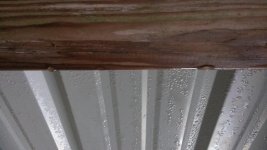
That's a good idea of insulation of the roof. Keeping an air gap to provide some air flow reducing problems with condensation.
I've built metal roofs in the past, most were roofs made from lumber and plywood with sheet metal roofing laid on top of the plywood with tar paper, which helps to reduce condensation.
Whats may be important is to have a ridge and side vents, so air is able to flow from e.g. gable end vents up and out the ridge vent. Some people install only roof vents or both ridge and roof vents. Roof vents are usually placed at different locations approx midway between the ridge and side of the roof or gutter.
Tentatively one only needs to install gable ends and a ridge vent, instead of building a false roof providing an air gap. When I built my tool shed I left a gap near the sides of the roof to allow air to also flow in or out. Whereas building a home this area would normally be sealed and closed off. Homes now a day are often better insulated so often install wall vents are installed just underneath the gutters. Along with, sometimes, gable, roof and ridge vents.
There's different techniques to install a ridge vent, the best method imo, would be to pull up the exiting metal roof near the ridge and install lateral support one or two inches thick, between the two gable ends on either side of the ridge to support a metal roof vent that will overlap on both sides of the ridge.