To avoid these ads, REGISTER NOW!

Restoring rusty old tools... citric acid?

n8n

Well-known member
Joined
Mar 11, 2014
Messages
3,607
Location
Curtis Bay, MD
So I tried something today... landlord had a bucket of rusty old tools and said I could pick what I wanted. One of the items was an old combination square. (yes, I know I can buy a new one for $10 or so. Just bear with me; I like playing with old stuff. There was other stuff in the bucket that made looking through it worthwhile, but I just wanted to play.) It's too cold to set up an e-tank, so I had the brilliant (?) idea to use some citric acid powder that SWMBO had laying around for some homemade beauty product or other. So I put a couple spoonfuls in a 2 qt. Pyrex measuring cup, and dunked in the scale from the combination square and also a little old DOE wrench that looked interesting. Used a SOS pad to scrub them clean after about 15 minutes or so, as well as to clean the rust off the machined surfaces of the body of the square, after dunking the pad in the acid, since I didn't want to submerge the body as it has both a level bubble and a little receptacle for a steel scribe.

This appears to work really, really well. As of right now I now have a functional combination square as well as a "Tomahawk" brand DOE wrench which I've never even heard of before, which makes me like it. Washed, dried, wiped down with an oily rag, all is good, with only some evidence of pitting to tell the tale of previous abuse.

Anyone have any opinions on citric acid vs. traditional vinegar? Anyone used it on cast iron? One of the other things I do is keep an eye out for rusty crusty old cast iron cookware that used to be nice back in the day and restoring it; I'm thinking that the citric acid would make a great final prep before seasoning rather than using vinegar which smells bad and isn't as strong - my theory, such that it is, is that less time in the acid bath is kinder to the metal than a longer soak, as it'll get the rust off quicker and not eat the metal. I don't want to use phosphoric on cookware as the coating it leaves behind would be a negative in that application, I'm shooting for fresh clean metal to immediately put some grease on it and burn it on in the oven. (I have in fact successfully restored quite a few vintage skillets, but the challenge that I have with my methods is the flash rust that occurs coming out of the e-tank; it appears to interfere with proper adhesion of the first coat of seasoning, so I typically wipe on/off some cheap vegetable shortening multiple times at about 200F or so until my wipe off rag doesn't show any brown or grey before cranking up the heat and burning it on.)

Anyone else ever experimented with this?
 
To avoid these ads, REGISTER NOW!

AL`

Well-known member
Joined
Sep 2, 2011
Messages
318
Location
Texas
Works even better at hot temperature with either vinegar or citric acid. I've heard, but not tried myself that cast iron skillets can be put in a hot fire and burn off the rust, then seasoned.
 
OP
N

n8n

Well-known member
Joined
Mar 11, 2014
Messages
3,607
Location
Curtis Bay, MD
I actually subscribed to a few cast iron cooking groups (there's a group for everything now isn't there?) just because I never really learned the proper method to season from my mom or grandma while I had the chance, the "throw it in a fire" method works, but is frowned upon these days for collectible stuff because if you get it too hot you can crack or warp it or change the metal so that it won't hold seasoning well. So I've heard; never tried it myself. I've been an e-tank evangelist for quite a while now since I started cleaning rusty car parts with it 20 years ago or so, it really is the kindest way to clean nasty metal.

In the specific case of cookware, a bucket full of lye gets all the black crustiness off to get it ready for the e-tank. just a 5 gallon bucket with a container of pure lye crystals dumped in it is about perfect, and can be reused over and over again.
 

AL`

Well-known member
Joined
Sep 2, 2011
Messages
318
Location
Texas
I actually subscribed to a few cast iron cooking groups (there's a group for everything now isn't there?) just because I never really learned the proper method to season from my mom or grandma while I had the chance, the "throw it in a fire" method works, but is frowned upon these days for collectible stuff because if you get it too hot you can crack or warp it or change the metal so that it won't hold seasoning well. So I've heard; never tried it myself. I've been an e-tank evangelist for quite a while now since I started cleaning rusty car parts with it 20 years ago or so, it really is the kindest way to clean nasty metal.

In the specific case of cookware, a bucket full of lye gets all the black crustiness off to get it ready for the e-tank. just a 5 gallon bucket with a container of pure lye crystals dumped in it is about perfect, and can be reused over and over again.
By "e-tank" you mean electrolysis?
 
OP
N

n8n

Well-known member
Joined
Mar 11, 2014
Messages
3,607
Location
Curtis Bay, MD
yes, electrolysis. I seem to have had a tank running pretty much constantly whenever it's above freezing because there's always rusty stuff that needs to be cleaned!
 

Y00PER

Well-known member
Joined
May 16, 2018
Messages
224
Location
Keweenaw Peninsula, MI
In the specific case of cookware, a bucket full of lye gets all the black crustiness off to get it ready for the e-tank. just a 5 gallon bucket with a container of pure lye crystals dumped in it is about perfect, and can be reused over and over again.

I have a 5" Birmingham Stove & Range Co. pan that I found at a garage sale a few years back that was covered in a thick layer of burned on black stuff. I was trying to clean it forever, before I decided to put it in the oven on the cleaning cycle. It came out amazing! I re-seasoned it and have been using it several times per week since
 

Bretny

Well-known member
Joined
Jul 31, 2017
Messages
3,918
Location
Dutchess county NY
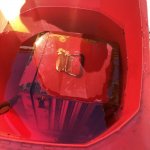
I just cleaned out a rusty metal gas tank with electrolysis last week. Was my first time doing anything like this, worked great and i alreaty had all the stuff. I used pool PH plus, 1/4 cup in 4gal. The pic is after 30min. I left it for 24hrs.
 

Attachments

  • 20190210_182112.jpg
    20190210_182112.jpg
    75.4 KB · Views: 195

6PTsocket

Well-known member
Joined
Mar 12, 2014
Messages
4,593
Check out Project Farm's YouTub video: "Rust Remover Showdown. Will Evapo-Rust prevail?"
A lot of rust removers or stabilizers are phosphoric acid; Naval Jelly for one. It turns iron oxide ( rust) into iron phosphate. It is black and not nearly a porus as rust so it acts as a protective barrier if you are painting over it. Muriatic is dilute Nitric acid. I think the strength of the acid is as least as important as what type you use. Vinegar is 5% acetic acid. Coke contains phosphoric acid but it must be fairly weak.
As far as using lye to strip a cast iron pan; lye is the main constituent of many oven cleaners. I found that Sams Club commercial brand, Member's Mark spray on BBQ grill cleaner quickly dissolves the worst burnt on deposits. You can see the white foam quickly turning brown. It comes as 4 pump bottles.

Sent from my SM-G900V using Tapatalk
 

tarmy

Well-known member
Joined
May 28, 2014
Messages
4,672
Location
Nor Cal
Go on that tool polishers thread in GJ and ask there...I bet there is a lot of experience there that could give you excellent advice...

It is called, “Before and After...a tool polishers heaven” in the fab sections...
 
Last edited:

mjeff87

Well-known member
Joined
Jan 22, 2010
Messages
2,745
Location
Richmond, VA
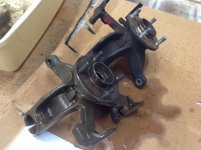
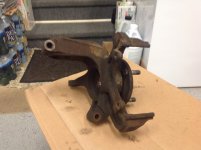
I've got a rusty steering knuckle/hub doing a vinegar soak right now (day 3). I'll pull it out tomorrow and rinse it off, then another one is going in for a soak. Here's the original, 16 years old and 213K miles on it. Once both are cleaned I'll press new hubs and bearings in them and put them back on the car.
 

Attachments

  • image.jpg
    image.jpg
    110.8 KB · Views: 114

mjeff87

Well-known member
Joined
Jan 22, 2010
Messages
2,745
Location
Richmond, VA
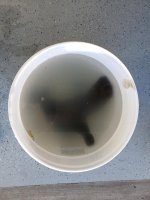
Here's what the bath bucket looked like yesterday afternoon. Lots of bubble action. Yes, it does kind of stink when you take the lid off:).
 

Attachments

  • image.jpg
    image.jpg
    133.2 KB · Views: 72

mjeff87

Well-known member
Joined
Jan 22, 2010
Messages
2,745
Location
Richmond, VA
And here's the part after about 72 hours of soak time. There's still a couple stubborn spots and I need to go pick up a tiny wire brush to get into some tight spots, so it's back in the bucket overnight again. It's about 95% back to bare metal right now.
 

Attachments

  • image.jpg
    image.jpg
    148.9 KB · Views: 118

mjeff87

Well-known member
Joined
Jan 22, 2010
Messages
2,745
Location
Richmond, VA
Thanks :beer: Not sure yet. It does start to flash rust after only about 5 minutes. I'll need to press out the hubs and bearings and install new ones so I'll probably hold off on painting them for now until I do the press work. I'm thinking about just soaking/brushing them with some old engine oil for now, then degreasing them before paint and reinstallation.
 

Mohawk Dave

Well-known member
Joined
Oct 7, 2012
Messages
5,068
Location
SoCal
I don't like vinegar simply because it stinks and will make a frikin mess (but it works).

I buy Citric Acid Powder, 5 lb bags, from Amazon and just add water.

I use Evaporust for delicate stuff like Starrett and what not, but use Citric Acid on anything that is not so delicate because it is so much cheaper than Evaporust. I especially use Citric Acid when I have to do stuff that takes 15 or 30 gallons of water because that would cost a fortune with Evaporust.

Citric Acid likes to flash rust, so often I'll rinse it afterwards then dunk it in Evaporust just to get that coating on it.

I have big *** containers from Home Depot I use for soaking and I also use the big mortar mixing tub...it's heavy duty and approx. 2x3 feet. I just did an Atlas Shaper Cast Iron Table in the mortar tub. I place stuff on bamboo skewers so it's raised off the bottom. I buy the skewers at the 99cent store.

Oh yea, then I use an immersion heater to heat the stuff and it really starts cranking on the process. My immersion heater is just an old one made for 5 gallon buckets that I bought at a yard sale. I take it up to 120 degrees F.
 
Last edited:

jimreed2160

Well-known member
Joined
Aug 7, 2016
Messages
3,589
Location
Tallahassee FL
I restore cast iron vintage handplanes and some of them are pretty rusty. Having restored HUNDREDS, I have picked up a few tips and techniques.

Citric acid--I used this for years. It works faster if you wash your item with Dawn first to make sure it is grease free. Also helps if you mix the acid with hot tap water. CAUTION--Remember your high school chemistry class and add the acid to the water. DO NOT ADD WATER TO ACID (unless you want an exothermic reaction). I use a metal scrub brush. Soak a few minutes and brush. Repeat. Usually takes about 5-10 minutes to knock off the rust. Then I wash with Dawn and lots of water, dry with paper towels, and place items into a warm (200 degree) oven for a few minutes to help water evaporate. While hot I rub down with 3 in 1 oil to prevent flash rust.

Evaporust--I graduated to this product because I can keep it in my shop and dunk items in at will. Usually an overnight soak works best. Unlike acid, EV stops when it eats all the rust so timing is not that important. After soaking, I wash with Dawn, apply heat, and 3 in 1 oil.
 

mjeff87

Well-known member
Joined
Jan 22, 2010
Messages
2,745
Location
Richmond, VA
Excellent tips Jim:beer:

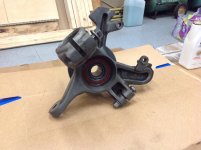
I'm posting on an iPad and for whatever reason GJ will only let me attach one pic per post, so I won't put up all the pics I have right now. I finished up the knuckle/hub this morning by pulling it out of the vinegar. I wire brushed off the last couple stubborn parts then rinsed it all in hot water. It started to flash rust almost immediately so I hosed it all down with WD40 and wiped it off. Then I painted it with used engine oil and let it sit for about an hour, rotating every so often so the oil could get into everywhere. Finally I wiped it all down with shop rags and wrapped it up in plastic bags to sit for a few days while I get the other side off and apply the same process. Once done, I'll press in new hubs/bearings (I wasn't worried about getting the hubs spotless because I'm replacing them, you can see in the pics), degrease everything, paint and reinstall both sides. Hopefully next weekend.

Getting an oil painting (after WD40 wiped off)
 

Attachments

  • image.jpg
    image.jpg
    122.1 KB · Views: 72
To avoid these ads, REGISTER NOW!

mjeff87

Well-known member
Joined
Jan 22, 2010
Messages
2,745
Location
Richmond, VA
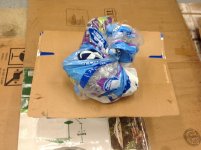
And finally, all wrapped up for storage

(sorry for the multiple posts....I can't figure out how to get multiple pics per post from an iPad here)
 

Attachments

  • image.jpg
    image.jpg
    140.1 KB · Views: 39

mjeff87

Well-known member
Joined
Jan 22, 2010
Messages
2,745
Location
Richmond, VA
Sure did. I did have to spend a few minutes with a wire brush on the parts but other than that it was mostly effortless.

I got the other side off yesterday (that was a story all to itself.....it involved air hammers, impacts, a crowbar and a can of PB Blaster). It's gonna soak most of this week in a new batch of vinegar.
 

Attachments

  • 20190224_161138.jpg
    20190224_161138.jpg
    149.3 KB · Views: 34
  • 20190224_161149.jpg
    20190224_161149.jpg
    150.5 KB · Views: 30
  • 20190224_161130.jpg
    20190224_161130.jpg
    147.8 KB · Views: 31
  • 20190224_161945.jpg
    20190224_161945.jpg
    99.4 KB · Views: 27

Locator

Well-known member
Joined
Sep 16, 2015
Messages
47
...Oh yea, then I use an immersion heater to heat the stuff and it really starts cranking on the process. My immersion heater is just an old one made for 5 gallon buckets that I bought at a yard sale. I take it up to 120 degrees F.

Does the acid not destroy the immersion heater?
 

Locator

Well-known member
Joined
Sep 16, 2015
Messages
47
If something needs to be painted after removing the rust (such as an old vise), it sounds like it's going to start flash rusting before you can dry it and then start painting? Is there something you can quickly paint it with or dip it, to prevent rust, but not keep the paint from sticking?
 

jimreed2160

Well-known member
Joined
Aug 7, 2016
Messages
3,589
Location
Tallahassee FL
If something needs to be painted after removing the rust (such as an old vise), it sounds like it's going to start flash rusting before you can dry it and then start painting? Is there something you can quickly paint it with or dip it, to prevent rust, but not keep the paint from sticking?

When I de-rust a vise I break it down into parts. Each one gets dried with paper towels and heated in an oven. Yes, there is a little flash rusting but usually VERY little. Next step is to immediately coat the screws and such with 3 in 1 oil. The castings get a coat of BLO at 40% boiled linseed oil and 60% turpentine. Brush it on liberally and let it sit for a few weeks. Warm is best--the BLO gets sluggish below 50 degrees.

After a day or so, wipe off the excess oil so it does not create drips. It is dry when it is not sticky. And the best part is BLO makes an excellent surface for painting. Most old style paints use a linseed oil base anyway.
 

giants

Banned
Joined
Feb 15, 2019
Messages
605
Location
California
Sure did. I did have to spend a few minutes with a wire brush on the parts but other than that it was mostly effortless.

I got the other side off yesterday (that was a story all to itself.....it involved air hammers, impacts, a crowbar and a can of PB Blaster). It's gonna soak most of this week in a new batch of vinegar.

Nice work, mjeff87!

For how long do you typically soak rusted parts in vinegar?
 

stonesfan68

Well-known member
Joined
Apr 19, 2012
Messages
2,758
Location
Houston, TX
Something else that works really well is to put the rusty object into a ZipLock bag and fill the bag with Evaporust. Then put the bag into an ultrasonic cleaner that is filled with water. A few cycles of heat and vibration really get the rust removed in a hurry. This is an excellent method for small hardware and tools. I've cleaned up several pairs of ViseGrips this way.
 

Coach James

Well-known member
Joined
Jun 24, 2005
Messages
8,933
Location
Sandhills of North Carolina
A lot of rust removers or stabilizers are phosphoric acid; Naval Jelly for one. It turns iron oxide ( rust) into iron phosphate. It is black and not nearly a porus as rust so it acts as a protective barrier if you are painting over it. Muriatic is dilute Nitric acid. I think the strength of the acid is as least as important as what type you use. Vinegar is 5% acetic acid. Coke contains phosphoric acid but it must be fairly weak.
As far as using lye to strip a cast iron pan; lye is the main constituent of many oven cleaners. I found that Sams Club commercial brand, Member's Mark spray on BBQ grill cleaner quickly dissolves the worst burnt on deposits. You can see the white foam quickly turning brown. It comes as 4 pump bottles.

Sent from my SM-G900V using Tapatalk

Muriatic is actually acid hydrochloric acid.

Coach
 

Mohawk Dave

Well-known member
Joined
Oct 7, 2012
Messages
5,068
Location
SoCal
Does the acid not destroy the immersion heater?

No...it's metal...so it just cleans it sparkly clean.

lol...I just googled it and learned it's actually a Char-Broil 120-Watt Electric Charcoal Starter...

13 bucks and kicks ***. https://www.amazon.com/dp/B06W5VR3ZF/?tag=atomicindus08-20

I can't stress it enough...60F soaking vs 100F+ soaking is drastically faster....maybe 5 to 10x faster on rust removal. On big nasty stuff we're talking hours for what used to take a full day or two.
 

Attachments

  • 047362848116.jpg
    047362848116.jpg
    25.2 KB · Views: 14
Last edited:

pfaustus

Well-known member
Joined
Feb 6, 2016
Messages
361
When I de-rust a vise … The castings get a coat of BLO at 40% boiled linseed oil and 60% turpentine. Brush it on liberally and let it sit for a few weeks.


Why the turps? BLO is basically paint without pigment. Turps thins it, which is usually for penetration into, say, wood. But nothing is going to penetrate cast iron. Brush it on, wipe off the excess a little later.
 

jimreed2160

Well-known member
Joined
Aug 7, 2016
Messages
3,589
Location
Tallahassee FL
Why the turps? BLO is basically paint without pigment. Turps thins it, which is usually for penetration into, say, wood. But nothing is going to penetrate cast iron. Brush it on, wipe off the excess a little later.

You are correct--turps is my personal preference. I like to thin the BLO because I am lazy. In my experience the BLO is too thick and dries with big drips on the underside unless someone is diligent about wiping off the excess. Thinning expands the time frame for wipedown. In addition, I would rather have two thin coats in lieu of one thick one. Again, personal preference.
 

Elvisidal

Well-known member
Joined
Nov 29, 2018
Messages
92
Location
Australia
So I tried something today... landlord had a bucket of rusty old tools and said I could pick what I wanted. One of the items was an old combination square. (yes, I know I can buy a new one for $10 or so. Just bear with me; I like playing with old stuff. There was other stuff in the bucket that made looking through it worthwhile, but I just wanted to play.) It's too cold to set up an e-tank, so I had the brilliant (?) idea to use some citric acid powder that SWMBO had laying around for some homemade beauty product or other. So I put a couple spoonfuls in a 2 qt. Pyrex measuring cup, and dunked in the scale from the combination square and also a little old DOE wrench that looked interesting. Used a SOS pad to scrub them clean after about 15 minutes or so, as well as to clean the rust off the machined surfaces of the body of the square, after dunking the pad in the acid, since I didn't want to submerge the body as it has both a level bubble and a little receptacle for a steel scribe.

This appears to work really, really well. As of right now I now have a functional combination square as well as a "Tomahawk" brand DOE wrench which I've never even heard of before, which makes me like it. Washed, dried, wiped down with an oily rag, all is good, with only some evidence of pitting to tell the tale of previous abuse.

Anyone have any opinions on citric acid vs. traditional vinegar? Anyone used it on cast iron? One of the other things I do is keep an eye out for rusty crusty old cast iron cookware that used to be nice back in the day and restoring it; I'm thinking that the citric acid would make a great final prep before seasoning rather than using vinegar which smells bad and isn't as strong - my theory, such that it is, is that less time in the acid bath is kinder to the metal than a longer soak, as it'll get the rust off quicker and not eat the metal. I don't want to use phosphoric on cookware as the coating it leaves behind would be a negative in that application, I'm shooting for fresh clean metal to immediately put some grease on it and burn it on in the oven. (I have in fact successfully restored quite a few vintage skillets, but the challenge that I have with my methods is the flash rust that occurs coming out of the e-tank; it appears to interfere with proper adhesion of the first coat of seasoning, so I typically wipe on/off some cheap vegetable shortening multiple times at about 200F or so until my wipe off rag doesn't show any brown or grey before cranking up the heat and burning it on.)

Anyone else ever experimented with this?
Citric acid works quicker and the more you use quicker it works .... but it WILL eat stuff.
I find vinegar + salt is good for light rust removal degreasing clean
Citric acid when I need to do some serious work

After you use citric acid soak it in baking soda & water then dry it as quick as possible.flash rust can some off with a quick hit with the steel wool. Hair dryer or heat gun and be ready with your grape seed oil to wipe on.
If it doesn’t stick are you doing it too thick to start with?


Works fine on cast iron. I like how the flash went off and showed me I missed a few spots
 

Attachments

  • E3455BDD-9057-419D-938A-44F309BB0A67.jpg
    E3455BDD-9057-419D-938A-44F309BB0A67.jpg
    151.5 KB · Views: 17
  • DA8F83E3-B91D-4197-B1B1-AC7707A9B52F.jpg
    DA8F83E3-B91D-4197-B1B1-AC7707A9B52F.jpg
    143.2 KB · Views: 16
Last edited:

bryanrj

Well-known member
Joined
Mar 2, 2011
Messages
216
Location
Easton, Pa and Ft Walton Bch, Fl
Same as Mohawk. Bought a bag off Amazon. Mix it in gallon milk containers, hot water to dissolve quickly. Use a small paper funnel to make it easy to get three tablespoons of citric acid into the jug. Works great, and as has been said, much cheaper than Evaporust.
 

Elvisidal

Well-known member
Joined
Nov 29, 2018
Messages
92
Location
Australia
Lot of times on “rust removal” products it’ll say something like ‘active ingredient 5% citric acid’
Pool cleaning places are good for it bulk

I use it in my garbage bin :bounce:
 

Attachments

  • 4ABD08D1-77A2-4C06-8734-D5EE9574502C.jpg
    4ABD08D1-77A2-4C06-8734-D5EE9574502C.jpg
    82.6 KB · Views: 18
  • Like
Reactions: AL`

txlonghorn1989

Well-known member
Joined
Feb 27, 2017
Messages
2,786
...

Evaporust--I graduated to this product because I can keep it in my shop and dunk items in at will. Usually an overnight soak works best. Unlike acid, EV stops when it eats all the rust so timing is not that important. After soaking, I wash with Dawn, apply heat, and 3 in 1 oil.

Jim Why aren't you concerned about the oil on your plane transferring to your wood?
 
To avoid these ads, REGISTER NOW!
Top Bottom