n8n
Well-known member
So I tried something today... landlord had a bucket of rusty old tools and said I could pick what I wanted. One of the items was an old combination square. (yes, I know I can buy a new one for $10 or so. Just bear with me; I like playing with old stuff. There was other stuff in the bucket that made looking through it worthwhile, but I just wanted to play.) It's too cold to set up an e-tank, so I had the brilliant (?) idea to use some citric acid powder that SWMBO had laying around for some homemade beauty product or other. So I put a couple spoonfuls in a 2 qt. Pyrex measuring cup, and dunked in the scale from the combination square and also a little old DOE wrench that looked interesting. Used a SOS pad to scrub them clean after about 15 minutes or so, as well as to clean the rust off the machined surfaces of the body of the square, after dunking the pad in the acid, since I didn't want to submerge the body as it has both a level bubble and a little receptacle for a steel scribe.
This appears to work really, really well. As of right now I now have a functional combination square as well as a "Tomahawk" brand DOE wrench which I've never even heard of before, which makes me like it. Washed, dried, wiped down with an oily rag, all is good, with only some evidence of pitting to tell the tale of previous abuse.
Anyone have any opinions on citric acid vs. traditional vinegar? Anyone used it on cast iron? One of the other things I do is keep an eye out for rusty crusty old cast iron cookware that used to be nice back in the day and restoring it; I'm thinking that the citric acid would make a great final prep before seasoning rather than using vinegar which smells bad and isn't as strong - my theory, such that it is, is that less time in the acid bath is kinder to the metal than a longer soak, as it'll get the rust off quicker and not eat the metal. I don't want to use phosphoric on cookware as the coating it leaves behind would be a negative in that application, I'm shooting for fresh clean metal to immediately put some grease on it and burn it on in the oven. (I have in fact successfully restored quite a few vintage skillets, but the challenge that I have with my methods is the flash rust that occurs coming out of the e-tank; it appears to interfere with proper adhesion of the first coat of seasoning, so I typically wipe on/off some cheap vegetable shortening multiple times at about 200F or so until my wipe off rag doesn't show any brown or grey before cranking up the heat and burning it on.)
Anyone else ever experimented with this?
This appears to work really, really well. As of right now I now have a functional combination square as well as a "Tomahawk" brand DOE wrench which I've never even heard of before, which makes me like it. Washed, dried, wiped down with an oily rag, all is good, with only some evidence of pitting to tell the tale of previous abuse.
Anyone have any opinions on citric acid vs. traditional vinegar? Anyone used it on cast iron? One of the other things I do is keep an eye out for rusty crusty old cast iron cookware that used to be nice back in the day and restoring it; I'm thinking that the citric acid would make a great final prep before seasoning rather than using vinegar which smells bad and isn't as strong - my theory, such that it is, is that less time in the acid bath is kinder to the metal than a longer soak, as it'll get the rust off quicker and not eat the metal. I don't want to use phosphoric on cookware as the coating it leaves behind would be a negative in that application, I'm shooting for fresh clean metal to immediately put some grease on it and burn it on in the oven. (I have in fact successfully restored quite a few vintage skillets, but the challenge that I have with my methods is the flash rust that occurs coming out of the e-tank; it appears to interfere with proper adhesion of the first coat of seasoning, so I typically wipe on/off some cheap vegetable shortening multiple times at about 200F or so until my wipe off rag doesn't show any brown or grey before cranking up the heat and burning it on.)
Anyone else ever experimented with this?

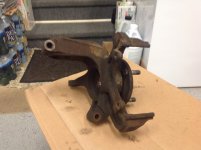
 .
.


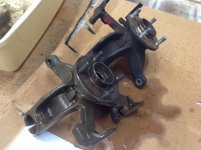
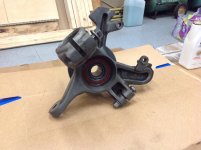
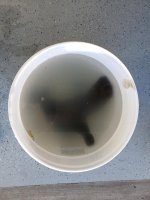
 Not sure yet. It does start to flash rust after only about 5 minutes. I'll need to press out the hubs and bearings and install new ones so I'll probably hold off on painting them for now until I do the press work. I'm thinking about just soaking/brushing them with some old engine oil for now, then degreasing them before paint and reinstallation.