To avoid these ads, REGISTER NOW!

Roadside Electrical Testing

Zewnten

Well-known member
Joined
Jun 11, 2017
Messages
1,839
What would you guys prefer in your roadside kit for testing electrical problems.
I'm debating between a test light with a long ground lead, a multimeter with jumper leads, or a power probe?

The issue I see with the test light is unless the lead reaches the battery sometimes the issue is where I've decided to ground, the multimeter does more but the battery can die, and the power probe is a bit expensive to just throw in bag for just in case.
 
To avoid these ads, REGISTER NOW!

seanb02

Well-known member
Joined
Apr 11, 2017
Messages
722
Location
The Farm
How in depth are you really going to get in testing on the side of the road? Multimeter is the best all around tool for the job, however the cost of having a good one for just in case issues isn't really the best option.

Test light will probably be the simplest way to go, just make your own lead for it so it is long enough to get to a good ground. Don't buy the cheapest one that the bulb will be bad on after bouncing around in a trunk for years before you finally need to use it.
 

unslow1

Well-known member
Joined
Mar 3, 2012
Messages
7,880
Location
Illinois
That's why I keep the Harbor Freight multimeters in the the trunks of each vehicle. No way am I leaving a Power Probe in the trunk. In the enclosed trailers I also keep test lights.
 

dogdog

Well-known member
Joined
Nov 15, 2011
Messages
12,711
I think a cheap $20 multimeter with a good set of test leads is all you needed... it's how you used your tool...not the Free HF ones but those $10 $20 ones would be fine... how much testing you really think you can do roadside ? other than test voltage to starter/test voltage on battery / test blinker fluids / test alternator exciter wire and output/.....
 

californiaHank

Well-known member
Joined
Nov 20, 2015
Messages
487
I keep a cheap clamp meter that does DC current in the car. Can use it to check alternator/battery/charging as well as working as a general purpose dmm.
 
OP
Z

Zewnten

Well-known member
Joined
Jun 11, 2017
Messages
1,839
Not planning on any serious diagnostics roadside, so the multi meter is over kill but probably the most economical option.
 

fasteddie

Well-known member
Joined
May 25, 2018
Messages
697
Location
NJ
Cheap test light. Anything with a battery is guaranteed to be dead when/if you ever need it.
 

Shadowdog500

Well-known member
Joined
Dec 7, 2009
Messages
9,872
Location
Down the shore
An analog volt/amp meter does not have a battery, it can sit in your car for decades and still work. A test light will also sit in a car for decades with no problem.

What do you plan to diagnose on the side of the road??

Chris
 

CoogarXR

Well-known member
Joined
Jan 11, 2016
Messages
6,867
Location
Ohio
I have a cheap multimeter in my roadside toolbox, along with a test light and a spark plug neon tester. I honestly have used the neon tester the most on the road, diagnosing no-start conditions with coils and ignition modules. I also keep a couple alligator clip leads in there too, just in case I need longer reach.

Contrary to the nay-sayers, I think a HF cheapie meter is fine. I have one that looks identical to the HF model, but it's some other generic brand. I have used it many times in a pinch. Is it dead-nuts accurate? Probably not, but it's been good enough each time. I think I have replaced the 9v battery maybe twice in the 15-20 years I've had it. And that's with many of those years sitting in a vehicle outside in the Ohio extremes.

Don't put too much thought into it. A small DMM and a test lamp don't take up that much space.
 

SkinnyG

Well-known member
Joined
Jan 27, 2011
Messages
749
Location
Orange Park, FL
If the diagnosis requires any more than a good test light, then the repair likely won't be happening on the roadside either.
 

bwringer

Well-known member
Joined
Jan 1, 2013
Messages
10,318
Location
Indianapolis
Suprising it only took four posts to get to "Fluke".


Anyway, I carry a compact multimeter on my motorcycle, plus a very small test light and two or three test leads.

Yes, I've needed both at roadside in different situations, and yes, I've effected repairs at the roadside using these to diagnose.

A test light is very handy, but you sometimes you need to check continuity or you don't have power on a circuit, or you don't want to turn the key on and risk drawing the battery down any more. Sometimes you need an actual voltage or resistance reading.

And sometimes it's really hard to see the meter, so the test light is the best option for things like checking the operation of a brake switch. (Or you might use the continuity beeper on the meter.)

I also carry a few different Posi-Lock connectors, tape, and a few possibly useful terminals to be used in improvised repairs.

As far as specifics, this Amprobe PM51A is nice and has a large display, but you need to come up with something to protect it, a little sleeve or case or whatever:
https://www.amprobe.com/product/pm51a/

I also have this "Allsosun" compact multimeter that has its own case. Works great.
https://www.amazon.com/dp/B013JGET4O/?tag=atomicindus08-20


And yes, I replace the batteries in the meters every spring. They both have protection against leaving the switch on.


How much all this is potentially needed in modern four-wheeled vehicles... probably not much. But I regularly ride vintage motorcycles to places far away, so being able to do roadside diagnosis and repair is necessary and has happened more than once.
 
Last edited:
OP
Z

Zewnten

Well-known member
Joined
Jun 11, 2017
Messages
1,839
Not planning on any indepth diag that's why I didn't see much point in the multimeter. In the past I have had a mouse chewed wire finally fail while driving (not sure when they had the time as it was a daily driver) and the fact that I had my power probe in the car from loaning it to friend got me home. Can't say I've ever had a catastrophic failure on the road like some here, it's always been a sensor or connector
 
To avoid these ads, REGISTER NOW!

ovilla

Well-known member
Joined
Dec 18, 2005
Messages
2,342
Location
Plainfield, IL
Definitely carry a multimeter in your car. My van broke down as we were visiting DC a few years ago and I was able to diagnose things easily with the DMM in my tool bag. I had actually made it to a parking garage so I told my family to go check out some sights while I fixed our van. I removed the battery and alternator and took a cab to AutoZone. They charged my battery while I grabbed some lunch nearby and then I came back and took another cab back to the parking garage with my fully charged battery and a new alternator. Fixed the van and then picked up the family at a museum. Yes it was a bit inconvenient but no different than if the breakdown had happened close to home.
 

mfewtrail

Well-known member
Joined
Apr 14, 2011
Messages
675
I have a mulitmeter, test light, jumper wires/extensions, fused jumpers, terminals, a common spare relay, fuses, backprobes, scan tool, etc. in my toolbag. I will diagnose some stuff in a parking lot, but I'm not really messing around with anything literally on the side of the road unless absolutely necessary(flat tire). For my personal vehicles, I've never really needed anything from my toolkit, but I have used it cars for other people. Having the toolkit comes in handy not just for side of the road stuff, but for those times when you're visiting someone and they ask you to take a look at something. That's probably the most common use I get out of my road tool kit...
 

dogdog

Well-known member
Joined
Nov 15, 2011
Messages
12,711
LOL some of you people should have just put an engine inside your snap-on tool box and drive it with all the tools inside instead.
 

Wrench97

Well-known member
Joined
Jun 23, 2018
Messages
12,147
Location
Southeastern Pa
I tried that but the fuel mileage was so bad I figured I could just buy a new pick up every 2 years and eliminate break downs as well as save money.......................


0086868A.JPG
 

2ndGearRubber

Well-known member
Joined
Mar 24, 2014
Messages
14,185
Location
Pittsburgh
I have a mulitmeter, test light, jumper wires/extensions, fused jumpers, terminals, a common spare relay, fuses, backprobes, scan tool, etc. in my toolbag. I will diagnose some stuff in a parking lot, but I'm not really messing around with anything literally on the side of the road unless absolutely necessary(flat tire). For my personal vehicles, I've never really needed anything from my toolkit, but I have used it cars for other people. Having the toolkit comes in handy not just for side of the road stuff, but for those times when you're visiting someone and they ask you to take a look at something. That's probably the most common use I get out of my road tool kit...


I build my mobile-diag bag as needed. Both scanners, scope, lots of leads, break outs, etc. I don't do much side work now that my buddy left the used car dealer he was working for. I spent a decent number of "days off" down there catching them up.


For broken down stuff on the side of the road, IF I'll look at it there as it sits, test light and cheap-o meter. The main purpose of this, is to make a fairly definitive call for price estimate, and figure out where it's getting towed.
 

Stuart in MN

Well-known member
Joined
Sep 8, 2005
Messages
23,157
Location
Minneapolis
A set of LONG test leads can be handy, long enough so you can clip one to something at the rear of the car while holding the meter in your hand at the front of the car. Make them yourself with alligator clips and banana plugs to match your meter.
 

mfewtrail

Well-known member
Joined
Apr 14, 2011
Messages
675
LOL some of you people should have just put an engine inside your snap-on tool box and drive it with all the tools inside instead.


I just carry this one fix-all "tool" instead. :beer:
 

Attachments

  • 51XlhWcViUL._SX425_.jpg
    51XlhWcViUL._SX425_.jpg
    13.8 KB · Views: 27

Shadowdog500

Well-known member
Joined
Dec 7, 2009
Messages
9,872
Location
Down the shore

jgromada

Well-known member
Joined
Oct 13, 2011
Messages
1,017
Location
Maryland (between DC & Balt)
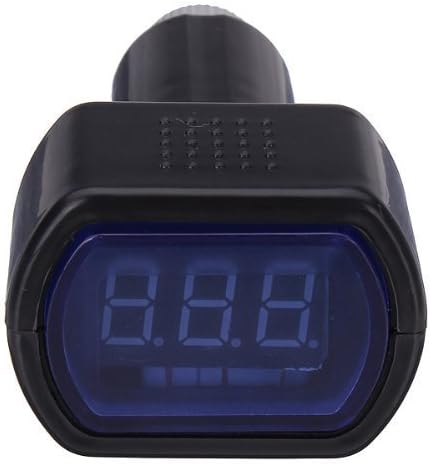
Most electrical problems in a car center on the battery or charging system. To keep an eye on things I bought a bunch of these cheap cigarette lighter voltmeters.

41ViIeW%2BuRL._AC_.jpg


These are good, anyone in the family can use them. If there is an issue first thing plug this thing in, what is the voltage reading? What is the voltage doing when you try and crank it over? All for around $7 or so.

Buy a couple, you won't regret it.
 
Last edited:
OP
Z

Zewnten

Well-known member
Joined
Jun 11, 2017
Messages
1,839
I do have printed copies of the wiring diagrams in the glove box and saved on my phone haha. I like that cigarette lighter voltmeter.
 

Two Speed

Well-known member
Joined
Sep 20, 2014
Messages
1,287
Location
Ontario Canada
I've used a DMM more than once when disabled somewhere. Prior knowledge of the vehicle and certain common electrical issues definately plays a part in it and using the dmm to confirm what I suspected.
I have also used a glove box lamp, and the test leads from a tach dwell meter to rig up a tester, and eventaully using the tach dwell leads to power the ignition and get me home.
 
To avoid these ads, REGISTER NOW!
Top Bottom