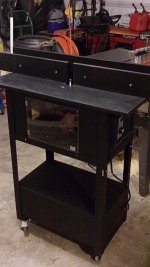
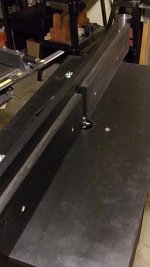
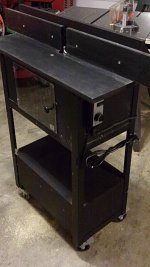
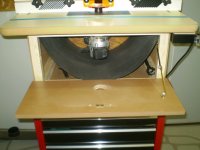
Glad you like it.....The build is really quite easy. I guesstimated a lot of my measurements and specs by looking at the ones sold in the big box stores. Using those as examples answered a lot of questions I had as I made it.
Start with a top. I used good old 3/4" plywood because I had it lying around.......in fact, most of it was extra wood just lying around. Your router table top needs to be perfectly flat and solid. There's a number of ways to do this, including buying prefab ones, or making your own. Mine is simply one piece. If I was going to go the extra distance, I'd glue together at least two pieces of 3/4" mdf, and then plan on topping it with some melamine for a super slick surface.....I skipped all that because I was building on the cheap and I was confident in the flatness of my top.
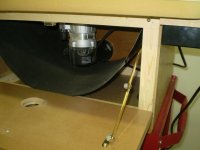
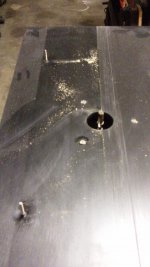
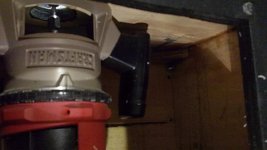
You'll need to mount your router to this top. My router is a standard 1/4" collet Cman router. My research told me you can spend a lot on mounting a router to a table......and if you are already working with a $400 top, you probably should. But, if you are building on the cheap, here's how: I located a hole, I think it was about 1 1/2" or so, in the middle of the top. Next, figure out where you need to drill the three holes to mount the router. Then countersink these from the top. You'll need to head to the hardware store to get flat-topped machine screws of the proper length. More advanced methods use plates you can drop in to accommodate different setups.....I'm not more advanced.

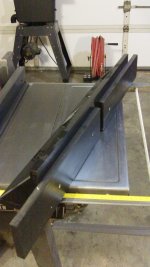
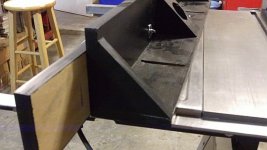
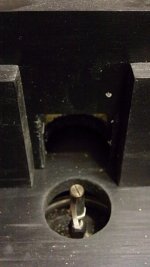
You need a fence. Again, you can spend more hundreds on this......if you want, but at this point, following my plan has you committed to an air of cheapness that is permeating your shop. A fence does need to be rigid. I made mine with more extra plywood......mdf might be a better bet. It's easy, make a big "L" the width of your top and brace it thoroughly. Cut a space in there for the bit to spin in and build a box over the back with a hole sized for your favorite vacuum attachment. Again, researching the ones at the stores can aid in planning the moving fences. Bottom line, recess some bolts into those fence faces to keep a smooth face. I used simple wingnuts and washers to make my fence totally adjustable. Want to change the profile on the outfeeding fence? Just add some washers between it and the primary fence.
Put lots of paint or clear coat on these parts, sand them super smooth, and then rub them down with some Johnson's paste floor wax.
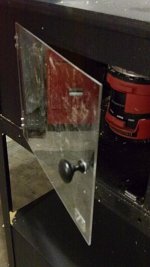
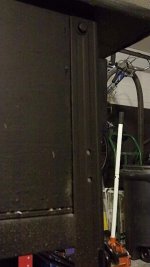
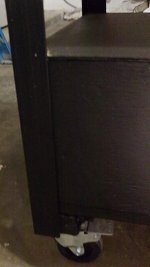
You can make your cabinet however you like. Consider height. Make sure it will accommodate your router. Cut an opening in the front of sufficient size that you can reach in there and manipulate the collet to change bits. Then you can get fancy and mount a clear lexan door.
That speed controller from HF was slick at only $18. The next big improvement was the addition of 140 pounds of concrete to make it more solid.
Total cost excluding the router:
Plywood: Free
Bedframe: Free
Concrete: $8
Lexan window: $4
HF speed controller: $18
Paint: really? who doesn't stock black paint in their shop anyway
A few bucks in hardware.
Let me know if you need any close-up shots of anything.