To avoid these ads, REGISTER NOW!

Rust prevention, hand tools

Samuel D

Well-known member
Joined
Apr 9, 2019
Messages
638
Even though my tools are stored in a warm and dry place, some of them easily get rusty.

The worst examples may be some of my punches, chisels, and files, but even my Wera Allen keys are rusting.

How do you avoid this?

What do machinists do with tools that must not rust at all?

I had some Swarfega Duck Oil that seemed to help a lot, but it’s hard to find where I now live (The Netherlands) and maybe you know of something even better?

Oiling is a pretty big job if you need to do it regularly and have any amount of tools. Not a big problem for me, but I’m wondering what people with multiple huge boxes of tools do.
 
To avoid these ads, REGISTER NOW!

Dave455

Well-known member
Joined
Mar 19, 2013
Messages
5,829
Location
Sussex, England
First - store your tools in some sort of tool box, don’t leave them out.

Second, when you’re done, wipe them down with a rag and some WD-40 or similar (Duck oil is great). This cleans the grime and leaves a thin protective layer.

If you do this I can pretty much guarantee you won’t get rust.

Cheap tools with crappy steel will rust whatever you do.

If you have tools you don’t use often, wipe down as above and store in a sealed plastic box.

I have 3 generations of tools, many stored in a detached garage, and don’t have any issues.
 

RTM

Well-known member
Joined
May 13, 2019
Messages
13,231
Location
SF Bay Area
Here near the beach, even good quality steel tools rust, due to highly salty fog permeating everything.

First key is to wipe your sweaty fingerprints off, it is so disheartening to see your own fingerprints in rust on the side of a new plane when pulled back out to use.

I keep all my better tools closed up in boxes, with VCI emitters inside. (As a woodworking fan, oiling my tools isn't an option.). Boeshield does not work well iny opinion nor does Camelia oil, often touted.

VCI is a Vapor Corrosion Inhibitor, commonly seen in paper form wrapping a new tool from the vendor, but is also available as a foam pad, or a cup, which can be mounted to the wall of the tool chest. A common brand here is Bullfrog, not sure what is available to you easily.
 

bigfunwmu

Well-known member
Joined
Oct 26, 2013
Messages
411
Location
S. MN
Throw VCI tabs in the drawers with the stuff thats rusts. They're cheap and make a large difference vs humidity. Not sure if they can beat salty humidity though.
 

Dave455

Well-known member
Joined
Mar 19, 2013
Messages
5,829
Location
Sussex, England
Ah, good point. That’s probably my problem too. I live near the sea. You should see the bicycles around here.
Ahh, salty air is very corrosive, so that makes life very difficult.

I resolved many years ago, never to live near the sea, or buy a car from anyone who had!
 

toolenthusiast

Well-known member
Joined
Jan 21, 2017
Messages
723
Second, when you’re done, wipe them down with a rag and some WD-40 or similar (Duck oil is great). This cleans the grime and leaves a thin protective layer.
I’ve stopped recommending WD-40 purely because a million people will jump in the thread to tell me I’m wrong… “WD-40 isn’t oil!”… “WD-40 will just evaporate!”… “Don’t use WD-40, use a light oil!” (What the actual eff :headscrat )

I’ve never had anything rust inside a toolbox, including bare steel tools such as punches and chisels, if they were cleaned with WD-40 before winter.
 

Dave455

Well-known member
Joined
Mar 19, 2013
Messages
5,829
Location
Sussex, England
Ah, good point. That’s probably my problem too. I live near the sea. You should see the bicycles around here.
One option, and it’s not an easy one, is to consider some stainless steel tools, at least for your most used.

Wiha, Wera and Elora make stainless screwdrivers, and screwdriver bits.
53DB45D6-A48B-4719-850D-DCFDFE3AA571.jpeg

Tsunoda offer stainless pliers.
3B19C34B-69FC-47A9-BBB3-4E2092B92B9F.jpeg

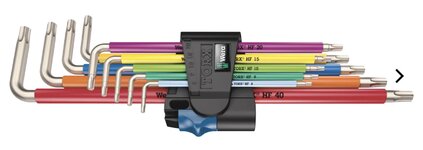
Wera offer most of their hex and Torx keys in stainless. I’ve just bought a set of the latter for my road box.
CE6C185F-67B7-400B-AD52-36654104D541.jpeg

Elora make stainless wrenches. Fasten your seatbelt before you ask the price though.
E9D8FBE2-97B6-4F18-91D3-01D57356389C.jpeg

and Hazet make stainless sockets and accessories in 1/4” drive.CC24E754-A6B5-4120-95DE-A2BC2BB35DDF.jpeg
 
Last edited:

Dave455

Well-known member
Joined
Mar 19, 2013
Messages
5,829
Location
Sussex, England
I’ve stopped recommending WD-40 purely because a million people will jump in the thread to tell me I’m wrong… “WD-40 isn’t oil!”… “WD-40 will just evaporate!”… “Don’t use WD-40, use a light oil!” (What the actual eff :headscrat )

I’ve never had anything rust inside a toolbox, including bare steel tools such as punches and chisels, if they were cleaned with WD-40 before winter.
Same as me.

I find WD-40 works great, It cleans grease and grime. Even the folks who say it isn’t a lubricant (it is) have to admit it displaces water, and it leaves a protective film.

I must admit, I‘ve been using Action Can AC-90 for about a decade. (British equivalent of WD-40). It works as well, or better, and it’s half the price (for me).
 

seber

Well-known member
Joined
May 31, 2016
Messages
4,205
Location
Deep East Tx.
I’ve stopped recommending WD-40 purely because a million people will jump in the thread to tell me I’m wrong… “WD-40 isn’t oil!”… “WD-40 will just evaporate!”… “Don’t use WD-40, use a light oil!” (What the actual eff :headscrat )

I’ve never had anything rust inside a toolbox, including bare steel tools such as punches and chisels, if they were cleaned with WD-40 before winter.
WD-40 is very effective at preventing rust for short duration. It will evaporate over time and lose it's protection unless it is so thick that it leaves a sticky nasty film behind. For longer term storage, six months or more, I prefer mineral oil. No sticky film and no time limit. For woodworking tools I use automotive wax. One thing I would warn about. Hydraulic oil is hygroscopic. It will draw water out of the air and encourage rust.
 

toolenthusiast

Well-known member
Joined
Jan 21, 2017
Messages
723
It will evaporate over time and lose it's protection unless it is so thick that it leaves a sticky nasty film behind.
See? Every thread someone’s gonna come in and say that WD-40 magically disappears.

The film that gets left behind might be invisibly thin but it still exists. Gravity exists. Radon exists. UV rays exists.

The film that remains behind after the volatile solvents have evaporated is almost waxy:

IMG_1144.jpeg
 

Hannahranga

Well-known member
Joined
Mar 8, 2023
Messages
217
Mostly cos I prefer how it smells over wd40 I use inox on my tools. I'd expect anything lanolin based to be fairly similar.
 

yhprum

Well-known member
Joined
Jul 27, 2006
Messages
1,398
Location
Brisbane Australia
An old time machinist trick is to put a piece of camphor in with your tools. It evaporates over time, leaving a slight oil like residue on everything that resists rust. I live in a warm humid area by the beach and it works for me. I get mine at the big box store or supermarket in the control area as it is used. I break the plastic container open and drop one or two pieces in a drawer and it lasts a few month before it finally disappears.
 

matthew

Well-known member
Joined
Dec 4, 2009
Messages
1,347
Stainless is great, but chlorides (like sea salt) can cause pitting corrosion.

I’m a long way from the sea, but do have temperature swings that can cause condensation leading to rust. I’d say avoid warmer air getting to colder tools. Meaning heat is more important during spring warmup than the rest of the year. And paste wax or Fluid Film.
 

TdK71

Well-known member
Joined
Apr 10, 2014
Messages
69
I save desiccant packs and toss them into the drawers of my tool box. Once or twice a year I pull them out and dry them in the oven, then back in the drawer they go.
 

pizza

Well-known member
Joined
Dec 4, 2019
Messages
1,739
Location
Midwest, USA


pharmacy grade USP mineral oil (refined to the point of being nontoxic).

i'm on the hunt for the 'perfect' tool lubricant as well. ideally something that works well and is nontoxic. i don't want to worry about toxic **** on my skin.

my wish list is:
  • as close as possible to nontoxic (safe to have residue on hands, ok to eat after working if you forget to wash your hands)
  • not gross to touch (not goopy)
  • not too oily
  • doesn't attract dirt
  • lubes well (in light use)
  • fights corrosion (are there nontoxic corrosion inhibitors?)
  • doesn't need frequent application
  • safe for all metals and most or all polymers
  • cheap
  • readily available
  • doesn't oxidize/gum up over time

i know there's probably no option that completely satisfies all those specs.

as a start, i've used plain old USP mineral oil. safe for all metals and most plastics, nontoxic, dirt cheap.

i've also used starrett 1620 Tool and Instrument Oil, which may just be severely overpriced mineral oil. not sure if it has any additives or not. the MSDS doesn't say.

i'm thinking that mineral oil with a corrosion inhibitor added could be as close as it gets. just need to find an inhibitor with the right balance of efficacy, safety, and cost. i have CAIG Labs D100L in mind, but i'm still trying to research safety. it's almost 30usd/25mL, but that small bottle probably lasts a lifetime and treats tons of mineral oil.

ballistol was also appealing because it's possibly nontoxic (at least the plain stuff without propellant, not the spray can..), but after thinking about it more, maybe it's better suited to cleaning (especially firearms) than general purpose lubrication and protection. i say this because:
  • it's miscible with water (why would you want that for storage?)
  • it's probably incompatible with some metals like brass and copper
 
Last edited:
To avoid these ads, REGISTER NOW!

JradM

Well-known member
Joined
Sep 4, 2019
Messages
1,820
Location
Alberta
I was going to mention wax, but I see Seber did earlier. There's fancy tool wax from Lee Valley, but automotive wax works too.
 
OP
S

Samuel D

Well-known member
Joined
Apr 9, 2019
Messages
638
To give a bit more context, I lived in Paris for years and stored my tools in a cave (cellar) under the apartment building. It was damp, but Duck Oil (when I discovered it) was very effective at preventing rust … at the cost of the labour of oiling.

Last year I moved to The Netherlands near the sea. I’d never lived by the sea before. I guess salt in the air is my problem now, because my tools are in a room under the stairs. So it’s warm and dry like the rest of the house, but the air is definitely salty.

Are oils a good barrier to salt as well as moisture?

Maybe I just need to import a big vat of Duck Oil from the UK and get busy. An oily rag after every use sounds good too. I’ve been lax with that, thinking the tools were safe indoors.
 
OP
S

Samuel D

Well-known member
Joined
Apr 9, 2019
Messages
638
I keep all my better tools closed up in boxes, with VCI emitters inside.
How would you feel about using that for tools stored in a room in a house? I even have a young daughter to worry about. Concerned about toxicity. The room is locked, but does this stuff in the air do any harm?
 

RTM

Well-known member
Joined
May 13, 2019
Messages
13,231
Location
SF Bay Area
No known harm from the VCIs. I wouldn't eat them, but otherwise no concerns

From their website:
Are Emitter Vapors Hazardous?
Bull Frog emitters contain chemicals which are not known to be hazardous, toxic or flammable. In fact, our emitter chemicals have been approved by the FDA (United States Food and Drug Administration) to be used with food and beverage containers.

Are Emitters Environmentally Safe?
Bull Frog emitters, like most of our other 20+ products, are very environmentally friendly and contain no known environmentally restricted or harmful compounds. Bull Frog's position on the environment is well documented. Environmentally safe production is assured under ISO 14001 (environmental impact) standards. There are very few ISO 14001 qualified companies in the world.
 

scooby074

Well-known member
Joined
Oct 26, 2008
Messages
5,259
Location
Nova Scotia
Throw VCI tabs in the drawers with the stuff thats rusts. They're cheap and make a large difference vs humidity. Not sure if they can beat salty humidity though.
They can. I regularly sell Cortec products to the offshore. Not sure if the knockoffs work as well as the genuine though.
 
  • Like
Reactions: RTM

ching0n

Well-known member
Joined
Jul 21, 2016
Messages
1,496
One thing I see some woodworkers talk about it warming boxes, where they put a 15-60W bulb in the bottom of their toolbox, in an airspace, and use that to warm the box to keep the tools above the dewpoint. Someone also talked about a gun safe heater.

huh....wouldn't take much to make a heated tool box w/some reptile heat lamps....there's a biz idea.
 

ching0n

Well-known member
Joined
Jul 21, 2016
Messages
1,496
To give a bit more context, I lived in Paris for years and stored my tools in a cave (cellar) under the apartment building. It was damp, but Duck Oil (when I discovered it) was very effective at preventing rust … at the cost of the labour of oiling.

Last year I moved to The Netherlands near the sea. I’d never lived by the sea before. I guess salt in the air is my problem now, because my tools are in a room under the stairs. So it’s warm and dry like the rest of the house, but the air is definitely salty.

Are oils a good barrier to salt as well as moisture?

Maybe I just need to import a big vat of Duck Oil from the UK and get busy. An oily rag after every use sounds good too. I’ve been lax with that, thinking the tools were safe indoors.
Salt should not be in the air but it can certainly be in the wind/mist. It shouldn't be an issue for indoor hardware save for the increased humidity of living by the coast. Honestly surprised at humidity for Paris:

1690234241332.png
 
OP
S

Samuel D

Well-known member
Joined
Apr 9, 2019
Messages
638
Salt should not be in the air but it can certainly be in the wind/mist. It shouldn't be an issue for indoor hardware save for the increased humidity of living by the coast.
Huh. This rust has surprised me. I also had an omafiets bicycle in storage in the same house and the chromed-steel hardware started rusting in mere months. I wonder what’s going on. We have double doors to a balcony that we often leave open in good weather to air the house. Could that be letting salt in? We don’t do it in bad weather (rain, mist). It’s always windy here though.

Are there other common reasons a house might cause steel to rust? It’s the driest house I’ve lived in. No damp problems at all. Well insulated and heated in winter.

The humidity problem in Paris was in the cellar of a 120-year-old building. That cellar was originally made for storing coal and had bare earth floors and all manner of leaky pipes. It even flooded knee-high one year in torrential rain and took weeks to dry out. Paris isn’t too humid above ground, but the old cellars can be wet.
 
Last edited:

ching0n

Well-known member
Joined
Jul 21, 2016
Messages
1,496
Huh. This rust has surprised me. I also had an omafiets bicycle in storage in the same house and the chromed-steel hardware started rusting in mere months. I wonder what’s going on. We have double doors to a balcony that we often leave open in good weather to air the house. Could that be letting salt in? We don’t do it in bad weather (rain, mist). It’s always windy here though.

Are there other common reasons a house might cause steel to rust? It’s the driest house I’ve lived in. No damp problems at all. Well insulated and heated in winter.

Honestly surprised at humidity for Paris:

The humidity was in the cellar of a 120-year-old building. That cellar was originally made for storing coal and had bare earth floors and all manner of leaky pipes. It even flooded knee-high one year in torrential rain and took weeks to dry out. Paris isn’t too humid above ground, but the old cellars can be wet.
a bike rusting quickly makes sense since it's ridden outside, although you mention in storage so perhaps that should not be the case. Salt dissolves completely in water so any mist from the sea will have salt. It precipitates out when water "distills" in vapor form. If your windows are not getting coated in white salt deposit/residue, it should not be making it inside. It's possible for metal to be coated in salt water from being outside before storage. This would accelerate rusting in the presence of humidity. Heat also accelerates rusting so if your place is more hot and humid than your Paris place it could also explain it. it's also possible your duck oil evaporated from being in a hotter temperature.
 
OP
S

Samuel D

Well-known member
Joined
Apr 9, 2019
Messages
638
My Duck Oil (spray can) ran out a year ago. Haven’t been able to find it in this country. I have WD-40 and other options of course.

Well, you’ve all given me things to think about and another couple of Garage Journal threads full of yet more things to think about. I’ll read it all before forming my plan.
 

RTM

Well-known member
Joined
May 13, 2019
Messages
13,231
Location
SF Bay Area
huh....wouldn't take much to make a heated tool box w/some reptile heat lamps....there's a biz idea.
I actually searched for Herp Heaters, but got big light bulb sized things, thought they were long and skinny too.
 

RTM

Well-known member
Joined
May 13, 2019
Messages
13,231
Location
SF Bay Area
Salt should not be in the air but it can certainly be in the wind/mist. It shouldn't be an issue for indoor hardware save for the increased humidity of living by the coast. Honestly surprised at humidity for Paris:
Very much in the air (loose definition, not the scientific definition) in the form of fog and wind. I don't bother washing my car much, because the next morning the windshield is just as crusty as it was two days prior.

Almost everything not SS rusts around here, and even cheap SS does rust here. Just a matter of how quick you notice it. The "chromed" piece on my generator, less than 1 month in the midst of the mess we had here in January February.

Almost 20 years ago, my daughter's grade school science experiment tested various forms of rust protection, by getting squares of plane blade steel, treating each of the 8 squares differently, and putting a set of 8 squares in various location around the property. Something like: outside, inside the garage, in a toolbox in the garage, inside a bathroom, inside a bedroom, boxed, and I forget where else. The winning rust protection method was not something I see touted online, but was what the plane blade maker used.

Almost every sample rusted, except in the toolbox, and maybe in the bedroom.

Need to fish that study out some day.
 

T45

Well-known member
Joined
Nov 20, 2014
Messages
3,253
Just a couple of comments for every rust prevention thread...

WD 40 is like 90% kerosene....so only relied on for a brief period...<24 hours. VCI is great but you need SEALED boxes. Its a sheild gas concept, if you have airflow in your toolbox... doesn't work as good.

ZERUST® ICT® VCI paper works best when metal parts are wrapped or layered with VCI paper and placed inside a fully enclosed poly bag, box, or container. Only pack clean and dry* parts.
 

AEAdam

Well-known member
Joined
May 27, 2023
Messages
2,788
Location
SE PA
In addition to the excellent comments above, highly polished surfaces resist rust. Break out the buffer and polish what you can. Oil or wax both help prevent rust. Second, consider a cold blue treatment. Punches and chisels can be cold blued effectively. Doesn’t 100% prevent rust, but does a prettty good job, especially with a little oil or wax applied.
Third, I’ve had success storing tools in ziploc plastic sandwich bag. Like film of oil, and in they go.
 

scooby074

Well-known member
Joined
Oct 26, 2008
Messages
5,259
Location
Nova Scotia
Just a couple of comments for every rust prevention thread...

WD 40 is like 90% kerosene....so only relied on for a brief period...<24 hours. VCI is great but you need SEALED boxes. Its a sheild gas concept, if you have airflow in your toolbox... doesn't work as good.
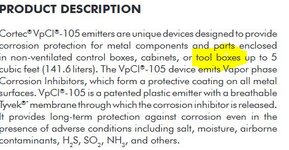
Cortec's emitters are actually recommended for tool boxes. Depending on model, a single emitter can do 11cuft (but I would use several regardless). They have a life up to 2 yrs, but for frequently opened or leaky boxes they should be changed every 6mths or when they become ineffective.

Cortec® VpCI®-105 emitters are unique devices designed to provide
corrosion protection for metal components and parts enclosed
in non-ventilated control boxes, cabinets, or tool boxes up to 5
cubic feet


Emitter105.jpg
 

T45

Well-known member
Joined
Nov 20, 2014
Messages
3,253
Intersting link. Couple of caveats, and happy to be proven wrong. If you look at the typical applications, it doesn't mention tool storage. Its all very high value stuff kept in very good condition. eg...

No mention of professional technician's tools or toolbox/rollcabs etc in the "typical applications"
TYPICAL APPLICATIONS
• Operating, packaged, and stored electrical equipment
• Marine navigation and communication equipment
Aerospace electrical controls
• Electric motors
Switching equipment
Fuse boxes and power boxes
Medical equipment
• Electrical wireways and terminal boxes
• Scientific and measuring instruments
Telecommunications equipment and remote electronics devices
I have seen this on portable latched-type boxes.
metal components and parts enclosed in non-ventilated...
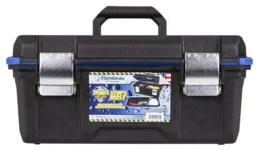
The snap-on all weather 2.0 box has rust inhibitors, and heres a generic latch-type box from ebay. With Ze Rust.

Would be great if someone figured this out for roll-cabs and tool-carts, however.
 

Attachments

  • 1690254187278.png
    1690254187278.png
    195.2 KB · Views: 13
Last edited:

scooby074

Well-known member
Joined
Oct 26, 2008
Messages
5,259
Location
Nova Scotia
Intersting link. Couple of caveats, and happy to be proven wrong. If you look at the typical applications, it doesn't mention tool storage. Its all very high value stuff kept in very good condition. eg...


No mention of professional technician's tools or toolbox/rollcabs etc in the "typical applications"

I have seen this on portable latched-type boxes. The snap-on all weather 2.0 box has rust inhibitors, and heres a generic latch-type box from ebay. So, not seeing OEM applications like a roll-cab type box either.

Would be glad if someone figure this out, however !

It actually is in theyre typical applications.

Ive spoken to their Application Engineers ;) when specing the stuff. The part number basically points to the volume it protects in a perfect world. Product inside is basically the same.
This is going Offshore, literally into the North Atlantic. Basically all this company deals with is rust and corrosion protection. Its a great product, not something aimed at home gamers, sold in large lots, but you can find retailers online and ebay selling small quantities.


Capture2.JPG

Lee Valley, sells it (looks like they dont any more) . Like $12 an emitter https://www.leevalley.com/en-ca/shop/tools/workshop/tool-maintenance/59367-anti-corrosion-emitters . Im sure other manufacturers products will perform similar, im just more familiar with the Cortec brand and know it works.

Capture.JPG
 

Attachments

  • Capture7.JPG
    Capture7.JPG
    51.8 KB · Views: 10
Last edited:
To avoid these ads, REGISTER NOW!
Top Bottom