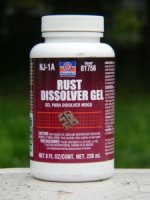
I've used acid (sulphuric - muriatic) because I'm impatient, Evaporust because of the advertising claims, wire brush/abrasives/blasting when I'm VERY impatient, and electrolysis. Each has its good points and bad points. For what I do mostly now, it's electrolysis. Gets all the rust, pits and all, gets most or all of the paint, doesn't touch the base metal or alter its finish, cheap. What I'm doing now is mostly tools; if I were doing auto body parts, I'd use abrasives/blasting.
All methods mentioned here will work, but differently. Here's my take, based on my experiences:
Acid soak (sulphuric, vinegar, molasses): slow, cheap,minimal equipment/setup, will attack good metal if left in too long. Leaves original finish if not left in too long.
Evaporust & similar: same as above but expensive
Wire brush, other abrasives: medium cost, attacks good metal, leaves deep pits, leaves "paintable" finish.
Blasting: High initial cost, equipment & setup bulky, can be very inconvenient unless you have a lot of space. Digs out pits, leaves paintable finish, attacks good metal if too long on one spot.
Electrolysis: Gets rust, leaves original finish, doesn't attack good metal. Cheap, minimal setup and equipment for small parts. Gets bulky and inconvenient and more expensive initially for large stuff - over about 2-3'.
As in most of life, there are tradeoffs. One consideration is how much rust removal you plan to be doing. If it's an everyday thing, you can afford to devote more space and expense to it. If it's an occasional big object thing, you might be better off hiring it out. Occasional small stuff - wrenches, say, your dip or electro tank can sit in an out of the way corner between uses.
Do your research -- oh, wait, you already are!
edit: as Fretters noted, some handwork is usually necessary no matter what method you use. For tools you're going to leave bare, for instance, electrolysis will often leave a dark residue. This is easily removed with soap and water and a scrub brush, or at worst a hand wire brush, which used lightly doesn't mark the tool steel. For painting, use any surface prep you like.
And with any method, practice on not-so-valuable tools first.