To avoid these ads, REGISTER NOW!

Rustoleum Primer/Enamel Failure

Skeptic68W

Well-known member
Joined
Jun 18, 2015
Messages
416
Over the last few years I've been embarking on my first automotive restortation project. First time doing body work/paint, so I'm trying to learn everything as I go along.

For the outer body panels I'm using professional 2k stuff from Tamco, but for the chassis parts I decided to use good old rustoleum. It's gonna be a daily driver, not a high end deal.

The process for all of the parts has been as follows:

For smaller parts:
Sandblast totally clean
Prime with Rustoleum Rusty Metal Primer
Topcoat with Rustoleum Stops Rust Gloss Enamel

For large parts:
Descale/clean with wire wheels
Treat with phosphoric acid to convert any remaining rust
Clean very well to remove acid residue
Prime with Rusty Metal Primer
Topcoat with Enamel


I've done a great deal of the truck with this process, the back half of the frame, the rear axle, leaf springs, and much more. However, I noticed the other day that I'm already starting to get rust staining/bleed through in some areas. The truck hasn't been used, just sitting outside. Most of the parts aren't even in direct sun or getting hit by rain. Somehow just the moisture in the air is sufficient to cause this issue.

Being somewhat new to this, I really don't understand what's happening. The primer/paint is stuck on just fine, no flaking or anything like that. The parts are super clean when they get primed. I truly don't get it. I'm hoping someone can explain to me what's going on, in a more informative fashion than "that's what you get for using cheapo box store paint". People online seem to use this combination of primer/paint frequently on outdoor projects like tractors and everything else with success, so I'm a bit baffled.

Here are some photos of the same part, 1 year apart. I sprayed this upper shock mount in may of last year, and it's just been sitting out there under the hood for 11 months and this is the result. It was sandblasted completely clean in the cabinet before priming.

1744935110609.png1744935127693.png1744935142011.png
 
To avoid these ads, REGISTER NOW!

Buckgnarly

Well-known member
Joined
Oct 8, 2010
Messages
7,651
Location
VT
I use the **** out of Rustoleum rusty metal primer...plows, frames, whatever, and its been pretty good. I do not however, spend a lot of time prepping. Usually wire brush and scraper to remove the loose stuff, but always leave the rust.
 
OP
S

Skeptic68W

Well-known member
Joined
Jun 18, 2015
Messages
416
Looks like the part rusted?

Unless I'm missing the question
Yes, I'm trying to figure out how the hell a part that's freshly blasted, primed, and painted, then not exposed to salt or use managed to rust through in under a year.
 
OP
S

Skeptic68W

Well-known member
Joined
Jun 18, 2015
Messages
416
It's kind of bizarre, because if I examine all the pieces currently on the truck that have been done with this exact same method, the results are all over the map. Many still look perfect, others are starting to spot, and stuff like this shock tower look terrible already.
 

kaymccampbell

Well-known member
Joined
Feb 27, 2015
Messages
29,434
Location
Upstate New York
That's a wow for me. I've rolled n sprayed Rustoleum for decades, and it's never done that to me. Did you sand lightly before the topcoat? Use a hardener?
 
OP
S

Skeptic68W

Well-known member
Joined
Jun 18, 2015
Messages
416
That's a wow for me. I've rolled n sprayed Rustoleum for decades, and it's never done that to me. Did you sand lightly before the topcoat? Use a hardener?
I do not sand between the primer and topcoat since it's still pretty fresh. Didn't seem necessary. But the only issue I could see that causing would be adhesion issues, which this doesn't have. The paint and primer are on there good...they're just clearly not doing their job.

I do use a hardener in the topcoat, yes.
 
OP
S

Skeptic68W

Well-known member
Joined
Jun 18, 2015
Messages
416
One of 2 things:

You didn't fully removed the rust (I'm talking microscopic levels) and it continued under the paint

Or

The paint is porous, rust started forming under the paint.

Likely a combination.
When something is sandblasted, is that not sufficient? I did a lot of research before embarking on this project and no-where did I see anything about a step between blasting and priming.

Your second answer is what ChatGPT seems to think. Is rustoleum designed to be porous? That strikes me as a ridiculous idea(from a design perspective). It's also hard to explain why others have had such success with the same product.

Thanks
 

PCustoms

Well-known member
Joined
Jul 23, 2011
Messages
22,351
Location
VT
Your second answer is what ChatGPT seems to think. Is rustoleum designed to be porous? That strikes me as a ridiculous idea(from a design perspective). It's also hard to explain why others have had such success with the same product.

Designed?

I don't know, but it seems to be. I've had similar issues. The paint *****, but you don't seem to want to accept that.

I've stopped using it for auto projects, I assume residual salts cause issues. Seems OK for shop and yard items.
 
OP
S

Skeptic68W

Well-known member
Joined
Jun 18, 2015
Messages
416
Designed?

I don't know, but it seems to be. I've had similar issues. The paint *****, but you don't seem to want to accept that.

I've stopped using it for auto projects, I assume residual salts cause issues. Seems OK for shop and yard items.
I'm willing to accept that it *****, I'm just trying to get a proper understanding. You're the first person to say you've had similar issues. The internet is overflowing with guys who've painted everything under the sun with this stuff and have good results (not the sort of results you'd want on the body panels, but good enough for suspensions and tractors and what not).

I'm certainly not going to be using it anymore either. But I'm currently trying not to have a coronary thinking about how many dozens or even hundreds of hours I've sunk into prepping and painting parts on this thing in this exact fashion.
 
OP
S

Skeptic68W

Well-known member
Joined
Jun 18, 2015
Messages
416
Can you redo?
At this point that would essentially mean starting over from scratch with 3 years worth of work, so...no.

What's going to happen is the undercarriage is going to get coated with fluid film/woolwax/surface shield when it's time to go back into use, and it's going to be what it is...but damn am I not going to be happy about it.
 

WildBill

ALLIANCE MEMBER
Joined
Aug 20, 2021
Messages
1,984
Location
PNW
Rusty metal primer works great on rusty metal. If your metal is really cleaned well the bare metal primer works better, I believe somewhere on Rustoleums site they even talk about it. The rusty metal primer takes forever to cure on clean metal because there is no rust to **** up the oils in it, and sometimes will not cure properly before the topcoat is applied causing issues later. I have experienced the same thing you have on a well cleaned car frame, and didn't have an issue with their bare metal primer for the same application. I have used the rusty metal primer on really crappy stuff I just hit with a wire brush and it worked great, but not on really clean metal.
 
OP
S

Skeptic68W

Well-known member
Joined
Jun 18, 2015
Messages
416
Rusty metal primer works great on rusty metal. If your metal is really cleaned well the bare metal primer works better, I believe somewhere on Rustoleums site they even talk about it. The rusty metal primer takes forever to cure on clean metal because there is no rust to **** up the oils in it, and sometimes will not cure properly before the topcoat is applied causing issues later. I have experienced the same thing you have on a well cleaned car frame, and didn't have an issue with their bare metal primer for the same application. I have used the rusty metal primer on really crappy stuff I just hit with a wire brush and it worked great, but not on really clean metal.
I read the TDS sheet before (and again today as a refresher) to make sure, but they explicitly state it's fine to use on bare metal. If there's some sort of special curing issue (I'm not doubting you), then I wish they would have said something about it.

It shows the recoat time to be roughly 24 hours (temp dependent of course). I pretty much always follow that. Prime stuff and leave it for a day or more before painting.
 
To avoid these ads, REGISTER NOW!

kaymccampbell

Well-known member
Joined
Feb 27, 2015
Messages
29,434
Location
Upstate New York
I do not sand between the primer and topcoat since it's still pretty fresh. Didn't seem necessary. But the only issue I could see that causing would be adhesion issues, which this doesn't have. The paint and primer are on there good...they're just clearly not doing their job.

I do use a hardener in the topcoat, yes.
There is a very narrow window between a direct primer and topcoat. The primer wants to be soft enough to take a fingerprint, but still reject dust. Overnight is too long. And if you're doing white, there is no overlap. You let the primer dry and then sand, and then white. Don't know why. It's just my experience.

And I only use the Rustoleum Professional High Performance Gloss Exterior Oil-based Industrial Enamel and Industrial Rusty Metal Primer. The silver can. The white can gives meh results.

I use a hardener, too, with no ill effects.
 
OP
S

Skeptic68W

Well-known member
Joined
Jun 18, 2015
Messages
416
There is a very narrow window between a direct primer and topcoat. The primer wants to be soft enough to take a fingerprint, but still reject dust. Overnight is too long. And if you're doing white, there is no overlap. You let the primer dry and then sand, and then white. Don't know why. It's just my experience.

And I only use the Rustoleum Professional High Performance Gloss Exterior Oil-based Industrial Enamel and Industrial Rusty Metal Primer. The silver can. The white can gives meh results.

I use a hardener, too, with no ill effects.
Glad that's worked out for you. I went by the TDS which says recoat after 24hr, dry to the touch in 5hr.
 
OP
S

Skeptic68W

Well-known member
Joined
Jun 18, 2015
Messages
416
Yep

I'm done. Good luck
I'm really not trying to be an ***, so apologies if it's coming off that way. I do appreciate your inputs, I'm just extremely frustrated and trying to get a handle on why my outcomes here are so different than what I see everywhere else online with these products.

As I've been researching people get super hung up on the use of clean vs rusty primer when the TDS for both clearly show they are applicable to both applications. It's not reasonable to presume that just because you used the rusty primer that warrants complete rust failure in 11 months of non-use. I'm not saying you're of this opinion, I'm just trying to prevent this conversation from going in that direction.
 

WildBill

ALLIANCE MEMBER
Joined
Aug 20, 2021
Messages
1,984
Location
PNW
1744938455260.png

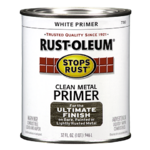
My understanding is that "clean" means "new" metal primarily.
I use spray cans of this a lot on car parts that I have taken down to mostly clean metal. Some on my mustang are going on 3-4 years and look great. It works way better than the rusty metal primer if the part is 90% rust free, at least in my experience. It dries faster and seemingly to a much better finish on mostly clean metal. It also seems that the surface finish makes a big difference, if I clean/grind/brush something until its smooth the rusty primer really *****, but if its a rough surface it works better, even if its clean metal.
 
OP
S

Skeptic68W

Well-known member
Joined
Jun 18, 2015
Messages
416
I use spray cans of this a lot on car parts that I have taken down to mostly clean metal. Some on my mustang are going on 3-4 years and look great. It works way better than the rusty metal primer if the part is 90% rust free, at least in my experience. It dries faster and seemingly to a much better finish on mostly clean metal. It also seems that the surface finish makes a big difference, if I clean/grind/brush something until its smooth the rusty primer really *****, but if its a rough surface it works better, even if its clean metal.
What do you mean when you say it "really *****"? Have you experienced failures like this?

As you can see in the photo, the shock tower is pretty pitted, so it's a rough surface for sure.
 

WildBill

ALLIANCE MEMBER
Joined
Aug 20, 2021
Messages
1,984
Location
PNW
What do you mean when you say it "really *****"? Have you experienced failures like this?

As you can see in the photo, the shock tower is pretty pitted, so it's a rough surface for sure.
I have. I ended up taking the parts back down to bare metal and starting over. I had almost exactly the same thing happen on a bunch of mustang suspension parts in less than a year. Sorry your having to deal with it, it was really upsetting. They looked just like your parts. I used the bare metal primer the second time and they look fine about 4 years later. Maybe we both did something else wrong but I repeated the same steps with the bare metal primer and it worked great. I now only use the rusty metal primer on stuff covered in rust that I can't or don't want to clean to bare metal. Like trailer frames and farm equipment.
 
OP
S

Skeptic68W

Well-known member
Joined
Jun 18, 2015
Messages
416
I have. I ended up taking the parts back down to bare metal and starting over. I had almost exactly the same thing happen on a bunch of mustang suspension parts in less than a year. Sorry your having to deal with it, it was really upsetting. They looked just like your parts. I used the bare metal primer the second time and they look fine about 4 years later. Maybe we both did something else wrong but I repeated the same steps with the bare metal primer and it worked great. I now only use the rusty metal primer on stuff covered in rust that I can't or don't want to clean to bare metal. Like trailer frames and farm equipment.
Thank you for the information. That now makes 2 others with the same problems. Dang sure wish I would have seen people talking about this online a couple years ago before I started all this.
 

WildBill

ALLIANCE MEMBER
Joined
Aug 20, 2021
Messages
1,984
Location
PNW
Thank you for the information. That now makes 2 others with the same problems. Dang sure wish I would have seen people talking about this online a couple years ago before I started all this.
No problem. One option now might be a quick coat of some sort of rust converter right on top of everything, I have used Eastwoods rust converter on some parts that were painted but had areas of rust coming through and it worked surprisingly well. Just turned the rust hard and black. This stuff is what I used but there are other less expensive brands of rust converters that are probably fine - https://www.eastwood.com/eastwood-rust-converter.html
 
OP
S

Skeptic68W

Well-known member
Joined
Jun 18, 2015
Messages
416
No problem. One option now might be a quick coat of some sort of rust converter right on top of everything, I have used Eastwoods rust converter on some parts that were painted but had areas of rust coming through and it worked surprisingly well. Just turned the rust hard and black. This stuff is what I used but there are other less expensive brands of rust converters that are probably fine - https://www.eastwood.com/eastwood-rust-converter.html
That's a good point. Maybe that's the stop-gap solution here for the parts already done. Hit them with phosporic acid to stop what's there, and coat with epoxy then lanolin to prevent future spread.
 
Last edited:

FourthQuarter

Well-known member
Joined
Dec 1, 2022
Messages
83
Location
Cape Ann
I've had similar experience as WildBill. I made a driveway gate of new rectangular tube ~20 years ago. Used Rustoleum Clean with at least two top color coats of Rustoleum. Damn thing is 50' from ocean at high tide and it was only two years ago that it deserved a freshening up but wasn't bad.

I did a truck rack picked out of my transfer station metal pile with Rustoleum Rusty. It wasn't more than three years and was having failures, even on areas not subject to abrasion from use. Nothing like the results with clean on new metal.

I'm pretty good about prep, e.g. wiping with spirits before, etc.

I prefer to get my pieces prepped well enough to use Rustoleum Clean if I have the time. It just seems to lay better.

OP doesn't make clear whether part shown failed where other parts were bolted to it (the hole). I don't think it's reasonable to expect the finish to hold up where parts mate.

Maybe newer, low VOC formulations don't perform as well?
 
OP
S

Skeptic68W

Well-known member
Joined
Jun 18, 2015
Messages
416
I've had similar experience as WildBill. I made a driveway gate of new rectangular tube ~20 years ago. Used Rustoleum Clean with at least two top color coats of Rustoleum. Damn thing is 50' from ocean at high tide and it was only two years ago that it deserved a freshening up but wasn't bad.

I did a truck rack picked out of my transfer station metal pile with Rustoleum Rusty. It wasn't more than three years and was having failures, even on areas not subject to abrasion from use. Nothing like the results with clean on new metal.

I'm pretty good about prep, e.g. wiping with spirits before, etc.

I prefer to get my pieces prepped well enough to use Rustoleum Clean if I have the time. It just seems to lay better.

OP doesn't make clear whether part shown failed where other parts were bolted to it (the hole). I don't think it's reasonable to expect the finish to hold up where parts mate.

Maybe newer, low VOC formulations don't perform as well?
It's worse in the area where parts mate for sure, since water traps there. However, at least on this part and a few others, there is failure occuring on the side where nothing touches, and it's vertical so no water is pooling.

Not that it's even exposed directly to rain since it's covered, but it does see condensation just by proxy of being outside.
 

gorilla

Well-known member
Joined
Dec 13, 2007
Messages
1,650
What did you do the clean the parts after sandblasting? Sandblasting can leave dust on the surface that might keep the paint from adhering. Parts should be cleaned with a wax and grease remover that evaporates slowly so the dirt floats to the surface and is removed with a clean cloth or towel. The process should be repeated until the cloth shown no dirt. Paint adhesion problems are almost always cause by inadequate preparation.
 

Leon bee

Well-known member
Joined
Feb 4, 2025
Messages
196
Location
NW Arkansas!
Isn't this like "**** happens"? **** happens to me continually, especially on my car projects. Just shrug and try it a different way next time. Only time to obsess is when you just can't get something to run.
 
To avoid these ads, REGISTER NOW!
Top Bottom