PugetDude
ALLIANCE MEMBER
What amazes me is how nice the spray can paint jobs turn out on the Eastern Europe machine builds on YouTube...seriously.


Whether the ball was loose or not, it obviously has thick, unmixed paint on the bottom of the can.
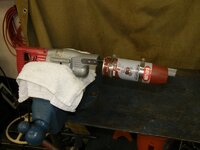
I use an attachment for my Sawzall to shake spray cans.
MixKwik Tool - Reciprocating Saw Accessories - Amazon.com
MixKwik Tool - Reciprocating Saw Accessories - Amazon.comwww.amazon.com
More mixing, and make sure the contents are warm.
Two minutes minimum, and three or four minutes under a hot water tap. It thins out the paint.
I set the cans upside down in the sun at least an hour before shaking.
These guys got it, and the heat creates a little more pressure in the can. The extra pressure makes the can spray better.When painting with spray cans it helps to pause occasionally and give the can a few shakes.
Imagine having ten cans. I have a battery operated sawzall set up for shaking, takes seconds to put a can in.How hard is it to shake a spray paint can? By the time I got out the saw, hooked up the saw, and put it away, I could have been done shaking and half way done painting whatever I was working on.
Todd
I've ordered a lot of paint in the last few months. Primer, top coat etc for my old pickup project. No issues at all. Companies that sell shipping supplies even sell a paint shipping kit. Box(es), precut foam, lid clips, baggies etc. I think the issue with AK and HI is that most small shipments must come by air and that changes the hazmat rules. Especially those in pressurized containers.Nope. Hazmat is just a PITA to ship so most vendors don't deal with it to mon commercial accounts
IMO, the biggest variable with spray cans is the age of the product. The longer it has set on the shelf, the longer it takes to really stir up the pigments. I have some Rustoleum that is nearing 40 years old. Bought a huge lot at a hardware store closing auction way back when. Still works, but it takes a really l o n g time to make it spray reliably. The sawzall trick really cuts down on the time needed. Just a worn out blade with the teeth ground off and a couple of hose clamps.These guys got it, and the heat creates a little more pressure in the can. The extra pressure makes the can spray better.
Imagine having ten cans. I have a battery operated sawzall set up for shaking, takes seconds to put a can in.
If I'm needing 10 cans to paint something, I'm using a spray gun!These guys got it, and the heat creates a little more pressure in the can. The extra pressure makes the can spray better.
Imagine having ten cans. I have a battery operated sawzall set up for shaking, takes seconds to put a can in.
Not an option for a lot of people.If I'm needing 10 cans to paint something, I'm using a spray gun!
Would save $$. $8 a can for rattle spray or a $40 sprayer and $20 for a quart of decent paint.Not an option for a lot of people.
Would save $$. $8 a can for rattle spray or a $40 sprayer and $20 for a quart of decent paint.
I have all that, but not everyone does. And in some cases, like in an HOA or rental situation, people can get away with spray cans. Or maybe something needs to be painted where there isn't any power available. I could go on and on..lolRustoleum works for me most of the time but I got spoiled after using Valspar. It can run to $14 a can and I won't do that.
RE: "Not an option..." I think he means having a compressor, hoses, etc.
I'd imagine nearly everyone on this forum has an air hose and compressor. I mean hell most of you all have shops with damn near acreage inside, lifts, 6 figures worth of tools, etc.Rustoleum works for me most of the time but I got spoiled after using Valspar. It can run to $14 a can and I won't do that.
RE: "Not an option..." I think he means having a compressor, hoses, etc.
I have a small compressor, no lift, maybe 4 figures of tools. So I am not most. But I know what you are saying. I can paint with Rust-Oleum and it looks like OEM automotive paint work. If I spend more time I can do show quality paint with Rust-Oleum on car parts. (Not outside body work)I'd imagine nearly everyone on this forum has an air hose and compressor. I mean hell most of you all have shops with damn near acreage inside, lifts, 6 figures worth of tools, etc.
I've never had rattle can hold up anywhere near as well as a proper 2k paint. In some cases it's good enough, that's true.I have a small compressor, no lift, maybe 4 figures of tools. So I am not most. But I know what you are saying. I can paint with Rust-Oleum and it looks like OEM automotive paint work. If I spend more time I can do show quality paint with Rust-Oleum on car parts. (Not outside body work)
Todd
You got it backwards. Sprayers are $8 and a quart of decent paint is $200.Would save $$. $8 a can for rattle spray or a $40 sprayer and $20 for a quart of decent paint.
Where are you buying a paint sprayer for $8? Decent paint runs $50-60 a gallon. We aren't talking about some designer brand paint for a Bentley.You got it backwards. Sprayers are $8 and a quart of decent paint is $200.
I think my spray can paint jobs come out pretty nice for what they are. I don't expect them to last like a catalyzed automotive paint. To be honest I don't even shake the cans nearly as long as I'm supposed to. I don't heat the cans in water - I tried it and didn't notice any difference. I have found that using Rustoleum primer first virtually assures a better job. For a long time I never used it.What amazes me is how nice the spray can paint jobs turn out on the Eastern Europe machine builds on YouTube...seriously.

When I blast air in a spray paint nozzle it usually flys across the garage never to be seen again lol.I read somewhere that blasting some compressed air back down the tube of a spray can can dislodge those chunks that seem to get caught in the tube. Have tried it a couple of times with varying results. I don't seem to have very good luck with rust-oleum either. but I do remove my tips after spraying, soak them in acetone for a few minutes and give them a blast with compressed air to ensure they are clean.
I live in South Florida and I leave them in the sun to warm them up, no need for hot water down here.Oh yea...FYI; my cans were about 80 deg. F. I have not tried hot water, but it is summer here in Atlanta.
Try mechanical mixing. I did this after starting this thread and it worked great. The amount of mixing required by the directions may be woefully inadequate. Try mixing via drill (I posted video link for a cheap DIY example) or recip saw.Hi guys, first time posting. I have had similar problems with the new Rustoleum can. At first, it seemed that I couldn't get the propellant to mix with the paint in a can that I had used previously. I do a lot of mods and redesigning so almost all of my paint jobs are small, using a small portion of the can. I decided to try storing the cans upside down, then agitating for 5+ minutes. The can would spray a light mist for about 1.5 seconds, then clear mist for 0.5-1 second, then stop. After several attempts at this, I decided to label Rustoleum with every "bad word" in the Bad Word Lexicon, and then I tried spraying upside down. What do you know, it worked! While not an ideal solution, this method enables me to finish a can and a project. Upside down with no sputter, clogs, or other spray issues. I am not saying that we should adopt this method as a permanent fix, but I don't have to buy another can ever time I start another small job. Absolutely, Rustoleum needs to fix this problem, and I don't mean by issuing refund checks. I have a small presence on Twitter, and I intend to tweet my followers and Rustoleum directly about this issue. Companies tend to respond when they know a crowd is listening! Has anyone else utilized social media in this cause?
Heating the can does two things. First, it reduces the viscosity of the paint, making it easier for the propellant to force the product out the nozzle office .Reading other posts, especially the "hot water" ones, is leading me to think that the propellant is the culprit. Rustoleum needs to weigh in on this.
Ironically, the better European spray paints use low pressure propellants.Heating the can does two things. First, it reduces the viscosity of the paint, making it easier for the propellant to force the product out the nozzle office .
Secondly, it increases the pressure inside the can, which again increases the velocity of the paint going through the orifice, reducing spatter.