To avoid these ads, REGISTER NOW!

Rusty, Pitted Sheet Metal: How To Clean It

bwingate

Member
Joined
Sep 27, 2014
Messages
16
I'm working on the front inner structure of a 1969 BMW 2002. The sunroof drains for these cars were notorious for emptying into the fenders so there is often a lot of rust in there.

I'm cleaning mine out, and am in the process of cutting out bad sheets and cleaning off what might be able to be saved. I am having trouble cleaning out some of the deeper pits.

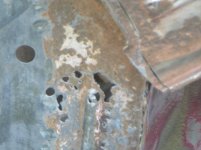
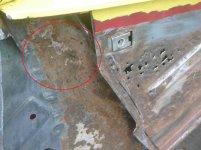
I started with a wire wheel on an angle grinder, switched to 80 grit roloc sanding discs. This wasn't course enough so I hit it with some naval jelly. After that it looked like pictures 1 and 2.

Part of my problem with the 80 grit was that at some point it was like I was just polishing the rust. So I got some 36 grit and tried again - it came out better, but I am trying to get as close to bare metal as possible. See picture 3 for the last results.

Should I be switching out between sanding and wire wheeling? Stronger acid or more naval jelly. More persistence?

And FYI, a lot of the metal in these pictures will be replaced - I'm waiting on the panels and figured it would be a good area to practice in.

Thanks,
Bruce
 

Attachments

  • Rust Pits 1.jpg
    Rust Pits 1.jpg
    134.6 KB · Views: 201
  • Rust Pits 2.jpg
    Rust Pits 2.jpg
    142.4 KB · Views: 177
  • Rust Pits 3 - After.jpg
    Rust Pits 3 - After.jpg
    125.5 KB · Views: 161
To avoid these ads, REGISTER NOW!

gungatim

Well-known member
Joined
Jan 8, 2013
Messages
8,101
Location
west mich
you're never going to get all that out by wire wheeling, maybe grinding. I would definitely be using a sand/media blaster there...
 

Leadfot

Well-known member
Joined
May 17, 2011
Messages
179
Location
Norway
I was experimenting With phosphoric acid and steel wool. The damage is from a engine fire in 1988.


MP&C

Well-known member
Joined
Oct 21, 2009
Messages
4,402
Location
Leonardtown, MD
Bruce, given the extent of the rust holes and deep pitting I would cut out the damaged area and weld in new metal to restore the structural integrity of the area. Then the issue of cleaning out the pits is no longer an issue.
 

MoonRise

Well-known member
Joined
Nov 5, 2010
Messages
4,028
Location
NJ
A wire wheel or roloc disk (or flap disk, etc) can only get the 'peaks' of the rusty areas (where the steel is still 'high' and not pitted). Until you grind (if using an abrasive tool and not the wire wheel, which will only pretty much get the 'peaks') the steel down until it is as thin as the thinnest parts of the 'valleys'.

A media (aka 'sand') blaster can get down into the 'valleys' of the pits better, because the media is physically smaller and can actually reach down into the pits/valleys.

Same as chemical (acid) treatments (Naval Jelly, phosphoric acid, other acids, etc). They can actually reach down into the pits/valleys.

Practice is all well and good, but in this case (as you and others have mentioned), just cut out the pitted and perforated steel and replace it.

IMHO, no real reason to 'practice' on those sections and 'waste' materials (either media or acids, which will have some sort of $$ associated with them).
 
OP
B

bwingate

Member
Joined
Sep 27, 2014
Messages
16
Practice is all well and good, but in this case (as you and others have mentioned), just cut out the pitted and perforated steel and replace it.

IMHO, no real reason to 'practice' on those sections and 'waste' materials (either media or acids, which will have some sort of $$ associated with them).

Thanks for all replies.

It might be a waste of time and resources, but I have basically zero body work experience except for the things that I have done wrong or poorly on this car over the past year. So, trying out different methods and looking at there effects, on something that if I destroy it is going to be cut out anyway is not so bad. There's 5 or 6 different kinds of wire wheels at the local hardware store - Why? Beats me - it is kind of confusing just starting out for a hobbyist.
 

HMCFab9

Well-known member
Joined
Jan 22, 2013
Messages
1,317
Location
Fox valley area, Wisconsin
The only way to get all the rust out of rust pits is to sandblast it.
You can grind, sand, wire wheel, use acid, etc for days......& you will still not have all the rust out.
The thing to know about sandblasting is that it can (will) warp flat sheetmetal, so it is best not used on large flat areas.
(Inner panels, etc are fine to blast)

Also, you do not want that acid to get into inner panels (between layers of metal) because you can never get it all out & it just keeps eating away at the steel.
 

J.O.V

Member
Joined
Jul 28, 2015
Messages
14
Location
Aulum, Denmark
As MP&C says, I would recommend the same. Use the time to cut out all the rust and a little more. The amount of corrosion you got there will always come back to haunt you if you don't make it right the first time. Another aspect are that the rust holes weaken the body of the car.
 

Kielbasavw

Well-known member
Joined
Jun 18, 2015
Messages
155
Location
Southern California
Phosphoric acid is the way to go. Clean as much rust off as you can with wire wheel then depending on how bad rust is. May end up doing several coats of phosphoric acid. It will convert the rust, it could turn white and crusty, and bare clean metal will end up dark grey. Which is safe to paint over.
 
OP
B

bwingate

Member
Joined
Sep 27, 2014
Messages
16
If you find the time read through this post, he deals with the same problem. Ignore the car.....concentrate on his methods.

http://retrorides.proboards.com/thread/65793?.U3NqP41OWM8=undefined

I've gone through about 4 pages of this (out of 27). This is basically all the work that needs to be done on my car. I'll be reading this slowly, studying the pictures and staring at my car for a while.

I know that I will be replacing most of what is in the pictures, but there will be other parts of the car where I won't be able to - that's when I'll want to look into other methods of getting rid of the rust.

Thanks everyone
 

trentonmakes

Banned
Joined
Aug 29, 2014
Messages
447
Phosphoric acid is the way to go. Clean as much rust off as you can with wire wheel then depending on how bad rust is. May end up doing several coats of phosphoric acid. It will convert the rust, it could turn white and crusty, and bare clean metal will end up dark grey. Which is safe to paint over.
Yep, neutralize it
Cut out/weld in new metal where you can is best
Phosphoric acid will stop the rust from growing and let you shape and paint the circled area


Sent from my LG-D801 using Tapatalk
 

MP&C

Well-known member
Joined
Oct 21, 2009
Messages
4,402
Location
Leonardtown, MD
The problem with the band aid repairs such as rust convertors, rust encapsulators, etc. is that they promote hack work. This area is very much a structural part of the car that supports everything from the door hinges to the windshield frame, and from what looks like a unibody construction, the front end suspension components. We already have rust through in this area to address, so any heavy pitting (weakened metal) should not even be given a second thought as to cutting it out at the same time.

Use your acid to get it nice and shiny metal, fill in the holes with some JB weld, and then spend 5K plus on a nice paint job. Sure you've now fixed the water leak issues, but give it a couple years and wonder why your doors start sagging, or why the door to fender gaps get tight at the top as the weakened metal in this area allows the front end to tweak upward. The car is blown apart for repairs, now is the time to fix it correctly, with new metal to correct the structural deficiency, before paint goes on.
 
Last edited:
To avoid these ads, REGISTER NOW!

trentonmakes

Banned
Joined
Aug 29, 2014
Messages
447
Don't rinse.... Lol
Defeats the whole purpose of the acid
Why add moisture back into the metal???
JMHO

Sent from my LG-D801 using Tapatalk
 

404

Well-known member
Joined
Aug 23, 2014
Messages
3,463
Location
Mass
Would suggest "dustless blasting". Media is wet crushed glass. An additive (hydrazine) I think to the water (same as used in industrial boiler treatment) prevents flash rust.


dkroth

Well-known member
Joined
Mar 11, 2010
Messages
3,067
Location
Rochester, New York
Would suggest "dustless blasting". Media is wet crushed glass. An additive (hydrazine) I think to the water (same as used in industrial boiler treatment) prevents flash rust.


Hydrazine is an inorganic compound with the chemical formula H 2NNH 2. It is a colourless flammable liquid with an ammonia-like odor. Hydrazine is highly toxic and dangerously unstable unless handled in solution. Wikipedia
 

404

Well-known member
Joined
Aug 23, 2014
Messages
3,463
Location
Mass
Hydrazine is an inorganic compound with the chemical formula H 2NNH 2. It is a colourless flammable liquid with an ammonia-like odor. Hydrazine is highly toxic and dangerously unstable unless handled in solution. Wikipedia

Yes that is all true. The amount needed for water treatment is small.
 

404

Well-known member
Joined
Aug 23, 2014
Messages
3,463
Location
Mass
So, My Bad. The rust preventer is called HoldTight 102.

The msds says Proprietary Formulated Amine compound.

Appearance and Odor: clear liquid, mild ammonia odor.
 

Attachments

  • msds.jpg
    msds.jpg
    142.8 KB · Views: 25

clubairth

Banned
Joined
Dec 24, 2014
Messages
263
You might also consider blasting with dry ice as it leaves nothing but the stuff blasted off the panel.


Does a great job but I think it's expensive to do.
.
.
.
 

mik386

Well-known member
Joined
Dec 29, 2010
Messages
62
Location
Northeast Ct.
If you have access to blasting equipment you could clean it out and then at that point you will probably realize that there is not much left. Then just replace the affected area. I have tried to save areas like this in the past and just drove my self crazy. My advice is cur it out and replace it. Cool car by the way!
 

Vegaman_Dan

Well-known member
Joined
Jun 1, 2012
Messages
2,453
Location
Pacific, WA
I think many people are missing the point of the OP, which was to practice with different rust removal methods on some existing sample areas that are going to be physically replaced anyways. It's an opportunity to try different methods without risking the final product. I think it's a good idea.

I've used rust converters and media blasting. Soda blasting was my latest effort. I still need to deal with some surface rust and may try the acid option. And I would like to practice before I try it. I assume you can buy phosphoric acid commonly at a store? Is it called something else by name?

**EDIT**

I just looked at the gallon of metal prep I ordered from Eastwood and it's phosphoric acid and zinc in a solution. Apply it, call it good. So I have it, but it's good to know I can get it locally too. Found that Home Depot sells it, but Lowes does not list it online. It's likely available in the stores though. Something worth having around, I think.
 
Last edited:

trentonmakes

Banned
Joined
Aug 29, 2014
Messages
447
Phosphoric acid is good rust converter, lol
I don't rinse with water, kind of Defeats the purpose in my mind
It will turn black, and stop surface rust from spreading.
Did that on a car with ragtop, that was removed, slightly pitted.
Worked very well, skim coat of filler then primer. Held up for years.

Sent from my LG-D801 using Tapatalk
 

Leadfot

Well-known member
Joined
May 17, 2011
Messages
179
Location
Norway
What was the process to get that metal clean?

Paint it on, wait, rinse, rub?

Steel wool and rub like hell, clean With paper towl and repeat untill its all gone.
I used thinner for the final wipe.
I also did alittle drop test With thinner and the acid before i used it on the metal just to see it wouldent explode in my face.
 
Last edited:

MBfreak

MEMBER EMERITUS
Joined
Dec 10, 2010
Messages
2,301
Location
Linkoping , Sweden
Real nice car. Well worth being repaired to last.
For all structural panels under the skin, my take would be to replace ALL rusted out areas. It is probably possible to by replacement panels, and then cut them down. If you replave spot welded parts, both flanges MUST be really rustfree and clean for the spotwelds to be good as new.
Tack in matching repair sections until you KNOW they are correctly positioned and then weld them in ( TIG or MIG) with about 20 mm long welds followed by 50% noweld and so on.

If hard to find structural panels, make drawings and find a sheet metal shop that can make decent lookalikes. Many have good shaping tools and stiffeners, spot welds and curves are done by them daily.

After all , an old BMW 2002 is a really cool car. You will not regret your efforts!

Ola
 

User_Name

Well-known member
Joined
Jul 30, 2008
Messages
281
Location
Teegeeack
Crud thug / Bristle Blaster.
I tried it out on some sections of floor pan this afternoon with decent results. Rust and 'dry' pits cleaned up well. I have one large section that I hit with naval jelly last year but didn't really clean up very well; that area seemed kind of wet in that the bristles just seemed to ride over top without penetrating. I'll try reactivating and washing it off and see if things go better.
 
To avoid these ads, REGISTER NOW!
Top Bottom