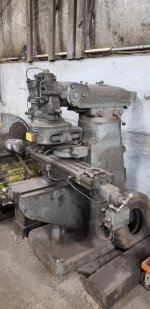
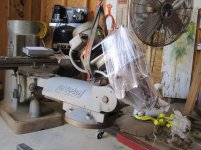
Once you clean it abit, the backlash (lost motion) in the X- screw (long axis of the table) is a pretty quick check on general "wear" of the machine. Fully new is probably .010-.020", I've seen well worn versions that had a half-turn of lost motion in the leadscrews. Without a DRO (direct or digital read out) you are reliant on the dials and the leadscrews to position the table. Its not a bad problem...world wars were won on that technology...but the one single accessory that makes an old machine new-er is the DRO. You can always lock up one of the axes and then you are reading direct table position.
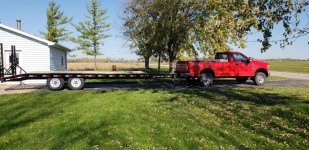
As others have mentioned you have a couple of new problems to solve...you have to rig a 2000# machine and you have to power a 3 phase machine. My suggestions for transport are to use forklifts whenever possible, set plywood scraps under the dovetail ram's lower surfaces and pick the machine up right there on the ram's overhanging parts at the top of the column. The center of gravity is low and tipover is unlikely. On a wooden deck trailer, screw 2x4 or 2x6 blocking into the trailer deck to prevent sliding and make all of your straps independent instead of long loops that go over the top and rely on friction between the strap and the paint. Use of the eyebolt (see below) is an excellent point to centralize your tiedowns. Avoid chains at all costs, avoid strapping anything to the table, cushion all sharp edges that contact web straps with multi ply cardboard, old jeans, old bathmats, etc, the web straps will slice amazingly fast in the vibration from the wind.
Pallet jack is excellent, my Bridgeport sits on a triple stack of 2x6s front and rear, one because its more ergonomic for me that way and two because the pallet jack rolls right under should I ever want to adjust its position. At the start I built a rotary phase converter because I wanted to have other machines. A VFD is a good modern option for one single machine but I recommend reconfiguring the OE drum switch to be a 2-wire Start/Stop signal for your motor. IOW don't expect the VFD to act like a standalone phase converter and use the drum switch on the "power" side of the VFD to start and stop the motor by making and breaking all 3 phases. Eventually you will want to configure one of the other drum switch "poles" to be the motor rotation signal so you can use LH drill bits...see below.
One thing that's often discussed is the suitability of using the 5/8-11 tapped hole in the ram to lift the machine. That is how Bridgeport, CT, USA factory moved the machines around their plant, so its fully acceptable to rig the machine from a single point.
The tooling accessories you'll need are a vise (Kurt or knockoffs are preferred), a set of R8 collets, a dial test indicator which is probably 0-15-0 style. A R8 to jacobs chuck setup is very handy, edge tooling should probably include a 115pc black oxide drill index, a 120 deg included solid carbide spot drill, and some 2 flute HSS (high speed steel) endmills, I like the double-ended versions, no need to go larger than 1/2" dia, most of your work can be done with 1/8 thru 3/8". I can't tell you what the sweetest deal on endmills are these days but beware shiny golden TiN coated endmills at low prices because the base material under the coating is pure trash. I'd buy some spiral point taps in either SAE or metric, whatever system you prefer. A few left handed drill bits are super useful in using your new machine to extract broken fasteners.
Edit: forgot to add that you'll need an edge finder to properly locate edges. Starrett makes one, I think the best is the Hermann Schmidt version but its discontinued.