To avoid these ads, REGISTER NOW!

Sealing Pipe Threads

Jmellc

Well-known member
Joined
Apr 28, 2019
Messages
277
Location
Durham, NC
Debating a coworker on this. The little I ever worked with threaded air or water lines, I was taught to use sealing tape on male threads, most common. Later to use pipe dope on female threads & tape on male; lastly, pipe dope on both. Coworker only uses dope, usually on male threads. I fear this will not hold up & he may have to rework a lot. Seems to me, tape allows more precise turning to line up T’s & other fittings.
What say you guys?
 
To avoid these ads, REGISTER NOW!

csp

Well-known member
Joined
Mar 23, 2010
Messages
5,720
Location
Franktown, CO
A good friend is a licensed pipe fitter and uses teflon and/or dope on male side only. His sealant use depends on the type of pipe and the size, using both teflon and dope as the size goes up.

I can't say that I've ever seen anyone use sealant on the female side. On many uses the first few threads of the male side should remain clean and I'm not sure how you do that if there's sealant on the female side. It would also push whatever the sealant is into the joint in a "blob" if you will at the front of the male fitting, which I wouldn't want.
 

fitter30

Well-known member
Joined
Jun 23, 2019
Messages
2,992
Location
Peace Valley,mo
Two types of thread sealant anaerobic pipe dope any brand and working with 2" or larger, sloppy threads x-pando it expands. It's powered mix with water cures in 24 hours . As for tape the only brand is monster.
 

u2slow

Well-known member
Joined
Nov 20, 2011
Messages
3,610
Location
BC
Tape and dope, on the male threads. Most reliable for me. Softer metals more forgiving than harder ones. If doing stainless, get the specific tape and dope for that.
 

Walkers

Well-known member
Joined
May 17, 2021
Messages
3,912
Location
Cave Creek Az
Worked for the gas company for 15 years. Anything on a house, dope on the male threads only. Seems to work fine depending on the quality of your pipe dope. When I moved into the high pressure department we taped and doped, again male threads only. You don’t really want to dope the female threads unless having a bunch of dope inside the pipe won’t hurt your process gas/fluid.
 

rlitman

Well-known member
Joined
Oct 18, 2010
Messages
24,651
Location
Long Island
I find that it depends on what you're doing. Brass on brass and well cut (dies are sharp) steel on steel should usually seal up nicely with whatever you use. Not all dopes (and tapes) are created equal, and most are limited on what range of pipe sizes they're rated for.

Don't forget about the old-school guys who swear by spool wick.

Copper threads just plain ****, and I'll apply dope to fill in the threads, then tape, and then a thin layer of dope again on copper threads, and pray that it all works.
 

cannuck

Well-known member
Joined
Nov 30, 2021
Messages
4,656
Location
Rural SK
Let's just review what the OP is trying to do: To start with, a male NPT is a lower angle than the female NPT, so all of the sealing should happen over the first three or four threads at most. Leakage from a tapered pipe thread occurs when the male thread that does not fully penetrate the female thread provides a passage at the bottom of the interface from inside to out. Pipe sealants attempt to fill this void to prevent flow going out.

I usually work with hot oil at relatively low pressure often on environmentally sensitive sites, but also do high vacuum so leakage is something we take very seriously. We also have to do pipe thread fitups by the dozens at a time in the field, summer and winter, so I give this advice freely out of some expensively learned lessons. My job is to teach electrians, techs and engineers how to make gas-tight pipe joints.

Given the above you can see where wick makes sense, but never having used it I can't say how well it stays in place in the joint. Remember the first few threads comment above.

Tapes, as has already been pointed out, can work very well IF you have the right tape for the job and you know how to use it. What I teach our guys is to start at the very first FULL thread. Tape works by being cut off by the threads and the remnants jammed to the bottom of the female thread. Putting it below the first full groove would just cut a bit off and let it drift into the flow stream. THAT is why most hydraulic installations do NOT allow pipe tape. I teach to tape ONLY on top of that first turn, and then the number of turns of the appropriate width according to the pipe size and tape thickness. Here is where tape is ultra-sensitive to technique: to work at all, it can NOT be really slippery or really stiff, and can not be wound too many turns or too loose. Missing out on any one of these four factors means the tape will slide up the male thread and not get pinched off in those first few critical threads. So: find the brand(s) and sizes that work for your application and be careful to get them pulled tight and right and you can seal most anything that isn't critical on the surface finish or cleanliness of the threads.

Pipe dopes are another thing that you need to know what product and pressure will work with what dope(s). I have found that some rated for "oil" fail miserably with the napthenics we work with (cyclic hydrocarbons are wicked good solvents, especially when hot) so I use them only with vacuum or water. I think most dope-on-tape people could get by fine if they learned to use the right tape the right way, but after spending some time with gas fitters, I can see how the layer of dope on top of tape would tend to lubricate the tape-to-female interface and keep it from riding up on the male thread (again, do it right and that would not be a problem, but I have watched a LOT of "professionals" that just wind the tape around loosely, so NEED that dope overcoat. For this reason I can NOT recommend putting dope under the tape on the male thread. If you are going to do dope (sorry for the pun) suggest strongly you check with other addicts to find out what product you will use with what process stream and thread size.

Anaerobic sealants are another matter. For them to work, the threads have to be CLEAN. Some require a primer and some do not, so clean the threads carefully with a non-residual solvent, blow them dry with compressed air and chose the sealant that is recommended for the size, pressure, temperature, process stream and fitting material you will using. For ultra-critical sealing of vacuum in shop work this is my go-to, but seldom try that in the field.
 

ddawg16

Well-known member
Joined
Jul 11, 2008
Messages
21,005
Location
S. California
No reason to put dope on the female end....besides....you end up leaving some the dope in that can then be washed or blown the pipe and potentially cause a blockage.

The real reason for tape or dope is to reduce the friction in the threads so you can get more turns of the pipe. It's the actual taper and compression that provides the sealing.

Dope is faster......

Lately, I've only been doing Monster tape.....it has dope impregnated into it.

Tape AND dope for when you want to make double sure.

One of the most common mistakes is with the thread.....as in people not cutting them far enough on the end. You should be able to get at least 3-4 full threads into the female coupling before it starts to tighten up. Besides the compression, you also want surface area.

For Stainless, use a coper based anti-seize
 

ddawg16

Well-known member
Joined
Jul 11, 2008
Messages
21,005
Location
S. California
Let's just review what the OP is trying to do: To start with, a male NPT is a lower angle than the female NPT, so all of the sealing should happen over the first three or four threads at most. Leakage from a tapered pipe thread occurs when the male thread that does not fully penetrate the female thread provides a passage at the bottom of the interface from inside to out. Pipe sealants attempt to fill this void to prevent flow going out.

I usually work with hot oil at relatively low pressure often on environmentally sensitive sites, but also do high vacuum so leakage is something we take very seriously. We also have to do pipe thread fitups by the dozens at a time in the field, summer and winter, so I give this advice freely out of some expensively learned lessons. My job is to teach electrians, techs and engineers how to make gas-tight pipe joints.

Given the above you can see where wick makes sense, but never having used it I can't say how well it stays in place in the joint. Remember the first few threads comment above.

Tapes, as has already been pointed out, can work very well IF you have the right tape for the job and you know how to use it. What I teach our guys is to start at the very first FULL thread. Tape works by being cut off by the threads and the remnants jammed to the bottom of the female thread. Putting it below the first full groove would just cut a bit off and let it drift into the flow stream. THAT is why most hydraulic installations do NOT allow pipe tape. I teach to tape ONLY on top of that first turn, and then the number of turns of the appropriate width according to the pipe size and tape thickness. Here is where tape is ultra-sensitive to technique: to work at all, it can NOT be really slippery or really stiff, and can not be wound too many turns or too loose. Missing out on any one of these four factors means the tape will slide up the male thread and not get pinched off in those first few critical threads. So: find the brand(s) and sizes that work for your application and be careful to get them pulled tight and right and you can seal most anything that isn't critical on the surface finish or cleanliness of the threads.

Pipe dopes are another thing that you need to know what product and pressure will work with what dope(s). I have found that some rated for "oil" fail miserably with the napthenics we work with (cyclic hydrocarbons are wicked good solvents, especially when hot) so I use them only with vacuum or water. I think most dope-on-tape people could get by fine if they learned to use the right tape the right way, but after spending some time with gas fitters, I can see how the layer of dope on top of tape would tend to lubricate the tape-to-female interface and keep it from riding up on the male thread (again, do it right and that would not be a problem, but I have watched a LOT of "professionals" that just wind the tape around loosely, so NEED that dope overcoat. For this reason I can NOT recommend putting dope under the tape on the male thread. If you are going to do dope (sorry for the pun) suggest strongly you check with other addicts to find out what product you will use with what process stream and thread size.

Anaerobic sealants are another matter. For them to work, the threads have to be CLEAN. Some require a primer and some do not, so clean the threads carefully with a non-residual solvent, blow them dry with compressed air and chose the sealant that is recommended for the size, pressure, temperature, process stream and fitting material you will using. For ultra-critical sealing of vacuum in shop work this is my go-to, but seldom try that in the field.
Good post and so very true about dope under tape.
 

cannuck

Well-known member
Joined
Nov 30, 2021
Messages
4,656
Location
Rural SK
The real reason for tape or dope is to reduce the friction in the threads so you can get more turns of the pipe. It's the actual taper and compression that provides the sealing.


One of the most common mistakes is with the thread.....as in people not cutting them far enough on the end. You should be able to get at least 3-4 full threads into the female coupling before it starts to tighten up. Besides the compression, you also want surface area.
Three turns by hand is the standard I have always used for cutting pipe threads. Four is IMHO one turn too far.

Agreed that dope and tape DO reduce friction, but in the case of tape, it is wiped off of the main contact surfaces between face of threads at the very start. DO NOT agree that the seal is complete (find pipe thread standards and you can see that especially in large threads, the male thread never reaches the bottom of the female thread).
 

Jlarson

Well-known member
Joined
Mar 27, 2015
Messages
738
Location
AZ
We use almost entirely sealants, mainly loctite and permatex, both the ptfe based and anaerobic. Only time we use tape is on out temp bypass pump lines that we take apart a lot to avoid making a mess changing camlocs and on test gauges.
 

senlow

Well-known member
Joined
Apr 26, 2008
Messages
2,248
Location
Wheat Ridge, Colorado
Agreed that dope and tape DO reduce friction, but in the case of tape, it is wiped off of the main contact surfaces between face of threads at the very start. DO NOT agree that the seal is complete (find pipe thread standards and you can see that especially in large threads, the male thread never reaches the bottom of the female thread).
This is correct. cannuck has a good understanding of pipe threads.
 
To avoid these ads, REGISTER NOW!

gsmith22

Well-known member
Joined
Jul 14, 2015
Messages
337
Location
Central NJ
For Stainless, use a coper based anti-seize
Nickle based tape and dope is a better alternative for stainless. stainless isn't malleable like brass and it tends to gall from the friction between threads. in my experience Nickle based tape and dope eliminates any issue and is best for stainless pipe fittings.
 

BD1

Well-known member
Joined
Mar 18, 2007
Messages
4,602
Location
north side
Tape and dope on male threads only up to 2''. We usually use dope , like Gasolia. On 2 and 1/2'' and over we will brush dope inside the female fittings.
IF your fittings are imports, from China, India, Mexico, or any other foreign country, tape is a must. Test screwing the fitting on by hand before any tape or dope. You should get 3 and 1/2 turns by hand. Some imports are so bad you may get one and a half or bottom out by and. Buy real fittings from a supply house.
 

speed bump

Well-known member
Joined
May 28, 2008
Messages
6,317
Location
Butte Montana
Dope on male threads, avoid the first thread so you don't end up with it your line. I like to wipe it on with a rag so it is consistently spread and I don't have a lot of excess.

I'll use tape in a pinch but it makes a mess if the joint needs broke and I see way more leaks using tape versus dope.

The only place I would dope female threads is in the oil field and that was more to make the roughnecks happy than something I recommend.
 

cannuck

Well-known member
Joined
Nov 30, 2021
Messages
4,656
Location
Rural SK
teflon tape is NOT a sealant. it is a lubricant to allow more thread engagement in order to make a better mechanical seal.
Please read this link to one of only two PTFE SEALANT tape manufacturers in the USA.
 

Rc_Guy

Well-known member
Joined
Apr 14, 2013
Messages
4,482
Location
Minnesota
Dope on male threads, avoid the first thread so you don't end up with it your line. I like to wipe it on with a rag so it is consistently spread and I don't have a lot of excess.

I'll use tape in a pinch but it makes a mess if the joint needs broke and I see way more leaks using tape versus dope.

The only place I would dope female threads is in the oil field and that was more to make the roughnecks happy than something I recommend.
26 years of using dope and tape on fire sprinkler pipe and I never had a leak that was my fault, had some fittings with sand holes in them or cracked fitting, Everyone and T, don’t first then tape it because we didn’t always put the pipe up in the air right away that way it wouldn’t get dirty on the door
 

Firebrick43

Well-known member
Joined
May 12, 2015
Messages
14,172
Location
West central Indiana
Nickle based tape and dope is a better alternative for stainless. stainless isn't malleable like brass and it tends to gall from the friction between threads. in my experience Nickle based tape and dope eliminates any issue and is best for stainless pipe fittings.
No, you should always use an Anti-seize that is a dissimilar metal base. Using a nickel base anti seize will promote galling of the threads. Copper or moly Anti seize should be used on stainless, nickle or moly on brass/bronze, and steel can use anything.
 

gsmith22

Well-known member
Joined
Jul 14, 2015
Messages
337
Location
Central NJ
No, you should always use an Anti-seize that is a dissimilar metal base. Using a nickel base anti seize will promote galling of the threads. Copper or moly Anti seize should be used on stainless, nickle or moly on brass/bronze, and steel can use anything.
here is a stainless fitting manufacturer recommending nickle tape:

here is a dope/tape manufacturer recommending nickle tape:
 

matt_i

Well-known member
Joined
Mar 14, 2008
Messages
10,741
Location
SE Michigan
So i just roll with Loctite PST. Work with instrumentation and also spool valves for automation and the shards of tape are hours of lost time troubleshooting if one gets loose somewhere. Especially in leak-testing when its almost guaranteed to come back apart for trying to isolate/chase down leaks affecting the integrity of the system. SMC's One Touch fittings (push-in air fitting ala sharkbite) come preloaded with a semi dry thread sealant on the external threads which I think is to encourage "no tape".

I own tape but very rarely take it out.
 

JackOfDiamonds

Well-known member
Joined
Jul 31, 2020
Messages
706
Location
Idaho (USA)
It depends what it's for. For clean air applications I believe that tape is of the devil because it escapes and clogs mechanisms. If it's for your garden hose, sure go ahead with tape, but otherwise it has to be a sealant, and there's not one sealant either. There's the correct sealant for the application; there's nothing like a universal sealant. I have no idea what this "pipe dope" substance is that people talk about. I guess it's one if those things like "duct tape" that is not actually correct for anything.
 

cannuck

Well-known member
Joined
Nov 30, 2021
Messages
4,656
Location
Rural SK
Worth noting that there is an extremely wide range of pipe dope formulations. Same is true of anaerobic sealants. Don't feel shy about calling the manufacturer's tech support lines. Once you figure out how to get through, they are usually VERY helpful. Do your homework BEFORE you ask questions, though - as the answers you are likely to get will depend upon how well the person on the other end of the line feels you understand what you are asking and doing. I have worked at this for decades and wish I could give a simple "use this" dope answer, but there are far, far too many variables and options.

BTW: cleaning out a dark corner of my shop this weekend I ran into the pipework that originally came with my 80 or so year old 3HP 2 stage compressor. I had been cut off where I picked it up from and I just threw it behind the compressor with no thought. 38 years later I cleaned that out and found a bunch of 1" brass (!!) that used some kind of WWII era pipe dope. Tried to salvage the fittings but the dope was SO strong a bond that it collapsed some of the schd 40 pipe in torsion.
 

Dznutz

Member
Joined
Jul 2, 2020
Messages
12
Location
minnesota
I am surprised no one has mentioned the use of xpando pipe thread sealant. It is likely the "WWII" dope mentioned above.
 

andyvh1959

Well-known member
Joined
Feb 15, 2020
Messages
2,598
Location
Green Bay WI
I've been working on hydraulics for 27+ years. First thing with pipe thread is the quality of the material, and there is a lot of variability. Steel is best for hydraulics, NO black pipe, NO cast pipe, forged steel is best. Quality threads are key, stick with known brand names for the best threads, though keeping in mind some common brands buy their steel and forgings from anybody and anywhere. I have a few customers that do both tape and dope, but only one that I have seen in 27 years. For hydraulics Loktite 545, or a thread sealer/thread locker is better than tape. Most customers use Loktite threadlocker dope. In general NO tape for hydraulics. If you use tape for hydraulics do not apply tape to the 1st two threads, the 1st two threads do almost nothing to make a seal. The caution is tape shards can get into the circuit and hold up a solenoid, relief or spool.

When installing pipe adapters or fittings, after applying the thread sealant, turn it into the port to tighten and seal. If you need to reposition a 90, 45 or tee back, take it all the way out and reapply the thread sealant and then turn it into the port to the position needed.

For water or air systems tape is ok. If a piece of tape gets sheared off and into the system its not as critical as a hydraulics system.
 

Willie Makeit

Well-known member
Joined
Dec 30, 2013
Messages
920
Please read this link to one of only two PTFE SEALANT tape manufacturers in the USA.
I don't give a rip what a webpage from a company thats trying to sell me a product says. I have worked in the NPT fitting business longer than that webpage has been around. Teflon tape is NOT a sealant. If you disagree, please show me one application of TEFLON outside of pipe tape, where its sold for anything other than lubricity applications.
 

cannuck

Well-known member
Joined
Nov 30, 2021
Messages
4,656
Location
Rural SK
I don't give a rip what a webpage from a company thats trying to sell me a product says. I have worked in the NPT fitting business longer than that webpage has been around. Teflon tape is NOT a sealant. If you disagree, please show me one application of TEFLON outside of pipe tape, where its sold for anything other than lubricity applications.
It is in virtually EVERY piece of NPT field fitup I design, specify, build, sell or instruct upon with petroleum products or high vacuum.

(on edit): Sorry, I missread your post and took "outside of pipe" to mean, literally on the outside of a pipe!!. Teflon tape for sealant is what I spec, but as mentioned in next post, PTFE is used for MANY other things that of course do include use as a low friction surface. I make things often from PTFE machined to make chem resistant mechanical parts.
 
Last edited:

rlitman

Well-known member
Joined
Oct 18, 2010
Messages
24,651
Location
Long Island
I don't give a rip what a webpage from a company thats trying to sell me a product says. I have worked in the NPT fitting business longer than that webpage has been around. Teflon tape is NOT a sealant. If you disagree, please show me one application of TEFLON outside of pipe tape, where its sold for anything other than lubricity applications.
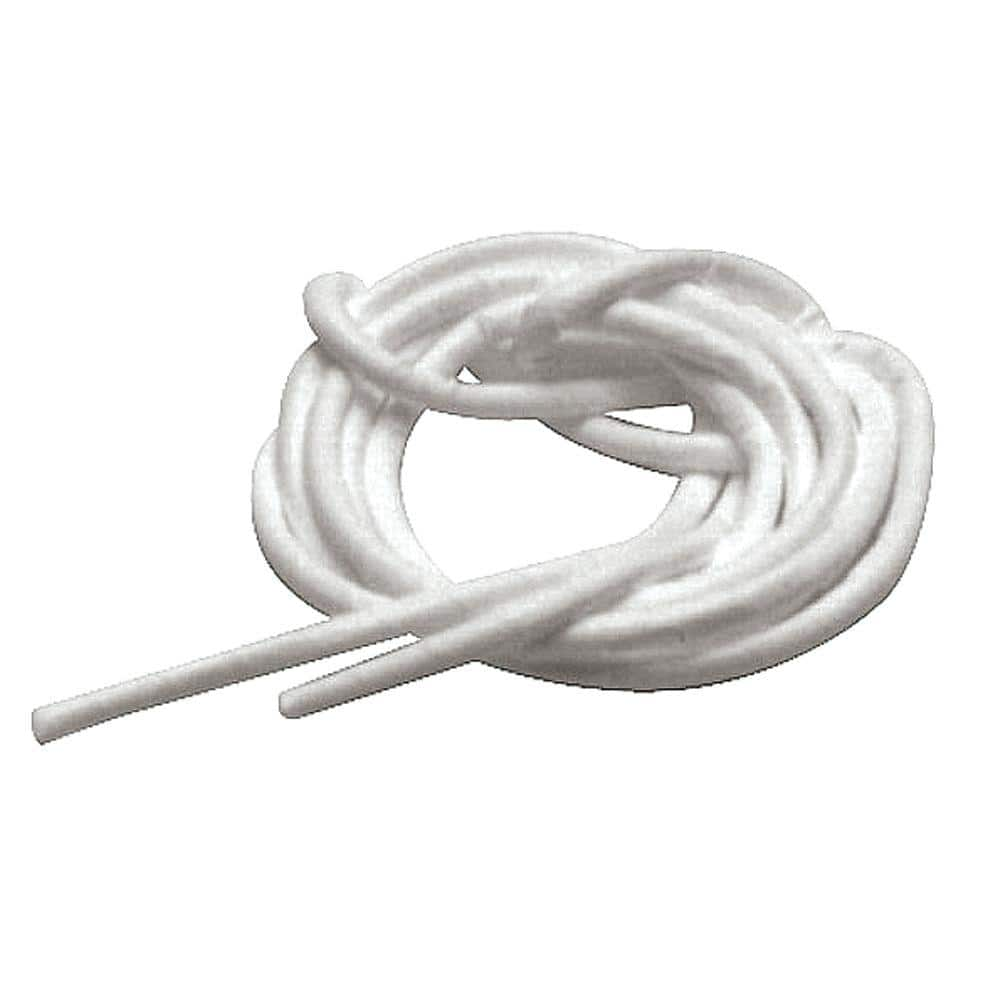
Here's one example. Teflon rope is used for valve packing:

Teflon has COUNTLESS applications other than lubricity, from chemical resistance (google teflon beaker) to pasta extrusion molds (for wear resistance, more than lubricity) to thermal resistance.

I too don't care what you do or don't give a rip about. Your inside knowledge of the NPT fitting business is flawed. Plain and simple. NPT has not changed since 1864. It had a helical leak path then, and it still does to this day. Many dryseal threadforms have been invented to get around this, with NPTF being the predominant one, but NPT by itself requires a thread sealant.
 
To avoid these ads, REGISTER NOW!
Top Bottom