Let's just review what the OP is trying to do: To start with, a male NPT is a lower angle than the female NPT, so all of the sealing should happen over the first three or four threads at most. Leakage from a tapered pipe thread occurs when the male thread that does not fully penetrate the female thread provides a passage at the bottom of the interface from inside to out. Pipe sealants attempt to fill this void to prevent flow going out.
I usually work with hot oil at relatively low pressure often on environmentally sensitive sites, but also do high vacuum so leakage is something we take very seriously. We also have to do pipe thread fitups by the dozens at a time in the field, summer and winter, so I give this advice freely out of some expensively learned lessons. My job is to teach electrians, techs and engineers how to make gas-tight pipe joints.
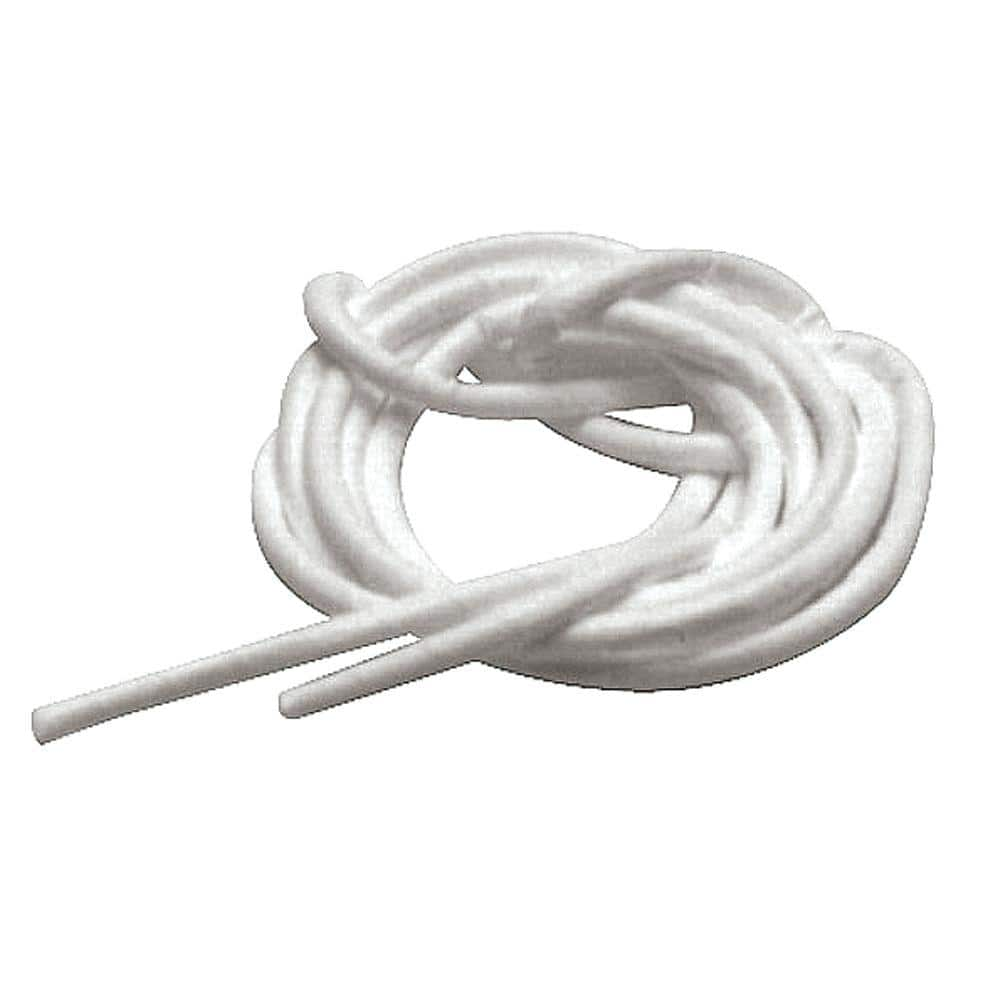
Given the above you can see where wick makes sense, but never having used it I can't say how well it stays in place in the joint. Remember the first few threads comment above.
Tapes, as has already been pointed out, can work very well IF you have the right tape for the job and you know how to use it. What I teach our guys is to start at the very first FULL thread. Tape works by being cut off by the threads and the remnants jammed to the bottom of the female thread. Putting it below the first full groove would just cut a bit off and let it drift into the flow stream. THAT is why most hydraulic installations do NOT allow pipe tape. I teach to tape ONLY on top of that first turn, and then the number of turns of the appropriate width according to the pipe size and tape thickness. Here is where tape is ultra-sensitive to technique: to work at all, it can NOT be really slippery or really stiff, and can not be wound too many turns or too loose. Missing out on any one of these four factors means the tape will slide up the male thread and not get pinched off in those first few critical threads. So: find the brand(s) and sizes that work for your application and be careful to get them pulled tight and right and you can seal most anything that isn't critical on the surface finish or cleanliness of the threads.
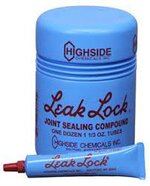
Pipe dopes are another thing that you need to know what product and pressure will work with what dope(s). I have found that some rated for "oil" fail miserably with the napthenics we work with (cyclic hydrocarbons are wicked good solvents, especially when hot) so I use them only with vacuum or water. I think most dope-on-tape people could get by fine if they learned to use the right tape the right way, but after spending some time with gas fitters, I can see how the layer of dope on top of tape would tend to lubricate the tape-to-female interface and keep it from riding up on the male thread (again, do it right and that would not be a problem, but I have watched a LOT of "professionals" that just wind the tape around loosely, so NEED that dope overcoat. For this reason I can NOT recommend putting dope under the tape on the male thread. If you are going to do dope (sorry for the pun) suggest strongly you check with other addicts to find out what product you will use with what process stream and thread size.
Anaerobic sealants are another matter. For them to work, the threads have to be CLEAN. Some require a primer and some do not, so clean the threads carefully with a non-residual solvent, blow them dry with compressed air and chose the sealant that is recommended for the size, pressure, temperature, process stream and fitting material you will using. For ultra-critical sealing of vacuum in shop work this is my go-to, but seldom try that in the field.


.png)