To avoid these ads, REGISTER NOW!

Seeking wire pulling advise

Innovate1

Well-known member
Joined
Jul 28, 2014
Messages
4,289
Location
Illinois near St. Louis, Missouri
I want the wall on the front side of the panel clean. It's a finished room. Yes both are inside. Just one side is a future in-law type suite and other side raw as-is barn storage space.
You could cover it with an access panel - don't know if you consider that "clean". Or put a large junction box below with access from the other side. Or come into the back of the panel as Mike suggested - might be tight on thickness needed for that. Or do a sweep out the bottom of the panel and angle it so it comes out of the wall a short distance over and then continue on the surface although that would need an odd bend to get parallel to the wall. Lots of ways to do it and still meet code.
 
To avoid these ads, REGISTER NOW!

Innovate1

Well-known member
Joined
Jul 28, 2014
Messages
4,289
Location
Illinois near St. Louis, Missouri
No inside my barn 20' horizontal run. I could go out the back but I'd rather not If possible. I have framing on the way and it's a cleaner wire install coming from the bottom.
I don't see how an LB on the wall surface that then feeds into the bottom of the panel is any cleaner than an LB on the wall surface that feeds into the back of the panel. Either way you have an LB and a conduit run showing. If you really don't want the stuff on the walls run up into the attic and over. If you use cable that doesn't require conduit that would be pretty easy - just a slightly longer run.
 

Bert_

Well-known member
Joined
Dec 24, 2016
Messages
9,751
Location
NW Iowa
Are you pulling with the bucket and have some type of pulley/sheave up top?
Yes.

I have a Maxis wire puller but I never use it unless it's a big pull inside a building or 100' in the air or something like that. Faster/easier setup to just hook to a piece of equipment and use a pulley to change direction if needed.

When I bury power and water together I like them at the same depth. Then you don't have to dig around the wire if you ever need to get to the water line
 

Bert_

Well-known member
Joined
Dec 24, 2016
Messages
9,751
Location
NW Iowa
I don't see how an LB on the wall surface that then feeds into the bottom of the panel is any cleaner than an LB on the wall surface that feeds into the back of the panel. Either way you have an LB and a conduit run showing. If you really don't want the stuff on the walls run up into the attic and over. If you use cable that doesn't require conduit that would be pretty easy - just a slightly longer run.
Back to back LB's are a pain in the ****. Do it only when you have no better option.
 
OP
D

Donttouchthat

Well-known member
Joined
Apr 11, 2021
Messages
147
Location
CONNECTICUT
I don't see how an LB on the wall surface that then feeds into the bottom of the panel is any cleaner than an LB on the wall surface that feeds into the back of the panel. Either way you have an LB and a conduit run showing. If you really don't want the stuff on the walls run up into the attic and over. If you use cable that doesn't require conduit that would be pretty easy - just a slightly longer run.
not sure if I am describing the 2 spaces accurately. Front side of the subpanel is a finished space (think your Living Room) But with an electrical panel. The other side is your garage so to speak. Two different animals regarding what is showing etc. I may have to through the back of the panel but I have to rip it out and reframe for securing the panel. And also the wires will be bent much tighter to get into the lugs. Bottom is nice and clean. I can't believe there isn't (I'm still searching) that similar function and size as a 2" DWV elbow.
 
OP
D

Donttouchthat

Well-known member
Joined
Apr 11, 2021
Messages
147
Location
CONNECTICUT
Even just a short piece of flex conduit (IDK if a PVC hard pipe conduit coupling fits the flex stuff) would work to make this bend.
 
OP
D

Donttouchthat

Well-known member
Joined
Apr 11, 2021
Messages
147
Location
CONNECTICUT
I think someone mentioned this before but I can't find it. And hopefully I have enogh leftover from my basement SER run. I could just run a short piece of SER from my panel box into that LB body and splice with the xhhw wires there. Or switch out the LB for a large junction box.
 

Innovate1

Well-known member
Joined
Jul 28, 2014
Messages
4,289
Location
Illinois near St. Louis, Missouri
I think someone mentioned this before but I can't find it. And hopefully I have enogh leftover from my basement SER run. I could just run a short piece of SER from my panel box into that LB body and splice with the xhhw wires there. Or switch out the LB for a large junction box.
A splice isn't allowed in an LB but a junction box would work.
 

shawhite

Well-known member
Joined
May 28, 2014
Messages
1,519
This thread is hilarious I had to read it several times because I though I was missing something. 120ft pull of alum conductor in 2 in pipe and he needs no less than 5 guys and a gallon of lube. Provided all the bends are sweeps and going in the right direction you could probably almost push 120ft. I personally am a fan of mule tape and would never use a three braid rope in a duct because I have seen them eat sweeps like the Cookie Monster. I also am not a fan of the halfhitch/lock stitch because I have seen what it does under tension. It usually pulls the end of the cable to the side causing the of the cable to form a L not good in conduits as the L lights to get hung up. But being this is 120ft I would use it in a second but I would put a clove hitch at the start then 2 half hitches with tape on both ends like shown but no duct tape because it adds to much bulk. Don’t over think this. Remember pulling cable is usually grunt work.
 
OP
D

Donttouchthat

Well-known member
Joined
Apr 11, 2021
Messages
147
Location
CONNECTICUT
This thread is hilarious I had to read it several times because I though I was missing something. 120ft pull of alum conductor in 2 in pipe and he needs no less than 5 guys and a gallon of lube. Provided all the bends are sweeps and going in the right direction you could probably almost push 120ft. I personally am a fan of mule tape and would never use a three braid rope in a duct because I have seen them eat sweeps like the Cookie Monster. I also am not a fan of the halfhitch/lock stitch because I have seen what it does under tension. It usually pulls the end of the cable to the side causing the of the cable to form a L not good in conduits as the L lights to get hung up. But being this is 120ft I would use it in a second but I would put a clove hitch at the start then 2 half hitches with tape on both ends like shown but no duct tape because it adds to much bulk. Don’t over think this. Remember pulling cable is usually grunt work.
Point noted. Thanks
 

sparky 1971

Well-known member
Joined
Oct 9, 2018
Messages
7,974
Location
Central Iowa
This thread is hilarious I had to read it several times because I though I was missing something. 120ft pull of alum conductor in 2 in pipe and he needs no less than 5 guys and a gallon of lube.
You probably should read post #1 again. He's never done this. Nobody said five guys. I said four, and I would be one of those four, because, IF things go wrong and the wire gets stuck, it might take another person to help get it free. I could probably pull it by myself, I've pulled larger wire farther by myself, but I would for sure have two people at the feed end, especially if the wire is on spools. And as far as the gallon of lube, it's easier to get the lube out of a bucket vs. screwing around trying to get it out of a bottle when it's 1/2 empty and whoever is using it has to bang the top on something to get it to fall to the hole. Since he will probably never need it again, why not use the whole gallon? If I didn't use the whole gallon, it wouldn't bother me, but it would wind up on a shelf and the next time I needed it, it would be moldy and get thrown away anyway, just like almost every partial bucket of lube I've ever had that sat for more than a couple of months. Ideal used to have quart tubs, a couple of those would do it, but they are a thing of the past.
Provided all the bends are sweeps and going in the right direction you could probably almost push 120ft.
Now, go read post #33 again. He is going to dig it straight with distinct intersections. There won't be any sweeps. That's why this gets a little more difficult.
I personally am a fan of mule tape and would never use a three braid rope in a duct because I have seen them eat sweeps like the Cookie Monster.
The one and only time I tried to use a mule tape to pull, it broke. It was four #6's and a #8, about a 150' straight shot with a 90° at both ends. It broke after about 100' and it wasn't a pulling hard. Why would anyone want to buy a 1000' mule tape to use 120' of it? He's probably never going to use it again. A 3/8" rope isn't going to cut into anything, and if he needs to buy a 100' and a 50' and tie them together, so what? Rope can always be used for other things and is a good thing to have around. A string will cut into the 90's for sure, a 1/4" rope might if it's a hard enough pull. What would you be using if this were a 200 amp feeder? A rope is what's used, that's why Ideal makes and sells wire pulling rope.
I also am not a fan of the halfhitch/lock stitch because I have seen what it does under tension. It usually pulls the end of the cable to the side causing the of the cable to form a L not good in conduits as the L lights to get hung up. But being this is 120ft I would use it in a second but I would put a clove hitch at the start then 2 half hitches with tape on both ends like shown
And if it's on wrong and slips off? Why not use a tried and true, proven method that's been used millions of times? I've probably stripped the wire and cut about 1/2 the strands off 20 times. A sock or pulling head would be even better, but he doesn't have either one of those.
but no duct tape because it adds to much bulk
If 1/2 the strands are cut off and the duct tape is used to keep the loop in the end closed, where is the bulk?
. Don’t over think this. Remember pulling cable is usually grunt work.
Again, the OP has never done this before. If he had, he wouldn't be on here asking what the best way to do it is. Based on the info that has been provided, I would do it the same way I suggested. The only differences would be that I would use my pulling head to attach the wires to, and if possible, I wouldn't have back to back LB's. If I laid eyes on the job, there might be a lot of things done differently, but that isn't going to happen.
 

shawhite

Well-known member
Joined
May 28, 2014
Messages
1,519
I guess I hurt your feeling. Sorry I just didn’t want the OP to over think this. 120ft of Al conductor should be a walk in the park even if he hasn’t done this grab the rope and pull have the person feeding end put some lube on while helping the wire in the pipe.
 

sparky 1971

Well-known member
Joined
Oct 9, 2018
Messages
7,974
Location
Central Iowa
I guess I hurt your feeling. Sorry I just didn’t want the OP to over think this. 120ft of Al conductor should be a walk in the park even if he hasn’t done this grab the rope and pull have the person feeding end put some lube on while helping the wire in the pipe.
You didn't hurt my feelings. I just fail to see how someone that comes on here to ask how to change from florescent to recessed lighting is remotely qualified to give advice about pulling cable through conduit.
 
Last edited:

shawhite

Well-known member
Joined
May 28, 2014
Messages
1,519
That’s funny. Been a lineman for 22 years in that time I can assure you I have pulled my share of cables.

I will leave the Op with a couple of my thought. If the pipe falls any significant amount end to end the lube will run to the low side over time and possibly into your basement hint the reason I wouldn’t gobbb on the lube. I’m sure you already planned on plugging both ends of the conduit going from the barn to the basement just make sure the product used meets code. Don’t over think it.
 
Last edited:
OP
D

Donttouchthat

Well-known member
Joined
Apr 11, 2021
Messages
147
Location
CONNECTICUT
Thanks everyone for your input. Feel like I got a good grasp on it.

Another question(s), I am contemplating on swapping out the Barn interior LB for a junction box and make a transition to SER cable to go into the panel box. But I would then run that through the studs in the panel box 2x6 wall. As I mentioned there will be a 1-1/2" pvc vert vent line in the wall going to the attic space. Is there any code as to how the horizontally run SER cable circumvents the vent pipe within that stud bay? Whether in front of or in back? Touching/No touching? This way I would eliminate 2" conduit and junction box exposed in the Barn storage side.

The junction box is in the bare existing 2x4 stud Barn area (where it enters from outside) and am thinking that I should run the SER cable in conduit until it gets into the new demising 2x6 wall that the panel box is on. Rather than have a short 2' section of SER cable exposed in the Barn. Would that be how you would do it? Thanks!
 

Innovate1

Well-known member
Joined
Jul 28, 2014
Messages
4,289
Location
Illinois near St. Louis, Missouri
Thanks everyone for your input. Feel like I got a good grasp on it.

Another question(s), I am contemplating on swapping out the Barn interior LB for a junction box and make a transition to SER cable to go into the panel box. But I would then run that through the studs in the panel box 2x6 wall. As I mentioned there will be a 1-1/2" pvc vert vent line in the wall going to the attic space. Is there any code as to how the horizontally run SER cable circumvents the vent pipe within that stud bay? Whether in front of or in back? Touching/No touching? This way I would eliminate 2" conduit and junction box exposed in the Barn storage side.

The junction box is in the bare existing 2x4 stud Barn area (where it enters from outside) and am thinking that I should run the SER cable in conduit until it gets into the new demising 2x6 wall that the panel box is on. Rather than have a short 2' section of SER cable exposed in the Barn. Would that be how you would do it? Thanks!
Seems like a good plan to me. Pretty sure there is no issue with running the SER past the vent pipe but others here would know better than me. With a 1.5" vent pipe in a 2 x 6 wall there should be plenty of room for the cable. Just have to be aware of it being in the wall when you attach things to the wall so you don't hit it.
 
OP
D

Donttouchthat

Well-known member
Joined
Apr 11, 2021
Messages
147
Location
CONNECTICUT
Seems like a good plan to me. Pretty sure there is no issue with running the SER past the vent pipe but others here would know better than me. With a 1.5" vent pipe in a 2 x 6 wall there should be plenty of room for the cable. Just have to be aware of it being in the wall when you attach things to the wall so you don't hit it.
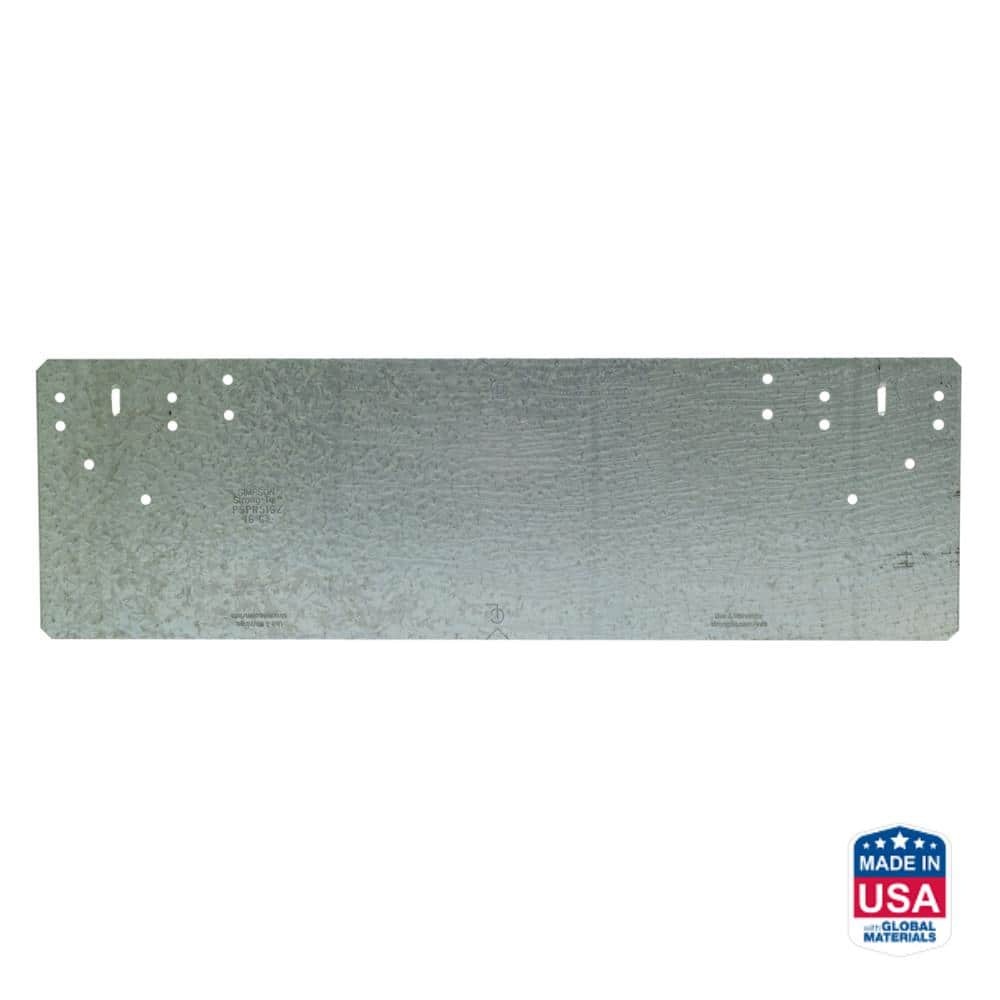
Thanks. Nail plates used for sure (y)
 
To avoid these ads, REGISTER NOW!

mike93lx

ALLIANCE MEMBER
Joined
Dec 9, 2013
Messages
37,642
Location
Richmond, VA
Those are plate straps with holes all over them, not nail plates.
They're designed for a completely different use.
Not what I am referring to

Simpson Strong-Tie PSPNZ 5 in. x 16-5/16 in. ZMAX Galvanized Protecting Shield Plate Nail Stopper
SKU# 100375202
 

sparky 1971

Well-known member
Joined
Oct 9, 2018
Messages
7,974
Location
Central Iowa
Hi. I've never pulled any major wires before and was seeking some tips and advise. Will be pulling 4 wires (3@ 1/0 xhhw-2 AL and 1@ #4 awg xhhw-2 AL) though a 2" conduit. The new Barn subpanel is uphill (about 6-7ft in elevation from the House) if that matters. I have a drawing to scale (attached) showing my rum and planned conduit bodies. Once in House basement I am transitioning to a 1/0,1/0,1/0,#2 ground SER AL cable to my main panel.

Where would you start the pull? Would it be done in phases then hand fed in places? What kind of pulling implements? etc. Thanks!Wire Pull-1.jpgWire Pull-2.jpg
I'm not trying to tell you what to do, but I have to ask. Is there a reason for putting the sub panel where you are? Could you put it right in front of the first LB and go right into the back of it? That would eliminate a lot of screwing around with boxes, SER cable, and splices. It will make some of your interior wire pulls a little bit longer though.
 
Last edited:

Norcal

Well-known member
Joined
Mar 16, 2008
Messages
13,763
I'm not trying to tell you what to do, but I have to ask. Is there a reason for putting the sub panel where you are? Could you put it right in front of the first LB and go right into the back of it? That would eliminate a lot of screwing around with boxes, SER cable, and splices. It will make some of your interior wire pulls a little bit longer though.
Good point! We all need to remember the KISS principle, Keep It Simple Sir, & yes am well aware of the other one but no need to be nasty.:p
 
OP
D

Donttouchthat

Well-known member
Joined
Apr 11, 2021
Messages
147
Location
CONNECTICUT
I'm not trying to tell you what to do, but I have to ask. Is there a reason for putting the sub panel where you are? Could you put it right in front of the first LB and go right into the back of it? That would eliminate a lot of screwing around with boxes, SER cable, and splices. It will make some of your interior wire pulls a little bit longer though.
Been through Many revisions... But at this point (framing started) this is the final, which I think will be good now. Here's the final plan so you get a better idea of things. Plus a few on the project. Thanks
 

Attachments

  • Apt plan-1.JPG
    Apt plan-1.JPG
    117.9 KB · Views: 29
  • 2016-12-27 00.42.54.jpg
    2016-12-27 00.42.54.jpg
    333.7 KB · Views: 29
  • P1010203.JPG
    P1010203.JPG
    454.7 KB · Views: 28
  • IMG_20210828_140018176.jpg
    IMG_20210828_140018176.jpg
    317.2 KB · Views: 27
  • IMG_20220520_092147046_HDR.jpg
    IMG_20220520_092147046_HDR.jpg
    433.4 KB · Views: 25
  • IS2rhmu76blo8f1000000000.jpg
    IS2rhmu76blo8f1000000000.jpg
    192.8 KB · Views: 23
  • IMG_20210626_093513967.jpg
    IMG_20210626_093513967.jpg
    433.8 KB · Views: 25

Miss the Pontiacs

Well-known member
Joined
Nov 7, 2016
Messages
16,482
Location
Saskatchewan Canada
Lots of good advice on your subject. Noticed Yellow 77 mentioned. While this doesn’t apply in this thread but should be noted. In metal conduit a repull where the original lubricant was Yellow 77 is difficult. Y77 is or was partly a lanolin based product. It can meld wire or help it stick it right to metal conduit as it leaves a film behind when it dries. A repull is next to impossible. Trust me I know.
HD sells a pulling product made by Klein that is pretty good. Due to its consistency we used to call it snot.
We used to use a product made by Polywater which I think was superior but the Klein product is more than adequate.
Good luck. Buy 2 bottles as you don’t want to run out during a pull and it can be used for other projects where a little lubricant is handy.
 
OP
D

Donttouchthat

Well-known member
Joined
Apr 11, 2021
Messages
147
Location
CONNECTICUT
Lots of good advice on your subject. Noticed Yellow 77 mentioned. While this doesn’t apply in this thread but should be noted. In metal conduit a repull where the original lubricant was Yellow 77 is difficult. Y77 is or was partly a lanolin based product. It can meld wire or help it stick it right to metal conduit as it leaves a film behind when it dries. A repull is next to impossible. Trust me I know.
HD sells a pulling product made by Klein that is pretty good. Due to its consistency we used to call it snot.
We used to use a product made by Polywater which I think was superior but the Klein product is more than adequate.
Good luck. Buy 2 bottles as you don’t want to run out during a pull and it can be used for other projects where a little lubricant is handy.
Thanks for the info and link. They do stock it at my HD (y)
 

Miss the Pontiacs

Well-known member
Joined
Nov 7, 2016
Messages
16,482
Location
Saskatchewan Canada
Forgot! Mule tape is also superior to the twine (similar to baling twine) mentioned however is more expensive. MT won’t have a tendency to cut into nonmetal conduit on corners or bends. Great for other uses as well. You might throw out 20’ of baler twine but will likely roll up and save 20’ of MT and reuse it many more times.
 

hh76

Well-known member
Joined
Nov 9, 2010
Messages
3,451
Location
NE Wisconsin
Looking at you diagram, looks like you will be entering the home below grade on the low side of the run? That can be an issue if the conduit picks up ground water.
 

aggie113

Well-known member
Joined
Jul 22, 2015
Messages
475
Location
San Antonio, TX
I had an odd pull just this weekend. I'd had my local network fiber run to the garage sitting exposed to the weather for a few months and finally decided to put the weatherproof plastic conduit to use before it got too brittle (the fiber). Was a 45 ft run to get it from the side of the garage to the side of the house. I used string, an N52 magnet and a "dock buster" fishing magnet to run the string through the conduit and then pull the fiber through. It took a bit of niggling but got it through without much fuss after straightening the conduit run out a bit. Best I could come up with running something so flimsy through conduit.
 

hh76

Well-known member
Joined
Nov 9, 2010
Messages
3,451
Location
NE Wisconsin
Thanks, what would be your suggestion?
run the conduit up above grade to a pull box, then enter the building at that height. The pull box will give the water some place to seep out, if it ends up collecting any.

I don't know how often it actually happens, but underground pipe can gather water. Pvc underground is for physical protection, not really considered water proof, that is why you need to choose a insulation rated for wet locations. I've seen water running out of pull boxes on a particularly wet day, and it would be a mess if it were a finished basement.
 
OP
D

Donttouchthat

Well-known member
Joined
Apr 11, 2021
Messages
147
Location
CONNECTICUT
run the conduit up above grade to a pull box, then enter the building at that height. The pull box will give the water some place to seep out, if it ends up collecting any.

I don't know how often it actually happens, but underground pipe can gather water. Pvc underground is for physical protection, not really considered water proof, that is why you need to choose a insulation rated for wet locations. I've seen water running out of pull boxes on a particularly wet day, and it would be a mess if it were a finished basement.
I don't know what you mean by "run the conduit above grade" and "pull box" Thanks
 
OP
D

Donttouchthat

Well-known member
Joined
Apr 11, 2021
Messages
147
Location
CONNECTICUT
run the conduit up above grade to a pull box, then enter the building at that height. The pull box will give the water some place to seep out, if it ends up collecting any.

I don't know how often it actually happens, but underground pipe can gather water. Pvc underground is for physical protection, not really considered water proof, that is why you need to choose a insulation rated for wet locations. I've seen water running out of pull boxes on a particularly wet day, and it would be a mess if it were a finished basement.
re. rated for wet locations. using XHHW-2 wire


mike93lx

ALLIANCE MEMBER
Joined
Dec 9, 2013
Messages
37,642
Location
Richmond, VA
I don't know what you mean by "run the conduit above grade" and "pull box" Thanks
He's saying to put a junction box above grade and run the conduit to that.

If you can't enter the building above grade, you could run back down from that box to below grade, then enter. It would at least prevent water in the long run from getting in the house. But, it's another box to deal with in the run and won't make the pull easier
 

hh76

Well-known member
Joined
Nov 9, 2010
Messages
3,451
Location
NE Wisconsin
Yes, I mean place a junction box above grade on the outside of the building, and sweep your duct up into it. Any water that collects in the pipe can drain from that junction box.

I don't want to be a fear monger, just noting a possible negative.

Here is a good forum discussion about the issue. Link
 
OP
D

Donttouchthat

Well-known member
Joined
Apr 11, 2021
Messages
147
Location
CONNECTICUT
Yes, I mean place a junction box above grade on the outside of the building, and sweep your duct up into it. Any water that collects in the pipe can drain from that junction box.
I don't want to be a fear monger, just noting a possible negative.

Here is a good forum discussion about the issue. Link
I didn't realize that ground water could enter the conduit with glued joints and all. But given that you say it does and best practices would be to come into the basement above grade. I will reassess and revise my plan. It would seem to make my pull more difficult for sure. But one less hole to core through the foundation wall. Thanks

If you can't enter the building above grade, you could run back down from that box to below grade, then enter. It would at least prevent water in the long run from getting in the house. But, it's another box to deal with in the run and won't make the pull easie
 
OP
D

Donttouchthat

Well-known member
Joined
Apr 11, 2021
Messages
147
Location
CONNECTICUT
Update: Pull was a success! My wife and I did the main 120ft run in less than 1/2hr. Went real smooth.

Sucked a rope pull line with vacuum. Amazing how fast that line gets through the conduit! Attached a 3/8 nylon rope I had that was just long enough. Braided the loop end. I was at the Barn with one glove on for Yellow 77 lube and the other hand bare for pushing. Actually was able to push with both hands even with lube covered glove. Had phone set up to coordinate our push/pulls. Was never really hard. Ground wire got pinched in the spool twice during the pull. Other than that, all wires came of their spools great. I didn't like the result of my 1st wire head, result was too big. And seriously had my doubts of getting it through my 2" conduit. I made the mistake of twisting the wires around one another after feeding through the rope loop. Then watched more videos and saw that wires were not twisted once fed through the rope lube. This made it easier to smash together tighter. 2nd wire head was much better! Used about a half a gallon of lube. Although not in picture, the set up for pull at the house did have a pulley set up for the rope (it was removed in picture shown to get some extra wire length on the pull side. Inside barn pull leg (20ft) was done just by my self. Had my doubts about the way my spools were staged on my scaffolding but worked great.

Some changes I made as per suggestions of others. Instead of running the 2" conduit straight into the basement I decide to go in above grade due to possible water getting into conduit. I replaced the interior Barn LB with a junction box. Actually I did that thinking I was going to need to splice a SER cable for the last 20ft to the subpanel due to my concern with 2" conduit conflict with vert vent pipe in the wall but was able to get my conduit through the wall OK and stick with original plan for bare wire all the way to the subpanel. Glad I ended up putting in the junction box anyways as others pointed out this would be a pain point with back to back LB's.

Anyhow. Glad it's over! just waiting for my Polaris type connectors to splice the wires together in my basement. Thanks everyone for all the good tips and info!!IMG_20220720_125016004.jpgIMG_20220720_130230473.jpgIMG_20220720_093348596_HDR.jpgIMG_20220719_131958452_HDR.jpgIMG_20220719_132039470_HDR.jpgIMG_20220720_122117460.jpg
 

slimpickins

Well-known member
Joined
Mar 27, 2011
Messages
2,404
Location
Canada
I just saw this thread and thought I would post a quick video (gif) of the neat wire pulling winch (powered by a battery drill) that my contractor used to pull 200A service conductors about 80-ish feet from the power pole to the house. This thing made it look so easy. The video only shows the last few seconds of the pull. Posting this in case it may help someone that finds this thread later. (on second thought, this might have been the muni-poco.) You can see the big spool of white flat pulling tape.
ElectricalPull.gif
 
To avoid these ads, REGISTER NOW!
Top Bottom