To avoid these ads, REGISTER NOW!

VR6ix

Well-known member
Joined
Mar 24, 2013
Messages
355
Location
Onterrible, Canuckistan
8000 Watts Maximum Cutting thickness (at least on our Mitsubishi's):

1.000 thick Hot Rolled

.500 Stainless

.375 Aluminum

Nice looking work! Does your shop do the design work or just fab?

Interesting that your 8k laser will do 1" steel but only 3/8" alu. The 6k Bystronic fibre where I work does 1/2" SS & alu and we top-out at 3/4" HRS as the cut quality doesn't justify trying anything thicker.
 
To avoid these ads, REGISTER NOW!

4 FN 27

ALLIANCE MEMBER
Joined
Oct 19, 2015
Messages
4,635
Location
Minnesnowta
What are the limits of this kind of service? For example, are cuts limited to right angles or is a beveled edge possible from the start?

not knowing their equipment but seeing some of the items posted on this thread and others I am going to assume only 90° or right angle.
 

4 FN 27

ALLIANCE MEMBER
Joined
Oct 19, 2015
Messages
4,635
Location
Minnesnowta
Nice looking work! Does your shop do the design work or just fab?

Interesting that your 8k laser will do 1" steel but only 3/8" alu. The 6k Bystronic fibre where I work does 1/2" SS & alu and we top-out at 3/4" HRS as the cut quality doesn't justify trying anything thicker.

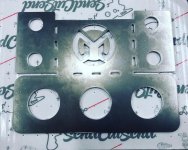
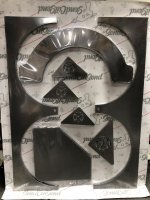
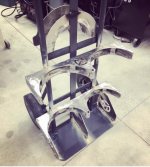
We did all the design and development for the all except the 2nd picture. That is a frame in the development stage but the company who is behind it sat shoulder to shoulder with our Engineers to finalize the design and they helped do the assembly this week. They shipped this morning.

The other 3 assemblies were designed 100% in house with the input and requirements from the customers. They do not have in house Engineers thus we do it all for them. BOM Management, Fabrication to fulfillment.

We do this for a number of companies across the US and a few aboard.


I looked a Bystronics years ago but their automation (FMS) was not up to speed at the time. I know we could cut 1/2 Aluminum but it is not worth the risk of bouncing a Beam back and taking out the Fiber.

Like I tell the guys in the shop: "We can do anything. Just like you can drive home blindfolded, it just comes with a consequence".

That stand up service box is seriously badass!

Thank you Ryan. That is a Tool Staging System. The technology built into it is incredible. It can track your tools and if somebody takes a tool other than you it will send a message to your phone or tablet and send you video of who took what.

3 versions left the Shop about 3 weeks ago to make tour around the country to drum up sales.

Our strength is in our Engineers. We have 8 of the most seasoned veteran Sheet Metal guys in the business and a few rising stars in training and mentor programs currently. It is what we do all day every day.
 
Last edited:

Bodj Built

Well-known member
Joined
Feb 3, 2016
Messages
1,165
Location
Moorpark, CA
Very cool! Is there any way for someone who doesn't know how to create the cutting file to have parts made?

Say someone designs a part and draws everything out with precise measurements... Is there a way for this person to get part made without being friends with someone? Can you pay someone to make this into a file?

Send cut Send will work off napkin sketches. Send it to them.
 

JackOfDiamonds

Well-known member
Joined
Jul 31, 2020
Messages
706
Location
Idaho (USA)
Here's some more SCS ****...various bike parts cut out of 4130 chromoly. The service is really in its own for small parts which can be had for only a buck or two each, no matter how complex.
 

Attachments

  • PXL_20201212_225320028.jpg
    PXL_20201212_225320028.jpg
    96 KB · Views: 160
  • PXL_20210206_034843590_2.jpg
    PXL_20210206_034843590_2.jpg
    65.5 KB · Views: 133
  • PXL_20210206_034941930_2.jpg
    PXL_20210206_034941930_2.jpg
    99.9 KB · Views: 151

snyder

Well-known member
Joined
Dec 18, 2008
Messages
545
Location
Baltimore md.
Sorry for a dumb question. I found a fee vector file online that I would like cut into a peice of 20 gauge sheet to make a custom radiator cover for the home. Can I just send that file along with my height and width to send cut send or is the height and width already encoded in the vector file?
 
OP
R

Ryan

Administrator
Staff member
Joined
Jan 26, 2006
Messages
5,716
Location
Texas/Hawaii
Sorry for a dumb question. I found a fee vector file online that I would like cut into a peice of 20 gauge sheet to make a custom radiator cover for the home. Can I just send that file along with my height and width to send cut send or is the height and width already encoded in the vector file?

Yeah... pretty much... They will probably have some questions for you, but... yeah...
 

thejimmy

Well-known member
Joined
Dec 5, 2016
Messages
165
Location
Clearwater FL.
Sorry for a dumb question. I found a fee vector file online that I would like cut into a peice of 20 gauge sheet to make a custom radiator cover for the home. Can I just send that file along with my height and width to send cut send or is the height and width already encoded in the vector file?

Best to read through their guidelines for laser cutting, should answer your questions and more...
 

R. Deschain

Well-known member
Joined
Jan 7, 2016
Messages
393
Location
Seattle, Wa
I use the bejesus out of SCS. maybe 3-4 orders a month. They do a fantastic job and will call me if my design needs tweaking. They have saved and MADE me $$ in the last 1.5 years. Recently having a bracket made, custom gussets, and all the parts for my new cutting torch cart as well.

I own a CNC and looked at buying a CNC plasma table, but for the volume I produce and space I have available, SCS is a financially better option.
 

Attachments

  • IMG_7229[1].jpg
    IMG_7229[1].jpg
    134 KB · Views: 124
  • LHFM9792.jpg
    LHFM9792.jpg
    148.9 KB · Views: 146
  • ACZS3928.jpg
    ACZS3928.jpg
    120.2 KB · Views: 147
  • IMG_0112.jpg
    IMG_0112.jpg
    91.5 KB · Views: 148
  • IMG_E7328.jpg
    IMG_E7328.jpg
    58.5 KB · Views: 174
Joined
Dec 20, 2013
Messages
4
I've been trying to get the local laser shop to cut out this deck plate for three months. Thanks to Ryan 6 days and this showed up.
 

Attachments

  • IMG_1215.jpg
    IMG_1215.jpg
    103.4 KB · Views: 201

Gerald O

Well-known member
Joined
Mar 5, 2013
Messages
1,884
Location
NC
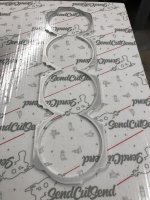
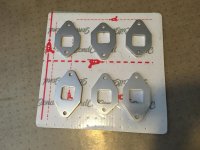
Sent drawings on Monday, laser-cut, 3/8" plate 304 stainless steel header flanges on my doorstep by Friday. :cool:

attachment.php
 

Attachments

  • IMG_8373.jpg
    IMG_8373.jpg
    111.4 KB · Views: 85
  • IMG_8370.jpg
    IMG_8370.jpg
    121.5 KB · Views: 652

fordkid88

Well-known member
Joined
Nov 10, 2013
Messages
680
I'm not knocking them but I did their quote and they gave me an estimate for 950ish for 12g 304 for a work envelope of about 2'x3' while oshcut game me 340 for the same piece. The local shop quoted it in at 10 bucks cheaper than osh. I don't know if it was a glitch in their system but that quote wasn't even close to reasonable.
 

Gerald O

Well-known member
Joined
Mar 5, 2013
Messages
1,884
Location
NC
They charged $100 for the 6 header flanges, 1-day shipping included. So about $17 each.
 

Firebrick43

Well-known member
Joined
May 12, 2015
Messages
14,022
Location
West central Indiana
I'm not knocking them but I did their quote and they gave me an estimate for 950ish for 12g 304 for a work envelope of about 2'x3' while oshcut game me 340 for the same piece. The local shop quoted it in at 10 bucks cheaper than osh. I don't know if it was a glitch in their system but that quote wasn't even close to reasonable.

I have noticed orientation matters on their quotes. My local shop (high definition plasma) charges mainly on inches cut and a steel weight. SendCutSend just seem to charge by largest dimension by largest dimension(box) irrespective of nesting.

One small part I submitted at a 45 degree angle as was surprisingly high. Rotated it 45 and it was half of the first "quote"

Here is the order I received today

View media item 111049
Right half .187 stainless, left .250 pickled steel.

View media item 111050

Edge quality pretty good.


View media item 111047
View media item 111046
Some tab and slot parts

View media item 111045
View media item 111048
I normally design with .008" clearance on tab/slot parts with the high definition plasma parts my local guy provides. I normally have to touch up here and there with a file.

These lasered part I designed with a .005" fit (.0025 per side) and needed no touch up, they nearly fell together. I could have probably dropped it to .003" or .004" with no issues.

I will be using them again for small intricate parts and low volume such as these. My local guy fits my in when he can(He has grown quite large and does huge runs now) His prices are cheaper for cut and deburred parts than I can buy sheet steel for. But, while I thought his high definition plasma was good, it doesn't hold a candle to SCS laser. It also can take him a couple of weeks to fit my small beans orders in.

Every thing here was $242 total and took 5 days including ship time/weekend so really only 3?
 
Last edited:
OP
R

Ryan

Administrator
Staff member
Joined
Jan 26, 2006
Messages
5,716
Location
Texas/Hawaii
Here's my prototype bed rack for the Diamondback...
 

Attachments

  • 01.jpg
    01.jpg
    155.3 KB · Views: 150
  • 02.jpg
    02.jpg
    155.7 KB · Views: 139

LXCam

ALLIANCE MEMBER
Joined
Apr 23, 2013
Messages
19,109
Location
AZ
Gezzz Pat, it figures it was your company that came up with that beauty. Just this morning fedwrench posted a picture of these boxes he saw at barret Jackson. Nice job bud.

8000 Watts Maximum Cutting thickness (at least on our Mitsubishi's):

1.000 thick Hot Rolled

.500 Stainless

.375 Aluminum

Thickest I have done in the Water Jet was 2 in Bar Stock and 2 inch Aluminum. Have done some D2 Tool Steel at 1.500 thick +/-.

The Laser only houses are racing their way to the bottom on pricing to stay competitive which is a good thing for GJ peeps. Us, we'll stick with the value add of complete fabrication including BOM Management and Assembly.

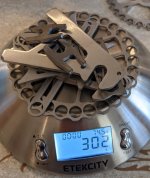
A few of our latest creations:

attachment.php


attachment.php


attachment.php


attachment.php
 

4 FN 27

ALLIANCE MEMBER
Joined
Oct 19, 2015
Messages
4,635
Location
Minnesnowta
Gezzz Pat, it figures it was your company that came up with that beauty. Just this morning fedwrench posted a picture of these boxes he saw at barret Jackson. Nice job bud.

Thank you...we are just having fun in the Sheet Metal World...we are in the process of designing a shorter smaller version too...

Wait until you see out next creation...it will change the Vending World as we know it. NDA's are in place thus I can not share any pictures just yet.
 

gtae07

Well-known member
Joined
Mar 6, 2015
Messages
2,965
Location
Fayetteville, GA
I had them cut the instrument panel for my airplane. It came out great. I would have more business for them but the thinnest aluminum they offer (at least last time I checked) was .063, and I could use a lot of .025 and .032 for little brackets.
 
To avoid these ads, REGISTER NOW!

catalytic

Well-known member
Joined
Jul 16, 2011
Messages
636
Location
Boston, Los Angeles, Cleveland
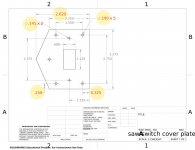
Quick question for you all: I need a simple electrical cover plate for my 1943 army metal saw resto. Here is the schematic (not drawn to scale).

https://i.imgur.com/5CQP7E1.png

I have Adobe Illustrator, but not sure how to use it to make a version that SendCutSend will take. Anyone know of a super quick tutorial, or what object tool in AI to use to get the dimensions correct? (I'm experienced with other Adobe tools, just not so much AI).

5CQP7E1.png
 
Last edited:

thejimmy

Well-known member
Joined
Dec 5, 2016
Messages
165
Location
Clearwater FL.
Quick question for you all: I need a simple electrical cover plate for my 1943 army metal saw resto. Here is the schematic (not drawn to scale).

https://i.imgur.com/5CQP7E1.png

I have Adobe Illustrator, but not sure how to use it to make a version that SendCutSend will take. Anyone know of a super quick tutorial, or what object tool in AI to use to get the dimensions correct? (I'm experienced with other Adobe tools, just not so much AI).

5CQP7E1.png

This is their guidelines for file formats LINK
 

loganb

ALLIANCE MEMBER
Joined
Dec 29, 2011
Messages
5,517
Location
Omaha, NE
Quick question for you all: I need a simple electrical cover plate for my 1943 army metal saw resto. Here is the schematic (not drawn to scale).

https://i.imgur.com/5CQP7E1.png

I have Adobe Illustrator, but not sure how to use it to make a version that SendCutSend will take. Anyone know of a super quick tutorial, or what object tool in AI to use to get the dimensions correct? (I'm experienced with other Adobe tools, just not so much AI).

5CQP7E1.png

This look right?

The dimensioning is a mess as I did it quick but make any markups necessary and I'll update it tomorrow and can post an updated drawing then send you the .dxf file for upload to them after it's good.

View media item 111332
 

Attachments

  • saw switch cover plate.pdf
    52.9 KB · Views: 2

catalytic

Well-known member
Joined
Jul 16, 2011
Messages
636
Location
Boston, Los Angeles, Cleveland
This look right?

The dimensioning is a mess as I did it quick but make any markups necessary and I'll update it tomorrow and can post an updated drawing then send you the .dxf file for upload to them after it's good.

^^WOWOWOW -- amazing!! Just double-checked and found a few errors that I marked in the file below in red (errors were mine, not yours---seeing it to scale made me catch that the outer 4 holes are closer to the bottom than the top and a couple other little things!)

The outer corners are all supposed to be slightly rounded, but if this is a pain to do in CAD I can do 'manual rounding' on my mill or with a file.

What did you use to make this file?

There should be an 'awesome member' award for people like you.
 

Attachments

  • saw switch cover plate-FIXED2-JPEG.jpg
    saw switch cover plate-FIXED2-JPEG.jpg
    88 KB · Views: 106
Last edited:

loganb

ALLIANCE MEMBER
Joined
Dec 29, 2011
Messages
5,517
Location
Omaha, NE
Here is an updated file, couple notes

-rounded outside corners at 1/16" radius, it's easy to adjust(like 3 clicks) so you call the ball on what size of radius you want
-Updated hole locations, note that with these changes the Center to Center is different, so verify this is what you need
-Changed hole diameters

Also this should be scaled at 1:1/full size so you should be able to print it out and do some Cardboarded Aided Design and place in in position to make sure it's what you want, happy to make other changes as you see fit as well.

And happy to help, it was an easy project to kick out as I was already in "CAD mode" mentally, I use SolidWorks for CAD projects like this. Learned it in school and used to use 3D modeling commonly for my job(engineering) but moved to a new role and don't use it for work anymore so it's now just hobbies/3d printing/fun stuff
 

Attachments

  • saw switch cover plate REV1.pdf
    46.8 KB · Views: 15

laser3kw

Well-known member
Joined
Nov 17, 2012
Messages
7,276
Location
northen IL
word of caution:
if you send a "dxf" to a company for a part to be made from, the company will use the geometry (the lines and circles) as the actual pattern to make the part. They may check the dimensions of a couple of features but general you will get what you send, errors and all. Some shops may check further and ask questions before cutting, some won't.
If the features are "floating" and are not grounded, they could be made out of place and still be "to print". As just one example in the reference shown above for example, the rectangle feature does not have a defined position in reference to edges or to other features that have clear definitions. The machinist should never assume that a part has inferred feature placement.
Also, when you dictate a tolerance, you may drive the price up - way up! A friend of mine told me once
"the more zeros after the decimal point, the more zeros are added to the price."
Usually, three places after the decimal dictates +/-.005, which most cnc equipment will hold without extra effort. Two place after the decimal may be +/-.015, different shops have different standards. A tolerance of "+/-.001", that might take precision machine work such as EDM or grinding and the price will reflect that.
Best thing to do is to send the print and then followup with a phone call and discuss your true needs. That will help assure you get the shape you want, out of the best material for your use and at the lowest price.
 

loganb

ALLIANCE MEMBER
Joined
Dec 29, 2011
Messages
5,517
Location
Omaha, NE
Some good points laser3kw, thanks for commenting.

Absolutely agree that the part as dimensioned there has ambiguity that if machined in a conventional manner could lead to an issue depending on how the print was interpreted and how familiar the machinist was with the intended purpose and use.

On the flip side, knowing that it's not being machined in that manner and that it will be based off the drawing uploaded vs a print and then automatically processed and likely not touched by an operator in their workflow until it comes off the laser, the print matters less and what matters more is the model/file. This is a flip from the old days where you could easily clean up "sins" in the solid models in the drafting mode because nobody on the shop floor worked with the model....now it's almost the reverse. Machinists in my company are often using the solid models for more than just CAM programming and if you get the model right(especially for complex shapes/curves/molded parts) the prints are often a reference document with true design intent residing in the model.

Good dimensioning practices should still be followed, but I do(and did there) worry less about the print vs getting the underlying model right as that's what's being used to produce the part.


Sent from The Garage Journal mobile app
 

laser3kw

Well-known member
Joined
Nov 17, 2012
Messages
7,276
Location
northen IL
Some good points laser3kw, thanks for commenting.

Absolutely agree that the part as dimensioned there has ambiguity that if machined in a conventional manner could lead to an issue depending on how the print was interpreted and how familiar the machinist was with the intended purpose and use.

On the flip side, knowing that it's not being machined in that manner and that it will be based off the drawing uploaded vs a print and then automatically processed and likely not touched by an operator in their workflow until it comes off the laser, the print matters less and what matters more is the model/file. This is a flip from the old days where you could easily clean up "sins" in the solid models in the drafting mode because nobody on the shop floor worked with the model....now it's almost the reverse. Machinists in my company are often using the solid models for more than just CAM programming and if you get the model right(especially for complex shapes/curves/molded parts) the prints are often a reference document with true design intent residing in the model.

Good dimensioning practices should still be followed, but I do(and did there) worry less about the print vs getting the underlying model right as that's what's being used to produce the part.

Sent from The Garage Journal mobile app

I understand that in some cases, the "machinist" or "operator" (I interchanged the terms - I also interchanged "machining" and "processing") may not be the person programming the machine to cut the part. Once the laser or other machine processes the part, how is it inspected? The print should be the master. That is why we use GD&T and ISO standards. At the very least, there should be reference dimensions shown for the purpose of inspection.
Most shops rely on manual measurements and maybe cmm to compare to a print. Even then, most shops do not have the ability to do any sort of true 3 dimensional scan and have the ability to compare that directly to a 3 dimensional model.
 

4 FN 27

ALLIANCE MEMBER
Joined
Oct 19, 2015
Messages
4,635
Location
Minnesnowta
The print should be the master.

Respectfully I am going to 100% disagree with this statement.

Everyday we receive Models that do not match the Print. This means somebody overrode the link between the Print and the Model disconnecting the 2 and now you can never ever trust that data again or the design process.

The Model should be absolute Ground Zero. The Model should push all changes to the Print Updates and to the Manufacturing Processes (as more and more machines and software link directly to the Model for X, Y and Z to create the code for the process).

Our customers who supply us with accurate Models and Prints derived from those Models reduce the opportunity for lead-time increases and costly errors.

We have other customers who call the Print Ground Zero thus the first step in the Engineering Process is to make the Model match the Print so our Automated Laser, Turret and Forming Software can make the part. Then question is where do you start looking and when do you stop. If you want 100% quality and part integrity you have to 100% inspect the Model supplied to the Print which adds hours and hours to Engineering increasing lead-time and increasing cost.

Everything should be derived from a clean Model. Print included.

As I tell all our customers: Why pay your people to **** it and then pay me to unfuck it?

Moving forward we are looking at an automated quoting process. You just dump the Model in and it provides a quote based on the processes required and the associated cost. A Model is real geometry unless you change the Print and not update the Model. Now the foundation that everything from the point of Quoting through Shipping the product has to be second guessed and never trusted. A pdf print or printed copy of a native print is nothing but Pixels. It adds no value other than conveying a message to the Account Manager, Buyer, Production Manager, Operator or Inspector. The Model on the other hand conveys the finite detail to make the code to produce a part. If your Machines are capable (Process Capability) then the part should be in Print. Not all Machines are capable...wear, "advertised held tolerances" and Tooling Tolerance build-ups can make a machine not capable.

My preference, send me a Model and no Prints or Prints that only identify critical to function dimensions and let me detail the Print the way it will be manufactured trusting that our process is capable.

Most Designers/Draftsman today have lost the fine art of Drafting Etiquette...one of the biggest costs in Manufacturing today that nobody seems to care about...until you go to build the part.
 

laser3kw

Well-known member
Joined
Nov 17, 2012
Messages
7,276
Location
northen IL
Respectfully I am going to 100% disagree with this statement.

Everyday we receive Models that do not match the Print. This means somebody overrode the link between the Print and the Model disconnecting the 2 and now you can never ever trust that data again or the design process.

The Model should be absolute Ground Zero. The Model should push all changes to the Print Updates and to the Manufacturing Processes (as more and more machines and software link directly to the Model for X, Y and Z to create the code for the process).

Our customers who supply us with accurate Models and Prints derived from those Models reduce the opportunity for lead-time increases and costly errors.

We have other customers who call the Print Ground Zero thus the first step in the Engineering Process is to make the Model match the Print so our Automated Laser, Turret and Forming Software can make the part. Then question is where do you start looking and when do you stop. If you want 100% quality and part integrity you have to 100% inspect the Model supplied to the Print which adds hours and hours to Engineering increasing lead-time and increasing cost.

Everything should be derived from a clean Model. Print included.

As I tell all our customers: Why pay your people to **** it and then pay me to unfuck it?

Moving forward we are looking at an automated quoting process. You just dump the Model in and it provides a quote based on the processes required and the associated cost. A Model is real geometry unless you change the Print and not update the Model. Now the foundation that everything from the point of Quoting through Shipping the product has to be second guessed and never trusted. A pdf print or printed copy of a native print is nothing but Pixels. It adds no value other than conveying a message to the Account Manager, Buyer, Production Manager, Operator or Inspector. The Model on the other hand conveys the finite detail to make the code to produce a part. If your Machines are capable (Process Capability) then the part should be in Print. Not all Machines are capable...wear, "advertised held tolerances" and Tooling Tolerance build-ups can make a machine not capable.

My preference, send me a Model and no Prints or Prints that only identify critical to function dimensions and let me detail the Print the way it will be manufactured trusting that our process is capable.

Most Designers/Draftsman today have lost the fine art of Drafting Etiquette...one of the biggest costs in Manufacturing today that nobody seems to care about...until you go to build the part.

Loganb & 4fn27
I am not trying to discredit either of you or am I trying to start an argument over the various scope of engineering across the country. I respect your levels of expertise in your fields. I guess my views are specific to the area / industry I am in.
My first objective is to the members who read this discussion. When the involve a company like sendcutsend, they need to be aware of the minimal requirements of a drawing in order to get the part they want / expect. Most do not and cannot supply a model for SCS to work off of. That is my bases for "The print is master". Other industries such as yours and mine allow vastly different methods of product definition.
In the area I am in, and with the type of machinery I work with, most of prints or DXF are for flat material ( flame cut or laser) and sheet metal. Our other parts that needed machining were typically off of prints. I would not hesitate to send on of my models to a vendor if they needed it. In 14 years, I have not had an outside vendor ask for a model.
I was a plant manager for a laser job shop for 10 years (hence the handle "Laser3kw") and dealt with this vary situation often. If I got a paper print, I would redraw it into cad to develop a DXF cutting path geometry. What was cut was inspected to that print. If I received a DXF and a print, I would inspect the geometry for various features and compare it to the print. That is where I would find overridden dimensions or broken geometry and contact the customer to get a sign off before cutting.
Since then, I moved into product engineering for the last 14 years and have only done 3d modelling (no non associative 2d) and therefore the prints are always correct to the model. My department practice discipline and one of our standards forbid us to override dimensions ( model / print associated). I spent they better part of 10 years redrawing our old 2d and older 3d stuff to correct "the sins of the past". Trust me, I could not model some items off of the "gospel" prints and exposed many errors along the way ("but we have always done it that way").
In the area I am in, and with the type of machinery I work with, most of prints or DXF are for flat material (flame cut or laser) and sheet metal. We have never had a vendor ask for a "model". Our other parts that needed machining were typically off of prints. I would not hesitate to send on of my models to a vendor if they needed it.
I guess it is subjective to industry. If you are doing mold making of or anything with flowing contours or somewhat involved geometry, I can see where a model would be a key development tool. Like you suggested, the "operator" can alter tool path or tool offset as needed resulting "junk". How do you inspect it so the customer doesn't get "junk"
I will clarify and stand by my assertion. In the case of a layman sending a "2d" drawn print to and you cannot supply a 3d model to a company, the print is the master.
 

loganb

ALLIANCE MEMBER
Joined
Dec 29, 2011
Messages
5,517
Location
Omaha, NE
I understand that in some cases, the "machinist" or "operator" (I interchanged the terms - I also interchanged "machining" and "processing") may not be the person programming the machine to cut the part. Once the laser or other machine processes the part, how is it inspected? The print should be the master. That is why we use GD&T and ISO standards. At the very least, there should be reference dimensions shown for the purpose of inspection.
Most shops rely on manual measurements and maybe cmm to compare to a print. Even then, most shops do not have the ability to do any sort of true 3 dimensional scan and have the ability to compare that directly to a 3 dimensional model.

Here is how we handle it with our external vendors supplying us components for use in our products, as well as how we handle it with both in house and external machine builders designing and building the custom machines we use. Note we build "finished goods" not components for others to assemble so we have control over the finished product and understand it's use, which is something that often isn't the case in a job or production fab shop and I understand and am not understating that distinction.

The "master" is what is agreed to by the customer and the supplier, for the particular part in question.

For 2D flatwork, mounting plates and relatively simple items, the print may be the best way to control things from design to the floor and onto quality and eventually receiving at the customer....however all parties need to understand that. On our prints we'll note if the model is the master, and for complex castings, injection molded components etc where inspection, tooling design and all associated work is done off the actual model, the print isn't irrelevant...but it's less relevant.

Yes many of these components could be detailed/drafted on a traditional "print" and at one point in the past were, but does it add value to the current mfg/supply chain??? The vendor needs the model(especially on casings/moldings) for their tooling/quoting processes, so when you hand them both and there is a discrepancy(as there will be) which wins? If the model wins, the effort to detail out a traditional print so the component could be machined causes substantial excess work, as well as confuses future users as to what the truly important features/functions/measurements of the item in question are.

Blueprints were invented to be able to convey the construction details on what to build and where to build it to the guys and gals building as it was the best way that existed at the time to both document then understand if it was built correctly. Now that we have other options, it's worth taking the time to evaluate if the old way is still best, if the new way is better, or if it's somewhere in the middle and may depend on the part/customer/situation at hand.

For newer business models like Protomold or SendCutSend, they don't want to see the prints, they want the model. For me as a hack of a draftsman that's awesome, because it means I don't have to detail out a great(ok passable print). I get the model right(or right enough for this iteration) and upload and move on. Then when it's all done and you're moving from "R&D/Change Order" stage to the "Production" environment we work with the quality/supply mangt/production/vendor to make sure the critical items are documented on the "print" and everything meets the company/customer standards and we move on

I also agree that many shop's don't have some of the more advanced measuring capability, I'm also going to predict that many of those shops will need to do 1 of 2 things in the next 5-10 years:
  1. Obtain it and integrate into workflow
  2. Struggle to get by and eventually close

If they weren't keeping up with the advances in measuring technology, they often weren't keeping up with the advances in manufacturing tech either. Some of the more "traditional" job shops will always exist, but as more options like SendCutSend come about, I personally think it will challenge many existing shops not at least "keeping up" with advances in mfg and measurement to adapt or be one of several factors that causes them to close their doors when ownership is ready to retire.
 

loganb

ALLIANCE MEMBER
Joined
Dec 29, 2011
Messages
5,517
Location
Omaha, NE
Laser-all good, the different perspectives and backgrounds here are a benefit and discourse like this hopefully helps all who follow along!

I assumed your background was flatwork based on your user name, I've never worked in that side of the business and have always worked for companies producing "finished goods" of various levels.....currently windows & doors. Often times I was supporting the partsmaking side of the operations, but my "end customer" was always an internal user and we were very knowledgeable about the end use of the part as it was often on the other side of the aisle/plant which makes life easier when you know how it's being used vs only having what's on the paper/file in front of you and anything not there is operator's choice.

We in house much of our machine build capability as well so it's a mix in that environment in terms of what the master is, print or model. For a lot of the "simple" stuff cranked out on smaller 3 axis mills the part is programmed off the model via CAM software then checked vs the paper print, for EDM work it's generally checked optically, for complex profiles we have both traditional bridge style CMM machine or Faro arm as well as Faro laser tracking capability for qualifying the custom built large working envelope CNC routers and the associated work holding.

Isn't updating old prints to modern file types fun :)....the last facility I was at before going full remote work with a change in roles 6 years ago was in the midst of updating a lot of the legacy/service parts type components from .dwg to 3D models. At least we generally had 2D files to start from in most cases. It had been put off for 10 years at least but with a change in the ERP software that generated all BOM's/routing/documentation for the order it was required so we could complete that implementation/transition. I was just glad it wasn't something I was doing

And I will admit, I'm guilt of a fair number of sins still in 3D...still learning the "most efficient" way to model certain features and enable easy future editing down the road, but it's all personal projects as I don't do it for work which makes my print/document control requirements non-existent
 

4 FN 27

ALLIANCE MEMBER
Joined
Oct 19, 2015
Messages
4,635
Location
Minnesnowta

Not arguing at all...pointing out as technology changes the methods must also change. Everything related to programming is moving towards working with the Model only. Thus the Model should be the driver without exception unless you want to add lead-time, and cost...or you process does not require it.

A shop with a Bridgeport and a Clausing Lathe will not require a Model. Now a Shop with a CNC and Master Cam if use correctly saves all the redrawing time.

The High Tech Shops, like ours the Model is used at almost every step. This drives the automation lowing the cost of products and services and reduces time to market.

SCS requirements are:

File is a two-dimensional vector format file. If you're designing in Adobe Illustrator, please send us your original .ai file.

File is built at a 1:1 scale, preferably in inch-units

All text has been converted to outlines or paths

Cut-out text (reversed text) has bridges or has been stencilized

All stray points, duplicate lines, empty objects and text areas have been removed

No shapes have open contours

All shapes have been united, combined or merged

All objects are on the same layer

All holes and cutouts are at least 60% material thickness

From this I am going to say they will not build or quote to a Print using their automation (i have never used them but understand the automation they are using). It will increase their overhead by having to employ Engineers/Programmers to translate that print to a usable file at the machine. they want you to be the overhead they don't have to pay.

We have been using Models for Prototyping and Production since 1987 when we started a pilot program with 3M and IBM...long ago. We went from employing 14 guys doing nothing but Sheet metal Layout writing M&G Code, 2 Guys typing into Teletypes to create Paper Tape, 4 guys inspecting every 1st part off the Machine (and I mean every hole in X and Y) and a error rate of 9.8% of the parts were wrong the first time to 2 guys Flattening Parts and Programming. And 1 Inspector. First part right the first time 99.4%.

I love leading the charge to better ways of doing things and adding accountability where it belongs and determining where the work should be done based on the Processes requirements. I call it subtract before you add.

Today we have 8 full time Engineer/Programmers processing 800-900 orders a month. 4 Estimators quoting thousands of jobs per month (keep in mind each Part gets a quote but multiple parts may go into 1 job) using Models to quote from. The Model does all the work for them if the Model is correct. If not the whole package comes to a stop and now the delays and customer calls and waiting on Engineers to get back to you begins. And then the procurement teams are calling looking for lead-time reduction and cost reduction and as I always say...Let me help you to help us.

My ideals and visions are met with great resistance at times internally and externally but once implemented either here or at the customer we look back and laugh at the old ways. Not every shop is like that. They remain the same.

I say you either lead or you follow...

I am in a Lead-time Reduction meeting in 35 minutes to get the ball rolling reducing how long it takes to get a job to the floor by 50% by the end of the year. The foundation of this accomplishment is based on the Model supplied by the customers. We will carve a path and create a list of do's and don'ts just like SCS has done for it's users.

Will we be that ridged...hell no...I'll let them PAY us to Unfuck it all day long...but when they come asking for cost reduction I'll hand them the list of Do's and Don'ts and then they own it...

Next I want to quote any part or assembly in 2 hours or less...that automation will require the Model.
 

catalytic

Well-known member
Joined
Jul 16, 2011
Messages
636
Location
Boston, Los Angeles, Cleveland
Here is an updated file, couple notes

-rounded outside corners at 1/16" radius, it's easy to adjust(like 3 clicks) so you call the ball on what size of radius you want
-Updated hole locations, note that with these changes the Center to Center is different, so verify this is what you need

Ahh---I realize now that one of my corrections was ambiguous--here's the correction (attached). The 4 outer holes are centered at 1.5" wide X 2.75" tall spacing, but they are closer to the bottom of the part than the top.

--Also, if it's easy to do, can you make the corner radii 1/8" instead of 1/16"

--I tried your print&Cardboard-aided-design idea and bolted it onto the saw---everything else looks perfect!

Again, above and beyond---I really appreciate it! I'll have to post a pic of the plate on the restored saw. And just curious, how long does it take you to mock something like this up in SolidWorks? I think I can get a copy through my university, in which case it would just be a matter of learning curve...
 

Attachments

  • saw switch cover plate FixedWedsEvening.jpg
    saw switch cover plate FixedWedsEvening.jpg
    60 KB · Views: 84

loganb

ALLIANCE MEMBER
Joined
Dec 29, 2011
Messages
5,517
Location
Omaha, NE
Updated that hole pattern location and the outside corner radius(I lied, it was 4 mouse clicks to change it plus inputting the new size, think I said 3) lol

Updated .pdf and .dwg for uploading to SCS are here, I did upload the file to my account on SCS and it translated thru at the correct size and looks right so you should be good to go. Because of the file format(can't upload .dwg or .dxf's directly here) the files are zipped together so you'll need to download the .zip then uncompress it. Check closely that the .pdf print shows what you need and I didn't screw up the latest revision...it's been known to happen! As long as it looks good the .dwg file should be what you need to upload to SendCutSend and you'll hopefully be off to the races!

As for time, it was 10 or 15 minutes....if I was more comfortable with the new hole wizard in this version it'd have been less as most of that time was screwing around with hole positioning and relations.

If you've got access to legal version of Solidworks and are interested, it's a powerful program to learn and can be a very useful skill, especially with the proliferation of 3D printing. However...it's far from the easiest of the "pro" level 3D cad programs to learn. I personally think that AutoCad's "Fusion360" is more intuitive to pickup and learn...however it's not nearly as common out in the engineering/design world...if that's not important to you...go with what's available. YouTube has some very good video series on both

Both programs have options for discounted(or free) "hobbyist" licenses which is actually what I'm using for Solidworks. More details on that in one of my past comments in my build thread linked in the sig.
 

Attachments

  • catalytic part.zip
    57.1 KB · Views: 9

catalytic

Well-known member
Joined
Jul 16, 2011
Messages
636
Location
Boston, Los Angeles, Cleveland
Updated that hole pattern location and the outside corner radius.

^^ It looks perfect. Thanks again for all of the help!!!:beer:

BTW just uploaded it to SendCutSend... it's like $6 in stainless. That's no more than my material cost if I were to machine it myself. I really need to learn solidworks...this opens up all sorts of possibilities...
 

racer-john

Well-known member
Joined
Apr 1, 2008
Messages
1,461
Location
Newmarket, ON Canada
In post #64, the holes (0.141) still need a vertcal dimension to either top or bottom of the part

Do NOT leave a presumed location on a drawing, you are asking for trouble.

John S. Evelyn, C.E.T. {Certified Engineering Technologist} Lic'd in Ontario Canada.
 

loganb

ALLIANCE MEMBER
Joined
Dec 29, 2011
Messages
5,517
Location
Omaha, NE
In post #64, the holes (0.141) still need a vertcal dimension to either top or bottom of the part

Do NOT leave a presumed location on a drawing, you are asking for trouble.

John S. Evelyn, C.E.T. {Certified Engineering Technologist} Lic'd in Ontario Canada.

Agreed, the original drawing was not something that could be reproduced by a fabricator/machinist without have to make assumptions which isn't best practice. It also doesn't matter in this instance as no people should be reviewing this part prior to producing and the service cutting the part will never see a dimensioned drawing of this component

If your uploaded file is right, and their processing is good north of 99% of their orders should process thru automatically without human interaction until it comes off the laser at breakout. The dimensions are for people to validate what they've drawn is what they think they want, after that dimensioning of drawings is waste when produced in this manner.

@Catalytic Did you happen to order this part yet? Interested to hear how it went??? Good or bad would love to learn more about how it went for you!
 

86turbodsl

Well-known member
Joined
Jul 1, 2005
Messages
6,556
Location
Michigan
Nothing but good to say about them, I'm about 5 projects into their services with several "on the brain".

I did use Alro here in MI last year as they could laser cut 3/4" HR that I needed for a project. They said they could do 1" thick as an upper limit. The 3/4" came out impressively finished on the sides.

ALRO does cnc cutting??? I didn't know that. My reasons for owning a cnc plasma keep diminishing. Only plus is i get the part NOW.
 
To avoid these ads, REGISTER NOW!
Top Bottom