To avoid these ads, REGISTER NOW!

Settled Foundation and Slab

RyanB

Member
Joined
May 11, 2011
Messages
7
Location
Louisville, KY
Our new to us house has a 2-car detached. I believe it was built in 1996 when some major addition was done to the house. The left side (viewing from front) sits about 3 feet from a retaining wall below. The front corner mostly, but also this whole side of the garage have settled causing the slab on that half to tilt down on the edges and up in the middle.

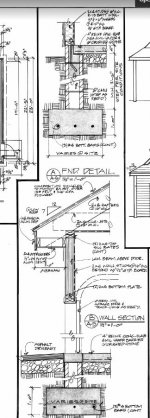
Already had the concrete leveling company come out to quote. They suggested doing piers per the attached diagram. Cost is going to be quite up there of course (on the order of $10k).

Does it really seem necessary to do this? Or would it be fine to have a regular concrete company bust up the existing half slab, level with stone and then re-pour? Heck, seems like I could just have the whole floor repoured with insulation underneath, spec'd depth and contraction joints for 2-post lift (likely MaxJax), etc. for significantly less.

It seems like the soil and retaining wall would be fairly well settled after 20 years...
 

Attachments

  • IMG_20170928_112814[1].jpg
    IMG_20170928_112814[1].jpg
    148.5 KB · Views: 258
  • IMG_20170928_113038[1].jpg
    IMG_20170928_113038[1].jpg
    147.2 KB · Views: 233
  • IMG_20170928_113044[1].jpg
    IMG_20170928_113044[1].jpg
    147.1 KB · Views: 224
  • 2-car detached diagram.JPG
    2-car detached diagram.JPG
    16.3 KB · Views: 147
To avoid these ads, REGISTER NOW!

ForceFed70

Well-known member
Joined
Apr 27, 2010
Messages
3,441
Location
BC, Canada
The problem I see here is that it's not just the slab that has settled, but the entire garage sitting on top of it as well. The Piers will fix that. Busting up the slab portion and re-pouring won't.
 
OP
R

RyanB

Member
Joined
May 11, 2011
Messages
7
Location
Louisville, KY
It is strange. Not sure where I can make more measurements. The cement stem wall in that area is sitting about 1-1.5° out of level, but the jack/king studs for the garage door are quite plumb. The opposite side studs are not as plumb... Otherwise there's not visual issues with the structure. Not sure if it might have been shimmed at some point after the settling?

My main goal here is to make this the work shop where I can install a Max Jax (only 9ft. ceiling) and be able to roll around a loaded engine hoist/stand if needed.
 

matt_i

Well-known member
Joined
Mar 14, 2008
Messages
10,725
Location
SE Michigan
It looks like in the pics you have a concrete stem wall that's independent from the actual concrete slab-floor. Imo that's a good thing.

An important issue to address is whether the actual garage is sinking on one side or its just a slab defect...probably the easiest test is to put a level on the garage door trim as its probably nailed off to the header. I would think you'd have scrubbing issues with the door if the foundation were actually sinking.

A more likely scenario is that to form the "deep wall" the excavator had to take out a lot of soil on that side. My guess is it was put back (quickly, haphazardly) probably just in 1 fell swoop without much compaction, and now that deep fill has settled.

I think the idea sketched out is a decent one. You could probably rent a jumping jack and ram the earth some more after the concrete is broken out, or put this on the contractor. Possibly remove soil, in order to get 4-6" of washed limestone 3/4" nominal, and plate compact this stone base. Insulation if you desire, which if taped could probably double as a vapor barrier. Set rebar grid (best) or welded wire mesh mats (ok). Repour a 4000 psi mix. Skip offerings of fibermesh reinforcement. Wet cure or curing sealer, saw cut the control joints into 10-12' squares the next morning after the pour.
 

kbs2244

Well-known member
Joined
Nov 11, 2006
Messages
14,065
Your first PIC shows a lot.
You have a big drainage problem.
All that driveway water needs to be diverted away from the retraining wall.
A hole in the curb maybe?
Then gutters and downspouts to the outside of the wall.

Then lift the building off the stem wall and level the wall top it.
Think about getting additional wall height while you are doing this.
We have had many posts on doing this.
You tube as well.

You are correct about most of the settling have taken place by now.
While the building is "up in he air," off the stem wall, is the time to level the top of the wall.
Or build a knee wall the adjust for the difference.
That knee wall can be inches or feet tall.

After you set the building back down call the mud jacking back and have the slab leveled.
 

wssix99

Well-known member
Joined
Mar 2, 2011
Messages
5,159
Location
Chicago, IL
Looking at the first picture, I'm wondering if this is all intentional???

First, I'd check the level of the door header and the roof truss bottom chords. If they are level and the walls of the garage are plumb - you'd just have a slab issue.

From that first picture, it looks like whoever poured the interior slab may have been matching the crown and profile of the driveway?
 
OP
R

RyanB

Member
Joined
May 11, 2011
Messages
7
Location
Louisville, KY
Do you have any pictures of the retaining wall from the low side?

See attached. Apologies for my sloppy picture angle. I think it is a lot more plumb than that.

Your first PIC shows a lot.
You have a big drainage problem.
All that driveway water needs to be diverted away from the retraining wall.
A hole in the curb maybe?
Then gutters and downspouts to the outside of the wall.

Then lift the building off the stem wall and level the wall top it.
Think about getting additional wall height while you are doing this.
We have had many posts on doing this.
You tube as well.

You are correct about most of the settling have taken place by now.
While the building is "up in he air," off the stem wall, is the time to level the top of the wall.
Or build a knee wall the adjust for the difference.
That knee wall can be inches or feet tall.

After you set the building back down call the mud jacking back and have the slab leveled.

There is a channel drain in front of the garage door to catch the water runoff. Granted it could be repaired a bit due to how the driveway also settled. It also needs a better spout through and clear of the retaining wall. Gutters on the structure itself are probably needed though.

It seems like an awkward amount for a knee wall. Just a quick trig calc based on 1.5° gives (20'*tan(1.5°)= .52') about 6". Now I wouldn't mind building knee walls all around to get the roof ceiling higher than 9ft., but that is outside the scope here.

The slab does seem independent of the stem wall. Just wondering if having the building off level by this much is going to cause issues long term. My assumption is that it's already in the long term phase of it's life cycle (20 years old), settling has already taken place, and if it hasn't shown signs of stress yet, then it won't. I think the structure was probably over-built too.The roof structure is 16" centers. The walls are too, but might only be 2x4.

So I guess that's why I'm wondering if adding piers and lifting the stem wall isn't overkill? Seems like the slab could be repoured in a more cost effective manner and also have improvements made (vapor barrier, insulation, etc.)

Looking at the first picture, I'm wondering if this is all intentional???

First, I'd check the level of the door header and the roof truss bottom chords. If they are level and the walls of the garage are plumb - you'd just have a slab issue.

From that first picture, it looks like whoever poured the interior slab may have been matching the crown and profile of the driveway?

The concrete from the drive looks to level out pretty well on door approach.

Also see picture of what I'm measuring on the interior above the door with the door closed. This measurement seems fairly consistent no matter where I measure from.

No footers?

I have there original plans for it and footers are spec'd, but of course there are deviations in other (aesthetic) areas...
 

Attachments

  • IMG_20170929_090122[1].jpg
    IMG_20170929_090122[1].jpg
    145.4 KB · Views: 91
  • IMG_20170929_085914[1].jpg
    IMG_20170929_085914[1].jpg
    135.4 KB · Views: 92
  • IMG_20170929_085520[1].jpg
    IMG_20170929_085520[1].jpg
    153.4 KB · Views: 107
  • IMG_20170929_085456[1].jpg
    IMG_20170929_085456[1].jpg
    147.1 KB · Views: 88
  • 2-car wall section.JPG
    2-car wall section.JPG
    83.2 KB · Views: 81

garagelogician

Well-known member
Joined
Jan 27, 2016
Messages
453
Location
Blaine, MN
Is there a toe slope in front of the wall? From what I can tell, it looks like you might have a global stability problem. What is the height of the retaining wall?

Since that is a small block wall (and there is no room for geogrid) the garage foundation should be at or below the bottom elevation of the retaining wall, and the wall should be pinned to the foundation.

The recommendation to install piers is probably the right way to go.
 

d300

Well-known member
Joined
Sep 15, 2017
Messages
109
Location
Oregon high desert
Yeah, you have a issue that will easily be traced back to the type and depth of fill behind the wall, the height of the wall, and the setback of the building from the wall.
Generally, the ideal situation would have the building footing the same distance from the wall as the wall is high (45° from the wall footing).
Drilled-cast piers will get you to the wall footing elevation.
 

ptgarcia

Well-known member
Joined
Nov 15, 2016
Messages
1,202
Location
Alta Loma, CA
I keep hearing talk of settling but this may not be a settling problem at all. What I see on cursory inspection is a retaining condition that looks suspect. If the earth is moving because that wall is moving (and either that wall was built by amateurs or its clear that wall has signs of movement) it may not stop moving until it all comes down. I strongly suggest you hire a structural engineer and get a professional opinion.
 
To avoid these ads, REGISTER NOW!

garagelogician

Well-known member
Joined
Jan 27, 2016
Messages
453
Location
Blaine, MN
If the earth is moving because that wall is moving (and either that wall was built by amateurs or its clear that wall has signs of movement) it may not stop moving until it all comes down.

The wall would move because the soil underneath/behind it is moving. Chicken-egg. ;)

I strongly suggest you hire a structural engineer and get a professional opinion.

I think this situation would be best handled by a geotechnical engineer. They are going to have a better idea of what is going on underneath the garage/wall and will have enough structural knowledge or know if/when to bring in a structural engineer.
 
Last edited:

ptgarcia

Well-known member
Joined
Nov 15, 2016
Messages
1,202
Location
Alta Loma, CA
The wall would move because the soil underneath/behind it is moving. Chicken-egg. ;)

I think this situation would be best handled by a geotechnical engineer. They are going to have a better idea of what is going on underneath the garage/wall and will have enough structural knowledge or know if/when to bring in a structural engineer.


Geotech/structural.....chicken-egg. ;) It's likely both will be needed. I'd like to see a cross-section through the wall and garage to see how it was constructed. That wall is pretty close to the garage and is within it's load influence. I just wonder if it was designed for it?
 
OP
R

RyanB

Member
Joined
May 11, 2011
Messages
7
Location
Louisville, KY
Is there a toe slope in front of the wall? From what I can tell, it looks like you might have a global stability problem. What is the height of the retaining wall?

Since that is a small block wall (and there is no room for geogrid) the garage foundation should be at or below the bottom elevation of the retaining wall, and the wall should be pinned to the foundation.

The recommendation to install piers is probably the right way to go.

The retaining wall is about 80" high at its tallest. No real toe slope that I can tell.

So is about $8k to put in the piers seem about right? Just a bit of a budget buster for trying to get a smooth level floor. Will have to see where it fits on the priority list.
 
Last edited:

garagelogician

Well-known member
Joined
Jan 27, 2016
Messages
453
Location
Blaine, MN
The retaining wall is about 80" high at its tallest. No real toe slope that I can tell.

So is about $8k to put in the piers seem about right? Just a bit of a budget buster for trying to get a smooth level floor. Will have to see where it fits on the priority list.

An 80" tall small block wall needs reinforcement, even standing on its own with no surcharge loading. There is no room for reinforcement there, so it couldn't have been designed or constructed properly. Based on the photos, it looks like everything was built on the side of a hill, and it sure looks like the grade continues to break away from the wall.

Just because it has been in place for 20 years, doesn't mean it isn't going to continue to get worse. It looks as though you could be in danger of serious structural issues in the future, and the problems are far deeper than just an unlevel floor.
 

kbs2244

Well-known member
Joined
Nov 11, 2006
Messages
14,065
It seems like an awkward amount for a knee wall. Just a quick trig calc based on 1.5° gives (20'*tan(1.5°)= .52') about 6".

You are doing trig calcs for a garage?
I think your building is level.
It is just the slab that need leveling

If the corner studs are within half a bubble of plumb and the door header is within half a bubble of level you are good to go.

But the slab has settled due to the bulge in the retraining wall.

That wall has a bulge because of roof runoff on that side.
You need to get rid of the water before it soaks down to dry out and stabilize that dirt.
 

wssix99

Well-known member
Joined
Mar 2, 2011
Messages
5,159
Location
Chicago, IL
Geotech/structural

If you go see a car salesman, they are going to try to sell you a car. If you go see a proctologist, they are going to stick a finger up your ****. If you go see a an engineer... they are going to point out all the little things wrong with your structure or foundation.

So is about $8k to put in the piers seem about right?

Yea, but did you go see someone who sells piers/piles???


Looking at the other pictures, it really looks to me like some dum-dum poured the driveway with a crown and carried that crown (for some ungodly reason) into the garage. Over time, it looks like there has been some movement - but not much, which has accentuated the crown.

Look at how the driveway and interior pad intersect the foundation and how the pavement is sloped. If everything was sinking together, then the siding and driveway should still be parallel.


If you are after professional validation, I'd get a surveyor. They can give you real facts as to where your foundation is in space and how the corners of the building are situated to each other.
 

wssix99

Well-known member
Joined
Mar 2, 2011
Messages
5,159
Location
Chicago, IL
If you are after professional validation, I'd get a surveyor. They can give you real facts as to where your foundation is in space and how the corners of the building are situated to each other.

... Actually you could do this yourself...

Get a plumbob, hang it on the back wall of the garage and mark a long perpendicular line to that string line on the wall. (Or on some tape put on the wall. Triangulate the points to make sure you have a perfect line perpendicular to gravity.

Do the same thing on one of the side walls.

Then you can get a rotating laser level. Get it level in the middle of the garage and use your lines perpendicular to gravity to get your line hyper-accurate. (The laser should be parallel to the lines on the back and side wall.

Then you can walk around and take point measurements and use the laser to record differentials. The measurements won't be as accurate as a surveyor, but you should be able to get within 1/8-1/4 of an inch, which would be just fine for what you need to know.
 

ptgarcia

Well-known member
Joined
Nov 15, 2016
Messages
1,202
Location
Alta Loma, CA
If you are after professional validation, I'd get a surveyor. They can give you real facts as to where your foundation is in space and how the corners of the building are situated to each other.


I happen to be one of those, too (PLS 8623), and if you called me for this issure I'd advise you to consult an engineer. :D
 

wssix99

Well-known member
Joined
Mar 2, 2011
Messages
5,159
Location
Chicago, IL
I happen to be one of those, too (PLS 8623), and if you called me for this issure I'd advise you to consult an engineer. :D

Thanks. I didn't mean it like that. :) I shouldn't have said "professional" validation. My thought was to internally self-validate with survey data.
 
To avoid these ads, REGISTER NOW!
Top Bottom