To avoid these ads, REGISTER NOW!

Sheetrock before or after ceiling electric boxes...

nicke

Well-known member
Joined
Jan 26, 2017
Messages
62
Location
Spokane, WA
Hey Folks,
I'm trying to decide what is going to be the best route to take as I finish off my 24x35 shop with insulation and sheetrock. Right now, the shop has 10' ceilings and trusses on 24" centers and its completely open. I want to install 9 outlets in the ceiling for plug in style LED 4' lights. I'll do blown-in insulation and sheetrock the ceiling. My question is on the order of events.

Should I run the electrical and attach the boxes prior to doing the sheetrock (meaning I'll have to mark and cut the sheetrock and take lots of ceiling measurements), or should I sheetrock the ceiling, and come from above, and cut and install my boxes from the top?

I'll be doing the sheetrock myself, with a sheetrock lift but want to be as efficient as possible.
Thanks!
-Nick
 
To avoid these ads, REGISTER NOW!

Kaizen

Well-known member
Joined
Jan 9, 2015
Messages
6,938
Location
New England
I think it depends on if you need a rough in electrical inspection. if no then i'd do drywall and cut in from above.
 

CJ7VFR

Well-known member
Joined
Jan 13, 2015
Messages
2,939
Location
Central New Jersey
I think it depends on if you need a rough in electrical inspection. if no then i'd do drywall and cut in from above.

I would agree with this as well.

If you put the ceiling in first, then you might decide that you actually want the lights in a different location based upon how the space has come out, and your requirements for the lighting. This way, you can update your lighting plan, and since you have access to the area above the space, you can always put the electrical boxes in at a later time exactly where you want/need them.

You can do it either way, but if it was me, and my garage, I would sheetrock it first, then decide where to put the boxes/lights since there was adequate access above to do the electrical work.

If you didn't have that available access from above, then it would be easier to rough in the electric and cut the sheet rock around the boxes.

Jim
 

matt_i

Well-known member
Joined
Mar 14, 2008
Messages
10,722
Location
SE Michigan
A problem with using the plastic "new work" boxes is the nails angle up from the floor side (as installed on the ceiling). As such its nearly impossible to hammer in the nails without an overstrike on the drywall. The "old work" boxes can of course be used but they are more expensive and hang only from the drywall surface.
 
OP
N

nicke

Well-known member
Joined
Jan 26, 2017
Messages
62
Location
Spokane, WA
Thanks guys. Nope, I wont need an electrical inspection since it is not attached to any living quarters, though I am having an electrician wire it all up (including a new panel).

-Nick
 

Kaizen

Well-known member
Joined
Jan 9, 2015
Messages
6,938
Location
New England
Jim has it. Would be great to install and paint drywall then temp hang the lights on extension cords to see if it's to your likening


Sent from my iPhone using Tapatalk
 

CJ7VFR

Well-known member
Joined
Jan 13, 2015
Messages
2,939
Location
Central New Jersey
A problem with using the plastic "new work" boxes is the nails angle up from the floor side (as installed on the ceiling). As such its nearly impossible to hammer in the nails without an overstrike on the drywall. The "old work" boxes can of course be used but they are more expensive and hang only from the drywall surface.

They have metal boxes that are installed using screws instead of nails. Most of these attach to studs/joists using a metal bracket with holes in it that is attached to the box. I just used two of them in my garage this past month to install receptacles in the ceiling. They were very easy to put up and drive the screws in to hold them to the joists.

I have also used the gray plastic boxes that have the screws already installed in them. The screws are installed at an angle, so the box can be screwed to a stud or a joist from below the box right thru the hole in the drywall. The downside to those is you have to have someone holding the box in position from above if the sheetrock is already there. But they are quick to install.

They might cost a bit more, but they are easy to install if you have access from above the ceiling, and they can be placed exactly where you want then after the sheetrock has been installed.

Jim
 
Last edited:

Jack D

Well-known member
Joined
Nov 3, 2015
Messages
68
Location
Southwest Connecticut
If you have good access from above I would do both. Have your electrician rough in the wiring and get it all stapled in and leave you with enough in the general area that your initial design wants boxes and use old work boxes after the ceiling is up.

The extra costs of of the old work boxes will be minimal to the extra effort needed in figuring and cutting in the new work boxes. If you put up wall board all the time it's easy but if you are not highly experienced it is a challenge to do it neatly without frustration and extra waste.
 

Radix2

Well-known member
Joined
May 28, 2014
Messages
1,853
Location
the thumb!, MI
Use the round old work ceiling boxes and put them in with either a 4 1/8 or 3 5/8 holesaw (depending on which style you buy).

You are not hanging anything from them. You can cut a perfect hole in 3 sec. and work from below no fuss no muss.

+1 on JackD - get the wires close before closing up. working in attics *****.
 

kbs2244

Well-known member
Joined
Nov 11, 2006
Messages
14,065
Before anything hang your lights with what you have now to be sure of placement.
(You can always use the extension cords later)
Mark the box locations.
Then route your rough wiring, leaving long tails, at your markings.
Mount your sheets.
Go upstairs and cut your holes buy the marks, screw the box to the truss.
Fish the wiring into the box.
Call your electrician.
 

gnpenning

Well-known member
Joined
Jan 25, 2015
Messages
2,754
Location
I have more questions than answers.
Since your hiring a electrician you should be asking his preference...

He may charge you more to do the work after sheetrock.

Who's doing the sheetrock? A pro will not have any issue with cutting boxes out.
 

mikegt4

Well-known member
Joined
Sep 12, 2005
Messages
3,265
Location
sw ohio
Thanks guys. Nope, I wont need an electrical inspection since it is not attached to any living quarters, though I am having an electrician wire it all up (including a new panel).

-Nick

Lucky you, I live out in the country and still need inspections on everything.
 

Norcal

Well-known member
Joined
Mar 16, 2008
Messages
13,752
If the lights are cord and plug connected, then the receptacles are required to have GFCI protection with no exceptions allowed, they went away a number of NEC editions ago. Hardwire them & no GFCI's required. According to the Mike Holt website Washington is on the 2014 NEC.
 

maxpower_hd

Well-known member
Joined
Apr 17, 2015
Messages
2,230
Location
Massachusetts
I used hard wire lights and flush mount. No plugs. I also installed mine after the fact so I had to use conduit from one light to the next. I only had one box per row at the end wired in and I wasn't going to do surgery to install them. Plus I have a finished space above.

I would have liked some nailers where the lights were being installed though. It would have made it easier. So if you have the lights and the instructions I would figure out where they are going and install some 2x4 nailers to attach them to before the rock goes up.

I would probably rough in the wires and boxes first. Just seems easier to me than trying to move around on the rafters above later.
 

maxpower_hd

Well-known member
Joined
Apr 17, 2015
Messages
2,230
Location
Massachusetts
Forgot to mention, not all of the LED shop lights are the same. Some are linkable and some are not. Some hang from chains and some are flush mount. And some have plugs and some are specifically hard wired. Just FYI so you can make sure you get what you want.
 

gungatim

Well-known member
Joined
Jan 8, 2013
Messages
8,101
Location
west mich
the way I've always seen it done, and done myself, is to do the electric first, then hang the drywall.

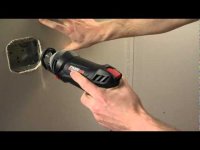
you don't mark and cut, you just put it up covering the boxes. grab a dremel or rototool with a drywall spiral bit and hand plunge into the box and trim around it. if you mess up, that's what the finisher's job is for...
 

ddurrett896

Well-known member
Joined
Mar 29, 2015
Messages
994
Location
VA
The sheet rock guy will say do sheet rock first.
The electrician will say do electrical first.

Do electrical first.
 

Doug B

Well-known member
Joined
Dec 24, 2008
Messages
1,236
Location
Schroon Lake, NY
Sounds like your main concern is measuring and marking the boxes accurately. I like a rotozip . All you need to do is mark the center of the box.
 

Attachments

  • rotozip.jpg
    rotozip.jpg
    10 KB · Views: 50
To avoid these ads, REGISTER NOW!

Angelfire

Well-known member
Joined
Mar 22, 2012
Messages
1,367
Location
New Mexico and Ireland
I'm in the very same position although I've already done all my electrical rough in. For me, I laid out my lights first and ran my wires with the intention of them coming through the drywall and all connections in the fixtures (hard wire). No boxes to mess with, no GFCI, and it's simply a matter of poking a hole in the ceiling for the wire vs. cutting an opening for a box. Plus it eliminates the unsightly cords running all over the ceiling.
Cheers.
 

gungatim

Well-known member
Joined
Jan 8, 2013
Messages
8,101
Location
west mich
Sounds like your main concern is measuring and marking the boxes accurately. I like a rotozip . All you need to do is mark the center of the box.

and if you don't have one, we used a keyhole saw back in the day to do the same thing...
 

Doug B

Well-known member
Joined
Dec 24, 2008
Messages
1,236
Location
Schroon Lake, NY
that's how the pro's do it...

That must play hell with your saw blade around metal boxes. I am currently working with 3 different drywall contractors. they all use rotozips or similar cutters for doors, windows and electrical openings, jab saw for plumbing rough in.
 

gungatim

Well-known member
Joined
Jan 8, 2013
Messages
8,101
Location
west mich
That must play hell with your saw blade around metal boxes. I am currently working with 3 different drywall contractors. they all use rotozips or similar cutters for doors, windows and electrical openings, jab saw for plumbing rough in.

you misunderstand, the pro's use a rotozip. before rotozips were invented for this very purpose, the ones I watched build the houses in my neighborhood used a keyhole saw--which is a short, stiff, almost hunting knife sized hand held saw that had a narrow tip but widened out at the handle. it was made for plunging into a small hole in drywall and cutting out around boxes and such.

you can still buy them and they are still handy for certain things. like rotozip bits, they eventually get dull and you throw them out, though I still have one that takes replaceable blades.

we don't use metal boxes around here. back when they did this by hand, they were some sort of compressed wood-****/resin type thing before going to plastic boxes...
 

Doug B

Well-known member
Joined
Dec 24, 2008
Messages
1,236
Location
Schroon Lake, NY
you misunderstand, the pro's use a rotozip. before rotozips were invented for this very purpose, the ones I watched build the houses in my neighborhood used a keyhole saw--which is a short, stiff, almost hunting knife sized hand held saw that had a narrow tip but widened out at the handle. it was made for plunging into a small hole in drywall and cutting out around boxes and such.

you can still buy them and they are still handy for certain things. like rotozip bits, they eventually get dull and you throw them out, though I still have one that takes replaceable blades.

we don't use metal boxes around here. back when they did this by hand, they were some sort of compressed wood-****/resin type thing before going to plastic boxes...

:thumbup: Gotcha! Years ago (pre-rotozip) I worked with a guy who would use the hatchet end of his drywall hammer and chop out the boxes:eyecrazy:...maybe that's what the hatchet is for, but it was brutal. The tapers hated him. They had to repair around every box.
 

Rock knocker

Well-known member
Joined
Aug 14, 2014
Messages
704

Attachments

  • Screen Shot 2017-02-01 at 8.24.26 AM.jpg
    Screen Shot 2017-02-01 at 8.24.26 AM.jpg
    21.1 KB · Views: 16
Last edited:

gungatim

Well-known member
Joined
Jan 8, 2013
Messages
8,101
Location
west mich
:thumbup: Gotcha! Years ago (pre-rotozip) I worked with a guy who would use the hatchet end of his drywall hammer and chop out the boxes:eyecrazy:...maybe that's what the hatchet is for, but it was brutal. The tapers hated him. They had to repair around every box.

I always wondered what the hatchet end was for as well...I learned from my drywall guys that the metal cap on the end of a good taping knife was for tapping down drywall nails that were a touch proud though...they also introduced me to the "spatter" method of finishing interior closets...hadn't seen that done but really liked it so all my closets are done that way.
 

gungatim

Well-known member
Joined
Jan 8, 2013
Messages
8,101
Location
west mich
What is the spatter method?

they thin out the drywall compound and spatter the entire wall with it using a brush. sort of flinging it all over. that is after the taping. eliminates the sanding, and leaves a slightly bumpy surface, but not rough like stucco or knock down stipple.

benefits are it's cheaper, faster, and knocking hangers and shoes and vacuums and **** you typically stuff in a closet doesn't really detract from a smooth finished wall. the dings just blend in and can be repainted over without any fuss...
 

readhead

Well-known member
Joined
Dec 8, 2012
Messages
6,175
Location
Durango, Co.
You don't need a GFCI in every box. The first one will protect the rest down stream. Cheaper than a $45 breaker
 

CJ7VFR

Well-known member
Joined
Jan 13, 2015
Messages
2,939
Location
Central New Jersey
You don't need a GFCI in every box. The first one will protect the rest down stream. Cheaper than a $45 breaker

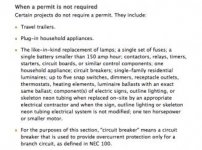
In most cases this is true. But the GFCI breaker he has shown is only $24 bucks. That is on par with the cost of a GCFI receptacle.

Unless the first GFCI receptacle is in an easily accessible location, using a GFCI breaker can be easier to reset when something trips the circuit.

Jim
 
Last edited:
To avoid these ads, REGISTER NOW!
Top Bottom