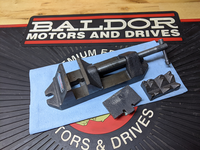
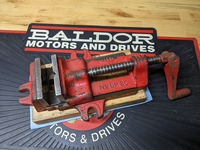
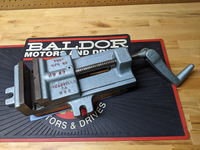
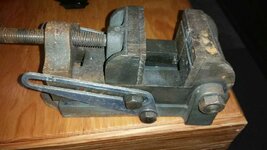
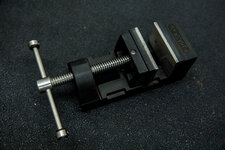
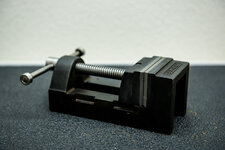
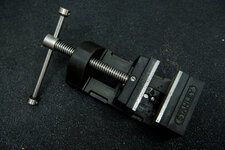
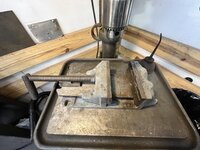
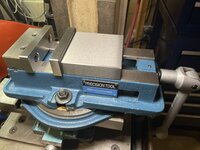
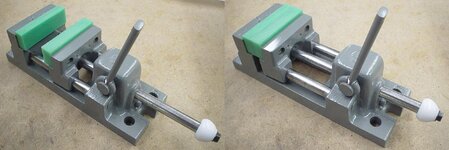
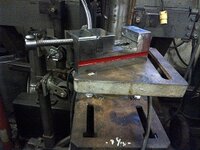
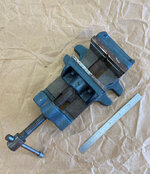
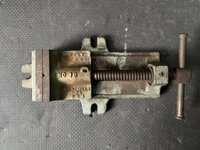
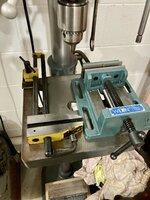
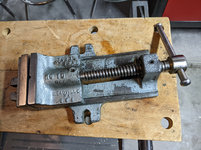
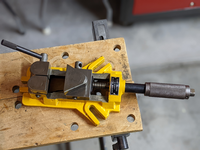
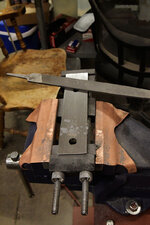
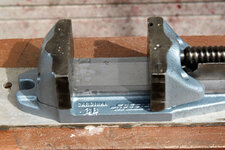
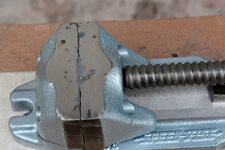
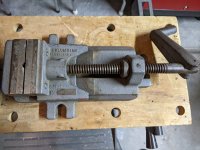
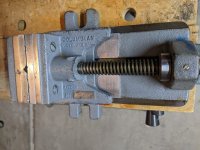
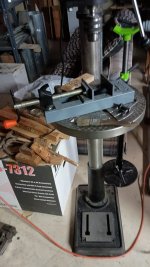
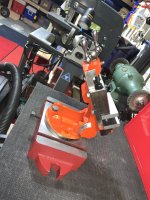
Here is one I just rehabbed. There were several surprises along the way, detailed below. The vise looks to have originally been a dark blue, a few patches of color here and there. The only markings are a No 4 and a W in a diamond, both on the removable
handle**. Got it at an
estate sale back in April 2023, along with some other heavy goodies. It was dirty with an obviously oily residue covered in dust. for $10, I grabbed and went. Back then, it seemed unusually heavy, but I didn't look too closely, the price was right.
@Outlawmws, you asked about this a while back, here it finally is.
The whole pictorial diary is here, for those who want to see all the details.
Welcome to My SmugMug site. I'll always be adding to it, as people around me continue to participate in things of interest. I live in the SF Bay area, and spend lots of time photographing the sports my kids are participating in. These images are my attempts to document what they're doing...

kirkhmb.smugmug.com
Now, a year plus later, I finally had the time, space and energy to clean it up. I started by scraping off all the accumulated **** on any surface I could, and running twine thru the screw, I removed the jaws,
which came out quite easily. I could see a bunch of **** under the jaws, and realized on my other decent sized vise, that falls out easily. So I flipped it over, and was immediately perplexed.

There was a solid plate on the bottom, with 7 big (3/8-16) flat head bolts holding it on. Of course, for something this big, I wanted to haul out my Perfect Handle Heavy Duty screwdriver, but it was a bit too big, so I had to step back to a 12" Stanley 100. That worked OK on the easy ones, but needed to get some more force applied. Unfortunately I did not have any drag link sockets small enough to work on this, so I had to step down to my 3/8" Vessel Impact Wrench, with the biggest flat head bit, and it seemed puny. But, by preloading the wrench, I was able to make fairly quick work of removing the screws. Couple of them had been cut off, so I took care to note their locations. Once I go them out and removed the plate, the real circus began.

Not only was there a pile of **** on the plate & under the jaws, the holes holding the plate on were not drilled evenly. And oh dear, there is a crack at the bottom end of the frame. Turns out the shortened screws were required to stop the screw from interfering with the dynamic jaw sliders. Moving carefully around the coils of metal, I quickly found out that they had not deburred the holes, so lots of places to take a bite of my fingers. I started to move the dynamic to disengage it from the base, and the base separated into 2 pieces.
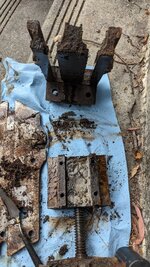
This explains the bottom plate, 1/2" thick, and 7# of steel. It had done a fine job of holding the base together, until I decided to screw with it. Hoping at this point I can get it back together.
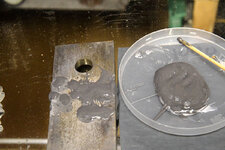
So everything went into the Simple Green batch in waves, starting with all the little stuff that I had removed early, the jaws screws, etc. A 24 hour soak had them looking pretty good, but when I wiped off the jaws they almost looked chromed. There was a boatload of metallic swarf in the bath, as I wisely used a magnet to pull them out, rather then randomly poking about in the brown residue. All of the screws and their mating holes got cleaned up with a tap and die, one of the dynamic slide bolts was especially fouled up, took some time with a thread file and a thread plate to get it cleaned up well enough for a die. after several days, all the pieces were through the SG bath, and looking decent.

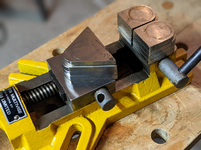
Gave each of the cast iron pieces a coat of boiled linseed oil, and the non sliding faces. Noticed that the jaw faces had a bit of a copper hue to them, which I think is the SG impacting the chrome a bit. Made me look harder at the jaws, realized the faces may have been cut from a chrome or nickel plated bar, as the face looked nothing like the edges.

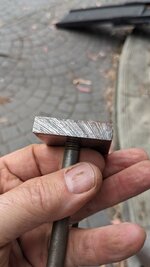
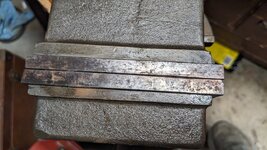
Got it all back together Sunday evening, while the BLO wasn't fully cured but we lost our sun, so may be a few more weeks curing, and I didn't want pieces scattered about waiting. But everything together the jaw faces were a bit of a bear, as the first two times I put them together, they didn't match up great (more thoughts of homemade jaw faces), but eventually were acceptable. Getting all the screws for the base into position was a little exciting, as of course they were not drilled square, so tightening had to happen in a certain order. once I added the broken piece, and its three anchor screws, it again to 2-3 tries to get the gap minimized, all the screw heads below the plate surface.
Once it was all together hit it with some dry lube on the screw, the sliding surfaces, and put some into the oiler reservoir. Hadn't seen this initially, it was so covered over with dirt. But a quick press down, and it accepts lube. Once the BLO is dry, I will add some oil to that reservoir. I then cranked the jaws open and closed a few times, spreading the lube around. I then grabbed a 5/8" double square socket, and ran it back and forth a few dozen times with a drill. Its not quite perfect, bit of a sticky spot in the middle, but not enough to make a Craftman NexTec drill stall. One thing I did not do, was punch out the pin holding the handle into the base. Couldn't get a good grip on things, so blew it off, as the handle spun easily. Once the mass was fully assembled, two taps with an 8 oz BP hammer, and the tapered pin popped right out. Gave it a bit of a degunk, and tapped it back in.
o

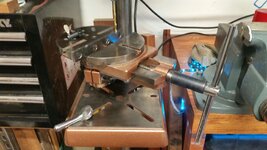
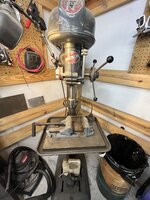
with a 4.5" (expanded to 4.75") jaw width, 3" of opening, and 32# of dead weight with the handle, I think it will be more than sufficient for my cheap little Taiwanese Shop Fox drill press. The house it came from had a
Canedy Mfg 6' tall one in the garage that I had to pass on for fear it would tip my house over. (Even at 24# without the plate, a heavy beast)
So, follow on question, does anyone know who might have made this? That finished area above where the screw exits the dynamic jaw seems a bit unique, and it was blue originally. Thanks
Edit** Williams made a #4 handle, about this size and shape. Guess that won’t help define the vise yet.
154 p., illus., 26.9 cm, trade catalog
archive.org