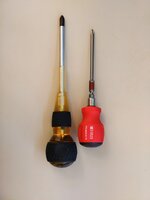
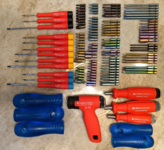
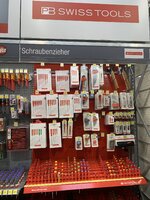
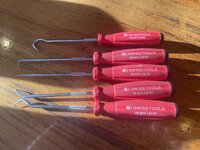
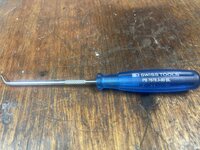
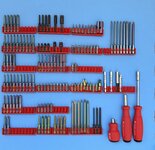
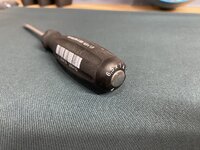
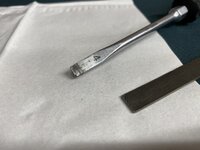
Vintage PB Swiss tools are quite hard to find, I'll share more for sure

Not really, here a few decades ago nearly all screwdrivers were PB's. Now the problem is that these were the classic ones with acetate handle which are still made so they're just old, not collector.
Get a random old toolbox and you'll typically end with some PB screwdrivers and wrenches marked "W. Germany" from various random manufacturers, many of which no longer existing.
There are also some common looking PB tools which are no longer manufactured, for example the PB 205.8 (8 mm Allen/INBUS). I'm not sure if they ever made a PB 205.10 (10 mm Allen/INBUS; Wera made one which looks exactly like the PB, both 8 mm and 10 mm).
BTW I was wrong, the PB 100.9-240 (classic VSM size 9) is still in the catalog, in this example 100 designates the series, 9 the size and 240 the blade length in mm (metallic part below the grip, not the overall length). Physical markings depend on the generation.
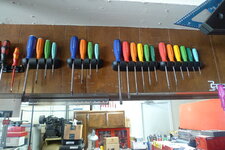
Personally I'd recommend following classic PB screwdrivers:
PB 100, sizes 00 to 9 (VSM blade, way better than the much more common ISO/DIN)
PB 106, sizes 1 to 5 (for screw terminals and slotted set screws)
PB 135, sizes 2 to 7 (stubby VSM)
PB 190 sizes 00 to 4 (Phillips)
PB 195 sizes 0 to 3 (stubby Phillips)
PB 192 sizes 0 to 4 (POZIDRIV, green handle)
PB 194 sizes 0 to 2 (stubby POZIDRIV, green handle)
PB 205 sizes 1.27 to 6 mm (Allen/INBUS), above 6 mm no longer available
PB 206 sizes 1.27 to 10 mm (Allen/INBUS, ball head)
PB 400 site T3 to T40 (TORX)
and if required:
PB 196 sizes 1 to 10 (for slotted nuts)
Longer versions or with hexagonal drive part below the grip can be useful but aren't an absolute must.
I don't know the new handle forms, I can live without.
The main drawback of the acetate handles is the extremely poor chemical resistance against many solvents. Even small amounts of some solvents can
instantly damage these grips beyond repair. Also the smell from the pre-vanilla versions is not great (chemically like rotten butter).


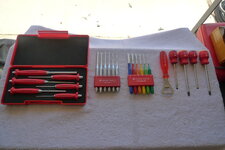
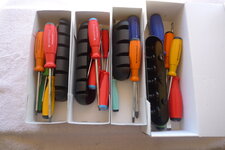



 . Thanks for sharing