To avoid these ads, REGISTER NOW!

Show us your welding projects

To avoid these ads, REGISTER NOW!

outtaplace

Active member
Joined
Jan 21, 2011
Messages
37
Location
Central NJ
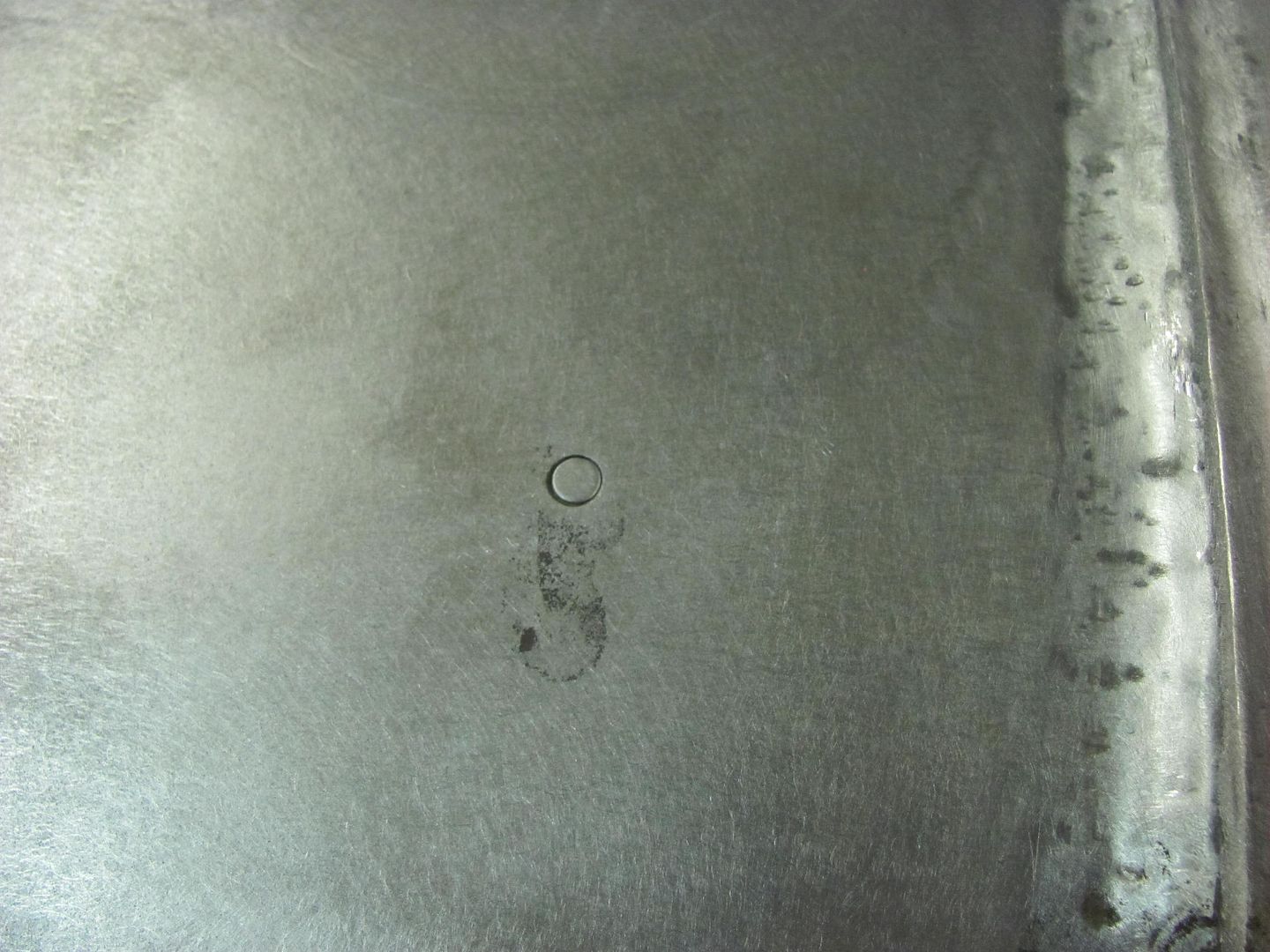
Any pointers on filling molding holes in sheet metal like these:


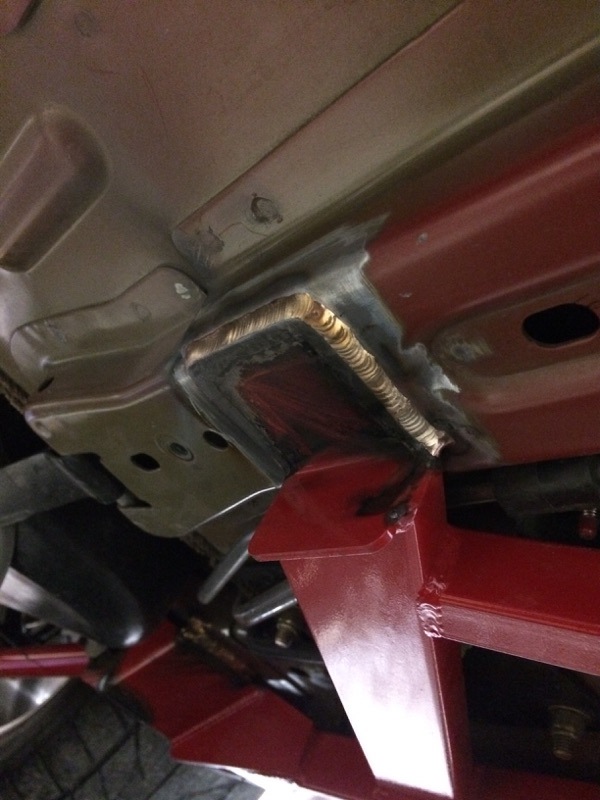
The holes are about 1/4" diameter. Should I make a small plug out of sheet metal to help bridge the gap? I have been building up weld around the edge of the hole then slowly filling it in but this leads to a ton of material to grind down and pin holes appear just as the metal becomes flush. Most holes are accessable from behind also.

Here are a few that I've done already but I'm thinking my method is more time consuming than it needs to be.


There are about 40 holes per side of the car. There must be a better way :headscrat
 

TheModelAGuy

Well-known member
Joined
Aug 24, 2014
Messages
108
1/4" is pretty small. Welding them in is the way to go. Either fill completely with rod or tig /mig in little plugs.
As it is the weld is harder than the body steel and you must grind carefully.
I've recently started using a 2" cutting disk in an air grinder. It is effective to work small areas. Work slow to control your warpage.
Looks good, just takes time.
 

great white tj

Well-known member
Joined
Apr 12, 2009
Messages
545
Location
Ocala Fl.
Any pointers on filling molding holes in sheet metal like these:


The holes are about 1/4" diameter. Should I make a small plug out of sheet metal to help bridge the gap? I have been building up weld around the edge of the hole then slowly filling it in but this leads to a ton of material to grind down and pin holes appear just as the metal becomes flush. Most holes are accessable from behind also.

Here are a few that I've done already but I'm thinking my method is more time consuming than it needs to be.


There are about 40 holes per side of the car. There must be a better way :headscrat


Just weld them close.... real slow.... do one or two on one side of the car and then do one or two on the other side. Until they are done, yes this will take time. But it will work.
 

zkling

Well-known member
Joined
Jan 23, 2007
Messages
16,939
Any pointers on filling molding holes in sheet metal like these:

Most holes are accessible from behind also.

There are about 40 holes per side of the car. There must be a better way :headscrat
For the holes that you can get to the backside of, make a copper spoon to back up the weld on the other side. You can fill against the copper without worry of it dropping thorough or sticking. If you have some larger diameter copper tubing or even just a coupling, smash it flat and add a little curve so it sits flush against the back of the hole.
 
Last edited:

MoonRise

Well-known member
Joined
Nov 5, 2010
Messages
4,025
Location
NJ
outtaplace,

For 40x2=80 1/4" dia holes, you are probably at the 'tipping' point where it would be beneficial to make the 1/4" disk/plugs to mostly fill the hole and then weld the perimeter seam, as opposed to just filling the hole with all weld.

No matter what, the fix will be slow going and rather labor intensive, so don't rush it and don't get discouraged.

Further making your repair more 'difficult' is the fact that the holes are on a curved section on the body and not just in a flat section. More fitting and fussing to do. Fitting the 'plugs' to the contour of the body curve, welding them, planishing the welds, grinding things back to the desired profile, etc.

But it is doable.

Check here in the Fabrication section on the forum and read and look at the thread by MP&C. IIRC, he has shown (multiple times) just such repairs.

For the pinholes that show up when you grind down the welds, that pretty much means you didn't have 'good' welds to begin with. Even with thin sheet metal, you have to properly fuse the filler and the base/parent metal into one homogeneous mass of metal.

btw, what's the car?
 

MP&C

Well-known member
Joined
Oct 21, 2009
Messages
4,396
Location
Leonardtown, MD
I'd suggest to make some sheet metal plugs out of 18 ga and tack those in, see if it leaves a less pronounced HAZ..
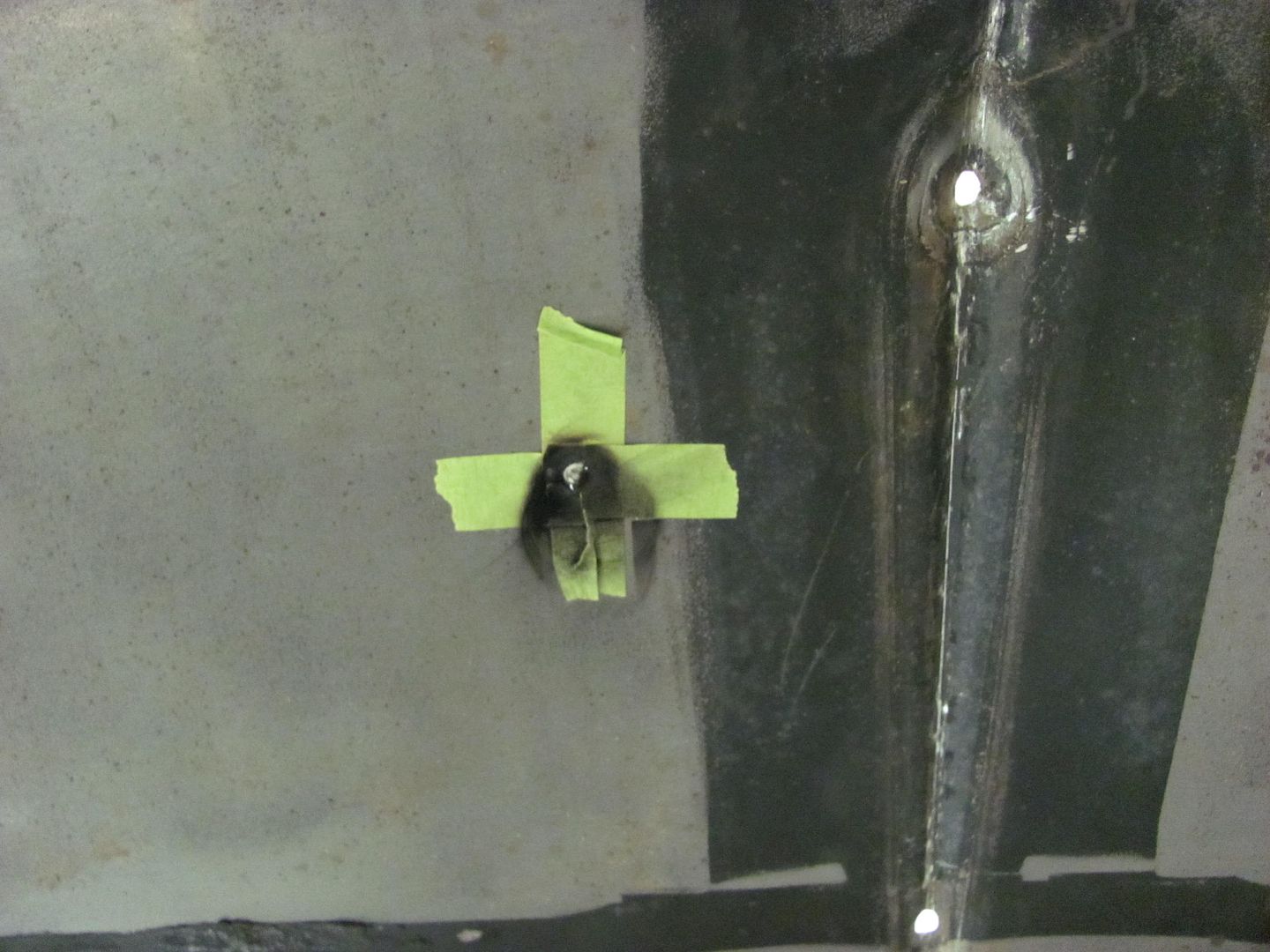
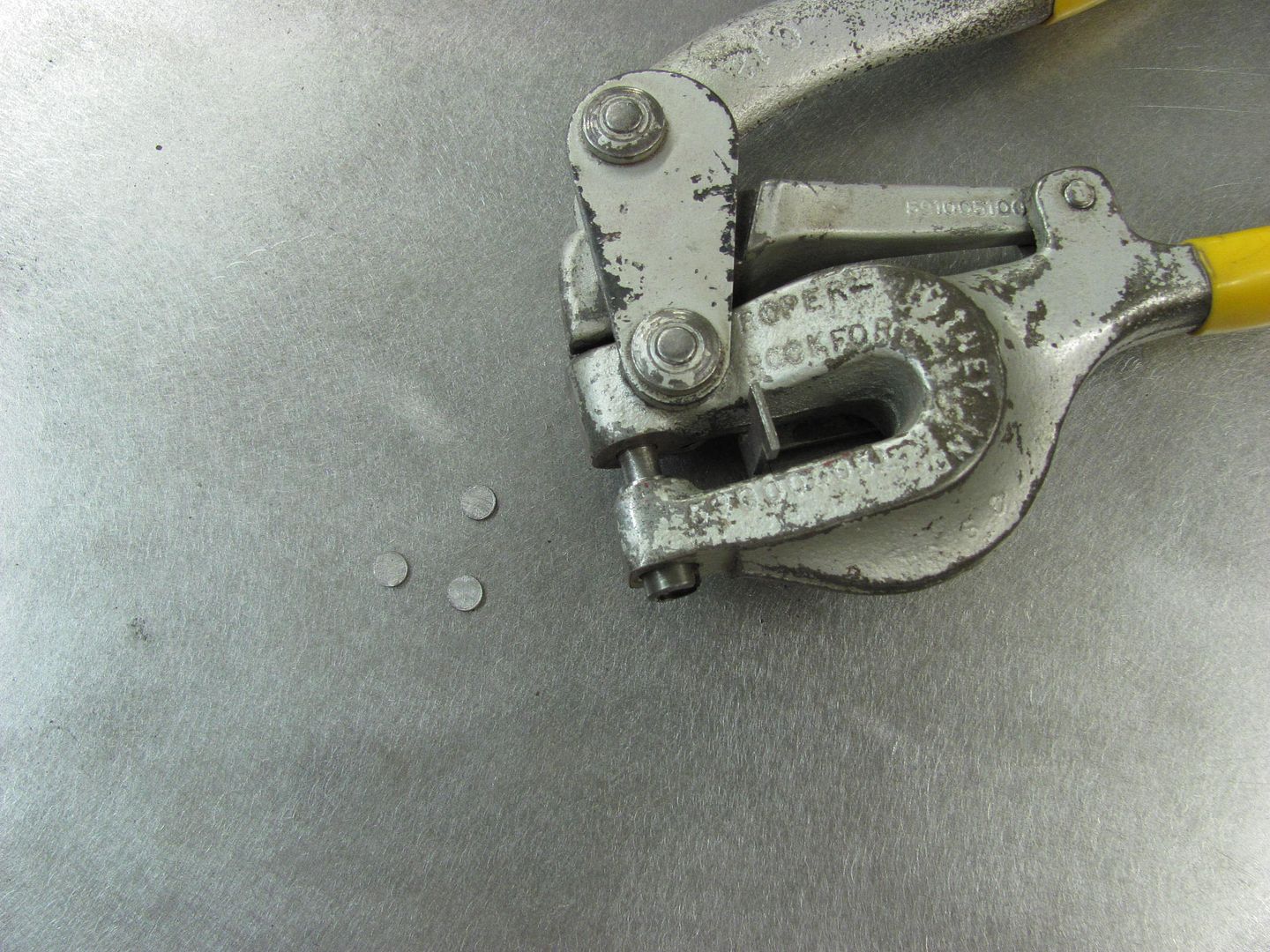
Here's some mounting holes I needed to fill after shaving a hood ornament and peaking the hood.... I used my Roper Whitney hand punch to make some plugs for the holes. Where they could have been made by cutting by hand, sounds like you have enough to make to justify one of these punches. Keep in mind they have a "centering" point on the punch part, for making these I ground the point off in order to keep the "plugs" flat.


Picture514.jpg


Plug held in place with a couple strips of tape on the bottom, long enough to tack in place....


Picture516.jpg


Picture517.jpg


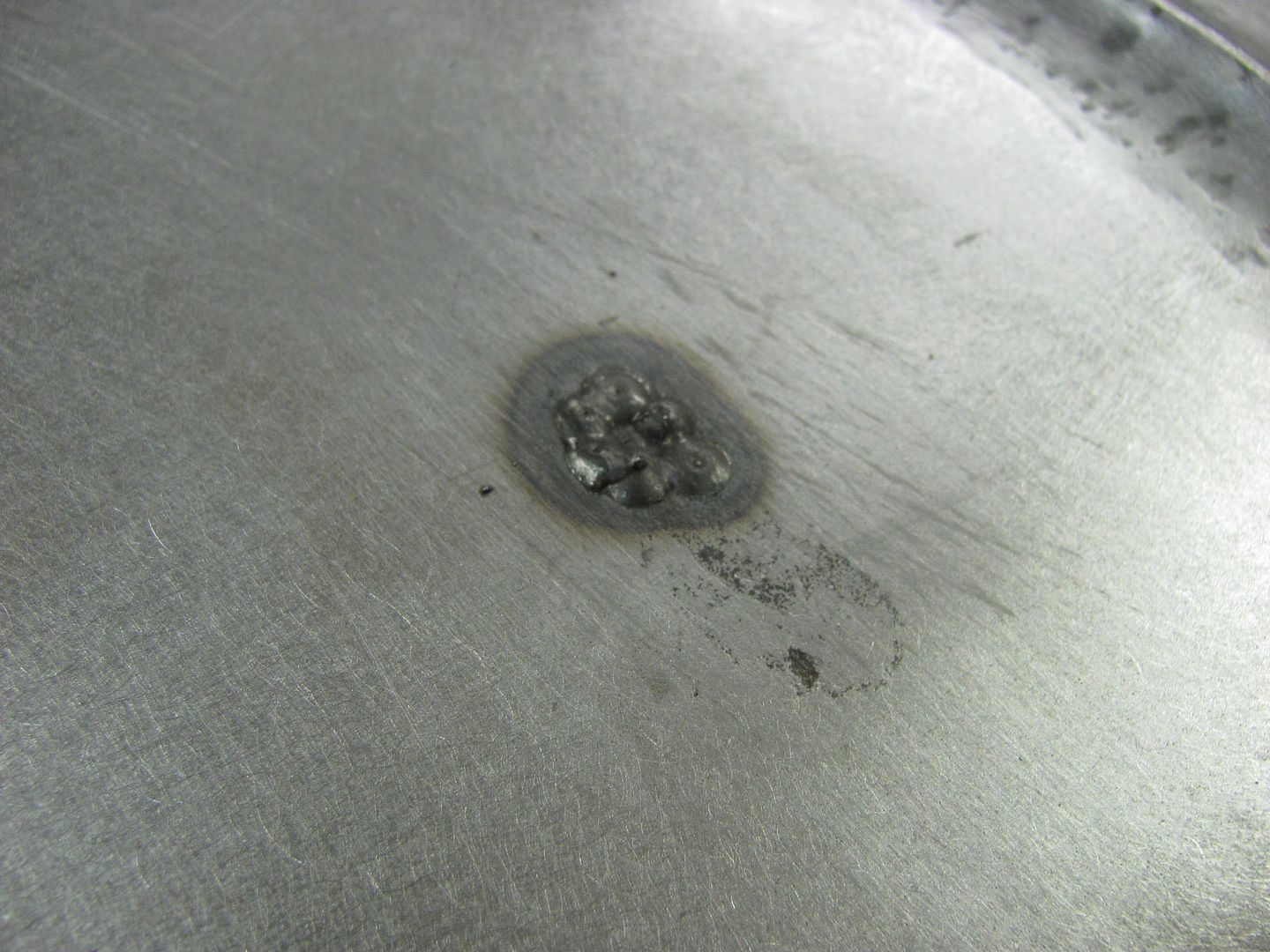
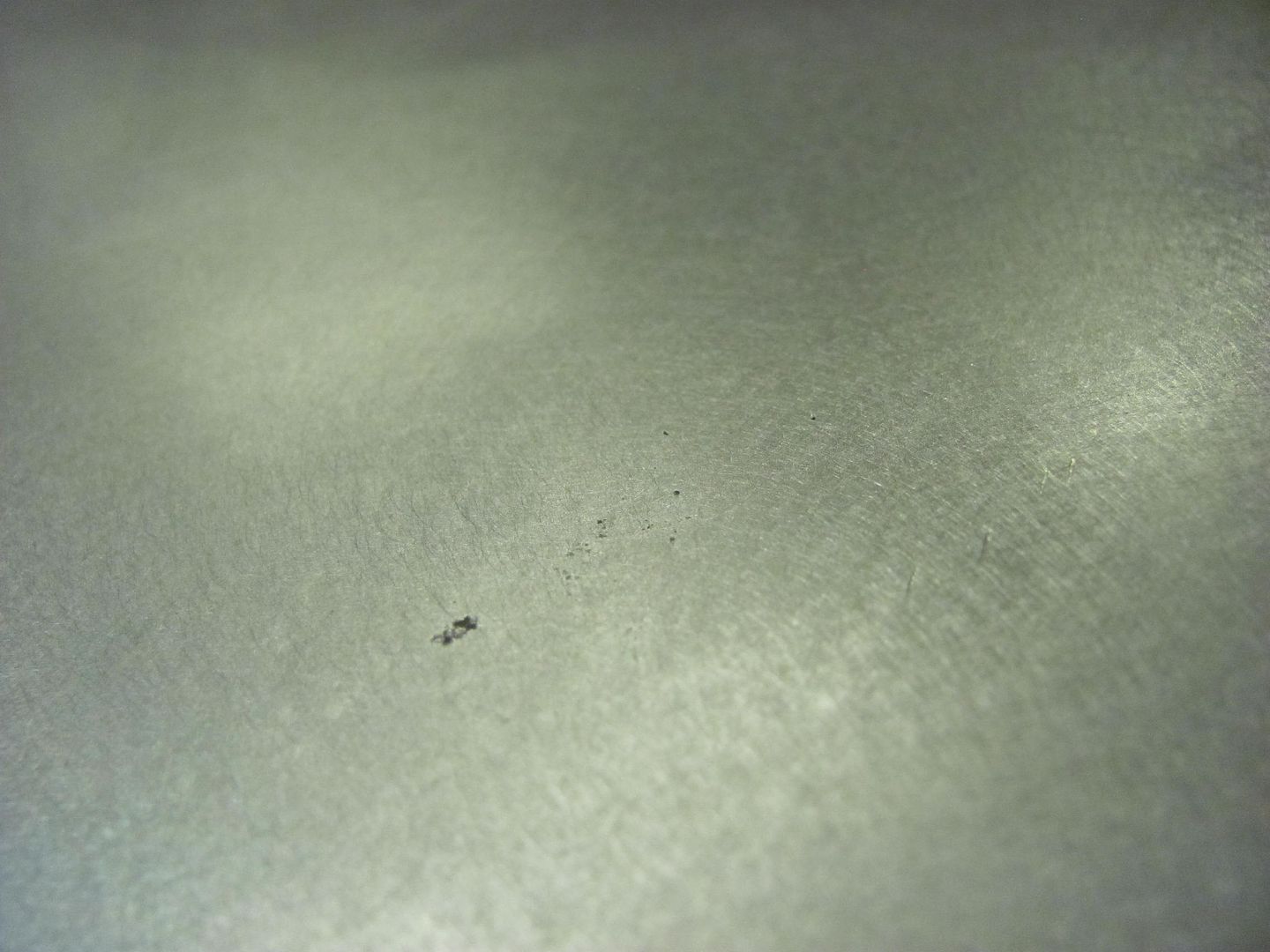
Welded in place and welds dressed....


Picture518.jpg


Picture520.jpg


Note the minimal amount of HAZ around the 1/4" plug. I would think you could use this on your car as well, and for those spots with no access to the rear you should be able to hold the plug in place with tape on the outside, and leaving a partial "uncovering" of the seam to one side. Aim your torch ever so slightly more to the quarter panel side of the joint vs. the plug so the wire feed doesn't have a tendency to push on the plug and move it as you add the first tack. As shown above, slight overlaps help to eliminate pin holes.

Re: a copper backer and just using the Mig, IMO you are about at the size where that much Mig filling of a 1/4" or larger hole is going to introduce more heat and thus more shrinking and deformity than using the plug. If this were one hole it would be less of an issue, but with 40 per side, I'd want to keep those long panels as straight as possible.

Now for the guys using the nail trick, most of the nails I've seen lately are not made 'round here, and some of those were plagued with the head falling off after a few strikes with the hammer. Not sure what junk metal they are being made from, but I much prefer putting back in what it's being welded next to. Most hardware box stores will have 18 ga bare steel in 12 x 12 or larger sizes. You could also use a piece of metal out of an old car panel, but with needing 80 of these things, it would be nice to not have to strip paint as well.

As my pictures above show, no copper backer was used, and there is slight weld penetration through the tape, so plenty of heat. If you do find yourself blowing holes and increasing the wire feed slightly won't cure it, then by all means use the copper backing. But keep in mind, it is a heat sink and that should be considered when adjusting your welder's heat setting.. You should still have full weld penetration, so if you don't see that with using a copper backer, more heat is needed. Also keep a wire brush handy to shine up the copper every so often. Contamination is contamination, and a charred and pitted piece of copper from not cleaning it up will give your weld porosity on the back side just the same as welding on dirty, rusty metal.
 
Last edited:

outtaplace

Active member
Joined
Jan 21, 2011
Messages
37
Location
Central NJ
I apprecitate all of the helpful suggestions. I think for the remaining holes I will try to make or retrofit a punch to pop out plugs (I did not think of this). I like the tape idea as well. Thanks to everyone for commenting.

The car is a 65 Dodge Coronet 440 model. I'm converting it to a plain-jane 330 model by deleting all of the side molding and trunk panel (7 more holes to fill, I forgot about).

Here is a picture of the car before I took it off the road started the major rust repair:


The '68 Dart behind the Coronet is mine as well, next in line for restoration...when I get to it...one day...lol
 

TheModelAGuy

Well-known member
Joined
Aug 24, 2014
Messages
108
Another thought if you don't have access to a punch is to use 3/16 welding rod. Easy to hold in place and cut off after the weld.
The copper backer works well, I have used pieces of copper bus bars from electrical panels (free).
The sheet metal disk are problematic to hold in place esp way up in the fender where you are working. I'd vote to try the rod. A mig **** joint should not be tight, hence the 3/16 Rod.
 

MarkG

Well-known member
Joined
May 23, 2012
Messages
1,219
Location
Elgin, IL
Besides the plug welding mentioned, another way I'd consider (being a wooden boat builder/hobbyist) is to back up each hole with a bit of fiberglass wet with epoxy, let it cure, then fill the remaining indentation from the front with thickened epoxy (I like West System's line of products) on a plastic squeegee following that contour. You would be able to get it close enough to flush that all that's needed afterwards is some sanding and maybe a swipe of putty.

It's not a 'purist' way of doing it probably, but I know it would work well. In areas where it might be visible on both sides, you may want to just weld and grind.
 
Last edited:

sanddan

Well-known member
Joined
Jul 7, 2005
Messages
708
Location
Oregon
Besides the plug welding mentioned, another way I'd consider (being a wooden boat builder/hobbyist) is to back up each hole with a bit of fiberglass wet with epoxy, let it cure, then fill the remaining indentation from the front with thickened epoxy (I like West System's line of products) on a plastic squeegee following that contour. You would be able to get it close enough to flush that all that's needed afterwards is some sanding and maybe a swipe of putty.

It's not a 'purist' way of doing it probably, but I know it would work well. In areas where it might be visible on both sides, you may want to just weld and grind.

Mark, first I am not bashing you but I think it's a funny solution to post in a welding projects thread. That said, it sounds like it would be an easy solution for you as you have fiberglass experience but it would be a mystery for me since I have no experience. I would love it if you could share some of your projects here as I know I could learn a lot.:thumbup:
 
To avoid these ads, REGISTER NOW!

big_dan

Well-known member
Joined
Dec 6, 2014
Messages
59
Location
Tennessee
The absolute easiest method to plug weld trim holes is to use the head of a 16p nail. Have something to hold onto, plenty of material so it sticks quick, then zip it off with a cutoff wheel. Done. Some will disagree, but it's always worked for me.

Dan
 

crewchief888

Well-known member
Joined
Dec 3, 2009
Messages
13,736
Location
NW indiana
The absolute easiest method to plug weld trim holes is to use the head of a 16p nail. Have something to hold onto, plenty of material so it sticks quick, then zip it off with a cutoff wheel. Done. Some will disagree, but it's always worked for me.

Dan


i've never thought of that.. sounds like a good idea :thumbup:


:beer:
 

paigej

Well-known member
Joined
Dec 5, 2012
Messages
253
Location
Arizona
The absolute easiest method to plug weld trim holes is to use the head of a 16p nail. Have something to hold onto, plenty of material so it sticks quick, then zip it off with a cutoff wheel. Done. Some will disagree, but it's always worked for me.

Dan

I wish I knew about this six months ago:wtf:
 

Nortonscustom

Well-known member
Joined
Jun 5, 2008
Messages
375
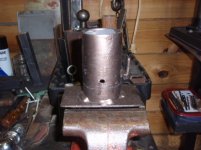
This was a quick project to free up some room on my welding table. Used a replacement blade for a disc harrow as the base, piece of scrap 4" pipe and a 1/2" plate on top. Filled it with sand and half a quart of oil through the hole in the top.

anvil%20stand%201.jpg


The little guy now has his own stand. Works good and is nice and quite.


anvil%20stand%202.jpg
 

youngnstudly

Well-known member
Joined
Apr 20, 2007
Messages
79
Location
The "Whine" country, CA
Nothing too exciting here, but at least I got to do a little welding in between all the other **** that's been going on lately. This would be my Woodward Fab bead roller from last x-mas that I have been slowly working to finish. The main frame is nearly done. Just have to finish the mounting plate, the adapter for the pulley that will power the shafts, and the back gauge. Another 4 months and it should be done! :D


11 ga stainless was cut and drilled, then welded to the frame so the paint won't get scratched when I slide the bushing blocks and shafts in/out. I HATE cutting and drilling stainless (esp. 11 gauge)...but I hate scratched paint on a finished project more! :mad:


My first (cheapest/easiest) idea for a top die:Stainless fender washers and metric shaft collars (if it doesn't work, I have a plan B, C, D, E, and F:D):


Andy
 

outtaplace

Active member
Joined
Jan 21, 2011
Messages
37
Location
Central NJ
P.S.
Did I hear a 440 in a Coronet? That gonna be a wild ride.

Mopar didn't come out with the 440 engine until 1966. The 65 coronet I have is a 440 model - meaning the trim package (side moldings, trunk molding, etc.). They had the 330 model; 440 model; and 500 model (more options, convertible, etc.). Biggest engine you could get in 65 was a 426 street wedge or a 426 race Hemi (if you were going racing only).

That being said, my car actually does have a 440 engine in it, lol. I put it in (it bolts right in with the correct motor mounts) to replace to 273 mopar small block it came with from the factory. My 440 is a '73 block so its lower compression and isn't really that fast...yet. My plan for after the car is painted is to rebuild the engine, making it a 493 (stroker crank and .030" over) and aluminum Edelbrock heads and decent cam. Should be capable of running low 11's on 93 octane and be very streetable.
 

outtaplace

Active member
Joined
Jan 21, 2011
Messages
37
Location
Central NJ
68 Dart GT, oh the memories! 1st car. about 1978.
good luck on the Coronet. Looks nice.
Thanks!! The plan for the '68 Dart is to turn it into a autocross/road course car since I'm pretty involved in autocrossing and the older american cars are under represented in that community. As you can see, I've got a long way to go...
 

great white tj

Well-known member
Joined
Apr 12, 2009
Messages
545
Location
Ocala Fl.
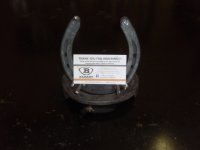
Business card holder for a few tack shops here in Ocala.
 

Attachments

  • P4190001.JPG
    P4190001.JPG
    121.1 KB · Views: 162
  • P4190002.JPG
    P4190002.JPG
    123.9 KB · Views: 151
  • P4190003.JPG
    P4190003.JPG
    126.7 KB · Views: 157
  • P4190004.JPG
    P4190004.JPG
    143.3 KB · Views: 140

youngnstudly

Well-known member
Joined
Apr 20, 2007
Messages
79
Location
The "Whine" country, CA
Please skip all this and just post pictures of a adjustable straight edge so I can copy it :D soon ; looks good.

I was just planning to copy (loosely) one of the larger manufacture's designs that I used back when I worked in a sheet metal production shop, but use square tubing in a few sizes that would make the fence adjustable (as opposed to round material). The actual straight edge will probably be a small (1/4" thick) chunk of stainless or high carbon flat stock. I'll have to check my stock on hand before making any final decisions. :lol:


The little guy now has his own stand. Works good and is nice and quite.

anvil%20stand%202.jpg

I completely missed this when I posted, but you have some awesome metal working equipment! Do I spot slip rolls on that work bench in the background (on the right side)? If so, do you happen to know the maximum gauge capacity and diameter of the rolls by chance?
 

kazlx

Well-known member
Joined
Oct 30, 2012
Messages
2,851
Location
Tustin, CA
I'm guessing to keep any moisture in the sand from rusting out the stand. Could be something else though...
 
To avoid these ads, REGISTER NOW!
Top Bottom