To avoid these ads, REGISTER NOW!

Show us your welding projects

To avoid these ads, REGISTER NOW!

landi250r

Active member
Joined
Dec 2, 2008
Messages
28
Couple of things I did...

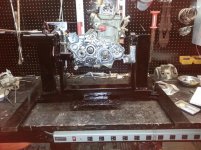
double axis ATV engine stand. it started its life out as a engine stand. it is mounted on a lazy Susan so it can be turned 360 degrees.
 

Attachments

  • Enginestand 1.jpg
    Enginestand 1.jpg
    151.5 KB · Views: 316
  • Engine stand 2.jpg
    Engine stand 2.jpg
    149.4 KB · Views: 262

landi250r

Active member
Joined
Dec 2, 2008
Messages
28
And re-fabbed a blade mount for the side by side. I also built a cart that mounts to the same mount for carrying wood, getting a deer out or what ever.
 

Attachments

  • UTV Blade mount 1.jpg
    UTV Blade mount 1.jpg
    141 KB · Views: 344
  • UTV Blade mount 2.jpg
    UTV Blade mount 2.jpg
    138.4 KB · Views: 289
  • UTV Blade mount 3.jpg
    UTV Blade mount 3.jpg
    146.5 KB · Views: 332

Boost Creep

Well-known member
Joined
Feb 17, 2010
Messages
1,407
Location
michigan
finished up my stand. its ready to roll

IMG_6137_zpsexkdr9pg.jpg


IMG_6143_zps5xewxyxg.jpg
 

nonhog

Well-known member
Joined
Nov 6, 2007
Messages
2,449
Location
Arizona (Tucson)
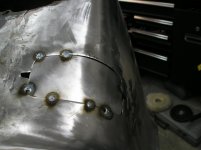
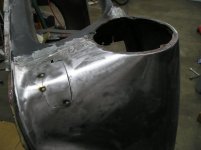
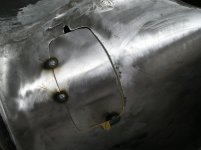
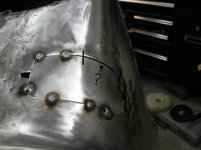
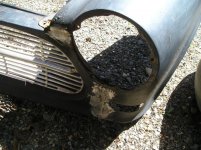
Wondering if my patch just warped or I didn't fit it well to begin with? The edges ended up slightly smaller than I hoped for, but while holding it in place seemed to fit well for/aft. Should I have tacked one each side before adding more in the lower areas or did I just not catch how badly it fit before welding. I get you can only guess at this point. Copper backing will have to be used and maybe lower heat a notch?

A skim coat of mud will no doubt happen but want the next side to come out better.

Thoughts?
 

Attachments

  • lights122 004.jpg
    lights122 004.jpg
    138.3 KB · Views: 221
  • lights122 003.jpg
    lights122 003.jpg
    139.4 KB · Views: 235
  • lights122 002.jpg
    lights122 002.jpg
    141.9 KB · Views: 216
  • lights122 001.jpg
    lights122 001.jpg
    147.5 KB · Views: 246

nonhog

Well-known member
Joined
Nov 6, 2007
Messages
2,449
Location
Arizona (Tucson)
I had stopped tacking at this point to get an expert opinion. :thumbup:

Do I risk making a mess with the hammer and dolly or just mud over it and move on? Want to learn as I am showing my boy how (or how not) to do this. :beer:

click on pic, for best view!
 

Attachments

  • lights122 004.jpg
    lights122 004.jpg
    138.7 KB · Views: 231

brawls43

Well-known member
Joined
Aug 29, 2012
Messages
133
Location
Minneapolis
As a novice too, it kind of looks like the weld pulled the panel tight to the one side. So where it had been an even gap all around, pulling the panel tight on the one side just increased the gap on the other side. But that's just a novice guess.
 

80z28s6

Member
Joined
Nov 16, 2009
Messages
11
Search the forum for a thread called welding in patch panels. A member called mpcc is quite an artist at this. Also lots of great info.
 

Vegaman_Dan

Well-known member
Joined
Jun 1, 2012
Messages
2,453
Location
Pacific, WA
Wondering if my patch just warped or I didn't fit it well to begin with? The edges ended up slightly smaller than I hoped for, but while holding it in place seemed to fit well for/aft. Should I have tacked one each side before adding more in the lower areas or did I just not catch how badly it fit before welding. I get you can only guess at this point. Copper backing will have to be used and maybe lower heat a notch?

A skim coat of mud will no doubt happen but want the next side to come out better.

Thoughts?

Patch appears to be a bit too small for the opening. Yes, tacking it on all sides would have helped prevent the lifting and pulling as it shrinks.

I also see the dreaded blowthrough, meaning you've got too much heat going in. Trust me, it's a dance I'm still doing to avoid when I'm doing sheet metal. It's one reason I'm practicing TIG right now and will be doing some more coupons in an hour or so to learn how to use it right for the materials I'm working with.
 

stinkity stoink

Well-known member
Joined
Apr 8, 2007
Messages
729
Location
New Jersey
Grind the welds down a little front and backside. After that try hammer on dolly on the welds ,it should stretch them out a bit and put the patch back to the way it was.
I am not an expert ,but have had some good success doing it this way. I don't know how the patch fit prior to welding.
 

Zeke

Well-known member
Joined
Aug 13, 2009
Messages
17,176
Location
Long Beach CA, the sewer by the sea.
MIG pulls the patch towards the tack as it cools. Work opposite sides evenly. Yes, hit the welds with a hammer and dolly to flatten them and to push the patch outward a bit. You can always work the area planishing it which will stretch (and work harden) it. No, don't just smear filler on it until you've done your best metalwork.
 

trentonmakes

Banned
Joined
Aug 29, 2014
Messages
447
Don't mud over it!
You may be able to build up the welds in that area and eventually fill it. PITA, though with that gap.
Take your time and let it cool, spread your tacks out, as it looks like you have been.

Check wire speed and heat settings for blow through.

Patch panel should be tightest possible fit or as close to as you can get.

Sent from my LG-D801 using Tapatalk
 

trentonmakes

Banned
Joined
Aug 29, 2014
Messages
447
What is it your patching?

Tack a gas rod on one side to build up your weld[emoji106], unless of course it's a structural piece.

Could also use brass underneath to bridge the gap. Your weld won't stick to brass.

Sent from my LG-D801 using Tapatalk
 

Okie Pete

Well-known member
Joined
Jan 9, 2009
Messages
653
Location
willow springs,okla
Don't know if these count but here's a couple things I've done .
 

Attachments

  • kurte's creation   Darin 009.jpg
    kurte's creation Darin 009.jpg
    74.5 KB · Views: 368
  • Cat Kurte made 006.jpg
    Cat Kurte made 006.jpg
    124.1 KB · Views: 384
To avoid these ads, REGISTER NOW!

TauntDevil

Well-known member
Joined
Mar 19, 2014
Messages
194
Location
Mesa, AZ
I agree, those are pretty darn rad. Could definitely see the second one being a shifter for an old 50s truck or rat rod. Super super cool!
 

nonhog

Well-known member
Joined
Nov 6, 2007
Messages
2,449
Location
Arizona (Tucson)
I also see the dreaded blowthrough, meaning you've got too much heat going in. Trust me, it's a dance I'm still doing to avoid when I'm doing sheet metal. It's one reason I'm practicing TIG right now and will be doing some more coupons in an hour or so to learn how to use it right for the materials I'm working with.

Yes maybe too hot? I try and find that sweet spot, doesn't always happen.
:dunno:
Lets see those coupons!

Don't mud over it!

As you can see its already got the fenders welded to the nose, bought it that way. It'll get mud but I'm striving for as little as possible after all the welding is complete. I never meant now (just to be clear)

What is it your patching?

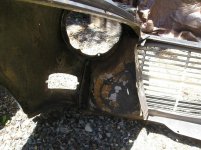
The car in my avatar is a 66 Volvo Amazon. Me and my boy are adding custom turn signals to a one piece front end so I (we) are filling the old factory holes.

Thanks all for the ideas!
 

Attachments

  • 90 degrees 003.jpg
    90 degrees 003.jpg
    127.8 KB · Views: 388
  • 90 degrees 001.jpg
    90 degrees 001.jpg
    109.2 KB · Views: 390
  • 1719.jpg
    1719.jpg
    138.5 KB · Views: 1,090

Mike.ASC

Well-known member
Joined
Apr 21, 2010
Messages
880
Location
East coast
I've seen a lot of those era Volvo's turned into really nice looking machines , are you planning on doing the same ?
 

trentonmakes

Banned
Joined
Aug 29, 2014
Messages
447
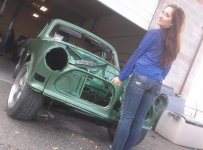
I'm still checking out the chic in the last pic,.... What were you saying?
Lol

Sent from my LG-D801 using Tapatalk
 

Mike.ASC

Well-known member
Joined
Apr 21, 2010
Messages
880
Location
East coast
Some mild mods, but mostly stock. added some pics on my shop build.
(keeping from cluttering the welding thread) :thumbup:

I must be starting to go blind ... I don't remember ever seeing your shop thread before. Nice shop in a beautiful part of the country. I have been out there twice in the last few years visiting a good friend in Everson . Those older Volvo wagons are a favorite of mine.
 

vintagespeed1956

Well-known member
Joined
Dec 24, 2014
Messages
221
Location
RanchoCucamonger, CA
Don't mud over it!...You may be able to build up the welds in that area and eventually fill it....

no, dont do that. a little mud isn't a horrible thing when done properly.

What is it your patching?..

looks like a turn signal/parking light hole to me. :dunno:

edit:

and hammer your tacks.
 
Last edited:

trentonmakes

Banned
Joined
Aug 29, 2014
Messages
447
You'll never get it straight without filler! That said, you don't want to layer it on or fill gaps/holes with it.
Yeah, it may come out looking great, until it starts cracking and crumbling under that sweet paint job! Lol

New cars come rolling out the factory with filler on them.

Sent from my LG-D801 using Tapatalk
 

ilovevocs

Well-known member
Joined
Jun 26, 2009
Messages
1,966
Location
Toledo, Ohio
Plastic fillers get a bad name buy hacks that use them outside of their intended perimeters.

Ive seen so many guys use duck tape to support it and spread filler to fill the holes. Or they just smear it over hole. The cheap filler they use contains talc and absorbs moisture and then it bubbles or just plain falls out.

Seems to me that most guys that try to flip cars for a quick buck take this approach, shiny paint job, half assed body work, undercoat everything to make it look new, getting running acceptably, sell.....
 

trentonmakes

Banned
Joined
Aug 29, 2014
Messages
447
Pinholes!
Cheap fillers leave them, I prefer rage xtreme from evercoat
Bit pricey, but imo, it's saving time and extra work!

Sent from my LG-D801 using Tapatalk
 

Divcod

Well-known member
Joined
Jan 9, 2015
Messages
319
Location
Pacific Northwest
I had stopped tacking at this point to get an expert opinion. :thumbup:

Do I risk making a mess with the hammer and dolly or just mud over it and move on? Want to learn as I am showing my boy how (or how not) to do this. :beer:

click on pic, for best view!
While not an expert, I would cut out the current repair panel an start over.
1. Panel looks like it is not a difficult fabrication
2. Make the new panel to fit as tight as possible. The smaller the gap the less heat introduced, i.e. Less shrinkage .
3. Spot weld the panel on opposing sides.
4. Grind the spot welds and if possible TIG weld to finish.
5. MIG welding is pretty common to finish but I find the working of a TIG weld to be easier.
6. Whatever method of welding is used it is best to work on the distortion as it occurs VS waiting until all of the welding is complete.

If you work at it the repair can be completed to a level that the distortion can be dealt with a minimum of filler. Our goal is to use less than 1/16" of filler and generally don't use any where near that amount.

Good luck

You might take a look at the MP&C Shop in the fabrication thread as there are some excellent example of the metal work. Answer to the question of how much filler to use is whatever works for you as it is always a balance of what is practical and what is possible - time / money
 
Last edited:

trentonmakes

Banned
Joined
Aug 29, 2014
Messages
447
I work in an auto factory and I can honestly say that this is not true. They will always get the panel smoothed back out
I don't work in an auto factory, but I stayed at a holiday Inn last night. Lol

There's no way, in my mind, that they could get perfectly straight panels without some filler before spraying paint.

I've read that many times, maybe that was the case back when? Still would not be surprised if they still do it today.

Sent from my LG-D801 using Tapatalk
 

vintagespeed1956

Well-known member
Joined
Dec 24, 2014
Messages
221
Location
RanchoCucamonger, CA
You'll never get it straight without filler!..

sheetmetal will school ya that's for sure. :bowdown:

if the OP hammers his tacks and keeps the replacement panel fairly straight, there will be very little filler needed to straighten it out, he also has the benefit of the panel he's working on being curved which makes it alot easier to weld and keep straight.
 

coma13

Well-known member
Joined
Nov 5, 2012
Messages
247
You'll never get it straight without filler! That said, you don't want to layer it on or fill gaps/holes with it.
Yeah, it may come out looking great, until it starts cracking and crumbling under that sweet paint job! Lol

New cars come rolling out the factory with filler on them.

Sent from my LG-D801 using Tapatalk
Tons of metal shapers get their sheet metal paint ready with no filler. Heck there are some examples of it right on this board.

Sent from my XT1049 using Tapatalk
 

Dragoonmc

Well-known member
Joined
Feb 5, 2015
Messages
60
I don't work in an auto factory, but I stayed at a holiday Inn last night. Lol

There's no way, in my mind, that they could get perfectly straight panels without some filler before spraying paint.

I've read that many times, maybe that was the case back when? Still would not be surprised if they still do it today.

Sent from my LG-D801 using Tapatalk


Heck back in the day they literally filled areas with lead to fill the panel seams. But now it's all thin enough it comes off the stamping die straight
 

MP&C

Well-known member
Joined
Oct 21, 2009
Messages
4,396
Location
Leonardtown, MD
Responses in blue


Patch appears to be a bit too small for the opening. Yes, tacking it on all sides would have helped prevent the lifting and pulling as it shrinks.

Actually the tacking on all sides of a patch that is too small for the opening does exactly what was shown, pulls it to the outside of the hole as the weld dot shrinks which pulls it down in a high crown area like that shown. The correct way to prevent this (besides the patch fitting a bit better) is to tack in the same direction and forget what you've heard about skipping around. Start the top seam from the inside (for example) and work the tacks toward the outside, aligning the panels as you go. Start the bottom seam and work it the same direction, aligning the panels as you go. Now if the patch is too short it results in a gap along the outside vertical seam, not the patch pulling downward.


I also see the dreaded blowthrough, meaning you've got too much heat going in. Trust me, it's a dance I'm still doing to avoid when I'm doing sheet metal. It's one reason I'm practicing TIG right now and will be doing some more coupons in an hour or so to learn how to use it right for the materials I'm working with.


Without seeing the back side of the welds, I'd say that you have a few real nice ones there, and a few that blew likely due to excessive gap in the panel. IMO, increase the wire feed slightly and leave the heat alone. If weld dots start to appear too large, control that with less weld duration. But full penetration welds, first and foremost.


Yes maybe too hot? I try and find that sweet spot, doesn't always happen.
:dunno:
Lets see those coupons!


Don't mud over it!
You may be able to build up the welds in that area and eventually fill it. PITA, though with that gap.
Take your time and let it cool, spread your tacks out, as it looks like you have been.

Check wire speed and heat settings for blow through.

Patch panel should be tightest possible fit or as close to as you can get.

Sent from my LG-D801 using Tapatalk


As you can see its already got the fenders welded to the nose, bought it that way. It'll get mud but I'm striving for as little as possible after all the welding is complete. I never meant now (just to be clear)


A little filler never hurt anyone, but you'd be surprised how a bit more attention to fit/trimming of the patch will help in limiting the filler needed..


What is it your patching?

The car in my avatar is a 66 Volvo Amazon. Me and my boy are adding custom turn signals to a one piece front end so I (we) are filling the old factory holes.

Thanks all for the ideas!


If you're shaving those light holes, then do the entire thing at once. Trim out the mounting slots, use a larger radius on the 4 corners for less distortion, form the patch to match the contour of the fender, and trim for no gaps. You've already seen what gaps and the patch pulling will do, now see what it does with a tighter fit... The results you have now are very much a lesson that your son (and anyone else reading along) can see how shrinking affects high crown panels.
 
Last edited:
To avoid these ads, REGISTER NOW!
Top Bottom