I did do some searching here, if there is much talk, could not find much.

Seeing sub-$200 small diesel heaters advertised, wondering how they perform and what amount of fuel, they consume. Three car garage. I do have a 20K btu salamander, but it's pretty noisy and non-vented (kero not cheap). Also have a 240V forced air electric, not permanently installed.
Looking for something to run longer periods with maybe remote start. Our home heats with fuel oil, so I could use some of that.
Any users? Thanks
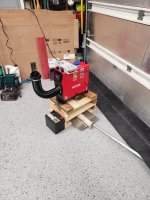
I use one in my shop and have messed with them a bunch. I have four of them, one is rigged up to run on tool batteries for portable use.
They are incredibly efficient and burn super hot so the exhaust is not smelly or anything. I've seen pictures of the inside when running and its like a jet motor, just a pure blue flame.
At about 3/4 output mine uses about a gallon of diesel every 24 hours, maybe a little less. I have a 7.5 gallon tank connected to it and it lasts more than a week of steady running. It is only around 14k btu output at 75% power, so I don't know if that is enough for your application. They are around 17k btu maxed out. They are rated for 5k watts output, that translates into 17k btu. I believe they are around that based on comparing them to a 10k btu gas heater I have, but have not done the fuel usage vs efficiency math.
There are lots of forums dedicated to them, but here are some of the main points -
1. You have to run a small exhaust pipe and an air intake hose for combustion outside, both about 1".
2. If yours comes with the crappy green fuel line you need to replace it with the solid semi-clear white one or it will leak, but you will want to buy the kit to run it into a larger fuel container if you don't get that with yours, and those all use the good line.
3. There is a flat gasket at the bottom that seals around the exhaust and air intake, you need to replace it with the silicone German one, the cheap rubber one will slowly burn and give off fumes forever. You can also cut one out of a cheap silicone baking mat.
4. They are all interchangeable inside, you can buy cheap rebuild kits with gaskets and a new glow plug online, eBay, Amazon, etc.
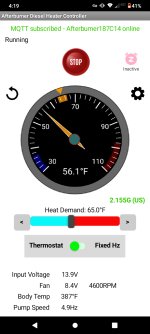
5. There are different control boards, certain ones work with a really cool controller called an Afterburner, a guy in Australia makes them. It does a much better job of running the heater plus adds all types of ways to control it online or with your phone. And does a better job tuning it, monitors and reacts to fuel usage and voltage, etc. I have one and love it. It cost almost as much as a heater, but has been well worth it.
https://www.mrjones.id.au/afterburner/
6. They run fine on diesel, fuel oil, or kerosene. Not on used motor oil unless you want to clean it constantly or have a really good filter setup.
7. You need to check the tuning out of the box, they all run rich and soot up inside by default. Some have automatic elevation tuning, some don't. The auto tune ones are pretty good but all need checked and tuned or you will be taking them apart and cleaning them a lot, when tuned correctly they will run for years without being messed with. Mine runs almost constantly all winter every year.
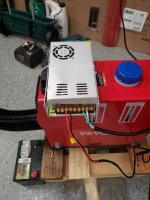
8. They have a glow plug that heats up during startup and shutdown, this draws 10-12 amps at 12v, so you need to have a solid power source. Most people connect them to a 12v battery with a small charger on it, that way it can stay charged up, and its good in a power outage.
9. You have to make sure power does not get interrupted when its running, the burn chamber is going to be incredibly hot and if the power goes out it will cook the controller and other stuff when the blower fan shuts down. Could even light on fire. They all run on 12/24v DC, some come with a wall adapter but internally they are 12/24v. You can't just use the wall adapter unless you hook it to some sort of UPS so the power never goes out. And the wall adapters are cheap garbage that will fail. If you have an Afterburner it can shut them down gracefully when power starts to drop.
10. I would not buy the all in one setup unless you wanted it to be portable, the ones that are separate parts are smaller and easier to setup more permanently in a shop, and easier to work on.
11. The fuel pump is a dosing pump, meaning it gets turned of and on at different speeds depending on output. This makes a loud ticking noise that drives people crazy. I use a dead silent pump from here, $20, you need the "22" for a 5k heater.
https://sunsterdirect.com/products/a220-ultra-low-noise-fuel-pump-12v
I think those are the main points, but feel free to ask me anything about them, I've been messing with them for 4-5 years and have setup a bunch for other people.