To avoid these ads, REGISTER NOW!

Small engine mechanic question

thetoolguy37

Active member
Joined
Jan 20, 2024
Messages
38
When buying chrome sockets. If you had to you spend more on 3/8 or 1/4 socket sets while starting out, which one would you buy first?
 
To avoid these ads, REGISTER NOW!

69charged

Well-known member
Joined
Sep 20, 2007
Messages
469
Location
carberry, manitoba
3/8.
Most 1/4” sets really only go up to 1/2” and you more than likely will need bigger than that. If a 1/4” set goes bigger, it won’t be much bigger that the 1/2”.
Whereas the 3/8” set can go down to 5/16” or smaller sometimes.
 

firebirdparts

Well-known member
Joined
Jun 8, 2016
Messages
10,584
Location
Kingsport, TN
Asking for a home gamer?

Anyway, the "sockets sure are cheap" response is pretty good. 3/8 sockets are what you'd actually need on what is considered a small engine to me. Like a lawn mower. Mowers traditionally didn't have any 5/16 hex fasteners on it. If you're working on something else, well, act accordingly.
 

L.Cheapo

Well-known member
Joined
Oct 23, 2014
Messages
5,879
Mowers traditionally didn't have any 5/16 hex fasteners on it.

B&S Quantum engines used 5/16 all over--air filter cover, air filter to carb housing, fuel tank to top of blower housing.

As for the OP, I'd go with 3/8 first as you'll likely use it more.
 

P0234

Well-known member
Joined
Aug 6, 2012
Messages
3,241
Location
NoVA
Just get a basic "mechanics" socket set of your favorite brand. I started out with a craftsman set like that over 30 years ago and it's still the basis for my socket collection.
 

AEAdam

Well-known member
Joined
May 27, 2023
Messages
2,729
Location
SE PA
Contrary: Cheap 1/4" typically ****. If you are upgrading one drive size or the other, you will get more bang for your buck out of the 1/4" drive in my opinion. I suspect you will need both SAE and Metric sockets.

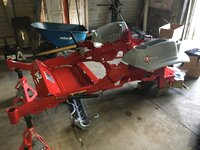
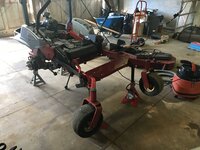
I completely rebuilt my mower years ago. Used wrenches and a lot of 1/4" drive. That was a big project. Here are a few pics for reference:
IMG_2717.JPG

Bought this for $1500 and just tore it apart.
IMG_3311.JPG
Engine had a cracked cylinder. Deck was cracked.
IMG_3315.JPG
People really mistreat these things.
IMG_3406.JPG
Have an Amish friend who powder coats farm equipment. I couldn't really pick the color. He only had one red. I cleaned the plastic fenders, but they just didn't look great so I wiped them with alcohol and just applied a thin coat of gray spray paint. I thought they came out great. So I did the same with the pulley covers and grass shoot.

IMG_3404.JPG
Repaired deck.
IMG_9124.JPG
This was little like building a car. I think I paid $1500 for the mower and put around $3500 into it - new engine, rebuilt hydros, new wheels, upgraded suspension seat, all new pulleys, belts etc. It was a fun project. My guess is, there's a lot of work for small engine repair people. Where I live there's a lot of lawns and everyone has mowers and also a lawn service but me. I would think you could make a living buying, selling, and maintaining nothing but Exmarks.
 

Mr_B

Well-known member
Joined
Nov 21, 2016
Messages
5,374
Location
Reading
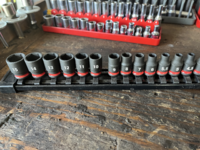
You could buy the deep and shallow 11pc 1/4 icon sets and the deep & shallow 12pc icon sets and be done plus got usable warranty if goof some up . That give you great size coverage in metric and sae at pretty low cost & decent socket design/easy use tray holders plus current easy warranty .
Milk HF ICON sale/coupon for best prices .
Get good range extensions, icon straight extension sets pretty decent, just don't buy the icon ratchets as they not great .
An impact driver & 3/8/1/4 socket drive adaptor is great tool for small engine work .
Torx bit/sockets will be useful on small equipment too, the Capri 60pc master torx set is decent for sensible dollar .
 
Last edited:

danielbuck

Well-known member
Joined
Apr 15, 2014
Messages
918
If $ is tight, don't under estimate cheap sockets. Sure the chrome might peel off of them eventually, or they might not be quite as tight fitting or whatever as a better set, and might not stand up to the occasional impact use that a better set might (yes... it happens sometimes!!) but even the cheapest of cheap sockets will probably last you a good while. My father was usually very cheap when it came to tools, I still use some of this old cheap sockets because I don't have any 12 point sockets of my own (all of mine are 6 point), and on the rare occasion I need a 12 point, I use his and they still work just fine.
 

cherrybomb

Well-known member
Joined
Oct 18, 2016
Messages
887
Location
Near Madison Wi.
If your starting out,why not go to your shop and check out what the experienced guys use ,no more,no less.You don't want to always borrow tools,the other tech and the customer suffers when the work doesn't get done.Lots of choices in sockets in both 1/4 and 3/8,I would pay attention and cover the overlap sizes,then you can use 3/8 to break loose and 1/4 to remove.Both metric and sae
 

KnurledNut

Well-known member
Joined
Jan 28, 2011
Messages
8,096
Location
n/a
When buying chrome sockets. If you had to you spend more on 3/8 or 1/4 socket sets while starting out, which one would you buy first?

Small engine repair really calls for both drive sizes even if you have to buy cheap now and upgrade later.
There are low-cost, good quality socketry options these days.
I fully tore down several old machines for parts and scrap recently and ended up using 1/4, 3/8, 1/2 in SAE and MM.
Some engine work benefits from the small profile of 1/4” like carb stud nuts, etc. but chassis work will be more 3/8”.
Also dont forget bits. Torx is pretty common on OPE.
If this is a career you’re venturing into, maybe consider skipping chrome and going straight for thin wall impact sockets, as power tools will likely be needed in the future to keep up with time allotted for each job.
Also look into impact drivers and accessories. Lots of those options come in handy for this line of work.
 

GarageHobbyist

Well-known member
Joined
Feb 18, 2024
Messages
361
Location
Illinois
I rebuilt my Allis Chalmers Garden Tractor and Briggs 10HP Cast Iron engine using almost exclusively 1/4" drive.

I like the Tekton 1/4" and 3/8" sets. They have a nice size range with no skips at a reasonable price.
 
To avoid these ads, REGISTER NOW!

seber

Well-known member
Joined
May 31, 2016
Messages
4,193
Location
Deep East Tx.
Just finished resurrecting a John Deere 455 garden tractor. I used 1/4" drive for the 10mm and 3/8" drive for everything else. This was a complete tear down and rebuild. Anything less than 10mm is nut drivers. I did use 1/2" drive for the blades.
 

mark-NJ

Well-known member
Joined
Apr 1, 2019
Messages
769
Location
new jersey
I'm going to say it: If you're not making a living with your tools, HF will likely suit you just fine. You could likely buy 3/8 deep & shallow, in metric & imperial AND all the same in 1/4" (that's 8 sets) and be out the door for under $100.

Say what you will...
 

jdl25

Well-known member
Joined
Jun 12, 2010
Messages
356
15 years ago I jumpstarted my tool collection with used tools from yard sales because I could get more for my money. This method allows you to get both drive sizes for similar or less money.

Consider used tools if you really want maximize your investment to meet your needs.
 

PoorUB

Well-known member
Joined
Mar 29, 2021
Messages
11,622
Location
Fargo, ND
Guys are mentioning stopping in a shop and see what they use.

I had a small engine shop for a few years. Without question, 3/8ths drive was my primary, but I had 1/4" and 1/2" too and neither of those sizes got used every day, maybe not even every week. 3/8ths got used constantly.

1/4" drive stops about 1/2" and I saw quite a bit of bolts over that size, but my 3/8ths went down to 5/16" so it had good coverage. 1/4" drive the ratchets and breaker bars are too short when you need the leverage.

Today with all the metric I would say the same, 8 MM to 19 MM is very common.
 

KenC

Well-known member
Joined
Dec 20, 2009
Messages
2,577
Just finished resurrecting a John Deere 455 garden tractor. I used 1/4" drive for the 10mm and 3/8" drive for everything else. This was a complete tear down and rebuild. Anything less than 10mm is nut drivers. I did use 1/2" drive for the blades.
Re: the red above. One of the most used 'handles' for my 1/4" set is a screwdriver type handle with a 1/4'sq male drive end and 1/4" female in the handle end. Don't recall the maker, but it is old and handy as heck. I also have one that folds, so you can break an nut/bolt loose with it bent and straighten it out to spin the nut off. Also handy. For a lot of work I never use a ratchet at all.
 

finn

Well-known member
Joined
Mar 27, 2005
Messages
16,190
Location
The UP, God's country
Asking for a home gamer?

Anyway, the "sockets sure are cheap" response is pretty good. 3/8 sockets are what you'd actually need on what is considered a small engine to me. Like a lawn mower. Mowers traditionally didn't have any 5/16 hex fasteners on it. If you're working on something else, well, act accordingly.
The nut that holds the blade to the crank is larger than 5/16”
 

cherrybomb

Well-known member
Joined
Oct 18, 2016
Messages
887
Location
Near Madison Wi.
Re: the red above. One of the most used 'handles' for my 1/4" set is a screwdriver type handle with a 1/4'sq male drive end and 1/4" female in the handle end. Don't recall the maker, but it is old and handy as heck. I also have one that folds, so you can break an nut/bolt loose with it bent and straighten it out to spin the nut off. Also handy. For a lot of work I never use a ratchet at all.
I'm thinking of the same handle made by Koken,I have one in 1/4 and 3/8.Its a great tool,the function it presents makes it one of my most used tools.I got mine from Palmac
 

cowades206

Well-known member
Joined
May 7, 2016
Messages
83
Hey I've done something similar back when I was younger and poorer.
You buy the 1/4" drive and use it a long time until you get that stuck nut and crack your 1/2" socket. Then you go buy a 3/8" drive ratchet and just one 1/2 inch socket to finish the job. Of course don't buy the whole 3/8 drive set, because money is tight. That way when you're old you have A full 1/4 set, a full 3/8 set, a full 1/2 set and several odd pieces because you will have that one stubborn bolt/nut before you buy the next bigger set.

If you go back 40 years I'd be solidly in the 3/8" drive camp. Back in the day, 3/8 drive just had way more socket choices than 1/4" drive.
Modern tools really have changed things, especially with power/impact options.

The people recommending 1/4" drive might be right, but I still bet my story holds true about breaking something. Could you spring for a used cheapo 3/8 drive set on CL or FBMP for those few bigger tight things? Maybe 10 or 20 bucks? It wouldn't need to be high quality since you're using your 1/4 stuff most of the time.

Just kinda how my tool life has gone.
 
OP
T

thetoolguy37

Active member
Joined
Jan 20, 2024
Messages
38
Contrary: Cheap 1/4" typically ****. If you are upgrading one drive size or the other, you will get more bang for your buck out of the 1/4" drive in my opinion. I suspect you will need both SAE and Metric sockets.

I completely rebuilt my mower years ago. Used wrenches and a lot of 1/4" drive. That was a big project. Here are a few pics for reference:
IMG_2717.JPG

Bought this for $1500 and just tore it apart.
IMG_3311.JPG
Engine had a cracked cylinder. Deck was cracked.
IMG_3315.JPG
People really mistreat these things.
IMG_3406.JPG
Have an Amish friend who powder coats farm equipment. I couldn't really pick the color. He only had one red. I cleaned the plastic fenders, but they just didn't look great so I wiped them with alcohol and just applied a thin coat of gray spray paint. I thought they came out great. So I did the same with the pulley covers and grass shoot.

IMG_3404.JPG
Repaired deck.
IMG_9124.JPG
This was little like building a car. I think I paid $1500 for the mower and put around $3500 into it - new engine, rebuilt hydros, new wheels, upgraded suspension seat, all new pulleys, belts etc. It was a fun project. My guess is, there's a lot of work for small engine repair people. Where I live there's a lot of lawns and everyone has mowers and also a lawn service but me. I would think you could make a living buying, selling, and maintaining nothing but Exmarks.
THATS BEAUTIFUL, that is amazing looking.
 

AEAdam

Well-known member
Joined
May 27, 2023
Messages
2,729
Location
SE PA
THATS BEAUTIFUL, that is amazing looking.
Hey thanks a lot. Appreciate it. This thing is my friend 6 months a year, mowing 5 acres of woods and sloping lawn.

My family didn't understand why I bought it and why I put so money into until it was done.

Regarding tools, it was all basic stuff except for the hydros, which I rebuilt. Needed my snap ring pliers and some other stuff, drifts, picks, scrapers, long pliers.
 

Mandres

Well-known member
Joined
Jun 22, 2006
Messages
1,152
Hey thanks a lot. Appreciate it. This thing is my friend 6 months a year, mowing 5 acres of woods and sloping lawn.

My family didn't understand why I bought it and why I put so money into until it was done.

Regarding tools, it was all basic stuff except for the hydros, which I rebuilt. Needed my snap ring pliers and some other stuff, drifts, picks, scrapers, long pliers.

Did you have much trouble with the hydro gear rebuild? I've seen several nice commercial mowers locally that would make great restoration projects. But I'm not sure I can repair weak teansaxles. I've heard a lot of horror stories about working on these
 

gungatim

Well-known member
Joined
Jan 8, 2013
Messages
8,101
Location
west mich
Not sure I'd want to loosen head bolts and exhaust bolts with 1/4" drive. And I sure wouldn't even try to remove the crank blade bolt or the flywheel nut with 1/4" drive.

Not sure how many engines the 1/4" drive recommenders have actually worked on, but a good 3/8" set and a pair of nut drivers is about all you need.

I like to use a 3/8 mini-impact on the mower blade bolt and flywheel nut but it's not mandatory.
 

AEAdam

Well-known member
Joined
May 27, 2023
Messages
2,729
Location
SE PA
Not sure I'd want to loosen head bolts and exhaust bolts with 1/4" drive. And I sure wouldn't even try to remove the crank blade bolt or the flywheel nut with 1/4" drive.

Not sure how many engines the 1/4" drive recommenders have actually worked on, but a good 3/8" set and a pair of nut drivers is about all you need.

I like to use a 3/8 mini-impact on the mower blade bolt and flywheel nut but it's not mandatory.
Tim. I may have misunderstood the question. What I understood the question to be was: if you were going to spend a little more to get better quality, what drive size would you spend more on? I’m imaging the OP buying Pittsburgh or Tekton or similar and wants to know, if he had extra cash for Icon, or Williams, what should he spend it on? I didn’t interpret his question to be, what single drive size works for everything a small engine mechanic needs.

BTW, my exmark mower is all SAE hardware on the body. It’s Kohler engine is a mixture of SAE and metric IIRC.

I think the bolt heads on my blades are 7/8” IIRC. I use a 1/2” mid torque impact gun to switch blades.

I recently rebuilt my Husqvarna chain saw. That’s held together with torx screws and the few hex bolts are metric.

Not sure where the OP is in his journey. I wish people would provide bigger back stories. My view: Small engine work needs automotive tools EXCEPT unlike an auto mechanic, the small engine person probably needs full sets of SAE wrenches, sockets, and Allen bit sockets. Could be the only SAE things they work on are Exmarks. To me that would be justified. All I see the landscapers using here are Exmark zero turns. Very occasionally I see an old scag or John Deere.

Though I complain about them, I’ve fixed and rebuilt a lot of stuff with craftsman wrenches and sockets. I’m confident a small engine mechanic could go very far with craftsman quality 3/8” drive. But if you wanted to spend a little more, craftsman (and other discount brands’) 1/4” drive sockets are pretty loose fitting. I’d also spring for good bit sockets. Icon may well be good enough. Also suggest researching and buying thinner wrenches for throttle cables etc.
 
Last edited:

AEAdam

Well-known member
Joined
May 27, 2023
Messages
2,729
Location
SE PA
Did you have much trouble with the hydro gear rebuild? I've seen several nice commercial mowers locally that would make great restoration projects. But I'm not sure I can repair weak teansaxles. I've heard a lot of horror stories about working on these
It’s a hydraulic motor. Mine are $1600, mower uses 2. You need to work clean. It’s like working on a car. You can’t muck around with it. Forget whether I needed a puller or not to get the fan blades off.

I guess the criticism I heard about my project was, I guess I thought I could buy a commercial mower with known engine trouble and repair the engine. I paid $1500 for a $12,000 mower. EVERY PART WAS BROKEN. I touched everything. Landscapers are really hard on their equipment.
  • Deck was cracked. I had that welded. Replaced the blades and all the pulleys and pulley bearings.
  • New clutch
  • New engine
  • new muffler (mine is aftermarket and pretty loud)
  • Drive wheels’ lug holes were wollered. Replaced the rear wheels
  • new casters, new anti scalp wheels
  • new seat, added the vibration isolation system - really nice upgrade
  • repainted the frame&ROPS (powder coated)
  • I actually had the engine shroud line-xed.
  • rebuilt the hydros
  • new battery
  • all new decals (they were almost $200 IIRC)
I would do it again. None of it was super hard. It’s a lawn mower. And it was super fun to do.

Parts I didn’t replace need replacing. I have wear in the control stick mechanisms. There’s more play than I’d like. Might do that this winter. Fuel gauge doesn’t work for ****. I’ve heard none of them do. Could have replaced that when I had it apart and didn’t. It works sometimes, then I go down a hill and it reads empty and stays like that.
 

AEAdam

Well-known member
Joined
May 27, 2023
Messages
2,729
Location
SE PA
This wasn't the question you asked, but just in case this helps:

I'm not a small engine repair person, but like many or most here, I've dabbled.

While "small engine repair" is defined by the size or usage of the power plant.....we could say something similar about "power sports" being a "sub-set" of automotive, NEITHER small engine repair or power sports have reduced tool requirements. Here are my thoughts based on recent repair work:

Where an auto mechanic would absolutely need bit sockets for all the specialty fasteners he encounters, small engine repair guys could probably start with screwdrivers. Reason: The use of plastics being so prevalent in garden equipment. Recommend:
  • decent set of screwdrivers. Klein would probably work. But you will need small sizes (P0, P00 for some things) so a "basic set" won't be enough. Might be nice to have fancier screwdrivers (PB Swiss, Vessel?) I like my SO instincts, but I feel they are really designed for heavy duty automotive use. You wouldn't want one of those to adjust a carburetor or to install a household electrical switch plate. You want something with a smaller rounder handle. So choose wisely.
  • Torx screwdrivers or T-handles. Take your pick or both. Not convinced you need sockets. I love my ratcheting screwdriver, but the recesses in my chain saw housing didn't allow that tool.
  • Allen T-handles

  • For sockets, I think you need SAE and metric, deep and shallow, and they should be thin walled, which may mean expensive. Icon might be more than good enough. Pittsburgh may not be good enough. For pulleys of different sorts, impact is really not a luxury item but a necessity. Not sure if you absolutely need 1/2" impact. My guess is, new mid torque 3/8" would do.

  • For wrenches, the double jam nuts tell me you either want thin wrenches, (suggest German wrenches as they tend to be thin, avoid Taiwan wrenches, as they tend to be thick) or whatever wrenches and a set of cone wrenches (like Park). Ratchet wrenches could also be helpful and fast. For me, so much about wrenches comes down to their open ends. I like hard, thin, tight and that means Snap On, but if you look through the TTC results, there are others. I'd pick tight fitting and thin over strength for small engine repair. Wrightgrip or FD+ should not be necessary. Those performing above or near Snap On tend to be MUCH thicker. Not a win for small engine repair I would think.

  • I think small engine people need and use more pliers than I do for automotive. More and smaller. KNIPEX has a dizzying array of styles. You will need snap ring pliers - I like Knipex forged models. I appreciated them for my Exmark hydro. Long nose, bent long nose. Then picks, mini picks mostly. Stuff to remove tiny fuel lines, tiny hose clamps. pliers as tweezers. I keep hemostats in my tool kits for that. Super helpful fuse pullers.

  • Then specialty tools: Multimeter, spark plug sockets, compression tester, various pullers for removing pulleys, strap wrench (not just for oil filters), slide hammer, air compressor, (just to remove caked on grass clippings etc), grease gun!
It's a long list. My guess is, a lot of small engine places take some of their tools for granted and "make do" because "it's just a lawn mower". Maybe I'm late to the party, but when you are working on a $10,000 lawn mower, that's really not "just a lawn mower" anymore.
 

rd65

Well-known member
Joined
Sep 29, 2017
Messages
2,718
Location
Granite Falls, WA
Not sure I'd want to loosen head bolts and exhaust bolts with 1/4" drive. And I sure wouldn't even try to remove the crank blade bolt or the flywheel nut with 1/4" drive.

Not sure how many engines the 1/4" drive recommenders have actually worked on, but a good 3/8" set and a pair of nut drivers is about all you need.

I like to use a 3/8 mini-impact on the mower blade bolt and flywheel nut but it's not mandatory.
Well, I've been the sole small engine tech at the city since Dec 2015, so more than a few. Lots of trimmers, plate compactors-so Honda engines, some jumping jacks, chainsaws, other misc construction type equipment. Yes, there is definitely call for some 3/8" stuff and even some larger 1/2" drive but mostly 1/4" metric work. I prefer a T handle vs nut drivers - less tools to keep track of that way. My shop is very small at approx 13' x 13' and that's wall to wall. Add workbenches on either side and tool box and parts bins across the back and a Handy lift in the middle and space is tight tight. I use a small stool to sit on because a small office chair is too large for the space.
 

Joemctag

Well-known member
Joined
Aug 11, 2017
Messages
813
Location
Outside raleigh nc
It’s a hydraulic motor. Mine are $1600, mower uses 2. You need to work clean. It’s like working on a car. You can’t muck around with it. Forget whether I needed a puller or not to get the fan blades off.

I guess the criticism I heard about my project was, I guess I thought I could buy a commercial mower with known engine trouble and repair the engine. I paid $1500 for a $12,000 mower. EVERY PART WAS BROKEN. I touched everything. Landscapers are really hard on their equipment.
  • Deck was cracked. I had that welded. Replaced the blades and all the pulleys and pulley bearings.
  • New clutch
  • New engine
  • new muffler (mine is aftermarket and pretty loud)
  • Drive wheels’ lug holes were wollered. Replaced the rear wheels
  • new casters, new anti scalp wheels
  • new seat, added the vibration isolation system - really nice upgrade
  • repainted the frame&ROPS (powder coated)
  • I actually had the engine shroud line-xed.
  • rebuilt the hydros
  • new battery
  • all new decals (they were almost $200 IIRC)
I would do it again. None of it was super hard. It’s a lawn mower. And it was super fun to do.

Parts I didn’t replace need replacing. I have wear in the control stick mechanisms. There’s more play than I’d like. Might do that this winter. Fuel gauge doesn’t work for ****. I’ve heard none of them do. Could have replaced that when I had it apart and didn’t. It works sometimes, then I go down a hill and it reads empty and stays like that.
FWIW, I’ve welded up a few dozen mower decks. It seems that the cracks are from fatigue and that probably new cracks will occure at the edges if the welds. Just my experience. But it’s not really that extensive. Would like to hear others chime in. Old post but still relevant?
 
To avoid these ads, REGISTER NOW!
Top Bottom