To avoid these ads, REGISTER NOW!

Solar electric

Teken

Well-known member
Joined
Jan 2, 2010
Messages
8,214
Location
The Bad Lands
what did the lease cost you?

Yes, do tell! :D Also, what were the terms etc with respect to your install. If I could find someone to provide the entire solar array on a lease. I would jump all over it like a rabid dog! :deathmeta

I am very much hoping in the next 10 years something big will change with respect to solar technology and drive down the prices.

I find it really ironic that this one single field has not dropped down in price as many other things have over the years. :eek:

Teken . . .
 
To avoid these ads, REGISTER NOW!

philip_g

Well-known member
Joined
Apr 12, 2012
Messages
821
Yes, do tell! :D Also, what were the terms etc with respect to your install. If I could find someone to provide the entire solar array on a lease. I would jump all over it like a rabid dog! :deathmeta

I am very much hoping in the next 10 years something big will change with respect to solar technology and drive down the prices.

I find it really ironic that this one single field has not dropped down in price as many other things have over the years. :eek:

Teken . . .

Ditto as long as its a straight lease and I own the electricity.
 

dahur

Well-known member
Joined
Feb 1, 2011
Messages
728
Location
Alamogordo, New Mexico
Yes, do tell! :D Also, what were the terms etc with respect to your install. If I could find someone to provide the entire solar array on a lease. I would jump all over it like a rabid dog! :deathmeta

I am very much hoping in the next 10 years something big will change with respect to solar technology and drive down the prices.

I find it really ironic that this one single field has not dropped down in price as many other things have over the years. :eek:

Teken . . .

Solar prices have dropped over the last couple years. To the point the panel manufacture's profit margins are pretty thin.
When I bought my system it was over $7 a watt installed. I believe it's $4 or less now.
 

Teken

Well-known member
Joined
Jan 2, 2010
Messages
8,214
Location
The Bad Lands
Solar prices have dropped over the last couple years. To the point the panel manufacture's profit margins are pretty thin.
When I bought my system it was over $7 a watt installed. I believe it's $4 or less now.

If that is the case what is keeping the cost for these system over 20K? :headscrat

Teken . . .
 

dahur

Well-known member
Joined
Feb 1, 2011
Messages
728
Location
Alamogordo, New Mexico
If that is the case what is keeping the cost for these system over 20K? :headscrat

Teken . . .

What size system are you talking about? You can spend less than 20k and get a very decent size system. Or you can spend as much as you want on a very large one. Lots of variables.
Remember the Feds will return you 30% on your tax return, and most states 10%. Some states utilities pay for part of the system cost.

Here's a 3KW system in Colorado for example:
http://www.adobesolar.com/index.php/site/solar-for-homes/residential-rebates-and-tax-incentives/

http://www.dailyfinance.com/2012/04/11/solar-power-cheaper-switch-green-energy-cost/

Price varies state by state.
 

PrecisionTools

Well-known member
Joined
Jun 4, 2011
Messages
703
Location
Victoria, Australia
I am on my second as the first one had a fault so do you think you would have a part in that as well ???

Funny bugga :) A few failed on the test jig but we had no failures in the field while I was there. I'm not saying that was because of me...It was a great inverter considering how new it was. Most of the bugs in the unit were firmware related because the R&D guys were still ironing out issues at the time.

For a small R&D team, in a small company, in a small (population) country where manufacturing is declining, it is a good product.
 

PeterT

Well-known member
Joined
Jul 31, 2011
Messages
1,476
Location
Toledo Ohio
Now that we are on the subject of solar, can anybody comment on a setup similar to below: I ran across it on craigslist. I was thinking I could either use it in the summer time, I could mount it to my barn roof - and power the inside barn... And use it as backup if we were to loose power.


BP solar panel & 50 foot cord (Cost $400 new)
Model SX375J
Part # 5211.0074
Serial # C10811297782836
http://www.solarpanelsonline.org/BP-Solar-Panel-75W-p/bp-sx-375-j.htm

Duracell Powersource 1800 (Cost $500 new)
Part # 852-1807
September 2007 Revision B (manual included)
http://www.xantrex.com/power-products/backup-power/xpower-powersource-1800.aspx

Morning Star SunSaver-6 (cost $40-$50 new)
Charge Controller attached to Duracell Powersource 1800
http://www.solar-electric.com/ss-6.html
 

Teken

Well-known member
Joined
Jan 2, 2010
Messages
8,214
Location
The Bad Lands
What size system are you talking about? You can spend less than 20k and get a very decent size system. Or you can spend as much as you want on a very large one. Lots of variables.
Remember the Feds will return you 30% on your tax return, and most states 10%. Some states utilities pay for part of the system cost.

Here's a 3KW system in Colorado for example:
http://www.adobesolar.com/index.php/site/solar-for-homes/residential-rebates-and-tax-incentives/

http://www.dailyfinance.com/2012/04/11/solar-power-cheaper-switch-green-energy-cost/

Price varies state by state.

Dahur,

Sorry, I should have told you I live in Canada. We do not have any of these similar incentives where I live. :sad:

With respect to the Kwh required . . . :spit:

How about I bounce some idea's off some of the forum members heads and get some feed back.

This is a thread I created about my new home energy monitor: http://www.garagejournal.com/forum/showthread.php?t=162749

In the first post at the very bottom you will see a link to see my energy use. For clarity sake here is the daily power consumption of my home.

DailyKwh.png


My 20 year plan is to have a combination of a grid tie system where extra power is sent back to the POCO to reduce my monthly electrical costs. As a longer term plan I would like my system to have the ability to have back up batteries in place to provide short term electricity during power failures.

My monthly Kwh used is aprox 500-800 per month based on climate conditions for the winter months. If someone could provide me some guidance on what size and along with respective models of PV panels, inverters, battery charging stations, along with any accessories required to accomplish this task.

It would be greatly appreciated.

I don't have any hard and fast numbers, but have basic goals I want to attain in the long term.

1. Reduce my monthly electrical bill. As costs will only go up in the future and I rather get paid for generating extra power I don't need.

2. Have the ability to tap into those reserves should power loss be present.

3. Reliable, informative, power monitoring interface.

4. Long term PV performance and warranty for all the gear. With respect to the PV panels which brands offer the best efficiency and low light performance?

5. Low maintenance and long term battery life. Which brands offer the best performance and warranty?


Teken . . .
 
Last edited:

dahur

Well-known member
Joined
Feb 1, 2011
Messages
728
Location
Alamogordo, New Mexico
Teken,
You seem to use about the same amount of energy I do. If I didn't have any incentives from PNM, and didn't use my AC in the summer, my 3.6KW system would provide me 100% of my power requirements. The difference is we get a lot of sun here in NM. You need to research your "sun hours" per day where you live. Here it's 6.2+. If your area is for example 4.5 sun hours per day, and you wanted to cover 100% of 600 KW per month, I believe you would need around a 4.8KW+ system.
(4.8KW x 4.5 sun hours =21.6KW generated per day. x 30 days = 648KW )
Batteries add around 30% to the cost of a system+ maintenance+ replacement. A generator may be more practical.
Your generally cooler temperatures would be to your benefit.
Another thing:
I have 16 Enphase inverters. One for each of my 225w panels.
I believe there are more pros than cons to having separate micro inverters, instead of one main inverter. Each inverter sends information back to my monitoring program via the powerline. If there is an issue with any one panel, it lets you know. Any shading on one of my panels only affects that panel. Shading on a one inverter system drops the whole system output down.
Lots to consider.
 

Teken

Well-known member
Joined
Jan 2, 2010
Messages
8,214
Location
The Bad Lands
Teken,
You seem to use about the same amount of energy I do. If I didn't have any incentives from PNM, and didn't use my AC in the summer, my 3.6KW system would provide me 100% of my power requirements. The difference is we get a lot of sun here in NM. You need to research your "sun hours" per day where you live. Here it's 6.2+. If your area is for example 4.5 sun hours per day, and you wanted to cover 100% of 600 KW per month, I believe you would need around a 4.8KW+ system.
(4.8KW x 4.5 sun hours =21.6KW generated per day. x 30 days = 648KW )
Batteries add around 30% to the cost of a system+ maintenance+ replacement. A generator may be more practical.
Your generally cooler temperatures would be to your benefit.
Another thing:
I have 16 Enphase inverters. One for each of my 225w panels.
I believe there are more pros than cons to having separate micro inverters, instead of one main inverter. Each inverter sends information back to my monitoring program via the powerline. If there is an issue with any one panel, it lets you know. Any shading on one of my panels only affects that panel. Shading on a one inverter system drops the whole system output down.
Lots to consider.

Dahur,

This is exactly why I wanted to pose these sort of Q's to the GJ collective! :rocker:

Having someone who has similar needs and requirements, and also doing it at the same time. :bowdown: I did not even consider the whole separate inverter scenario at all. :headscrat I could see this having a great level of redundancy value (not all of your eggs in one basket).

Having so many of these inverters, what was the cost difference compared to going with one massive unit? What are the specific con's you speak of with going this route?

Is it the loss in efficiency, reliability, power output? :headscrat

With respect to the sun hours, is there a site where I can plug in my local and address to get a general idea of what I can expect. I believe your quote of 4.5 hours of sun is close to what I was told in some random conversations in other forums.

I did use the link from the other forum member and plugged in a monthly energy costs using $100 & $200.00 per month to see what size of system I would generally need.

They returned a system of anywhere from 3-5 Kwh system. Well within costs I had planned to dish out for these things. The only reason I opted to for the higher output system was to hedge my bets and long term plans of receiving on going credits for my energy generation.

I figured at the current $0.677 cents I pay now, that the next 20 years I could expect to be paying around $0.12 - 0.15 cents. So, if I am already net neutral with a small 3 Kwh system, might as well get a 5 Kwh system and generate extra energy and get some cash! :rocker:

Teken . . .
 

dahur

Well-known member
Joined
Feb 1, 2011
Messages
728
Location
Alamogordo, New Mexico
Dahur,

This is exactly why I wanted to pose these sort of Q's to the GJ collective! :rocker:

Having someone who has similar needs and requirements, and also doing it at the same time. :bowdown: I did not even consider the whole separate inverter scenario at all. :headscrat I could see this having a great level of redundancy value (not all of your eggs in one basket).

Having so many of these inverters, what was the cost difference compared to going with one massive unit? What are the specific con's you speak of with going this route?

Is it the loss in efficiency, reliability, power output? :headscrat

With respect to the sun hours, is there a site where I can plug in my local and address to get a general idea of what I can expect. I believe your quote of 4.5 hours of sun is close to what I was told in some random conversations in other forums.

I did use the link from the other forum member and plugged in a monthly energy costs using $100 & $200.00 per month to see what size of system I would generally need.

They returned a system of anywhere from 3-5 Kwh system. Well within costs I had planned to dish out for these things. The only reason I opted to for the higher output system was to hedge my bets and long term plans of receiving on going credits for my energy generation.

I figured at the current $0.677 cents I pay now, that the next 20 years I could expect to be paying around $0.12 - 0.15 cents. So, if I am already net neutral with a small 3 Kwh system, might as well get a 5 Kwh system and generate extra energy and get some cash! :rocker:

Teken . . .

One of the cons to my having 16 inverters is there is 16 chances I can have a failure, vs. 1. (the Enphase come with a 10 year warranty) However, that in itself is pro, because if I do lose one inverter, the rest keep right on going. Lose your one inverter and that's it. The micro inverter is a fairly new technology, not time tested like the stand alone's.
If I remember, the micro inverters cost around $200 ea. I think you could easily spend $5000 on one main inverter.
Also I can expand my system with no headaches. If you have a one inverter system, that inverter is pretty much specific for your size system.

As to efficiency, and power output, the micro inverters actually put out more wattage than stand alone units. (according to my information)

I'm sure if you do a search you will come across a site for your area sun hours. I got my information from "Home Power" magazine.

I think opting for a higher output system is good. I did that too.
You will eventually add things that use more.
As soon as the prices for EV's come down from the stratosphere, my long term plans are to get one. Also on the list is a hot water heat pump, and air source heat pump for help with the heat, and more efficient cooling. I'm already planning on how much I will need to expand.

So your utility does have a net metering plan...? But no government incentives.
 
Last edited:

Teken

Well-known member
Joined
Jan 2, 2010
Messages
8,214
Location
The Bad Lands
One of the cons to my having 16 inverters is there is 16 chances I can have a failure, vs. 1. (the Enphase come with a 10 year warranty) However, that in itself is pro, because if I do lose one inverter, the rest keep right on going. Lose your one inverter and that's it. The micro inverter is a fairly new technology, not time tested like the stand alone's.
If I remember, the micro inverters cost around $200 ea. I think you could easily spend $5000 on one main inverter.
Also I can expand my system with no headaches. If you have a one inverter system, that inverter is pretty much specific for your size system.

As to efficiency, and power output, the micro inverters actually put out more wattage than stand alone units. (according to my information)

I'm sure if you do a search you will come across a site for your area sun hours. I got my information from "Home Power" magazine.

I think opting for a higher output system is good. I did that too.
You will eventually add things that use more.
As soon as the prices for EV's come down from the stratosphere, my long term plans are to get one. Also on the list is a hot water heat pump, and air source heat pump for help with the heat, and more efficient cooling. I'm already planning on how much I will need to expand.

So your utility does have a net metering plan...? But no government incentives.

Yes, the local POCO has a net metering plan but no incentives other than letting you borrow the cash to do the project.

I don't want to owe anyone any money. But, if there was some sort of lease where they would provide all the equipment and maintain it. This would be the only area I would ever consider doing so.

In my mind that is a win win situation. If they (the leasing company) is allowed to make money off of my install. All the while ensuring my electric bill is zero.

I am all in . . . But, in my part of the world that would never happen. Too many people in this town are still living in 1808, and can't see past their nose in terms of alternate and renewable energy. :sad:

All in what did your system cost? Would you be able to provide or create a new thread detailing your install and the pitfalls that came with it for us? One thing I find with Solar owners is that a lot of them are very low key and don't talk about their systems much.

It would be great to see and hear what others have done, and the planning that went into the solar array. I have been slowly reading solar specific forums along with watching on line you tube videos to gain more insight and guidance.

Much thanks for the input thus far. :beer:

Teken . . .
 

dahur

Well-known member
Joined
Feb 1, 2011
Messages
728
Location
Alamogordo, New Mexico
Yes, the local POCO has a net metering plan but no incentives other than letting you borrow the cash to do the project.

I don't want to owe anyone any money. But, if there was some sort of lease where they would provide all the equipment and maintain it. This would be the only area I would ever consider doing so.

In my mind that is a win win situation. If they (the leasing company) is allowed to make money off of my install. All the while ensuring my electric bill is zero.

I am all in . . . But, in my part of the world that would never happen. Too many people in this town are still living in 1808, and can't see past their nose in terms of alternate and renewable energy. :sad:

All in what did your system cost? Would you be able to provide or create a new thread detailing your install and the pitfalls that came with it for us? One thing I find with Solar owners is that a lot of them are very low key and don't talk about their systems much.

It would be great to see and hear what others have done, and the planning that went into the solar array. I have been slowly reading solar specific forums along with watching on line you tube videos to gain more insight and guidance.

Much thanks for the input thus far. :beer:

Teken . . .


Teken,
I had put up a post of my landscaping, and it was noticed in the pictures I had solar power. I posted information in answer to some of the questions I received.
http://www.garagejournal.com/forum/showthread.php?t=162010&highlight=landscaping+pics

The check I wrote was $27,400. After the government paid for 40% of that, my actual cost is $16,400. And the price since then has come down substantially (at least here in NM).
No pitfalls experienced, other than a State inspector. He finally approved on the 2nd visit. He wanted a different color wire for something, so the contractor had to come back and replace it.
The company "Sunspot Solar" out of Las Cruces did the work and I'm very happy with them. They did all the paperwork with the State, which was pretty intimidating. I didn't have to do anything. Turned the letter I got from the State to my tax guy, and no problems with my refund(s).
Sunspot Solar started on a Wednesday, and finished on that Friday. Very efficient.

The system sat there for over a month doing nothing, while I waited for PNM to come out and test it. They had to make sure it would disconnect from the grid upon a grid failure. When I called them, they said they were swamped with solar installations.
Finally they came out, tested it, and installed the REC meter. When that was plugged in, it activated the system, and immediately my main meter started turning backwards...
 

Teken

Well-known member
Joined
Jan 2, 2010
Messages
8,214
Location
The Bad Lands
Teken,
I had put up a post of my landscaping, and it was noticed in the pictures I had solar power. I posted information in answer to some of the questions I received.
http://www.garagejournal.com/forum/showthread.php?t=162010&highlight=landscaping+pics

The check I wrote was $27,400. After the government paid for 40% of that, my actual cost is $16,400. And the price since then has come down substantially (at least here in NM).
No pitfalls experienced, other than a State inspector. He finally approved on the 2nd visit. He wanted a different color wire for something, so the contractor had to come back and replace it.
The company "Sunspot Solar" out of Las Cruces did the work and I'm very happy with them. They did all the paperwork with the State, which was pretty intimidating. I didn't have to do anything. Turned the letter I got from the State to my tax guy, and no problems with my refund(s).
Sunspot Solar started on a Wednesday, and finished on that Friday. Very efficient.

The system sat there for over a month doing nothing, while I waited for PNM to come out and test it. They had to make sure it would disconnect from the grid upon a grid failure. When I called them, they said they were swamped with solar installations.
Finally they came out, tested it, and installed the REC meter. When that was plugged in, it activated the system, and immediately my main meter started turning backwards...

That was a great thread, simply amazing home! :drool: I really wish I had the property to install a ground solar array. :(

Would you be able to provide a few photo's of the solar array along with the equipment in your install? :drool:

Teken . . .
 

HOTFR8

Banned
Joined
Mar 2, 2007
Messages
24,498
Location
Castlemaine, Victoria. The Hot Rod Centre of Austr
Funny bugga :) A few failed on the test jig but we had no failures in the field while I was there. I'm not saying that was because of me...It was a great inverter considering how new it was. Most of the bugs in the unit were firmware related because the R&D guys were still ironing out issues at the time.

For a small R&D team, in a small company, in a small (population) country where manufacturing is declining, it is a good product.

This failed in a connection from what I understand as it kept going to alarm mode. Still all working now. You may also know Chris Stork that installed my Solar.
 

dahur

Well-known member
Joined
Feb 1, 2011
Messages
728
Location
Alamogordo, New Mexico
That was a great thread, simply amazing home! :drool: I really wish I had the property to install a ground solar array. :(

Would you be able to provide a few photo's of the solar array along with the equipment in your install? :drool:

Teken . . .

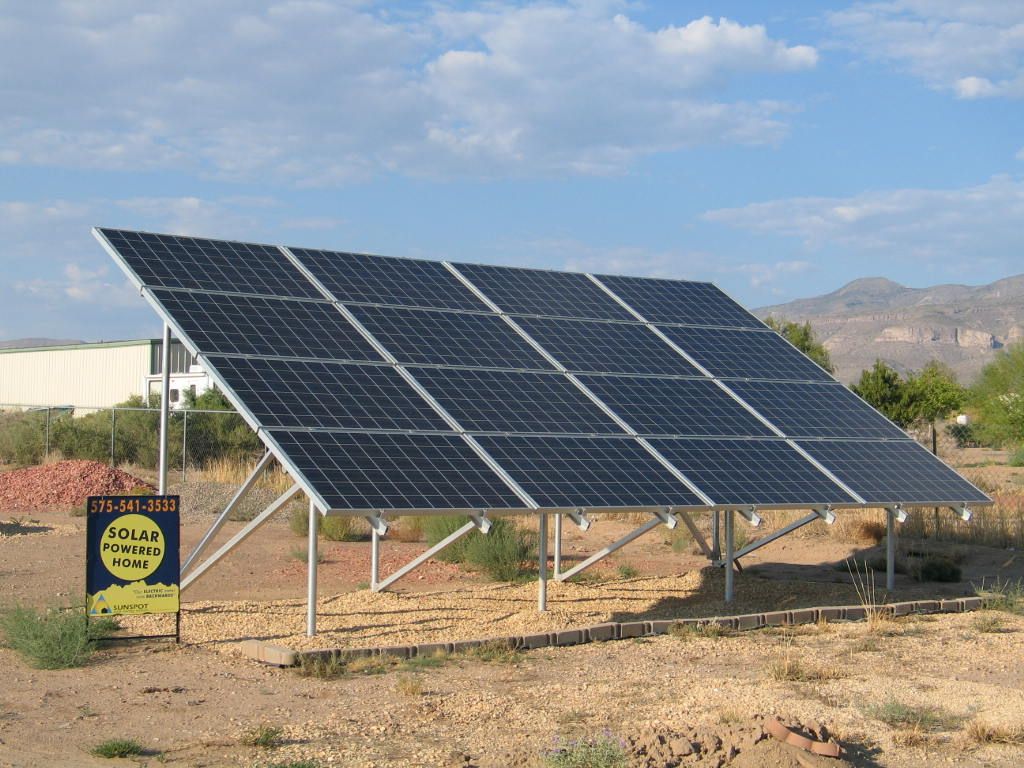
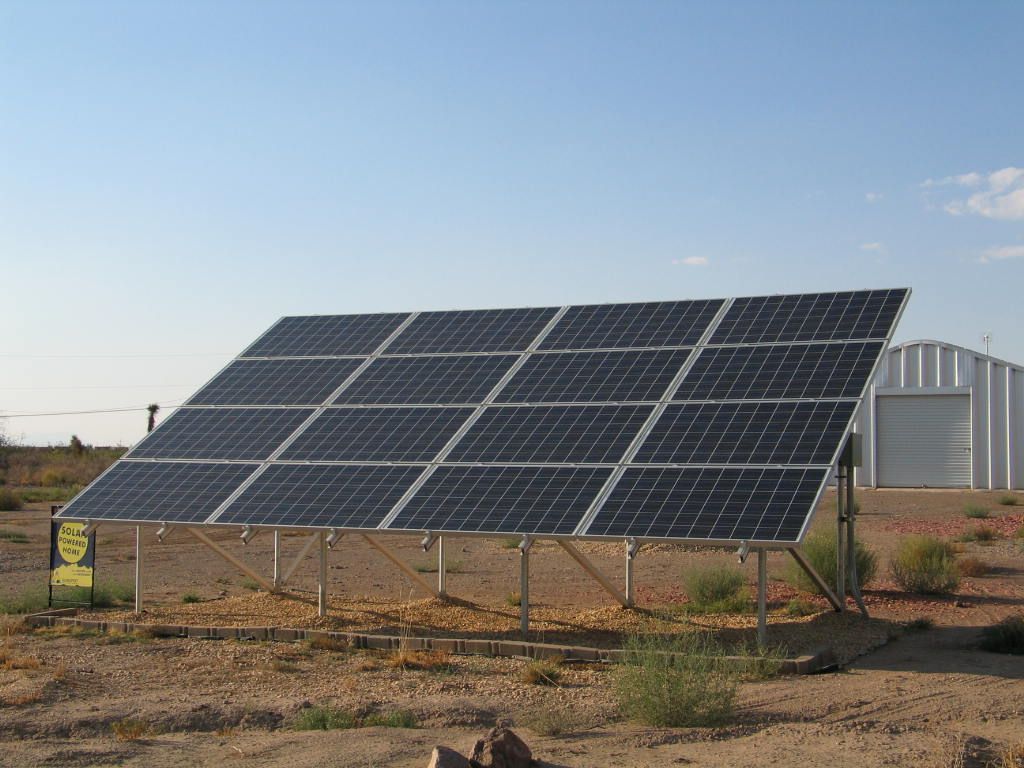
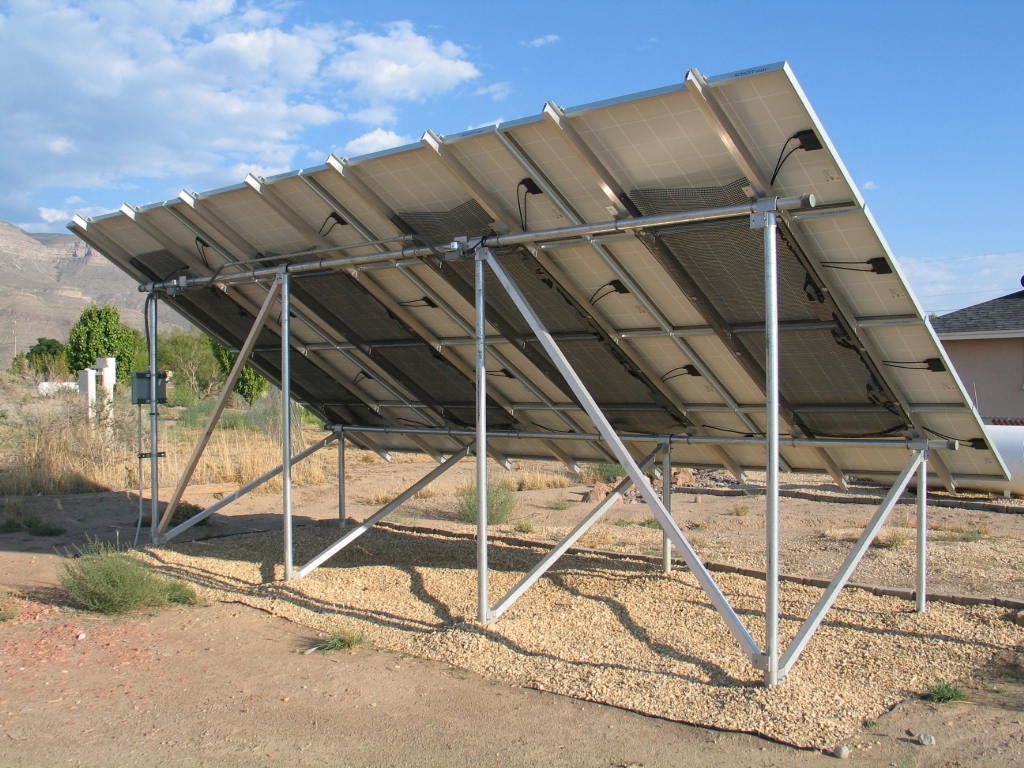
Sure.
IMG_7617.jpg


IMG_7625.jpg


IMG_7620.jpg


IMG_7621.jpg


In this photo, you can see the Enphase inverter attached to the back of a panel. The contractor installed the varmit screen over it all.
IMG_7623.jpg


This is the Enlighten monitoring system the contractor installed in my garage. It sends the information to an powerline bridge you can see plugged into the power outlet. At my computer there is another one that retrieves the info and is plugged into my router. The information goes to Enphase, and they put my personal production on my own private website, supplied by them. This way I can check my production from any internet connection in the world.
IMG_7631.jpg


In the window, it shows the KW coming in, plus total KW.
IMG_7629.jpg


This is what I see on my computer. You can see it shows each panel current production, ( not much...it's at the end of the day)
IMG_7633.jpg
 
Last edited:

Teken

Well-known member
Joined
Jan 2, 2010
Messages
8,214
Location
The Bad Lands
That is an outstanding install you have there. :bowdown: I took a few moments to call a local so called solar installer. The company is called Solar Solutions, speaking to the sales guy (Tim) he just through out some random number of $25K for a little 5Kwh system? :eek:

No details, no information, just simply threw out some number . . . :rolleyes:

Asked him for reference(s) along with sites he had completed in the last year and choked on being asked for references etc.

I don't get a warm fuzzy from some of these so called professionals. :spit:

Teken . . .
 

hh76

Well-known member
Joined
Nov 9, 2010
Messages
3,439
Location
NE Wisconsin
That is an outstanding install you have there. :bowdown: I took a few moments to call a local so called solar installer. The company is called Solar Solutions, speaking to the sales guy (Tim) he just through out some random number of $25K for a little 5Kwh system? :eek:

No details, no information, just simply threw out some number . . . :rolleyes:

Asked him for reference(s) along with sites he had completed in the last year and choked on being asked for references etc.

I don't get a warm fuzzy from some of these so called professionals. :spit:

Teken . . .

Throwing out the big number is a way that a lot of sales guy's weed out the tire kickers. Lots of calls from people who think it's going to be dirt cheap because of the incentives.

Lot's of people who are new to the industry because their regular work dried up and they thought solar was easy money. Just got to call a few places and find one who can show you something that will give you confidence in their abilities. Ask for references, and check with utilities/AHJ's to see if they have any complaints. I'm sure utilities and AHJ's are supposed to remain unbiased, but I've heard from a few customers that I was referred.
 

Teken

Well-known member
Joined
Jan 2, 2010
Messages
8,214
Location
The Bad Lands
Throwing out the big number is a way that a lot of sales guy's weed out the tire kickers. Lots of calls from people who think it's going to be dirt cheap because of the incentives.

Lot's of people who are new to the industry because their regular work dried up and they thought solar was easy money. Just got to call a few places and find one who can show you something that will give you confidence in their abilities. Ask for references, and check with utilities/AHJ's to see if they have any complaints. I'm sure utilities and AHJ's are supposed to remain unbiased, but I've heard from a few customers that I was referred.

I can appreciate the *tire kicker* aspect for sure. The fact I was the one providing him solar information, is quite troubling to me. :wtf:

Does anyone have any feed back about the Enphase micro inverters working in extreme cold weather? :headscrat

Cold as in steady (-25 to -45'C) this same guy also blew off Enphase as a credible micro inverter company??

Feed back anyone?
 
To avoid these ads, REGISTER NOW!

hh76

Well-known member
Joined
Nov 9, 2010
Messages
3,439
Location
NE Wisconsin
I can appreciate the *tire kicker* aspect for sure. The fact I was the one providing him solar information, is quite troubling to me. :wtf:

Does anyone have any feed back about the Enphase micro inverters working in extreme cold weather? :headscrat

Cold as in steady (-25 to -45'C) this same guy also blew off Enphase as a credible micro inverter company??

Feed back anyone?

Not sure how cold it's been the last couple of winters here in WI, but the one's I've installed are still doing fine.

They are rated down to -40c, so I'd assume they've been tested for that.

I've got nothing against microinverters, but I steer customers away from them unless they have a specific need such as shading issues. They are more expensive, and I'm still a little nervous about how long they will actually hold up to the heat underneath modules.
 

Teken

Well-known member
Joined
Jan 2, 2010
Messages
8,214
Location
The Bad Lands
Not sure how cold it's been the last couple of winters here in WI, but the one's I've installed are still doing fine.

They are rated down to -40c, so I'd assume they've been tested for that.

I've got nothing against microinverters, but I steer customers away from them unless they have a specific need such as shading issues. They are more expensive, and I'm still a little nervous about how long they will actually hold up to the heat underneath modules.

May I ask you a few key questions then:

1. Does it make sense using these micro inverters to allow a smaller initial investment?

ie. The client can start small and grow the system based on their financial position.

2. Going with micro inverters allow multiple layers of redundancy opposed to having just one unit.

3. Micro Inverters are more efficient.

4. Because they are independent and if shading is a factor. One panel will not bring down the entire system for power etc.

Teken . . .
 

hh76

Well-known member
Joined
Nov 9, 2010
Messages
3,439
Location
NE Wisconsin
May I ask you a few key questions then:

1. Does it make sense using these micro inverters to allow a smaller initial investment?

ie. The client can start small and grow the system based on their financial position.

This can be one of those situations. You can also add another string inverter in the future, but you most likely wouldn't be able to add one or two modules.

With micro inverters, you can only have so many on a single circuit, so if expansion is your plan, make sure you have enough room on the circuit being run, or add another.

Anytime future expasion is a thought, regardless of which type of inverter used, have the installer upsize conduit or wire size to accomodate.


2. Going with micro inverters allow multiple layers of redundancy opposed to having just one unit.

True, but can be more costly to replace. After my waranty is over, I have to charge to replace an inverter, and it takes more labor to replace a micro inverter. You also have many more machines that can go bad and need to be replaced.

The typical string inverter I spec will only be down for a few days(from when it's reported to me) due to great factory support. Last one I replaced cost the customer less than $5 in lost energy production. They would have paid an additional couple thousand to go with micro inverters in order to save some of that $5.


3. Micro Inverters are more efficient.

"More Efficient" is a broad term. Enphase claims 96% CEC efficiency, and so do a lot of string inverters. So far, the most efficient system I've seen, in actual numbers, has been a transformerless, string inverter.

Also note what size module the installer wants to marry to that micro inverter. If the inverter is too small, it may limit the output potential of every module. This will toss out any efficiency argument.


4. Because they are independent and if shading is a factor. One panel will not bring down the entire system for power etc.

This is typically the reason I would spec them

Teken . . .

I believe the reason that a lot of installers are recommended micro inverters, is that it is a little less design intensive, not necesarilly because they believe it's a better product.

If the price were the same, I'd be a little more open to them. I just don't think the difference is waranted by the benefits in most cases.
 

philip_g

Well-known member
Joined
Apr 12, 2012
Messages
821
I started the process with solar city and then they just sort of disappeared.
 

Teken

Well-known member
Joined
Jan 2, 2010
Messages
8,214
Location
The Bad Lands
I believe the reason that a lot of installers are recommended micro inverters, is that it is a little less design intensive, not necesarilly because they believe it's a better product.

If the price were the same, I'd be a little more open to them. I just don't think the difference is waranted by the benefits in most cases.

For my small and modest needs the maximum of 14 stringed units is more than enough.

My plan is to purchase say a 200+ panel and just grow the system as finances allow. If I drop down thousands of dollars on inside mounted inverter which is spec'd to allow 60-80 amps. By the time I can afford to install the other panels the ROI could take decades etc.

I like the fact, they Enphase units offer a 25 year warranty which would nicely match the warranty of the solar array panels.

Is there other key points you would like to offer pro's / con's? or just some solar wisdom? I appreciate you taking the time to share your experience and knowledge with me, and the forum members! :beer:

Teken . . .
 

jacob_coulter

Well-known member
Joined
Oct 4, 2006
Messages
333
The average utility savings from a residential solar installation are about a dollar per day.

2.0kw system x 5 daylight hours = 10 kwh

10kwh x 12 cents (average cost per kwh in US) = $1.20 per day

(and that's being generous, there are all sorts of conversions losses, and that doesn't count the days that are cloudy, which are significant)

The only way the numbers ever work is when the government "pays" people to install solar and subsidize the meager amount of electricity it provides. Once you strip that away, it's a joke.

I have a friend that makes a good amount of money installing solar systems, he'll be the first to tell you it's all about the person feeling good, as an investment, it doesn't even come close to adding up.

I don't have a problem with people installing solar, I just don't like my tax dollars subsidizing people feeling like they're saving the planet.
 

Teken

Well-known member
Joined
Jan 2, 2010
Messages
8,214
Location
The Bad Lands
The average utility savings from a residential solar installation are about a dollar per day.

2.0kw system x 5 daylight hours = 10 kwh

10kwh x 12 cents (average cost per kwh in US) = $1.20 per day

(and that's being generous, there are all sorts of conversions losses, and that doesn't count the days that are cloudy, which are significant)

The only way the numbers ever work is when the government "pays" people to install solar and subsidize the meager amount of electricity it provides. Once you strip that away, it's a joke.

I have a friend that makes a good amount of money installing solar systems, he'll be the first to tell you it's all about the person feeling good, as an investment, it doesn't even come close to adding up.

I don't have a problem with people installing solar, I just don't like my tax dollars subsidizing people feeling like they're saving the planet.

Understood . . . :spit: But, I won't lie to any of you. I would give a left nut just to get half the federal discounts you guys get! :bowdown:

So, lets talk dollar and cents here if we can. If I wanted to install just one micro inverter along with a high efficiency 235 watt PV panel. Along with the required installing gear.

What will it cost me?

Teken . . .
 

hh76

Well-known member
Joined
Nov 9, 2010
Messages
3,439
Location
NE Wisconsin
The average utility savings from a residential solar installation are about a dollar per day.

2.0kw system x 5 daylight hours = 10 kwh

10kwh x 12 cents (average cost per kwh in US) = $1.20 per day

(and that's being generous, there are all sorts of conversions losses, and that doesn't count the days that are cloudy, which are significant)

The only way the numbers ever work is when the government "pays" people to install solar and subsidize the meager amount of electricity it provides. Once you strip that away, it's a joke.

I have a friend that makes a good amount of money installing solar systems, he'll be the first to tell you it's all about the person feeling good, as an investment, it doesn't even come close to adding up.

I don't have a problem with people installing solar, I just don't like my tax dollars subsidizing people feeling like they're saving the planet.

I don't know your friend, or where he's located, but I suspect he's doing something wrong if he can't install a system that makes economical sense.

Simple math on a 5kw system installed in Phoenix.

$3/watt installed. No incentives $15,000
Based on PVWATTS
http://rredc.nrel.gov/solar/calculators/pvwatts/version1/, that system would produce 8,085Kwh/yr once you factor in inefficiencies.
At 12cents, that's a savings of $970/yr

That's less than a 16yr payback without any incentives.

If you factor in a 5% increase in electric rates, which has been typical, that timeframe comes down significantly.

5-10yrs ago, that $3/watt would have been closer to $8/watt. Thanks to incentives, the industry had the demand needed to drive prices down. I suspect most incentives will go away within the next 10yrs, and solar will maintain its marketshare, and possibly even grow.
 

hh76

Well-known member
Joined
Nov 9, 2010
Messages
3,439
Location
NE Wisconsin
Understood . . . :spit: But, I won't lie to any of you. I would give a left nut just to get half the federal discounts you guys get! :bowdown:

So, lets talk dollar and cents here if we can. If I wanted to install just one micro inverter along with a high efficiency 235 watt PV panel. Along with the required installing gear.

What will it cost me?

Teken . . .

Real rough numbers

I'm guessing the module would cost you around $1.30/watt, so about $300

Inverter would be about $150

Inverter accessories $40

Enphase Envoy about $500 (I'm not certain that you need this for the system to run, but if you want to monitor the inverters, you do)

Mounting hardware would be negligible if you are resourceful enough

Wire, grounding hardware, electrical equipment $4-600.
 

dahur

Well-known member
Joined
Feb 1, 2011
Messages
728
Location
Alamogordo, New Mexico
That is an outstanding install you have there. :bowdown: I took a few moments to call a local so called solar installer. The company is called Solar Solutions, speaking to the sales guy (Tim) he just through out some random number of $25K for a little 5Kwh system? :eek:

No details, no information, just simply threw out some number . . . :rolleyes:

Asked him for reference(s) along with sites he had completed in the last year and choked on being asked for references etc.

I don't get a warm fuzzy from some of these so called professionals. :spit:

Teken . . .

Teken, Yeah with this kind of money you want a credible contractor. I found out about mine when I saw the neighbor up the street having Solar installed. I called the number on the sign when I had my list of questions ready. I was very impressed. He came out to the house and drove me around to the systems near me they had installed. Within 1 mile we looked at, and walked around 4 of them.
I didn't know about micro inverters 2 1/2 years ago. I think it's the way to go, IMO. We don't have steady cold here, but it gets to 15-18F some nights in Dec., and Jan.. I think it's the heat that would get them, but they do have a long warranty. Doing it over again, for me, I wouldn't even consider a stand alone inverter.
The contractor has sent prospective customers to my home to ask questions. I've had a dozen or so people knock on my door that were driving by. I'm always happy to help them and talk with them.
 
Last edited:

Teken

Well-known member
Joined
Jan 2, 2010
Messages
8,214
Location
The Bad Lands
Teken, Yeah with this kind of money you want a credible contractor. I found out about mine when I saw the neighbor up the street having Solar installed. I called the number on the sign when I had my list of questions ready. I was very impressed. He came out to the house and drove me around to the systems near me they had installed. Within 1 mile we looked at, and walked around 4 of them.
I didn't know about micro inverters 2 1/2 years ago. I think it's the way to go, IMO. We don't have steady cold here, but it gets to 15-18F some nights in Dec., and Jan.. I think it's the heat that would get them, but they do have a long warranty. Doing it over again, for me, I wouldn't even consider a stand alone inverter.
The contractor has sent prospective customers to my home to ask questions. I've had a dozen or so people knock on my door that were driving by. I'm always happy to help them and talk with them.

That is exactly the way it should be! :thumbup: This guy I spoke to (Tim) got all bitchy when I asked him for referrals and sites he had completed over the last year.

Common sense people don't ask for referrals, want to see the jobs, talk to the previous clients if they are happy with the install and the company? :headscrat :wtf:

The guy was just an idiot in my book . . . :mad:

Back on point, I have watched quite a few videos from the Enphase company along with other related client installs. From what I have been able to see it is very impressive.

I appreciate that their warranty has been up from 15, to 25 years with some insane mean failure rate of 300 plus years! :shocking: I think having independent and separate inverters is also the future and the way to go.

I also understand that several of the other larger companies such as SMA and other German company are also coming to market with the same devices. What I appreciate about going this route is not having huge DC voltage coming down the side of the house, along with the shading factor.

I have a very out there Q for all of you: During my You Tube surfing I noted quite a few people using grid tie inverters and simply plugging there system straight into a outlet?

This essentially is back feeding into the home / grid. Just for the moment if we can ignore the safety portion about back feeding.

My Q is this: If a fellow had a 200 watt solar panel and wired it directly to one of these grid tie inverters, and then plugged it in to the house outlet.

How would the meter react on the outside? :headscrat

For the sake of clarity: Assume the home is consuming 300 watts for what ever devices are on. At the very same moment the gent is pumping in 200 watts for the next 5 hours.

Would the meter slow down? Would it continue to rotate at the same speed? I am very curious as to what if any, the electrical bill would look like.

Lets also assume he has not informed the POCO, and is not interested in getting paid etc, but simply wants to reduce his electrical bill. Would doing what has been described work?

Teken . . .
 

hh76

Well-known member
Joined
Nov 9, 2010
Messages
3,439
Location
NE Wisconsin
I also understand that several of the other larger companies such as SMA and other German company are also coming to market with the same devices. What I appreciate about going this route is not having huge DC voltage coming down the side of the house, along with the shading factor.


My Q is this: If a fellow had a 200 watt solar panel and wired it directly to one of these grid tie inverters, and then plugged it in to the house outlet.

I wouldn't be surprised if micro inverters became the standard in the future.

To your second question, DO NOT DO IT. It should work fine, but chances are the utility will find out. If you have an electronic meter (digital display), it will read an error the first time you send power back to the grid. They can take these types of situations very seriously. In their minds, you are threatening to shock any lineman working in your area on what he thinks is a de-energized line.
 

Teken

Well-known member
Joined
Jan 2, 2010
Messages
8,214
Location
The Bad Lands
I wouldn't be surprised if micro inverters became the standard in the future.

To your second question, DO NOT DO IT. It should work fine, but chances are the utility will find out. If you have an electronic meter (digital display), it will read an error the first time you send power back to the grid. They can take these types of situations very seriously. In their minds, you are threatening to shock any lineman working in your area on what he thinks is a de-energized line.

Understood, because if you had several people doing this exact same thing in one small area. The amount of current flowing back to the grid could be life threatening to the line man.

Now, if this was a mechanical spinning meter, in this example would the meter simply slow down?

Teken . . .
 

hh76

Well-known member
Joined
Nov 9, 2010
Messages
3,439
Location
NE Wisconsin
Understood, because if you had several people doing this exact same thing in one small area. The amount of current flowing back to the grid could be life threatening to the line man.

Now, if this was a mechanical spinning meter, in this example would the meter simply slow down?

Teken . . .

yes, or turn backward when you are sending the power back.

Keep in mind that once the power leaves your property, it's stepped up to a pretty high voltage. Even 200watts can do some real damage to an unsuspecting lineman.
 

hh76

Well-known member
Joined
Nov 9, 2010
Messages
3,439
Location
NE Wisconsin
Understood, because if you had several people doing this exact same thing in one small area. The amount of current flowing back to the grid could be life threatening to the line man.

Now, if this was a mechanical spinning meter, in this example would the meter simply slow down?

Teken . . .

http://garagejournal.com/forum/showthread.php?t=164850

Granted, inverters have software that make this safer, but you are essentially describing the same thing as this thread. Don't be that guy.
 

Teken

Well-known member
Joined
Jan 2, 2010
Messages
8,214
Location
The Bad Lands
http://garagejournal.com/forum/showthread.php?t=164850

Granted, inverters have software that make this safer, but you are essentially describing the same thing as this thread. Don't be that guy.

Yes, I believe some makers call it *Island Protection* so if the grid tie inverter detects the line loss, it will shut down the inverter.

As you stated clearly, it is still bad practice and it only assumes work is being done while a power outage.

I am sure maintenance work is being done while normal power is present.

Back on point: Is there a huge difference in purchasing a low efficiency vs a high efficiency solar panel?

Also, I understand that a lot of installers spec out higher wattage panels to ensure 10 years down the line the stated power generation output the client is looking for will be there.

Case in point: The client is looking for 200 watts for the long term. The installer specs out a 250 watt panel. The intent is that the panel over time, will lose output performance. For the sake of argument lets just assume the so called 80% rating is not accurate.

So, if Joe average went this route he would be totally covered in this example right?

Because the panels are 250 watts, some where down the road say 15 years it loses some performance. It would still be above 200 watts thus ensuring that *projected* power generation?

Clear as mud? :evil:

As always your insight and time is greatly appreciated.

EDIT:
DailyPowerUse.png


Based on your experience when you look at my daily Kwh usage. What is a reasonable sized system for this type of load? My intent is either to be net neutral, or reduce my annual electrical costs.

What would the associated costs for said unit, and how much is labor?

Teken . . .
 
Last edited:

hh76

Well-known member
Joined
Nov 9, 2010
Messages
3,439
Location
NE Wisconsin
Yes, I believe some makers call it *Island Protection* so if the grid tie inverter detects the line loss, it will shut down the inverter.

As you stated clearly, it is still bad practice and it only assumes work is being done while a power outage.

I am sure maintenance work is being done while normal power is present.

Back on point: Is there a huge difference in purchasing a low efficiency vs a high efficiency solar panel?

No. Watts is watts, and efficiency when talking about modules is typically refering to how much physical space they take up.

Also, I understand that a lot of installers spec out higher wattage panels to ensure 10 years down the line the stated power generation output the client is looking for will be there.

Case in point: The client is looking for 200 watts for the long term. The installer specs out a 250 watt panel. The intent is that the panel over time, will lose output performance. For the sake of argument lets just assume the so called 80% rating is not accurate.

So, if Joe average went this route he would be totally covered in this example right?

If that's what you're looking for. Sizing a system based on usage is typically not an exact science. Usage can be all over the place, and can change dramatically from month to month. If one of your main criteria was production potential in 20yrs, I would size accordingly. Typically though, most customers have no idea what their usage will be that far down the road, so we concentrate on present conditions. Usually, space available for modules, budget and price determine system size more than usage.

Because the panels are 250 watts, some where down the road say 15 years it loses some performance. It would still be above 200 watts thus ensuring that *projected* power generation?

Clear as mud? :evil:

As always your insight and time is greatly appreciated.


Based on your experience when you look at my daily Kwh usage. What is a reasonable sized system for this type of load? My intent is either to be net neutral, or reduce my annual electrical costs.

What would the associated costs for said unit, and how much is labor?

Teken . . .

Take a look at http://rredc.nrel.gov/solar/calculators/pvwatts/version1/. Plug in different sized systems, and find something that matches your usage the best. I've found that the standard .77 derate factor is pretty close to actual numbers, and maybe even a little conservative.
 

Teken

Well-known member
Joined
Jan 2, 2010
Messages
8,214
Location
The Bad Lands
What site will provide the user the sun rise, sun set per their location. I saw a video with it and I can't locate it right now.

It allowed you to enter your address and it would bring up google maps I belive and then it would draw 3 lines to show you where the sun rise / sun set was etc.

Just trying to do some pre design and get as much information before heading down this road in the next few years.

Thanks Again!

Teken . . .
 

hh76

Well-known member
Joined
Nov 9, 2010
Messages
3,439
Location
NE Wisconsin
What site will provide the user the sun rise, sun set per their location. I saw a video with it and I can't locate it right now.

It allowed you to enter your address and it would bring up google maps I belive and then it would draw 3 lines to show you where the sun rise / sun set was etc.

Just trying to do some pre design and get as much information before heading down this road in the next few years.

Thanks Again!

Teken . . .

Don't know, I usually don't have a need for that. If you are looking for shading, most installers have tools for determining that.

You can also use Sketchup for mapping shadows.
 

philip_g

Well-known member
Joined
Apr 12, 2012
Messages
821
does solarcity not do leasing any more? I finally actually talked to the guy and he said my options were to buy the panels outright, or buy the electricity. I don't really want to do either.
 
To avoid these ads, REGISTER NOW!
Top Bottom