
You are using an out of date browser. It may not display this or other websites correctly.
You should upgrade or use an alternative browser.
You should upgrade or use an alternative browser.
Solar Pricing in VA
- Thread starter Magna86
- Start date
I'm not in VA but my neighbor in Idaho paid $50K to have his 10kW installed. He did it through a financing program and pays the same each month on the loan as he would have paid the power company. He'll never break even on the expense.
I saved up and did my own 25kW system for $18K cash after tax credits so it was well worth the time and work on my part. I'll break even in 3 years (or less) from now (it's been online for 1.5 yrs). It provides all of my in floor heating, electricity, hot water, air conditioning and has enough capacity to cover an electric car when that time comes. I'm putting a mini split in the shop this winter and that will let the solar take care of most of the heating out there too (propane will be backup).
For me it made sense but in my opinion it often doesn't unless you want to do it for environmental reasons or as a hobby/project where the $$$ invested doesn't have to pay for itself.
I saved up and did my own 25kW system for $18K cash after tax credits so it was well worth the time and work on my part. I'll break even in 3 years (or less) from now (it's been online for 1.5 yrs). It provides all of my in floor heating, electricity, hot water, air conditioning and has enough capacity to cover an electric car when that time comes. I'm putting a mini split in the shop this winter and that will let the solar take care of most of the heating out there too (propane will be backup).
For me it made sense but in my opinion it often doesn't unless you want to do it for environmental reasons or as a hobby/project where the $$$ invested doesn't have to pay for itself.
No more net metering here. They are working on reducing the generation credit to rates closer to wholesale to cover infrastructure costs and plan to zero out the credit overages each spring. The 26% credit is done after this year unless it gets extended (I haven't heard of that happening but I also haven't been watching for it either) .
I think the future of grid tied solar will be smaller systems designed to reduce and not eliminate the monthly power bill.
Off grid is another story. I did a pretty sweet off grid system on my RV that will never pay for itself financially, but it sure makes things nice when we take "the vacation house" out for a long weekend.
I think the future of grid tied solar will be smaller systems designed to reduce and not eliminate the monthly power bill.
Off grid is another story. I did a pretty sweet off grid system on my RV that will never pay for itself financially, but it sure makes things nice when we take "the vacation house" out for a long weekend.
mike93lx
ALLIANCE MEMBER
I got a quote in July 2021 from Nova Solar . 14kw system for $35,700 before the federal tax credit, $26k after.
I didn't move forward with it but have been thinking about a smaller DIY setup for a while. Problem is that my roof is end of life and I don't want to replace it yet
I didn't move forward with it but have been thinking about a smaller DIY setup for a while. Problem is that my roof is end of life and I don't want to replace it yet
83VillageRepair
Well-known member
In Texas I am seeing from $3 to $7 a watt installed, not counting the financing.
For my house we only want panels on the rear of the roof which maxes us out about 8kw system. My house is all electric and the average bill is $200. Based on expected performance we'd only save about half the bill and then add a loan payment of that equivalent or more for next 25yrs. Even with the tax incentive it still doesn't make sense. Also I believe since the VA market is heating up there are price gouging due to demand. The most expensive company has been the best to deal with. The other two didn't even leave a proposal with me. Even after I called one asking for it and to correct the issue with panels due to my chimney on the roof. The 3rd I asked his point blank what's the cost of a panel and he said I don't know.. Next year the tax incentive goes down to 22% so we'll see if the market balances itself out. It's supposed to end at 2023 unless Congress extends it. The cash discount is about 5k but the first 2yrs of payments are all interest anyway. So I see it as double dipping to get the extra money. Also VA was mandated to be 100% renewable clean energy by 2035 so it's a big push now. So far our net metering is locked in until atleast that time but I'm sure will get gutted later. These were 3 local companies that's have been here a while too and use it their installers no subs.
vavet
Well-known member
We had a 10kw system installed just over 2 years ago. we’ve used about 5kwh in excess of what we’ve generated in that time. It was about $34k at the time before the federal tax credit. The company we used was local to us, and even though they weren’t the cheapest, using a local company was important to me. i talked to other vendors and finally told the local sales rep that , but tha his prices just were not competitive. I was willing to pay cash or finance, whatever I needed to do to get the best deal, so I asked him to come back with his best price. He came back with a better price, and it still wasn’t the lowest, but it was reasonably close And we signed with his company.
Welp I started on my journey for solar as well. Its wild the difference in pricing offered.
Still working on quotes and details but right around a 15-17kw system is what I want with at least 370w panels. Best guess is around 3.35-3.75 per watt financed installed is a reasonable price.

Still working on quotes and details but right around a 15-17kw system is what I want with at least 370w panels. Best guess is around 3.35-3.75 per watt financed installed is a reasonable price.
mike93lx
ALLIANCE MEMBER
Mr telsa doesn't have solar already?!?!Welp I started on my journey for solar as well. Its wild the difference in pricing offered.
Still working on quotes and details but right around a 15-17kw system is what I want with at least 370w panels. Best guess is around 3.35-3.75 per watt financed installed is a reasonable price.
gpiggaz
Well-known member
I'm surprised Tesla Solar was the lowest priced. Obviously, there are more factors that aren't shown there on the spreadsheet. But 2.3/watt installed and financed seems like a winner-Welp I started on my journey for solar as well. Its wild the difference in pricing offered.
Still working on quotes and details but right around a 15-17kw system is what I want with at least 370w panels. Best guess is around 3.35-3.75 per watt financed installed is a reasonable price.
We did our own self installed ground mount installation about 1.5 years ago, Using 385W Mission Solar panels and a Solar Edge inverter( 7.6KW inverter) All in cost pre-tax credit was about 22K including some tools I had to buy to install it. Just digging the holes for the piers was over 2K. . We purchased the system from a place in Oregon- UnboundSolar. They provided pretty much everything except the conduit, the wiring in the conduit to the inverter and the racking pipes( which we ordered on line from USPipe)- Our system is in AZ so YMMV- but we settled on 9.2KWDC and 7.6KW AC- It's covering charging our cars and almost all of our home's power usage in the cooler months- All electric home. Obviously in the summer with the AC and 110degree heat it's not covering all of our power needs, but it's still keeping the bills under $100/month- We generated and use about $200 worth of power per month right now- so payback is still pretty long at our power rates in AZ ( ~0.13/KWH) So YMMV so to speak.
Mr telsa doesn't have solar already?!?!
Mr tesla took 5 years to convince Mrs Tesla that it should be a thing. the compromise is "no visible panels from the street"
sigh.
I'm surprised Tesla Solar was the lowest priced. Obviously, there are more factors that aren't shown there on the spreadsheet. But 2.3/watt installed and financed seems like a winner-
We did our own self installed ground mount installation about 1.5 years ago, Using 385W Mission Solar panels and a Solar Edge inverter( 7.6KW inverter) All in cost pre-tax credit was about 22K including some tools I had to buy to install it. Just digging the holes for the piers was over 2K. . We purchased the system from a place in Oregon- UnboundSolar. They provided pretty much everything except the conduit, the wiring in the conduit to the inverter and the racking pipes( which we ordered on line from USPipe)- Our system is in AZ so YMMV- but we settled on 9.2KWDC and 7.6KW AC- It's covering charging our cars and almost all of our home's power usage in the cooler months- All electric home. Obviously in the summer with the AC and 110degree heat it's not covering all of our power needs, but it's still keeping the bills under $100/month- We generated and use about $200 worth of power per month right now- so payback is still pretty long at our power rates in AZ ( ~0.13/KWH) So YMMV so to speak.
The DIY cost is right around 40k for the size I want/need for full offset.
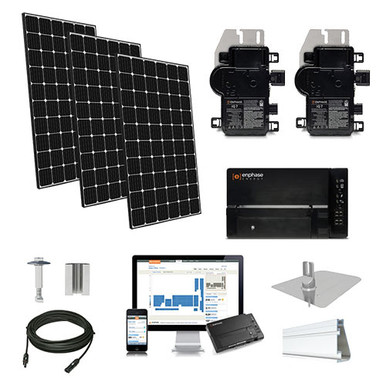
15.5kW solar kit LG 370, Enphase micro-inverters
15.5kW solar kit LG 370, Enphase micro-inverters, LG370Q1C-V5
 sunwatts.com
plus lift rental cause i got some steep roof sections and i dont wanna die.
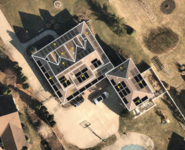
rough idea of layout. the garage on the bottom right is 2 stories tall and has a decently steep roof. the main both with the 3 and 4 pack of panels is pretty steep as well.
my next problem is conduit layouts. i dont want the junk rolling over the gutters to get down. i have 2 seperate attics between the garage and main house. both are finished rooms so conduit runs are a *****.
gpiggaz
Well-known member
I'm not an expert but with that roof layout you'll definitely want either Micro inverters or Power Optimizers on each panel since they aren't all facing the same directions and therefore will have varied illumination. That is also why you have such a disparity between the DC watts and the AC watts- since illumination isn't even. In my case I have equal illumination so installing 120% DC made perfect sense to maximize my output over the whole day ( we clip at 7.6KW AC mid day in the spring when the panels are still cool) We get about an average of 50-55KWH/day year round out of our system. Again, we're in the desert so YMMV and with that roof layout, I'd guess you will be doing well to get anywhere close to 7.6KW peak AC. You can model the system design and come pretty close to prediction of the power that you'd actually generate with some of the tools at the vendor websites and even the government web site. I'd start with Solaredge.com and see if you can input your design and see what the simulation says In our case the simulation is almost 100% accurate to our actual performance over the last 15 months since we turned on the system.
Edit: https://pvwatts.nrel.gov is another site to get an idea of what the real performance might be.
and at SolarEdge.com you have to log into their "designer" page to actually input a design, you'll have to set up an account there to do that. But it was free and pretty easy as I recall
Edit: https://pvwatts.nrel.gov is another site to get an idea of what the real performance might be.
and at SolarEdge.com you have to log into their "designer" page to actually input a design, you'll have to set up an account there to do that. But it was free and pretty easy as I recall
gpiggaz
Well-known member
Have you considered Ground mounting over by the swimming pool, with that layout on the roof, ground mount might be less expensive and require less panels for the same output. We have a steep east west facing roof, and ground mount made the most sense from an ease of installation and actually cost at the end of the day.The DIY cost is right around 40k for the size I want/need for full offset.
15.5kW solar kit LG 370, Enphase micro-inverters
15.5kW solar kit LG 370, Enphase micro-inverters, LG370Q1C-V5
plus lift rental cause i got some steep roof sections and i dont wanna die.
rough idea of layout. the garage on the bottom right is 2 stories tall and has a decently steep roof. the main both with the 3 and 4 pack of panels is pretty steep as well.
my next problem is conduit layouts. i dont want the junk rolling over the gutters to get down. i have 2 seperate attics between the garage and main house. both are finished rooms so conduit runs are a *****.
can't due to offset rules for solar ground mounts. first thing i looked into.Have you considered Ground mounting over by the swimming pool, with that layout on the roof, ground mount might be less expensive and require less panels for the same output. We have a steep east west facing roof, and ground mount made the most sense from an ease of installation and actually cost at the end of the day.
I'm not an expert but with that roof layout you'll definitely want either Micro inverters or Power Optimizers on each panel since they aren't all facing the same directions and therefore will have varied illumination. That is also why you have such a disparity between the DC watts and the AC watts- since illumination isn't even. In my case I have equal illumination so installing 120% DC made perfect sense to maximize my output over the whole day ( we clip at 7.6KW AC mid day in the spring when the panels are still cool) We get about an average of 50-55KWH/day year round out of our system. Again, we're in the desert so YMMV and with that roof layout, I'd guess you will be doing well to get anywhere close to 7.6KW peak AC. You can model the system design and come pretty close to prediction of the power that you'd actually generate with some of the tools at the vendor websites and even the government web site. I'd start with Solaredge.com and see if you can input your design and see what the simulation says In our case the simulation is almost 100% accurate to our actual performance over the last 15 months since we turned on the system.
Edit: https://pvwatts.nrel.gov is another site to get an idea of what the real performance might be.
and at SolarEdge.com you have to log into their "designer" page to actually input a design, you'll have to set up an account there to do that. But it was free and pretty easy as I recall
yup i def want enphase micros. i also want 400+W size panels which means IQ8's due to clipping.
im right around 16kw system size which by the quotes so far will have a full offset on cost. that plus my SRECs will essentially make payoff sub 10 years.
I DIY'd mine. Was about 7k for a ~4kw system. I'm sure it's cheaper nowadays though. Enphase 215 inverters and 235w Canadian Solar panels. 18 total.
I should mention it was about 7K after the tax credits. It was about 10k out my pocket before the credit.
I should mention it was about 7K after the tax credits. It was about 10k out my pocket before the credit.
Last edited:
gpiggaz
Well-known member
Bummer- That would likely have been the most cost effective and easiest to install solution.can't due to offset rules for solar ground mounts. first thing i looked into.
gpiggaz
Well-known member
I am very happy with Solar Edge Optimizers and their HD inverter- Don't discount looking into them vs enphase- Enphase makes all the wiring AC at line voltage vs DC at 400V - not much different, but a consideration. Also, 7.6KW- puts you into a back fed 40Amp breaker - or at least it did me. over 40Amp, we had to use something that actually fed into the poco meter- so it required another level of installation expertise. Your power company likely has a bunch of solar specifics, I hope you've looked into those. One we almost got caught up in, which is unique to a high solar installation area, The grid wasn't balanced enough to take more solar input- Since been resolved, but that almost stopped our approvals. Seems that with saturation of local solar, the utility company was having issues maintaining regulation at the peak generation part of the day- They had to do some load balancing magic to fix it.yup i def want enphase micros. i also want 400+W size panels which means IQ8's due to clipping.
im right around 16kw system size which by the quotes so far will have a full offset on cost. that plus my SRECs will essentially make payoff sub 10 years.
i could DIY a ground mount no problem. wouldnt even be a thought for me.Bummer- That would likely have been the most cost effective and easiest to install solution.
mike93lx
ALLIANCE MEMBER
How does the back fed breaker setup work, specifically dealing with a utility outage? What safety is in place?I am very happy with Solar Edge Optimizers and their HD inverter- Don't discount looking into them vs enphase- Enphase makes all the wiring AC at line voltage vs DC at 400V - not much different, but a consideration. Also, 7.6KW- puts you into a back fed 40Amp breaker - or at least it did me. over 40Amp, we had to use something that actually fed into the poco meter- so it required another level of installation expertise. Your power company likely has a bunch of solar specifics, I hope you've looked into those. One we almost got caught up in, which is unique to a high solar installation area, The grid wasn't balanced enough to take more solar input- Since been resolved, but that almost stopped our approvals. Seems that with saturation of local solar, the utility company was having issues maintaining regulation at the peak generation part of the day- They had to do some load balancing magic to fix it.
I am very happy with Solar Edge Optimizers and their HD inverter- Don't discount looking into them vs enphase- Enphase makes all the wiring AC at line voltage vs DC at 400V - not much different, but a consideration. Also, 7.6KW- puts you into a back fed 40Amp breaker - or at least it did me. over 40Amp, we had to use something that actually fed into the poco meter- so it required another level of installation expertise. Your power company likely has a bunch of solar specifics, I hope you've looked into those. One we almost got caught up in, which is unique to a high solar installation area, The grid wasn't balanced enough to take more solar input- Since been resolved, but that almost stopped our approvals. Seems that with saturation of local solar, the utility company was having issues maintaining regulation at the peak generation part of the day- They had to do some load balancing magic to fix it.
yup im going micro's for expansion. im at 100% limit without both of us on EV's nor the pool pump running. so micros can allow me to expand easier. My panel and meter are within 3' of each other so either option is fine with me. plus i have 12 open slots in my main for anything that needs to be done. even if i break it up into 3 systems feeding into the main got plenty of room.
How does the back fed breaker setup work, specifically dealing with a utility outage? What safety is in place?
inverters monitor the grid. no grid = they go offline automatically. how they monitor is magic.
gpiggaz
Well-known member
Exactly-inverters monitor the grid. no grid = they go offline automatically. how they monitor is magic.
gpiggaz
Well-known member
As Jeepxj said, the inverter shuts down if the incoming grid power is lost. So no Grid power available, no Solar power available. Thats how the safety interlock works on most systems as far as I understand. Interesting tidbit, The way solar actually feeds the grid is by raising the voltage slightly, so that the current flows from the solar into the load ( your house) or grid if you aren't using all the power the solar is generating- (grid tied, no battery back up grid tie is what I'm referring to) ie if the grid voltage is 240- the solar voltage might be 240.5 - (might be more or less, I'm not sure of the exact voltage difference the inverter uses) so that the current comes from the solar instead of the grid, it's more complicated than that, but that's the just of it. it's actually pretty ingenious that just raising the voltage a little manages the source. Of course the inverter sync's with the grid for frequency too.How does the back fed breaker setup work, specifically dealing with a utility outage? What safety is in place?
mike93lx
ALLIANCE MEMBER
Got it. Too bad it doesn't allow for usage when the grid is down, but as the least cost option, it doesn't surprise me.As Jeepxj said, the inverter shuts down if the incoming grid power is lost. So no Grid power available, no Solar power available. Thats how the safety interlock works on most systems as far as I understand. Interesting tidbit, The way solar actually feeds the grid is by raising the voltage slightly, so that the current flows from the solar into the load ( your house) or grid if you aren't using all the power the solar is generating- (grid tied, no battery back up grid tie is what I'm referring to) ie if the grid voltage is 240- the solar voltage might be 240.5 - (might be more or less, I'm not sure of the exact voltage difference the inverter uses) so that the current comes from the solar instead of the grid, it's more complicated than that, but that's the just of it. it's actually pretty ingenious that just raising the voltage a little manages the source. Of course the inverter sync's with the grid for frequency too.
gpiggaz
Well-known member
It's a safety thing. I have a friend with a system that has a single 120V outlet that remains powered in a grid down situation, but it's a separate outlet. I can't recall what brand inverter he has.Got it. Too bad it doesn't allow for usage when the grid is down, but as the least cost option, it doesn't surprise me.
If you had a grid tied system with battery back up- it has all the necessary interlocks to disconnect the grid connections during a grid power failure and then supply the house with power from the battery / inverter during that time. I would have done something like that- but it wasn't ever going to be cost effective and our grid ( knock on wood) has been pretty reliable - only outages we've had in 35 years have been storm related, and the biggest one was < 8 hours and the utility had to replace our transformer after a direct lightning strike. That was about 30 years ago.
mike93lx
ALLIANCE MEMBER
Oh, yeah, I know, that's why I was checking. Downside of the lowest cost optionIt's a safety thing. I have a friend with a system that has a single 120V outlet that remains powered in a grid down situation, but it's a separate outlet. I can't recall what brand inverter he has.
If you had a grid tied system with battery back up- it has all the necessary interlocks to disconnect the grid connections during a grid power failure and then supply the house with power from the battery / inverter during that time. I would have done something like that- but it wasn't ever going to be cost effective and our grid ( knock on wood) has been pretty reliable - only outages we've had in 35 years have been storm related, and the biggest one was < 8 hours and the utility had to replace our transformer after a direct lightning strike. That was about 30 years ago.
Got it. Too bad it doesn't allow for usage when the grid is down, but as the least cost option, it doesn't surprise me.
funny you bring that up.
they have a system; for 4-5k on the enphase systems that allows you to do just that.

Enphase Installer Systems | Build Complete Energy Solutions
Explore Enphase system builder tools, components, and resources for installers, including batteries, microinverters, communication devices, and EV charging solutions.
runs like a genset with isolation transfer switch would.
I can add it on later if i go with the enphase IQ8 inverters.
dcg9381
Well-known member
hh76
Well-known member
could you build a patio cover/ shade structure and mount some of the modules to that?can't due to offset rules for solar ground mounts. first thing i looked into.
dcg9381
Well-known member
Anything is possible (note the tilt here is non-optimal, which impacts production by about 20%)....

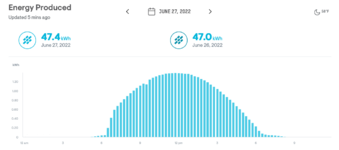
I have IQ7A micros. 405W REC Alpha panels, all flush mounted. I haven't seen any clipping on the curves yet, maybe next month? probably not due to the angle. I see 5.6kW output peak on a sunny day. hitting 3kW+ by 0730.yup i def want enphase micros. i also want 400+W size panels which means IQ8's due to clipping.
im right around 16kw system size which by the quotes so far will have a full offset on cost. that plus my SRECs will essentially make payoff sub 10 years.
probably something like sensorless vector on a VFD. that is also magic.inverters monitor the grid. no grid = they go offline automatically. how they monitor is magic.
mike93lx
ALLIANCE MEMBER
What do you mean by flush mounted?I have IQ7A micros. 405W REC Alpha panels, all flush mounted. I haven't seen any clipping on the curves yet, maybe next month? probably not due to the angle. I see 5.6kW output peak on a sunny day. hitting 3kW+ by 0730.
probably something like sensorless vector on a VFD. that is also magic.
all the stand-offs are the same length. the slope of the panels is equal to the slope of the roof.What do you mean by flush mounted?
Sure can. my cost per watt installed goes up pretty dramatically making the ROI period much longer.could you build a patio cover/ shade structure and mount some of the modules to that?
so jealous of perfectly flat open roofs.Anything is possible (note the tilt here is non-optimal, which impacts production by about 20%)....
so so jealous.
I have IQ7A micros. 405W REC Alpha panels, all flush mounted. I haven't seen any clipping on the curves yet, maybe next month? probably not due to the angle. I see 5.6kW output peak on a sunny day. hitting 3kW+ by 0730.
probably something like sensorless vector on a VFD. that is also magic.
magical electrons.
My shop was a 36X36 pole barn, gravel floor. (technically 12X36 with two same size wings but open in the middle with posts).
In order to fit the panels on the roof we had to make the shop bigger so now its 42 feet longer with two more overhead doors and 36X42 cement floor.
I really like my new solar panel "ground mount", just wish I could have written off 30% of that expense too.
Panels are mounted portrait, four rows of 21 panels. The "ground mount" shop extension is now 90% insulated and I'm thinking of installing a couple of those 18k BTU minisplits that can run directly off solar along with 16 more panels to heat and cool it.
In order to fit the panels on the roof we had to make the shop bigger so now its 42 feet longer with two more overhead doors and 36X42 cement floor.
I really like my new solar panel "ground mount", just wish I could have written off 30% of that expense too.
Panels are mounted portrait, four rows of 21 panels. The "ground mount" shop extension is now 90% insulated and I'm thinking of installing a couple of those 18k BTU minisplits that can run directly off solar along with 16 more panels to heat and cool it.
mike93lx
ALLIANCE MEMBER
Ah, got it, thanks.all the stand-offs are the same length. the slope of the panels is equal to the slope of the roof.