god dammit you're right.Your post said 16.8kw, not 20. Did you go bigger?
24kw (100a) is a big residential system
16.8 system max amp is 70a. i'm still screwed.

yea above 20kw is big boy **** for sure.

god dammit you're right.Your post said 16.8kw, not 20. Did you go bigger?
24kw (100a) is a big residential system
My math was a bit off, I was multiplying by 250 for some stupid reason...not trying to nitpick over 7agod dammit you're right.
16.8 system max amp is 70a. i'm still screwed.
yea above 20kw is big boy **** for sure.
My math was a bit off, I was multiplying by 250 for some stupid reason...not trying to nitpick over 7a
Just delete the car charger line and you are there**** im at 77a for solar. load calc existing is over 200a. best not be needing a 600a setup i hope.

Hey, 7a is enough to kill a million people and is enough to run everything you really need in an outage.**** in my situation that 7am might be the different i need. ill take it. plus this is GJ. nitpicking over non material differences is a way of life.
Just delete the car charger line and you are there
How do you have 9kva of lighting?
Ah, that makes sense. I bet it should be a quarter of that and the real draw is even lower.its all LED down but thats done by the sq ft calc. i wonder if they've updated the calc for LED draw. the calc im using is from 2017.
Ah, that makes sense. I bet it should be a quarter of that and the real draw is even lower.
I'd be surprised if the lights are on in more than three rooms of my house at any point.
Turn the damn lights and fan off when you aren't in the room!


Net metering is how the numbers work ....w/o net they fall apart. Net metering shifts all the infrastructure cost onto all the other users ... not workable long term.No more net metering here. They are working on reducing the generation credit to rates closer to wholesale to cover infrastructure costs and plan to zero out the credit overages each spring. The 26% credit is done after this year unless it gets extended (I haven't heard of that happening but I also haven't been watching for it either) .
I think the future of grid tied solar will be smaller systems designed to reduce and not eliminate the monthly power bill.
Off grid is another story. I did a pretty sweet off grid system on my RV that will never pay for itself financially, but it sure makes things nice when we take "the vacation house" out for a long weekend.
Thats and awfully broad statement that is not universally true. I know VA, for one, charges a much higher registration cost for fuel efficinent and EV vehicleswe are doing the same with electric cars and not paying a road cost through gas taxes
In some areas they have started to address this ... in VA it's only $80 a year if my memory is correct. I pay that in NJ for a reg car.Thats and awfully broad statement that is not universally true. I know VA, for one, charges a much higher registration cost for fuel efficinent and EV vehicles
 legislature.idaho.gov
I am nearly certain I paid more than that to register my prius (over my flex) when we moved last year, but it's all a blurIn some areas they have started to address this ... in VA it's only $80 a year if my memory is correct. I pay that in NJ for a reg car.
VA is also starting per mile this year .... I see problems with this. There is some basic fairness with the gas tax as it does directly correlate to use and wear on the roads.
i dunno if I agree with that. the year-long net metering is a bit farcical. the grid in fact, is NOT a battery you can fill in july and drain in february. as much as that would benefit me personally, i think the monthly net metering is probably more "honest" long-term.Net metering is how the numbers work ....w/o net they fall apart. Net metering shifts all the infrastructure cost onto all the other users ... not workable long term.
Partial solar should be the goal .. flatten out the needed supply curve. Hidden subsidies are never a good idea .... we are doing the same with electric cars and not paying a road cost through gas taxes.
i dunno if I agree with that. the year-long net metering is a bit farcical. the grid in fact, is NOT a battery you can fill in july and drain in february. as much as that would benefit me personally, i think the monthly net metering is probably more "honest" long-term.
for me to cover all my infrastructure costs, I have to generate all my consumption in both TOU brackets (or sell at wholesale to cover the other), and near 400kWh surplus before my bill goes to zero. seems pretty "fair" to the poco to me.
more solar everywhere would help. incentivize east facing solar to help with the duck curve problem.
Absolutely agree. Solar and EV tax incentives help the wealthy justify toys. The people getting $7500 tax credits for buying mostly $60k+ EV's don't need it. Same goes for residential solarTell me .... why should I .... living in an expensive town with upgraded grid get all the tax incentives to put solar on my big house and take the car credit and the people living a few towns over don't have the grid capacity nor are they part of the 1% to take advantage of all the credits ?
I'm with you ... initially, government has to get some of the balls rolling in the right direction. Net metering seemed like a good idea .... but it was an additional incentive to start overbuilding systems. Instead of developing smaller system .. maybe even standardized systems .. the push was to get that net metering and the outsized returnAbsolutely agree. Solar and EV tax incentives help the wealthy justify toys. The people getting $7500 tax credits for buying mostly $60k+ EV's don't need it. Same goes for residential solar
That said, without wide(ish) adoption, the tech will take much longer to get cost effective, so it is not without benefit
what load calc sheet is this?**** im at 77a for solar. load calc existing is over 200a. best not be needing a 600a setup i hope.
'if I spend capital on assets, why should I reap the benefits,' is a hell of an anticapitalist take.I have no problem with a homeowner selling excess power back to the utility at the wholesale generation cost ... it's a forced sale to the utility and the cost of distribution back to the grid is not being paid for by the homeowner .... but, it is close. Net meter gives back all the costs .. that's not fair. There should also be a min grid fee
Tell me .... why should I .... living in an expensive town with upgraded grid get all the tax incentives to put solar on my big house and take the car credit and the people living a few towns over don't have the grid capacity nor are they part of the 1% to take advantage of all the credits ?
They pay for me?
Partial solar makes more sense ... flatten out the curve. We also optimize each system for max return ... that may not match what is needed for the grid.
We have a place in south africa and there we use direct solar hot water and the small solar is for the mini splits.
Net metering happens at the time of generation ... the excess is going back and it zeros out the full cost of supply/ delivery and distribution. The utility is giving you all the services and you just give back the power and take it all for free.'if I spend capital on assets, why should I reap the benefits,' is a hell of an anticapitalist take.
net metering of power generated that you immediately consume doesn't seem unfair. net metering of power you generate in July and "consume" in February is an accounting joke that does not reflect the reality of our power grid in any way, shape or form. i think that's the real problem/difference here.
doesn't matter what town I'm in here, all our grid seems half decent.
mandating TOU with solar net metering and ditching the infinity battery (annual true-up) seems like a pretty solid way to keep revenue flowing to the POCO.


the motors aren't really DC, just PM, they're inverter run. but the inverter has a DC bus so you can tie in there. you can actually tie solar into a regular AC inverter's DC bus if you want.In Africa with the cost of solar dropping the safari camps can now provide full solar most of the time .. they still have back up as many of the camps are luxury ... but -- it's needed less and less. Especially with battery storage -- its' been cool to see the development over the 25 years we have been coming.
Direct solar for hot water is a given --- but when you have to pay for all the cost -- partial is the norm. They also have panels on the flat roof areas that will pivot depending on the time of year. I do direct DHW and there is an insulted tank for wintertime -- it will not do full heating but it will give the place a free hit of heat when needed. I don't have one but they make integrated small size solar/ minisplits -- since the motors are DC ... it's direct.
Direct solar for hot water is a given --- but when you have to pay for all the cost -- partial is the norm. They also have panels on the flat roof areas that will pivot depending on the time of year. I do direct DHW and there is an insulted tank for wintertime -- it will not do full heating but it will give the place a free hit of heat when needed. I don't have one but they make integrated small size solar/ minisplits -- since the motors are DC ... it's direct.
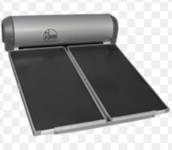
I don't know the inner workings ... I was told they were DC motors. they only sell them in a couple small sizes.the motors aren't really DC, just PM, they're inverter run. but the inverter has a DC bus so you can tie in there. you can actually tie solar into a regular AC inverter's DC bus if you want.
here's a nutter who did it:
All over Africa .. sort of a given when building a house. They have a couple different types -- evacuated tubes are common as they can still produce in overcast weather. You buy based on location and need ... mine is on the ground. Some use the insulated tank at the unit -- others have secondary storage tanks to hold a days worth of hot water. When the sun is out they can make large amounts of hot water -- way more than needed.I installed thermosyphon solar HW on my last house. They seem to be very common outside the USA, but in the US, it was very hard to find a unit. It worked absolutely flawlessly. Basically had an 80 gallon tank on top with a "back up" element that I could turn on. Ethylene glycol for heat transfer, so you don't have to worry about freezing lines.
We could basically go for 3 days without sun (overcast) before we had to turn on aux electric heat.
No pumps to fail.
Only downside was having to design for 80 gallons * 8 lbs/gallon permanently mounted to the roof deck. As our Texas roofs usually don't last 20 years (hail) - it'd have to be pulled off via crane to replace a roof.
Did I get my moneys worth over 10 years? I'm not sure... Solar rebates did apply though..