To avoid these ads, REGISTER NOW!

Soldering gun

andyvh1959

Well-known member
Joined
Feb 15, 2020
Messages
2,598
Location
Green Bay WI
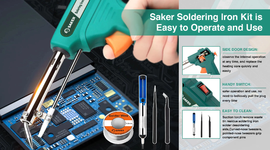
My wife bought me a Saker soldering gun:


Haven't used it yet but looking forward to properly soldering connections rather than using crimp connections or worse the 3M splice connectors. I have many vintage motorcycle build projects coming up so I'll certainly get a lot of use from it.
 
To avoid these ads, REGISTER NOW!

wssix99

Well-known member
Joined
Mar 2, 2011
Messages
5,162
Location
Chicago, IL
Soldering is important, but crimp connections are superior to solder in many applications. Solder is brittle and can track in vehicles. (On airplanes, its generally forbidden.) You also won't see an OEM ship a motorcycle with any soldered wires. They are all structurally crimped.

The OEM manuals should instruct to back up solder splices with a structural crimp. (To counteract vibrations causing cracking.)

With proper crimping tools, you can replace entire wires with the terminals and just pop them in and out of the plugs, avoiding the splices entirely. (I expect that the terminals for most of your projects would probably be the same, allowing you to purchase a minimum number of crimpers.)
 

walta

Well-known member
Joined
Jan 13, 2017
Messages
2,313
Location
Dutzow Missouri
That looks like the most useless soldering tool I have ever seen. I guess it might be useful for someone with the use of only one hand.

The smart move would be to send it back under the 30-day money back guaranty

I think you should buy your wife a new swim suit. Undoubtedly, she will hate it tell her your plan is to buy her a new outfit every time she buys you a new tool.

A real soldering tool will be temperature controlled with a digital readout and have a 3 prong cord.


Walta
 

Meursault74

Well-known member
Joined
Apr 1, 2019
Messages
22,081
Location
Southern California
That looks like the most useless soldering tool I have ever seen. I guess it might be useful for someone with the use of only one hand.

The smart move would be to send it back under the 30-day money back guaranty

I think you should buy your wife a new swim suit. Undoubtedly, she will hate it tell her your plan is to buy her a new outfit every time she buys you a new tool.

A real soldering tool will be temperature controlled with a digital readout and have a 3 prong cord.


Walta
Yeah, I remember seeing it in The Fugitive. ;)

dBEn5-1540228550-12669-list_items-fug_finale.jpg
 

American Locomotive

Well-known member
Joined
Jan 8, 2017
Messages
11,014
Location
Rhode Island
That's an interesting soldering gun. It looks like it would work a treat for field soldering of wires, where I'm often trying to hold two wires together and the iron and the solder at the same time.

Temperature control is great for eletronics work, but for just soldering wires (especially heavier wires) a traditional soldering "gun" like that works a treat.

As far as automotive stuff goes: Technically proper crimping is superior and the way OEMs do it. However a soldered linesman splice is very strong, and even if the solder cracks it should still stay together. I have soldered a lot of wires in project cars without issues, but I also have different durability standards than OEMs.

I would also like to emphasize "proper" crimps use high quality crimps with special (usually ratcheting) crimp tools. The crimper in your wire cutters with the $5 crimp kit will not make a proper crimp. I would take soldering over that any day.

Enjoy your new tool and let us know how it works.
 

Stuart in MN

Well-known member
Joined
Sep 8, 2005
Messages
23,179
Location
Minneapolis
That looks like the most useless soldering tool I have ever seen.
Tell us how you really feel. :cautious: That's comparing apples to oranges, both in function and in price. The gun posted by the OP has some interesting features; the built in solder sucker is pretty neat for one.

As for the whole solder versus crimp debate, the main thing for either technique is to do it properly. I tend to be in the crimping camp when it comes to joining wires in a car (or other spot subject to vibration) but soldering can work too.
 

duneslider

Well-known member
Joined
Jan 20, 2013
Messages
2,270
Location
Riverton, Utah
There are ups and downs to all methods. You generally can teach someone to crimp connectors faster than to competently solder. I have never had a properly soldered and heat shrinked connection fail. I have some nice crimp tools for certain applications and they are very nice and work great. It all depends on what I am trying to do. I don't always have room for the bulk that crimp connectors make. I had a solder gun a long time ago and it was fine for big stuff that didn't need precision but since getting a Hakko years ago it does everything I need.
 

BreeStephany

ALLIANCE MEMBER
Joined
May 19, 2012
Messages
854
Location
Oregon
For automotive and aviation applications, as well as in control environments where wiring is often subject to consistent vibration, I prefer mechanical connections / splices supported by solder to ensure that the connection is both strong and resistant to corrosion failures. I then use glue-lined heat shrink to insulate the connections / splices.

Just my two cents.
 
OP
A

andyvh1959

Well-known member
Joined
Feb 15, 2020
Messages
2,598
Location
Green Bay WI
One thing for sure is I have never owned a proper crimping tool for electrical connections. I've always deferred to the cheapo cutter/stripper/crimper. About time I step up and invest in a really good crimping tool.

So to that goal, I'm sure I can rely on many competent recommendations on this forum, hmm, hmm?
 

kabinenroller

Well-known member
Joined
Sep 14, 2013
Messages
908
Location
S.E. Wisconsin USA
I have this pliers:

this is one of many sets of dies available to fit the pliers:

I have dies for uninsulated, insulate insulate, flag, pin, and spark plug terminals.
 

PelicanPines

ALLIANCE MEMBER
Joined
Apr 30, 2014
Messages
38,144
Location
New Jersey, USA, Earth, My own reality
I crimp... I crimp then solder... I always shrinkwrap.

I've also used connectors that self solder with hot *** air... With shrink included. Took a few test tries before I got it right.

Interested in Hearing, with pictures, how this new fangled one arm soldering iron works.
 
Last edited:

Jeepster04

Well-known member
Joined
Jun 25, 2013
Messages
3,101
I've always soldered, but have been wanting to get a proper set of crimpers. Till then, solder and good heat shrink has never let me down. I imagine if I soldered a joint and zip tied it between the frame and axle, the joint may crack.... I'll refrain from doing that and I'll also try not to turn my vehicle into a plane.
 
To avoid these ads, REGISTER NOW!

Stuart in MN

Well-known member
Joined
Sep 8, 2005
Messages
23,179
Location
Minneapolis
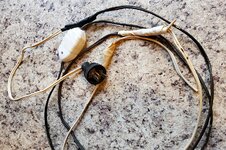
Haha. I have two antique lamps wired this way along with a questionable plug.

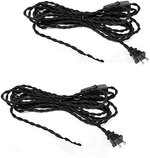
I bought these power cords on amazon. Going to do the job the right way.
Lamps typically don't need solder joints or crimp joints - you just hook the wires to the screw terminals on the light socket.
 

67carl

Well-known member
Joined
Dec 10, 2013
Messages
3,914
Location
California
I have this one. I don't use it often, but it works great when I do.


Schurkey

Well-known member
Joined
Oct 27, 2011
Messages
2,378
Location
The Seasonally Frozen Wastelands
My wife bought me a Saker soldering gun:

Visited the link. Clearly "English as a Second Language" (ESL). Which tells me all I need to know about the quality and origin of the device. Mistaking "welding" for "soldering" is another clue.

I was gifted a Wen 450 soldering iron sometime in the mid- to late-'70s. Fabulous. Still using it. The last time I called Wen for replacement tips, (10+ years ago, perhaps) I found out they were discontinued. I bought a heap of what they had in remaining stock. Since then, I've inherited several other soldering irons of various wattages; and depending on the application, time of day, my mood, the weather...I use 'em all.

Crimp, then solder, then seal with heat shrink tubing having adhesive layer inside. Although, there was a time in my career when the 600-volt connections were bolted together, sealed in butyl tape, then covered in COLD-shrink tubing. Cold-shrink tubing can be very hard to work with, if there's "just barely" enough room inside the tube to pull the spiral-cut reinforcement back out. And the bolted connection with a heavy layer of Butyl took up most of the room inside the cold-shrink tube. If we could get the spiral-cut core pulled past the bolted connection, we were pretty-much home free--it was easy to pull the last of the core out.
 

MBfreak

MEMBER EMERITUS
Joined
Dec 10, 2010
Messages
2,301
Location
Linkoping , Sweden
I have been meddling in electronics since 12. Now 77. Worked my way thru hischool and college as TV repair man. Most TVs at that time weighed 60 lbs. Good idea to repair at customers home. Always used a soldering gun. Fast and good enough. HEAVY
But for everything else soldering pen 15-60 W. Nowadays some fancy tempcontrolled unit. PERFECT. And weighs below 100 g.
Good for an old and very well worn out geezer. Like a replaced shoulder joint. Rotator cuff structure in metal!

Ola
 
Last edited:

BreeStephany

ALLIANCE MEMBER
Joined
May 19, 2012
Messages
854
Location
Oregon
One thing for sure is I have never owned a proper crimping tool for electrical connections. I've always deferred to the cheapo cutter/stripper/crimper. About time I step up and invest in a really good crimping tool.

So to that goal, I'm sure I can rely on many competent recommendations on this forum, hmm, hmm?
Working in the trades every day, I still use my Klein 1000 6-in-1 crimper tool as my daily carry on my tool belt for the occasional crimp and use my Klein 1005 crimpers when doing a LOT of repetitive crimps. I have my fair share of AMP aviation & electronics crimpers, molex crimpers, Klein & Knipex ratcheting crimpers, ferrule crimpers, etc., but my most common go-to is still my Klein 1000.

I think this is partially due to how I learned to wire electrical systems professionally and partially personal preference, but in the field, everyone always used Klein 1005s and no one ever used ratcheting crimpers.

I never really started using ratcheting crimpers & specific crimper brands (AMP, Molex, Knipex) until I started really getting into servicing & building electronics, controls & automation gear.

Just my two cents!
 

grounded-b

Well-known member
Joined
Oct 23, 2012
Messages
285
Location
Milwaukee, WI
Tell us how you really feel. :cautious: That's comparing apples to oranges, both in function and in price. The gun posted by the OP has some interesting features; the built in solder sucker is pretty neat for one.
It doesn't have a built-in solder vacuum. If you look at some of the other pictures, it comes with a typical spring loaded "solder sucker". The "sparks" coming from the soldered connection in the photos are a "nice touch" LOL. It basically is trying to imitate a wire feed welder, even though that is not how soldering works.

As most of you know, soldering involves heating the parts up, until sufficient for the applied solder to melt and flow into the parts. It's a 2 step operation
 

PelicanPines

ALLIANCE MEMBER
Joined
Apr 30, 2014
Messages
38,144
Location
New Jersey, USA, Earth, My own reality
It doesn't have a built-in solder vacuum. If you look at some of the other pictures, it comes with a typical spring loaded "solder sucker". The "sparks" coming from the soldered connection in the photos are a "nice touch" LOL. It basically is trying to imitate a wire feed welder, even though that is not how soldering works.

As most of you know, soldering involves heating the parts up, until sufficient for the applied solder to melt and flow into the parts. It's a 2 step operation
I put solder on the two individual parts... then heat only them together. That way I can clean most of the flux off between the steps. Saw a youtube... calling it... presoldering.
 

stubbsrodandcustom

Well-known member
Joined
Aug 30, 2012
Messages
70
I will give you a tip, DO NOT USE THE GUN ON ELECTRONICS.... The EMF it emits will damage electronics too fast.

Also I have soldered wires in automotive when needing to lengthen a wire or shorten. I mainly leave this to areas that are sensitive to any added resistance, ignition circuits etc. I may go above and beyond here but I solder my ring terminals and crimp, never had a failure, they also have naked **** splices, you can crimp then solder. Wires in a loom or that are not subject to constant forces will be fine being **** spliced soldered only, any joints in a constant force situation (wires going to and from engine) need to be crimped and soldered.

Heat shrink recommendations I love the adhesive lined shrink tube. That stuff is quality and adds another layer of joining the wire insulation together.

Good luck on the soldering man. I agree with alot said above about tinning the wires first and then only using enough heat to flow the joint also. There are other ways of doing solder joints, the twist of the wires making a mechanical joint and then soldering is also quite robust. Do a search on different soldering wire joining tricks and its quite interesting.

Cheers.
 

dave*99

Well-known member
Joined
May 5, 2009
Messages
4,286
Location
Coastal NJ
My wife bought me a Saker soldering gun:


Haven't used it yet but looking forward to properly soldering connections rather than using crimp connections or worse the 3M splice connectors. I have many vintage motorcycle build projects coming up so I'll certainly get a lot of use from it.
I'll try to be as polite as I can be. Send it back.

If you know how to solder, you will hate this tool.
If you don't know how to solder, this tool will cause you to hate soldering.


You need good solder, good flux, etc. Compatible with each other and your workpiece.

If you need a lot of heat, an old school Weller soldering gun will work. The tips are easily replaced, and they will provide consistent heat.

1677097346691.png

I rarely use a gun though. Usually a soldering pencil.

For electronics and micro electronics, I've used the Weller soldering irons, stations etc. For dozens of years. Most automotive sized connectors can be soldered with a large tip in a pencil.

My stuff is older than this, but here is a recent version:

1677097262752.png

At work, I have the pleasure to use the Metcal system. None better. But super expensive. They use RF energy to heat the tip and can provide instantaneous power. They sense heat load on the tip and instantly raise the power level to maintain temperature.

1677096483335.png
 

solo machinist

Well-known member
Joined
Nov 21, 2022
Messages
155
Location
North West, Ohio
My wife bought me a Saker soldering gun:


Haven't used it yet but looking forward to properly soldering connections rather than using crimp connections or worse the 3M splice connectors. I have many vintage motorcycle build projects coming up so I'll certainly get a lot of use from it.
I bought one of the soldering guns after seeing your post. I used it for the first time yesterday.
I tin my wires first, then solder. I thought it worked well. I have a larger gun I bought from radio shack after my weller took a ****.
So far I'm happy with it.
 

PoorUB

Well-known member
Joined
Mar 29, 2021
Messages
11,721
Location
Fargo, ND
Job is done. This was the old wiring.

wiring.jpg
That looks like and extension cord I found under my dad's bed when I was cleaning out his house. It was made of three different cords, all taped together and I am certain the connections were just twisted and taped, although I never tore it apart to look, It went right into the trash. In the mean time he had perfectly good household grade extension cords hanging in his garage.
 

byoungblood

Well-known member
Joined
Apr 6, 2011
Messages
2,590
Location
Berryville, VA
A soldering gun is useful for when you need to make a connection that requires a lot of heat. I have a Weller D-550 I use for soldering to radio chassis. For anything else, a pencil iron (I use a Hakko FX-888 on my bench). If I need portable, I use a butane iron.

I find it laughable that they show someone using that self-feeding gun on SMD parts. it would bury the part in solder or annihilate it completely. While you can use a pencil iron to solder SMD parts, hot air (even the cheapo $20 one I have) is the way to go.
 

exmaxima1

Well-known member
Joined
Jun 25, 2011
Messages
6,343
Location
Midwest
That Sako tool has been around for many years under various brand names. I bought one around 30 years ago thinking it would be great on the production line soldering speaker drivers---it sucked! It's clumsy to use and the tips are terrible. On that note, where do you buy replacement tips, and at WHAT COST? For casual use a simple soldering iron is best, ideally temperature controlled either electronically or using regulating tips (Weller used to make them, and they might still be available).

If you really need self-feed you might be able to rig something up like this:


dave*99

Well-known member
Joined
May 5, 2009
Messages
4,286
Location
Coastal NJ
Funny thing about this product.... It is actually a bent tip pencil. The form factor is a gun, but it is not the powerful heat source provided by a traditional gun. I would expect the trigger feed for the solder would not be the best way to solder.

Typically, you add bit of solder to wet the tip and provide heat flow to the joint. Once the joint it hot, you add solder on the side opposite the hot tip. Solder is effectively drawn toward the hot tip. The trigger feed on it only allows solder to hit the joint from one angle.

Additionally, I suspect squeezing the trigger to advance the solder may cause you to inadvertently move the tip around. I won't say you can't solder with this tool. But having been soldering for 50 years on everything from microelectronics under a microscope to heavy lugs on wire, I know I can do a better job with a pencil/gun in one hand and solder in the other.


1677512807964.png
 

Zeke

Well-known member
Joined
Aug 13, 2009
Messages
17,176
Location
Long Beach CA, the sewer by the sea.
That Sako tool has been around for many years under various brand names. I bought one around 30 years ago thinking it would be great on the production line soldering speaker drivers---it sucked! It's clumsy to use and the tips are terrible. On that note, where do you buy replacement tips, and at WHAT COST? For casual use a simple soldering iron is best, ideally temperature controlled either electronically or using regulating tips (Weller used to make them, and they might still be available).

If you really need self-feed you might be able to rig something up like this:

Just bought a Weller pencil style gun tip from Amazon. It wasn't easy to choose the correct tip — 3/8 or 9.8 mm over the other smaller diameters. The seller sent a card along with the tip. You can't get much from the website but there was an email FWIW:
[email protected]
 

dave*99

Well-known member
Joined
May 5, 2009
Messages
4,286
Location
Coastal NJ
That Sako tool has been around for many years under various brand names. I bought one around 30 years ago thinking it would be great on the production line soldering speaker drivers---it sucked! It's clumsy to use and the tips are terrible. On that note, where do you buy replacement tips, and at WHAT COST? For casual use a simple soldering iron is best, ideally temperature controlled either electronically or using regulating tips (Weller used to make them, and they might still be available).

If you really need self-feed you might be able to rig something up like this:

Yup, Weller regulating tips. Still available.
1677514864717.png
 
To avoid these ads, REGISTER NOW!
Top Bottom