To avoid these ads, REGISTER NOW!

Soldering Problems

LG63

Well-known member
Joined
Sep 7, 2012
Messages
1,003
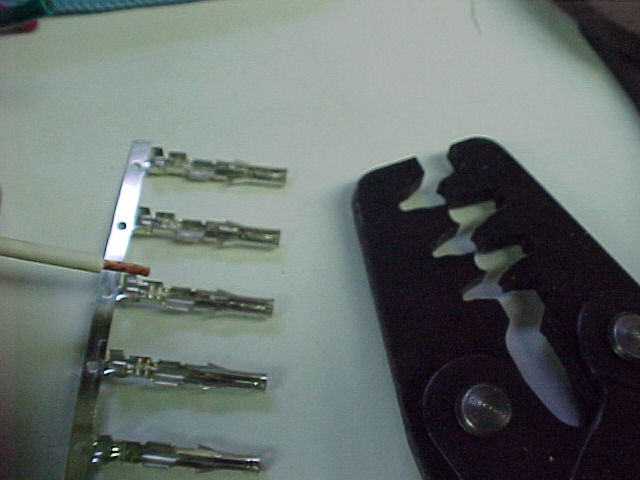
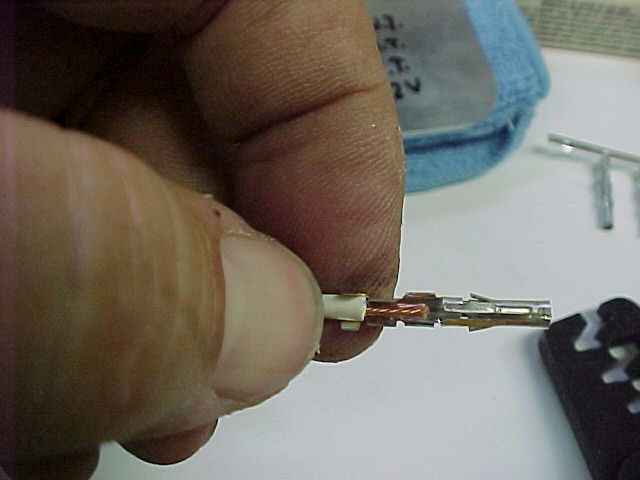
I’m in the process of wiring up some Bosch relay sockets and ran into a problem with the crimp terminals. The terminals are basically a female quarter inch push-on terminal with a tab on the back so they will slide into the socket but not come back out. It’s an open barrel terminal sort of like a Packard and thus requires a special crimper. I bought the econo line Sargent crimper thinking I could get by since I was only making a few crimps but I simply can’t get a decent crimp no matter how I do it.

I gave up on “practice” crimps since I was running out of terminals and decided I would solder after crimping but even that’s not working out. The terminals which I thought were tinned copper seem to be totally repellent of solder. I’m using rosin core, definitely hot enough, but the solder just beads up. Since these are crimp terminals and not intended to be soldered I’m now wondering if it’s not tin or there’s some other film on the tin that keeps the solder from wetting the surface.

Hoping there are some soldering experts here than can help.
 
To avoid these ads, REGISTER NOW!

zkling

Well-known member
Joined
Jan 23, 2007
Messages
16,939
Can you post a pic? For difficult to solder pieces I usually rough up with sand paper, very lightly, wipe with acetone, use a separate flux then solder. Make sure to tin the tip of the iron. When I build harnesses or goofy connectors I usually crimp and solder. :lol_hitti Yep, I am **** about wires coming loose.
 

garboui

Well-known member
Joined
Jun 30, 2011
Messages
999
Location
Southern Ontario
Are you using a torch or an iron. If torch, too hot could be a problem. If iron, try adding some past flux before hand. Sometimes rosin core just doesn't doo well with large joints.
 

theoldwizard1

Well-known member
Joined
Feb 22, 2011
Messages
43,243
Location
SE MI
A lot of electronic items are 100% lead free because of a German law (RoHS).

It is likely that they have a coating on them that rejects any lead based solder. Silver solder might work, but it is more expensive and requires more heat.
 
OP
L

LG63

Well-known member
Joined
Sep 7, 2012
Messages
1,003
I guess I'm going to be buying more terminals as I don't have enough to redo the whole lot. I can definitely clean with acetone but any sort of mechanical cleaning is going to be difficult because it's a tiny area where the wire resides after crimping.
I'm using an iron......I've soldered lots of standard ring terminals so I feel like I've got the heat right.
 
OP
L

LG63

Well-known member
Joined
Sep 7, 2012
Messages
1,003
A lot of electronic items are 100% lead free because of a German law (RoHS).

It is likely that they have a coating on them that rejects any lead based solder. Silver solder might work, but it is more expensive and requires more heat.

Aren't "tinned" terminals just that.....Tin?
 

astroracer

Well-known member
Joined
Jun 22, 2005
Messages
3,001
Location
Mid_Michigan
Aren't "tinned" terminals just that.....Tin?

Nope... "Tinned" refers to a solder coating applied at the manufacturer. Makes soldering easier as they are already coated. Terminals can be made out of tin plated copper or nickel plated steel for the high heat applications.
Mark
 

bullnerd

Well-known member
Joined
Sep 17, 2012
Messages
5,690
Location
Jersey
There was a big discussion years ago on the turbo buick site on the proper way to attach these teminals.

Some BIG auto manufacturing guys said do not solder,crimp only. Solder wicks up the wire creating a stress point where it ends and eventually fails there.

But this is like saying which oil is best.

Personally I would buy a good crimper.
 
To avoid these ads, REGISTER NOW!
OP
L

LG63

Well-known member
Joined
Sep 7, 2012
Messages
1,003
Turns out the terminals are brass, not copper like I initially thought. Since they aren't intended to be soldered, I'm thinking maybe they are zinc plated for corrosion resistance.
 

theoldwizard1

Well-known member
Joined
Feb 22, 2011
Messages
43,243
Location
SE MI
Zinc plating on terminals is common on automotive terminals. It is relatively inexpensive and does a reasonable job at preventing corrosion.

In the "solder versus crimp" wars, it should be noted that in both automotive and aerospace terminals are crimped. They use automated machines that are fast and accurate.

A properly done crimp has as much mechanical integrity as solder.
 

astroracer

Well-known member
Joined
Jun 22, 2005
Messages
3,001
Location
Mid_Michigan
Zinc plating on terminals is common on automotive terminals. It is relatively inexpensive and does a reasonable job at preventing corrosion.

In the "solder versus crimp" wars, it should be noted that in both automotive and aerospace terminals are crimped. They use automated machines that are fast and accurate.

A properly done crimp has as much mechanical integrity as solder.

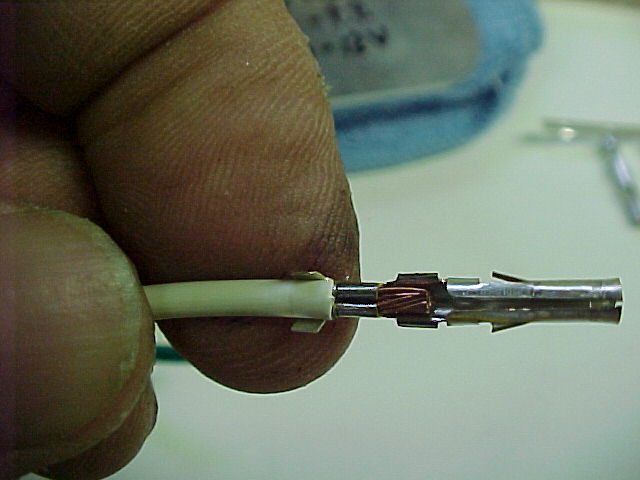
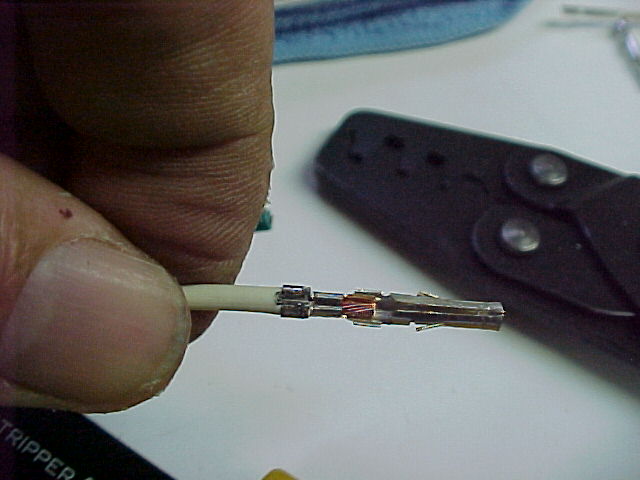
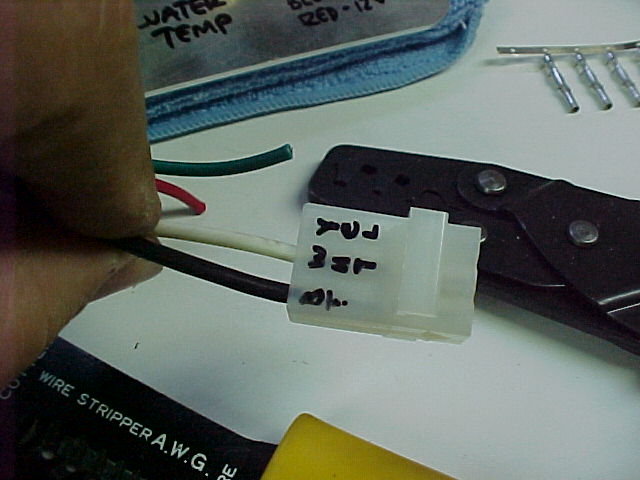
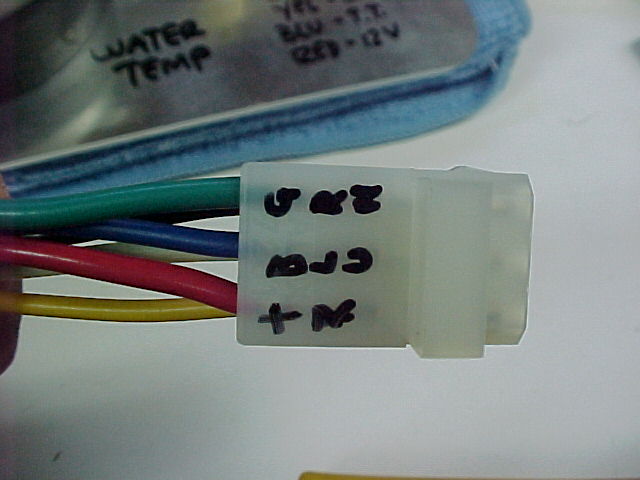
Ditto! I am using crimp pliers I got from Jegs. They weren't expensive and they work very well.
MVC007F-vi.jpg


MVC008F-vi.jpg


MVC009F-vi.jpg

These are strong crimps, they aren't coming apart.
MVC011F-vi.jpg


MVC012F-vi.jpg


MVC014F-vi.jpg


Mark
 
Last edited:
OP
L

LG63

Well-known member
Joined
Sep 7, 2012
Messages
1,003
Ditto! I am using crimp pliers I got from Jegs. They weren't expensive and they work very well.
MVC007F-vi.jpg

I have the same style crimpers and they worked okay on Packard terminals but the relay terminals have different wings and I haven't been able to get a symmetrical/firm crimp. I agree, solder is to be avoided, but in this situation (and for future reference) I'd really like to find a solder/flux combo that will work with zinc plating.
 

theoldwizard1

Well-known member
Joined
Feb 22, 2011
Messages
43,243
Location
SE MI
You were not real specific on your application, so this may or may not help.

Some "popular" connectors can be purchased with pigtails already crimped on. Just splice the pigtail to the harness. On 12-20 gauge stranded I just twist the bared conductors together and then use marine heat shrink. That give a waterproof, strong, neat splice.
 

astroracer

Well-known member
Joined
Jun 22, 2005
Messages
3,001
Location
Mid_Michigan
I have the same style crimpers and they worked okay on Packard terminals but the relay terminals have different wings and I haven't been able to get a symmetrical/firm crimp. I agree, solder is to be avoided, but in this situation (and for future reference) I'd really like to find a solder/flux combo that will work with zinc plating.

Hmm, I just used mine last night loading up a relay connector, same as you. Worked great! I'll get some new pics as I will be working on this stuff for a while.
Mark
 
OP
L

LG63

Well-known member
Joined
Sep 7, 2012
Messages
1,003
Hmm, I just used mine last night loading up a relay connector, same as you. Worked great! I'll get some new pics as I will be working on this stuff for a while.
Mark

Thanks, I'd appreciate that. My crimper has 5 stations marked A thru E. I was using "C" as none of the others were close. I'm working with 16 gauge wire.
 
OP
L

LG63

Well-known member
Joined
Sep 7, 2012
Messages
1,003
I tried some more crimps today and with 14 gauge wire the wings folded over good and the wire seemed secure. The best looking crimp I made was with 12 ga even though the terminals are 14/16 gauge. I need to order more terminals so I might get some 18/20 ga to try with the 16 wire because it seems like the wings on my 14/16 terminals are just too long for #16 wire.

Hopefully I’ll end up avoiding soldering altogether but my OCD still has me fixated on not being able to make solder work. The terminals are stamped “AMP” which leads back to Tyco, now called TE Connectivity. According to the TE website, the terminals are in fact tin plated so I’m baffled as to why the solder wouldn’t flow out.
 
To avoid these ads, REGISTER NOW!
Top Bottom