thooks
Well-known member
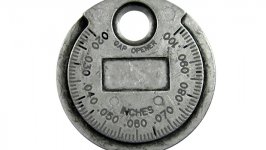
Ok.....I just found out the THREE gap gauges I've been housing in my tool boxes for 25+ years are WRONG. None of the three match.
Who makes the best/most accurate gauge?
Who makes the best/most accurate gauge?


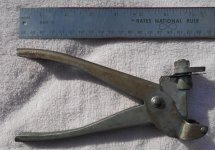


snap-on orange one is pretty good.
if you need accuracy beyond over kill then use a machinist gauge block set. Just slip the gauge in the space.
The hole in the gauge is used to bend the ground electrode back not for putting on your key ring [emoji4]I got one but never used it. I was wondering, do you make the gap a little tight then draw it through to open it up to the correct gap?
You need to be very careful with gapping fine wire plugs. Bending against the center electrode can cause damage and further running issues with the engine.You can pretty well use whatever you want, however you must verify it's accuracy. Once verified against a known good measurement, simply use the same device (whatever it is) and add or subtract as required.
The one thing you don't want to do is used more than one gauge without knowing how far off they are. You'll get different results every time unless you're packing something very expensive.
Modern thinner wire plugs need gapping just like anything else. The center electrodes are generally made of harder elements/alloys now. Iridium is generally the best choice unless you're running copper (copper is better, but fouls more readily and rounds off more quickly), and it's hard as hell.
You aren't going to damage that if you're even halfway careful.
Gapping still makes a difference. Indexing is a bit pointless and always has been for most people, but gapping is worth the paltry amount of effort it requires. Even higher quality plugs are gapped toward the "middle of the road" from the factory.
At the very least, it's fun, and adds a bit of tinkering to a relatively mundane operation. [emoji106]
Besides the point that none match. Are any of them right?
Did you use a precision measuring instrument for this, or compare them to each other?
If so; use the one that's right/closest.
I normally use a feeler gauge instead of "cheap" gap gauges.
Can't get much more accurate than a feeler gauge and knowing how to use it.
Give or take .002 on a plug gap won't matter much, I wouldn't think.
1. Most feeler gauges don't go up high enough for most modern engines running Iridium (.040-.045)
2. Some of you claim you know all this and that, but can't wipe that stupid, pre-set "TapaTalk" signature off your phone app....
Sorry a default message offends you. You don't know me and I don't know you but I certainly have much more knowledge on this subject than you believe and it's not from just dropping whatever plug in whatever lawn mower I have in the garage. This is a somewhat anonymous forum and you can believe what you want.1. Most feeler gauges don't go up high enough for most modern engines running Iridium (.040-.045)
2. Some of you claim you know all this and that, but can't wipe that stupid, pre-set "TapaTalk" signature off your phone app....
You need to be very careful with gapping fine wire plugs. Bending against the center electrode can cause damage and further running issues with the engine.
Do you need to gap them at all? If you buy good ones, no. High quality plugs should be pre gapped from the factory.
Copper plugs, ugh. The term "copper" plugs is a complete misnomer. I do not know of any plugs that have a purely copper (or significant alloy of) center electrode. They are a nickel jacket forged over a copper core. Virtually all modern day plugs have this including fine wire platinum or iridium plugs. In the fine wire plugs it is a copper core with nickel alloy over it base then a fine wire electrode welded to this base. The precious metal is often shorter than 1mm and is used for its wear and corrosion characteristics to extend the life.
Sent from my SM-G920T using Tapatalk
Yep. +1 on this.Nothing that putting a .022" and .023" together won't fix.
You're definitely right here. It's good to understand the market terminology and be able to communicate using standard terms. On the other hand, it's also good to educate people on what that means and how it can be applied to different things. For instance some engines/ designs require copper core ground electrodes, some don't. Some engines forego copper in the center electrode, while using a standard nickel based center electrode. Some use Inconell some don't. The spark plug while seemingly simple is a very complex product that can have a significant amount of engineering and customization, so it is important to recognize that.You shouldn't be using the electrode as a fulcrum.
As for copper... That's what people see, that's what they read, and that's what they'll believe until the day they die. Sooner or later you have to cut your losses if you want to get a point across.
Nothing that putting a .022" and .023" together won't fix.