To avoid these ads, REGISTER NOW!

Spark Plug Gap Gauge

thooks

Well-known member
Joined
Aug 3, 2011
Messages
3,333
Location
In Custody, Coweta County GA
Ok.....I just found out the THREE gap gauges I've been housing in my tool boxes for 25+ years are WRONG. None of the three match.


Who makes the best/most accurate gauge?
 
To avoid these ads, REGISTER NOW!

malibu101

Well-known member
Joined
Jul 1, 2005
Messages
3,909
Location
Walnutport PA
Besides the point that none match. Are any of them right?
Did you use a precision measuring instrument for this, or compare them to each other?
If so; use the one that's right/closest. :)

I normally use a feeler gauge instead of "cheap" gap gauges.
Can't get much more accurate than a feeler gauge and knowing how to use it.

Give or take .002 on a plug gap won't matter much, I wouldn't think.
 
OP
T

thooks

Well-known member
Joined
Aug 3, 2011
Messages
3,333
Location
In Custody, Coweta County GA
I bought 8 supposedly pre-gapped Iridium plugs from the Toyota dealer today.

All 8 hit the same exact spots on the 2 inifinty gauges. The 040" wire will pass right through the gap. One inifinty gauge measures the gap at .038" and the other .040"


These are supposed to be pre-gapped at .044"
 

four.cycle

Well-known member
Joined
Oct 19, 2015
Messages
29,367
Location
Tacoma, Washington
They don't match?
You mean they don't match each other, or the gaps don't match?

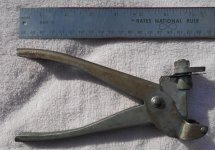
Probably the easiest and most fool-proof one to use is the Indestro-designed (patent 2645142) plier-type gapping tool, which can be found with any number of brands stamped on it. They made two versions: one goes from .018" - .035", the other was made for the larger-gap electronic ignition systems (.035" - .080", if my memory is correct.)

Prices on them are all over the place:

Herbrand:
https://www.ebay.com/itm/Vintage-Herbrand-Spark-Plug-Gapper-GT-10-MADE-IN-THE-USA/172989837555

greasy Blue-Point:
https://www.ebay.com/itm/Antique-Blue-Point-Spark-Plug-Gapper-CF-70/222248527669

Snap-on:
https://www.ebay.com/itm/3-VINTAGE-...UG-SPEED-GAPPER-GAPPING-TOOL-LOT/122825102608

Snap-on trio:
https://www.ebay.com/itm/3-VINTAGE-...UG-SPEED-GAPPER-GAPPING-TOOL-LOT/122825102608

Snap-on .035" - .080":
https://www.ebay.com/itm/Vintage-Un...Plug-Gapper-Gapping-Tool-035-080/272886613860

another big-gap Snap-on:
https://www.ebay.com/itm/Vintage-Sn...Gapping-Tool-Antique-Car-Tool-US/202142365606

Clark:
https://www.ebay.com/itm/VINTAGE-CLARK-FEATHER-MFG-SPARK-PLUG-GAPPER-OR-GAPPING-TOOL/112606233057

here you go... Wilde:

https://www.ebay.com/itm/Vintage-Wi...136802?hash=item3af88da9e2:g:7oYAAOSwcB5Z5O2w

^ last one is in the ballpark. you should be able to find them on Ebay for right around $20 bucks, which is about what they sold for new in the 1970's.

indestro_CF71_spark_plug_gapper_01.jpgindestro_CF71_spark_plug_gapper_02.jpgindestro_CF71_spark_plug_gapper_03.jpg
 
Last edited:

A E Numan

Well-known member
Joined
Oct 10, 2012
Messages
234
Location
Portland Oregon
With the old style pliers type gaping tool it,s all about how you mount the plug in the tool. A little trial and error -practice will get you repeatable results!
 

fivespdcat

Well-known member
Joined
Oct 25, 2011
Messages
1,520
You shouldn't be using a "ramp" style gap gauge for newer fine wire spark plugs. Your best bet is to use wire gauges to check gap if you really want to then if adjustment is needed bend the ground electrode and use a "tapping" method to fine tune. With all that good spark plugs are pre gapped from the factory and usually have a tolerance of 0.1mm or in inches 0.004".

Here's a pretty nice one:

Wright Tool 9531 Wire Gap Gauge https://www.amazon.com/dp/B0042T7J2C/?tag=atomicindus08-20
Sent from my SM-G920T using Tapatalk
 

American Locomotive

Well-known member
Joined
Jan 8, 2017
Messages
11,026
Location
Rhode Island
I'd verify your gauges using a set of calipers (although a micrometer would be better) before condemning them.

Although for what it's worth, modern ignition systems are such high energy that I haven't bothered to gap a plug in years. I remember playing around with a 2012 Mustang V6 - we completely took the spring out of a COP boot to simulate a misfire/bad coil. Except it didn't work. The coil fired straight across the ~1.5" gap inside the boot, to the top of the plug, and the engine ran fine.
 

454ragtop

Well-known member
Joined
Mar 24, 2008
Messages
5,011
Location
Carver, MA
As mentioned, you need to be real careful with these fine wire electrodes most use nowadays, not really meant to be gapped, should be close enough out of the box. Basically just check them, if you get one way off probably better to replace it.
 

anndel

Well-known member
Joined
Oct 28, 2015
Messages
3,270
Location
Hawaii, USA
I used like in the photo which I had in my tool box for 30+ years. These days I just check the gap with the long life Iridium plugs and so far all of them have been spot on.
 

Attachments

  • spark-plug-gap-tool.jpg
    spark-plug-gap-tool.jpg
    115.6 KB · Views: 24

bushmechanic

Well-known member
Joined
Mar 17, 2014
Messages
4,820
You can pretty well use whatever you want, however you must verify it's accuracy. Once verified against a known good measurement, simply use the same device (whatever it is) and add or subtract as required.

The one thing you don't want to do is used more than one gauge without knowing how far off they are. You'll get different results every time unless you're packing something very expensive.

Modern thinner wire plugs need gapping just like anything else. The center electrodes are generally made of harder elements/alloys now. Iridium is generally the best choice unless you're running copper (copper is better, but fouls more readily and rounds off more quickly), and it's hard as hell.

You aren't going to damage that if you're even halfway careful.

Gapping still makes a difference. Indexing is a bit pointless and always has been for most people, but gapping is worth the paltry amount of effort it requires. Even higher quality plugs are gapped toward the "middle of the road" from the factory.

At the very least, it's fun, and adds a bit of tinkering to a relatively mundane operation. :thumbup:
 

johninct

Well-known member
Joined
Dec 21, 2010
Messages
2,599
snap-on orange one is pretty good.

if you need accuracy beyond over kill then use a machinist gauge block set. Just slip the gauge in the space.

I got one but never used it. I was wondering, do you make the gap a little tight then draw it through to open it up to the correct gap?
 
To avoid these ads, REGISTER NOW!

johninct

Well-known member
Joined
Dec 21, 2010
Messages
2,599
I got one but never used it. I was wondering, do you make the gap a little tight then draw it through to open it up to the correct gap?
 

Squankum

Well-known member
Joined
Mar 28, 2011
Messages
7,895
Location
Southeast
I recently wanted to put a set of eight plugs into the 0.056" range and the time it took was getting on my nerves. I'm using a circular ramp gauge lately, as my wire gauges don't even come close to that size.

I discovered this:


Allstar ALL96515 Gold Anodized Spark Plug Gapping Tool
http://a.co/3fWN3u0

And since I'm not running a race team engine program, I did not buy it. But I like it, I like it!


_
 

fivespdcat

Well-known member
Joined
Oct 25, 2011
Messages
1,520
I got one but never used it. I was wondering, do you make the gap a little tight then draw it through to open it up to the correct gap?
The hole in the gauge is used to bend the ground electrode back not for putting on your key ring [emoji4]

Sent from my SM-G920T using Tapatalk
 

fivespdcat

Well-known member
Joined
Oct 25, 2011
Messages
1,520
You can pretty well use whatever you want, however you must verify it's accuracy. Once verified against a known good measurement, simply use the same device (whatever it is) and add or subtract as required.

The one thing you don't want to do is used more than one gauge without knowing how far off they are. You'll get different results every time unless you're packing something very expensive.

Modern thinner wire plugs need gapping just like anything else. The center electrodes are generally made of harder elements/alloys now. Iridium is generally the best choice unless you're running copper (copper is better, but fouls more readily and rounds off more quickly), and it's hard as hell.

You aren't going to damage that if you're even halfway careful.

Gapping still makes a difference. Indexing is a bit pointless and always has been for most people, but gapping is worth the paltry amount of effort it requires. Even higher quality plugs are gapped toward the "middle of the road" from the factory.

At the very least, it's fun, and adds a bit of tinkering to a relatively mundane operation. [emoji106]
You need to be very careful with gapping fine wire plugs. Bending against the center electrode can cause damage and further running issues with the engine.

Do you need to gap them at all? If you buy good ones, no. High quality plugs should be pre gapped from the factory.

Copper plugs, ugh. The term "copper" plugs is a complete misnomer. I do not know of any plugs that have a purely copper (or significant alloy of) center electrode. They are a nickel jacket forged over a copper core. Virtually all modern day plugs have this including fine wire platinum or iridium plugs. In the fine wire plugs it is a copper core with nickel alloy over it base then a fine wire electrode welded to this base. The precious metal is often shorter than 1mm and is used for its wear and corrosion characteristics to extend the life.

Sent from my SM-G920T using Tapatalk
 

Ign

Well-known member
Joined
Jul 7, 2006
Messages
12,769
Location
Butte Peak ND
Besides the point that none match. Are any of them right?
Did you use a precision measuring instrument for this, or compare them to each other?
If so; use the one that's right/closest. :)

I normally use a feeler gauge instead of "cheap" gap gauges.
Can't get much more accurate than a feeler gauge and knowing how to use it.

Give or take .002 on a plug gap won't matter much, I wouldn't think.

This. How much were the three off? I'd say plus or minus 2 thou is easily acceptable, probably much more for most engines.

edit: and yeah, I'd just use feelers if I really cared.
 
OP
T

thooks

Well-known member
Joined
Aug 3, 2011
Messages
3,333
Location
In Custody, Coweta County GA
1. Most feeler gauges don't go up high enough for most modern engines running Iridium (.040-.045)

2. Some of you claim you know all this and that, but can't wipe that stupid, pre-set "TapaTalk" signature off your phone app....
 

zmotorsports

ALLIANCE MEMBER
Joined
Oct 20, 2009
Messages
21,497
Location
Northern Utah
1. Most feeler gauges don't go up high enough for most modern engines running Iridium (.040-.045)

2. Some of you claim you know all this and that, but can't wipe that stupid, pre-set "TapaTalk" signature off your phone app....

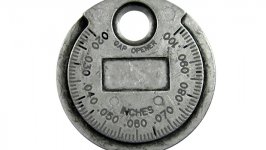
Nothing that putting a .022" and .023" together won't fix.
 

fivespdcat

Well-known member
Joined
Oct 25, 2011
Messages
1,520
1. Most feeler gauges don't go up high enough for most modern engines running Iridium (.040-.045)

2. Some of you claim you know all this and that, but can't wipe that stupid, pre-set "TapaTalk" signature off your phone app....
Sorry a default message offends you. You don't know me and I don't know you but I certainly have much more knowledge on this subject than you believe and it's not from just dropping whatever plug in whatever lawn mower I have in the garage. This is a somewhat anonymous forum and you can believe what you want.

Sent from my SM-G920T using Tapatalk
 

bushmechanic

Well-known member
Joined
Mar 17, 2014
Messages
4,820
You need to be very careful with gapping fine wire plugs. Bending against the center electrode can cause damage and further running issues with the engine.

Do you need to gap them at all? If you buy good ones, no. High quality plugs should be pre gapped from the factory.

Copper plugs, ugh. The term "copper" plugs is a complete misnomer. I do not know of any plugs that have a purely copper (or significant alloy of) center electrode. They are a nickel jacket forged over a copper core. Virtually all modern day plugs have this including fine wire platinum or iridium plugs. In the fine wire plugs it is a copper core with nickel alloy over it base then a fine wire electrode welded to this base. The precious metal is often shorter than 1mm and is used for its wear and corrosion characteristics to extend the life.

Sent from my SM-G920T using Tapatalk

You shouldn't be using the electrode as a fulcrum.

As for copper... That's what people see, that's what they read, and that's what they'll believe until the day they die. Sooner or later you have to cut your losses if you want to get a point across.
 

fivespdcat

Well-known member
Joined
Oct 25, 2011
Messages
1,520
You shouldn't be using the electrode as a fulcrum.

As for copper... That's what people see, that's what they read, and that's what they'll believe until the day they die. Sooner or later you have to cut your losses if you want to get a point across.
You're definitely right here. It's good to understand the market terminology and be able to communicate using standard terms. On the other hand, it's also good to educate people on what that means and how it can be applied to different things. For instance some engines/ designs require copper core ground electrodes, some don't. Some engines forego copper in the center electrode, while using a standard nickel based center electrode. Some use Inconell some don't. The spark plug while seemingly simple is a very complex product that can have a significant amount of engineering and customization, so it is important to recognize that.

I know a bit more than "what gap gauge to use" but it has a real impact on operating efficiency and engine performance/ durability.

Sent from my SM-G920T using Tapatalk
 

MikeF2316

Well-known member
Joined
Dec 29, 2012
Messages
9,605
Location
Thornhill, ON
Nothing that putting a .022" and .023" together won't fix.

My dad's feeler guage set ended at a maximum of .028". He had to put the .014 and .016 together to get .030. I've always just used feeler gauges too.

My neighbour's tenant put some new plugs in his little economy car, when he started it up, it was only running on 3 cylinders. He said out loud (for my benefit) "I put new plugs in and now it runs worse than before." I took pity on him, and asked if he'd checked the gap on his new plugs. "Gap, what's that?" he asked. So we took them out and sure enough one had no gap at all, I guess it was dropped. He wasn't going to buy another one, we just "regapped" it
 
To avoid these ads, REGISTER NOW!
Top Bottom