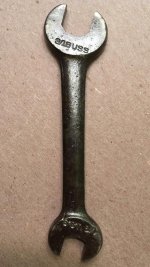
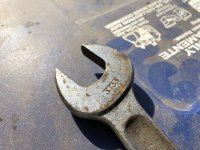
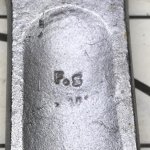
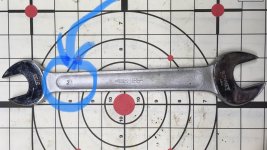
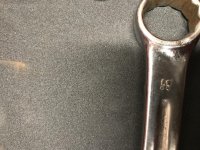
This No21 DOE is interesting, because of what it does, and does not, have in the combination of stamped and forged-in elements.
Process revisions: The simple forged-in B-shield on the shank dates back to at least 1909. Sometime later, I think, the stamped BON[embedded-shield]NEY emblem was added to the face. Logically, the forged-in phrase MADE IN U.S.A. one sees on the shank of some examples preceded its replacement with the same phrase stamped on the face below the embedded shield, believed to have occurred around May 1925. (I think the forged-in USA without MADE IN, on this tiny example, resulted from the space constraint. But that should coincide with the loss of the Forged-in B-shield. Seems this is a transitional example, perhaps early 1925, except, it is also missing any date codes, which were forged-in elsewhere on the shank beginning in 1921.
Conclusion: The blank for this wrench was forged with the B-shield and USA not long before 1921, explaining why there is no date-code. Then the stamped MADE IN USA was added when the gullets were ground and the sizes stamped, sometime after May1925 (but before 1927, when they began stamping across-flats sizes). I think this example illustrates that the rather specific (month/year) manufacturing dates we often establish by date codes alone are somewhat misleading: an individual wrench could be finished years after the initial forging of the blank.
Speculation: Might we argue from this, that narrow-niche collectors (say, WWII) may be misleading themselves to dismiss tools with late-1930s date codes as “too early” to have served, and tools with 1945 date codes as acceptable, when there is every possibility that those tools hadn’t been finished or left the factory, let alone been available for procurement by the military?