To avoid these ads, REGISTER NOW!

Stability of locking/leveling casters

The Metric System

Well-known member
Joined
Apr 28, 2025
Messages
268
I am building a new workbench and want it to be both stable and one-person mobile.

It doesn't have to be easy to roll since it will be mostly stationary, but I do need to be able to push it a short distance a few times per year.

However, it absolutely needs to be totally stable and solid when in place. I don't have much patience for benches that rock and wiggle when I'm trying to work.

My prior experience working on any bench with conventional locking casters is that (even when locked) there's enough play in the mechanism and/or the point contact with the ground that there's still noticeable movement from the work surface.

I'm familiar with the type where the wheels retract up and then deploy downwards when you step on them. these look like a good solution from a stability standpoint but I'd prefer not to have the assembly sticking out the side of the legs if I can avoid it.

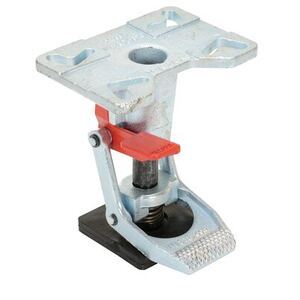
Does anybody have experience with this monolithic style of leveling/locking caster that extends a foot below the wheel? If so, do you get any noticeable play once the feet are down?

I like the idea of having a leveling function integrated into the locking caster, but want to make sure they're not going to be all wiggly in actual use.
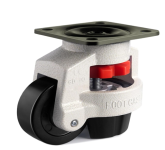
1764339795367.png
 
To avoid these ads, REGISTER NOW!

tom86951

Well-known member
Joined
May 14, 2005
Messages
155
Location
CA
My solution was to 3D print flat feet with cups for the wheels. They actually slide on the garage floor quite well but remove virtually all of the wiggle from the castors. As boots and suspenders, I bolted it to the wall with two easy to remove bolts...
 

Attachments

  • IMG_5658.jpeg
    IMG_5658.jpeg
    769.1 KB · Views: 39
  • IMG_5656.jpeg
    IMG_5656.jpeg
    781.8 KB · Views: 30
  • IMG_5634.jpeg
    IMG_5634.jpeg
    604 KB · Views: 28
  • IMG_5627.jpeg
    IMG_5627.jpeg
    805 KB · Views: 29
  • IMG_5659.jpeg
    IMG_5659.jpeg
    977.3 KB · Views: 35

Fav Onefour

Well-known member
Joined
Jul 14, 2022
Messages
707
Location
MN cold and hot
Swivel castors without some wiggle? Hard plastic wheels with good castors feel more sturdy but they slide around too easily. If you are clanging and banging on the bench, the wheels slide. @tom86951 , has a nice fix for the wiggle factor. I'd add rubber grippers on the bottom for sliding. You would still need a quick lift setup to get the blocks under the wheels each time you move the bench.

The style of castor posted is interesting. I have not used that style but I like the separate locking leg. I wonder how cumbersome it is to level and lock the leg?
Have you looked into the option of adding floor locks?

These guys have a lot of options.

There are some heavy duty versions with rubber feet grippers that super sturdy. If the height is adjusted correctly, the step down lock and unlock is convenient.
 

strength_and_power

Well-known member
Joined
Apr 26, 2015
Messages
1,406
I am building a new workbench and want it to be both stable and one-person mobile.

It doesn't have to be easy to roll since it will be mostly stationary, but I do need to be able to push it a short distance a few times per year.

However, it absolutely needs to be totally stable and solid when in place. I don't have much patience for benches that rock and wiggle when I'm trying to work.

My prior experience working on any bench with conventional locking casters is that (even when locked) there's enough play in the mechanism and/or the point contact with the ground that there's still noticeable movement from the work surface.

I'm familiar with the type where the wheels retract up and then deploy downwards when you step on them. these look like a good solution from a stability standpoint but I'd prefer not to have the assembly sticking out the side of the legs if I can avoid it.

Does anybody have experience with this monolithic style of leveling/locking caster that extends a foot below the wheel? If so, do you get any noticeable play once the feet are down?

I like the idea of having a leveling function integrated into the locking caster, but want to make sure they're not going to be all wiggly in actual use.
1764339795367.png
My buddy puts these on the tab and slot word tables he sells. He is pretty **** so I’m thinking they’d work just fine for your application.
 

Ultradog MN

Well-known member
Joined
Jan 20, 2024
Messages
766
Location
Twin Cities
I'm all about making things moveable in my shop.
Here's one example:
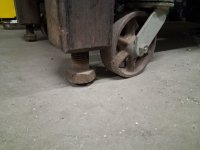
My welding table weighs most of a ton. When I got It had big 1-1/2"bolts under the legs to level it
I added the casters but I offset them
If I screw the bolts up about 1/8" I can move it around alone. If the bolts are screwed down 4 men couldn't move it.
Maybe that idea will work for you?
I do have to sweep the floor before I move it as even a dime will stop a caster from rolling.
 

Attachments

  • 714202542041.jpg
    714202542041.jpg
    559.5 KB · Views: 42

tom86951

Well-known member
Joined
May 14, 2005
Messages
155
Location
CA
I'm all about making things moveable in my shop.
Here's one example:
My welding table weighs most of a ton. When I got It had big 1-1/2"bolts under the legs to level it
I added the casters but I offset them
If I screw the bolts up about 1/8" I can move it around alone. If the bolts are screwed down 4 men couldn't move it.
Maybe that idea will work for you?
I do have to sweep the floor before I move it as even a dime will stop a caster from rolling.
Love the simplicity of that set up. Do you need jam nuts on the big bolts or do they stay put under all the weight?
 

Ultradog MN

Well-known member
Joined
Jan 20, 2024
Messages
766
Location
Twin Cities
Love the simplicity of that set up. Do you need jam nuts on the big bolts or do they stay put under all the weight?
After I move the table to where I want it I screw the bolts down so they raise the casters off the floor about 1/16". Don't need jam nuts - they never move.
 
Last edited:

goldtang

Well-known member
Joined
Feb 11, 2012
Messages
474
Location
Western Australia
We built a steel work bench that has drop down wheels so it sits on the legs most of the time and the wheel are lowed down with cheap scissors jacks when we need to move it the attached picture was it idea we used borrowed from the internet
 

Attachments

  • IMG_1449.jpeg
    IMG_1449.jpeg
    180.6 KB · Views: 49

Ultradog MN

Well-known member
Joined
Jan 20, 2024
Messages
766
Location
Twin Cities
Here's another of my contrivances for keeping things mobile.
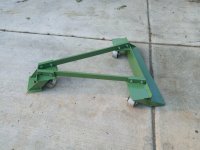
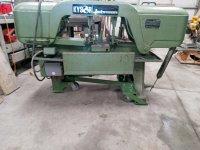
I did not want to raise the height much so I made this skate board. It only raises the height of the saw about 1/2".
It does not lock down as I move it frequently - for cutting angles or long pieces.
 

Attachments

  • cvphoto133527.jpg
    cvphoto133527.jpg
    154.7 KB · Views: 44
  • cvphoto133528.jpg
    cvphoto133528.jpg
    107.6 KB · Views: 36
  • 2022-08-17_08_05_48-1.jpg
    2022-08-17_08_05_48-1.jpg
    89 KB · Views: 35

Nutria

Well-known member
Joined
Jun 23, 2015
Messages
798
Location
Eastern Sierra
Does anybody have experience with this monolithic style of leveling/locking caster that extends a foot below the wheel? If so, do you get any noticeable play once the feet are down?

I like the idea of having a leveling function integrated into the locking caster, but want to make sure they're not going to be all wiggly in actual use.

1764339795367.png
I use some like that for several pieces of shop machinery, except that mine use a single bolt instead of a plate with four bolts. They are pretty good. With the locking foot extended, I get a bit of movement, which is sometimes noticeable on the wood lathe. But not much, and having four extendable feet is great for uneven concrete. I imagine that plate casters, like in your photo, would be even more stable.
 

rustyzman

Well-known member
Joined
May 7, 2015
Messages
772
Location
Chicagoland
We use those on automated assembly and inspection equipment at work. They are very nice to use and very compact. The center foot pad is a high durometer rubber, so it has a little give to it. When our machines are running, you can feel a little movement as slides on the machine shuttle back and forth, but it is not extreme. Also it provides a little isolation to the floor for vibration and impact, so overall I like them a lot.

If I could scrounge a 4 spares I would mount my workbench on them.
 

no704

Well-known member
Joined
Apr 27, 2016
Messages
5,217
I have used that type of caster on some test rigs at work before. Roll well if you have a clean flat floor. Not bad to deploy the stop pad, might require some extra effort depending on the weight. I used them on commercial door cycle testers. A full sized sold door cycles 1mm times to test Hardware. Those feet held up very well.
 
To avoid these ads, REGISTER NOW!

whateg01

Well-known member
Joined
Mar 13, 2006
Messages
11,328
Location
doo dah, kansas, usa
My solution has been to use regular locking caspers that are easily available and at leveling feet in the corners. The leveling feet prevents any wobble from an uneven floor. The casters don't even have to be at the very corners since they will not be the primary means of support. I have found that to be far more economical than combination units
 

rsanter

Well-known member
Joined
Dec 22, 2007
Messages
18,514
Location
visalia ca
Build it stationary with leveling screws.

make it where you put a floor jack under one end and use a HF dolly. Then you either use the floor jack on the other end or another HF dolly
 

jives

Well-known member
Joined
Jan 4, 2013
Messages
2,807
Location
Central NY
Timely thread. I just had my two oldest boys (home for T-giving) lift up a welding table I have (~320 lbs) onto a temporary gerry-rigged caster platform just so I can move the thing around the shop. But, as you know, too much movement. I just ordered the lever style retractable casters (black Friday) and see how well they will work. It needs to be quick to move, set, quick to move again. I thought about coming up with a better/cheaper idea, but sometimes ya' just gotta buy what is available.
 

Ultradog MN

Well-known member
Joined
Jan 20, 2024
Messages
766
Location
Twin Cities
Timely thread. I just had my two oldest boys (home for T-giving) lift up a welding table I have (~320 lbs) onto a temporary gerry-rigged caster platform just so I can move the thing around the shop. But, as you know, too much movement. I just ordered the lever style retractable casters (black Friday) and see how well they will work. It needs to be quick to move, set, quick to move again. I thought about coming up with a better/cheaper idea, but sometimes ya' just gotta buy what is available.
Are the casters steel?
I would not want anything plastic or rubber under my welding table. Slag from the torch and sparks from welding would melt them
 

KwikFab

Well-known member
Joined
Jul 27, 2024
Messages
1,189
Location
Central Valley, CA
I am building a new workbench and want it to be both stable and one-person mobile.

It doesn't have to be easy to roll since it will be mostly stationary, but I do need to be able to push it a short distance a few times per year.

However, it absolutely needs to be totally stable and solid when in place. I don't have much patience for benches that rock and wiggle when I'm trying to work.

My prior experience working on any bench with conventional locking casters is that (even when locked) there's enough play in the mechanism and/or the point contact with the ground that there's still noticeable movement from the work surface.

I'm familiar with the type where the wheels retract up and then deploy downwards when you step on them. these look like a good solution from a stability standpoint but I'd prefer not to have the assembly sticking out the side of the legs if I can avoid it.

Does anybody have experience with this monolithic style of leveling/locking caster that extends a foot below the wheel? If so, do you get any noticeable play once the feet are down?

I like the idea of having a leveling function integrated into the locking caster, but want to make sure they're not going to be all wiggly in actual use.

1764339795367.png

While I'm normally big about quick DIY jobs, I run similar casters myself on my welding tables.

20251201_130825.jpg

They do wobble the slightest when sitting on the rubber pads but otherwise they're great.
 

jives

Well-known member
Joined
Jan 4, 2013
Messages
2,807
Location
Central NY
Are the casters steel?
I would not want anything plastic or rubber under my welding table. Slag from the torch and sparks from welding would melt them
Caster wheels are not steel. Frankly, I had not thought much about it, other than my floor would not roll metal wheels very well. The lever on the caster actually covers the caster, which could provide some protection from sparks, but I'll need to keep and eye out.
 

LopezBart

Well-known member
Joined
Oct 13, 2023
Messages
2,539
Location
Lopez Island, WA
A friend is giving me a welding bench for our new shop; he's closing out a business and no longer has room for it. It weighs about 400 lbs and is about 4'x4', so it's going to get casters that come down for moving it around the shop. I'll may make/get four sturdy 3 caster dollies and just lift it w/ a floor jack initially; those would be handy for moving work benches, etc.


1764630967695.png
 

Milton Shaw

Well-known member
Joined
Feb 11, 2011
Messages
4,838
I have a single post lift in the middle of my garage. I built a frame out of 4" by 2" steel tube and leveled it in both directions with the lift supporting the ends. Then tacked welded a 4'by8' piece of steel on it with level to measure and keep any bow out of the top in all sides and center. Then I welded 2 & 1/2 half inch pieces of receiver hitch on ends of the long tubes and made "T" shaped bracket to hold casters and be removable and then able to use the receivers for mounts for bench vise, pipe vise, benders, tube benders and ring rollers. I located two holes for 3/4" inch eye bolts and use a 500 lb electric hoist on a swivel jib crane to set bench up right and on caster brackets when I need the hoist for car work. Lets me roll the top outside the shop, clean up and use the hoist for cars and SUV's. Installed a power strip with Individual GFCI to control power to bench. After a couple of years it's still about an 1/8 inch out, that is within the accuracy I need for just about all the stuff I weld up. I use the table top just about every day and still find the big problem getting it clean enough to set anything else on it.
 
To avoid these ads, REGISTER NOW!
Top Bottom