To avoid these ads, REGISTER NOW!

Stem wall - weak mortar - fully grouting as repair?

rothbard

Member
Joined
Mar 11, 2024
Messages
16
Location
Arizona
I've built a stem wall out of 6 inch CMU, for a 30x20 footprint.. It is 4 courses high. I mixed the mortar as instructed and got good flowable consistency. However after finishing the wall (took a couple months) I noticed the adhesion of the mortar to the blocks was poor. If I pulled really hard I could lift a couple blocks out. I could also topple part of the wall by pushing extremely hard on it with only muscle power.

Right now the blocks are all hollow. I would vastly prefer to grout every single core and basically interlock the whole wall with grout. My question is whether this would basically function as a doubling of the mortar in case the mortar is insufficient.
 
To avoid these ads, REGISTER NOW!
OP
R

rothbard

Member
Joined
Mar 11, 2024
Messages
16
Location
Arizona
That's consoling to hear. I have a dumb question, lets say all the mortar completely fell out. Would the core fill "grip" the blocks and basically function as stand in mortar?
 
Last edited:

bluedog225

Well-known member
Joined
Jan 31, 2012
Messages
3,275
Location
Texas
I vote yes.

I’d push down some 1/2” rebar every 6 inches or so. Then put in 3000 psi redimix.

Figure out a way to make it settle to the bottom without breaking up your existing work. Maybe a 1” wood dowel to plunge it down.

Made sure it’s all plumb and level before the concrete dries.

If it gets messy looking at the grout joints, there are surface skim coats you can put on that add more strength to the cmu wall.

You are mixing 3 methods of construction, but I don’t see a downside. It will be strong as heck.
 

bluedog225

Well-known member
Joined
Jan 31, 2012
Messages
3,275
Location
Texas
And re your original work. Maybe it would have helped to soak the cinderblocks in water first? It’s an art. Reminds me of the old saying “mortar holds bricks apart, not together.”
 
OP
R

rothbard

Member
Joined
Mar 11, 2024
Messages
16
Location
Arizona
Yeah maybe so. It is an extremely dry climate. I like your idea of rebar and redimix and at this point it seems to be the best option short of rebuilding the wall.
 

OccupantRJ

Well-known member
Joined
May 15, 2009
Messages
11,004
Location
Eastern North Carolina
And re your original work. Maybe it would have helped to soak the cinderblocks in water first? It’s an art. Reminds me of the old saying “mortar holds bricks apart, not together.”
My BIL has been a mason for 55 years. When rain is projected he wraps all brick and block on his job with plastic to keep them dry, even making a special trip on weekends, so there’s that.
 

bluedog225

Well-known member
Joined
Jan 31, 2012
Messages
3,275
Location
Texas
Yeah. wet/dry, I have no real advice.

One more data point, I think the surface skim coat products are used with dry stack cmu’s. That is, they make a strong wall with only the surface bond.

Don’t know which method would be easier/harder.

And you probably already have a plan, but now is a good time to think about how you are going to anchor your top plate to the stem wall. Before you fill in the voids with concrete.
 

OccupantRJ

Well-known member
Joined
May 15, 2009
Messages
11,004
Location
Eastern North Carolina
For what it is worth, a while back on a commercial block job near me I noticed the brick crew was filling all the voids in a wall they had built with the same mortar used to lay the wall, and it was about 8 feet high. They were using a concrete ******** to settle it.
 

rancherbill

Well-known member
Joined
Oct 18, 2007
Messages
5,334
Location
Foothills County, Alberta, Canada
Right now the blocks are all hollow. I would vastly prefer to grout every single core and basically interlock the whole wall with grout. My question is whether this would basically function as a doubling of the mortar in case the mortar is insufficient.
I am not sure what you mean with grouting? There are so many regional terms. I would fill them with concrete. Did you use horizontal rebar? If you didn't, I'd take off the top row of blocks, put 2 x 1/2" rebar and then redo the top row.

It seems like you are building a garage. I would be extremely careful backfilling. Your bottom row of blocks is probably not stuck to the footing. With Mechanical compacting there are risks of moving the blocks. Both sides have to be filled at the same time before compacting. When you reach the point where one side is fuller than the other, I would hand compact.
 
  • Like
Reactions: red

OccupantRJ

Well-known member
Joined
May 15, 2009
Messages
11,004
Location
Eastern North Carolina
Around here, J bolts are simply shoved down into a filled void and rotated a half turn to anchor sill plates. On my shop addition, which sits on a slab, I drilled down through the hollow core every four feet after the first course was laid and inserted a cinch anchor that was extended with a coupling nut and threaded rod. That rod was carried through the top plate. This clamped things down a bit for hurricane country. I had a supply of threaded rod that I found in a salvage materials yard for cheap, so why not. I did the same on my previous shop that was concrete block construction that my BIL laid. Yeah, I overbuild for myself.
 

billconner

Well-known member
Joined
Jul 20, 2021
Messages
6,956
Location
Thousand Islands NYS
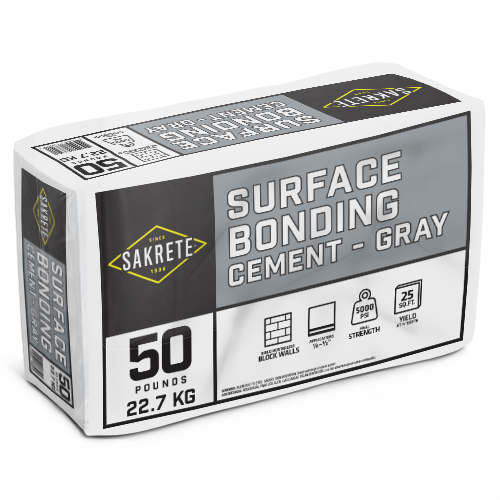
Surface bond cement, as blue dog mentioned, is also an option. I drylaid 8" - up to 7 courses in one corner - and strong as all get out. over 3' of unbalanced fill around that corner. Lap it on to footer to seal and grip. Provides good waterproofing also.
 
OP
R

rothbard

Member
Joined
Mar 11, 2024
Messages
16
Location
Arizona
am not sure what you mean with grouting? There are so many regional terms. I would fill them with concrete. Did you use horizontal rebar? If you didn't, I'd take off the top row of blocks, put 2 x 1/2" rebar and then redo the top row.
Yes in this case by grouting I think it will really be concrete. I have not done rebar. seems like given the questionable nature of the mortar to be a good idea.
 

rayra

Well-known member
Joined
Dec 1, 2014
Messages
4,724
Location
Escaped from Los Angeles
See? Now THIS is what i call a classic noob/stimulator post. We just had a topic talking about this sort of thing and here's a new guy to ask the same thing. The timing is uncanny.

Eta. Here -


And yes, fill them. Use a nice flowing mix and add some more portland cement and a bit of lime to the mix and it will seep in and bond well.

Be aware that you will likely get some efflorescence if you fill it all. But it will be strong.
 

bluedog225

Well-known member
Joined
Jan 31, 2012
Messages
3,275
Location
Texas
If you wanted rebar under the top run, you could always add another run of cmu. And the concern about how the bottom run is attached or interlocked with the foundation as @rancherbill is worth giving some thought.

Are you building on top of the wall?
 
OP
R

rothbard

Member
Joined
Mar 11, 2024
Messages
16
Location
Arizona
Appreciate the advice rayra. What do you think about the remaining block if somehow the mortar completely weakens out due to the poor bonding / weakness? Do you think the blocks would basically "crash" around the fill? The surface bonding cement seems to be a good idea too as I would think that would hold the mortar in compression so that even if the bonding was poor it would not easily escape.
 
OP
R

rothbard

Member
Joined
Mar 11, 2024
Messages
16
Location
Arizona
If you wanted rebar under the top run, you could always add another run of cmu. And the concern about how the bottom run is attached or interlocked with the foundation as @rancherbill is worth giving some thought.

Are you building on top of the wall?

Yeah I'm building on top of the wall, so there is lateral support (platform) at the top. I used a thick bed of mortar on top of the footing for the first course but it was otherwise unbonded.
 
Last edited:

bluedog225

Well-known member
Joined
Jan 31, 2012
Messages
3,275
Location
Texas
It may be beyond our remit, but I’d want that wall to have some lateral resistance on the slab. May depend on the specifics of the building.

You are in early stages. If you tell folks the plan, there are many here who can chime in.

For a basic/light garage shed, I think your wall will be fine filled and/or skim coated with the appropriate stuff.

For the floor plate anchors (or whatever you call them with cmu), you could still address. A long 1/2” masonry bit, a bulldog hammer drill, 1/2 rebar, and maybe some epoxy. I’d wash out the holes with a hose to get them clean.

I don’t know if the hammer drill is going to break up the bottom run of mortar or not.

Amazing what we can get so cheap these days.

Don’t know about spacing. Maybe every 2 feet?

IMG_0578.png
 

zendriver

Well-known member
Joined
Dec 10, 2014
Messages
29,814
Location
Indiana
My BIL has been a mason for 55 years. When rain is projected he wraps all brick and block on his job with plastic to keep them dry, even making a special trip on weekends, so there’s that.
That what I was going to say.

eons ago I worked for a small construction company and a helper for the mason, putting a block wall in a new bank basement. Had a hundred of them sitting up on scaffolding that got rained on that night.

Nope, take them down and put up dry ones.

Maybe the OP's mortar was not right :dunno:
 
To avoid these ads, REGISTER NOW!
OP
R

rothbard

Member
Joined
Mar 11, 2024
Messages
16
Location
Arizona
Mortar definitely does not seem to have been "right." I used Amerimix type S and got a nice workable consistency but not soupy consistency. But I don't see how it could have been a bad batch of premix as it took me two months to build the wall and several of the batches of mortar were bought weeks from each other and always take directly from dry warehouse for immediate consumption, and the results seemed fairly uniform between batches. Either Amerimix ***** or my mixing or both.
 

Hilltopmasonry

Well-known member
Joined
Oct 12, 2015
Messages
2,167
Mortar definitely does not seem to have been "right." I used Amerimix type S and got a nice workable consistency but not soupy consistency. But I don't see how it could have been a bad batch of premix as it took me two months to build the wall and several of the batches of mortar were bought weeks from each other and always take directly from dry warehouse for immediate consumption, and the results seemed fairly uniform between batches. Either Amerimix ***** or my mixing or both.
I use hundreds of bags of amerimix a year. I can almost guarantee you that it wasn’t the mortar.

Amerimix is one of the top mortar manufacturers out there
 
OP
R

rothbard

Member
Joined
Mar 11, 2024
Messages
16
Location
Arizona
Update: I found a thread basically exactly matching my concerns. https://www.garagejournal.com/forum/threads/filling-block-walls-existing-construction.121515/page-2
I use hundreds of bags of amerimix a year. I can almost guarantee you that it wasn’t the mortar.

Amerimix is one of the top mortar manufacturers out there

Roger, probably my mixing then. Looks like the dude ended up doing as you said, locking it with grout and rebar. Joes169 pretty much said same as you.
 

Hilltopmasonry

Well-known member
Joined
Oct 12, 2015
Messages
2,167

BillK

Well-known member
Joined
Aug 24, 2006
Messages
9,314
Location
Beautiful Southern Maryland
Right now the blocks are all hollow. I would vastly prefer to grout every single core and basically interlock the whole wall with grout. My question is whether this would basically function as a doubling of the mortar in case the mortar is insufficient.

Unless you are going to have truck come in and pour it I simply cannot imagine how many bags of concrete mix that will take. Not to mention how much time. I would really have to wonder if it might be easier and maybe even cheaper to remove the entire wall and pay somebody to come in and lay it properly ?
 

red

Well-known member
Joined
Feb 20, 2009
Messages
720
Location
Hudson Valley, NY
I am not sure what you mean with grouting? There are so many regional terms. I would fill them with concrete. Did you use horizontal rebar? If you didn't, I'd take off the top row of blocks, put 2 x 1/2" rebar and then redo the top row.

It seems like you are building a garage. I would be extremely careful backfilling. Your bottom row of blocks is probably not stuck to the footing. With Mechanical compacting there are risks of moving the blocks. Both sides have to be filled at the same time before compacting. When you reach the point where one side is fuller than the other, I would hand compact.
Durawall is a better option for horizontal.

As to backfilling, won't do it until after the building is at least framed & you have to have bracing on the inside of your building. The weight of the building keeps the block wall from moving.
 

NUTTSGT

Super Moderator
Staff member
Joined
Sep 14, 2009
Messages
50,895
Location
Northern Central Ohio
OP
R

rothbard

Member
Joined
Mar 11, 2024
Messages
16
Location
Arizona
Thank you all for the advice! You've graciously provided far more advice and expertise than I expected. I will go ahead and fully grout and put in rebar. I will also plan on applying surface bonding cement as an extra reinforcement to the mortar. If it is possible to drill in anchor/rebar to the footing I will try, but I'm not super confident about it. Hopefully in a month or so I will be able to report back with the results.
 
OP
R

rothbard

Member
Joined
Mar 11, 2024
Messages
16
Location
Arizona
As promised it has been a little over a month and I am reporting back with results.

I fully grouted all the cells with quikrete #3500. I put in vertical rebar at least every other cell except where anchors are placed.

I know quikrete isn't grout but it was only 4 blocks deep and had no trouble grouting the blocks when mixed on the wet side.

It wasn't too practical to drill down into the footing to lock the grout /wall to the footing, but I'm hoping the 20,000 pounds of wall compressing down plus whatever tensile force remaining of the mortar to the footing should be enough to not lose much sleep over.

Wall is solid as a rock now and there is very little doubt it will be enough for a 600 sq ft light frame above it.
 

Attachments

  • grouted.png
    grouted.png
    606.9 KB · Views: 60

ddurrett896

Well-known member
Joined
Mar 29, 2015
Messages
995
Location
VA
#4 rebar drilled and epoxied Into the footer every 3-4. Fill all blocks with mortar and I’d probably skim the blocks with this just to be safe.

 
Last edited:
OP
R

rothbard

Member
Joined
Mar 11, 2024
Messages
16
Location
Arizona
Don't forget rebar.
I used vertical rebar every 16".

I have never built anything with masonry before, and originally went with the IRC 2021 codes which said I could use plain ol unreinforced masonry since I have <16" of unbalanced of backfill and only 32" of total height and not in a seismic risk zone. Now that I've built a wall I can't really imagine relying on hollow plain masonry, but apparently the codes allow it. If I did I'd use mortar with a lot more cement than what I bought.

Now that I've built a stem wall, I can definitely see why people use bond-beam and reinforcement. That said, I think by grouting every single cell and then reinforcing vertically you get a sort of weak bond beam, since the blocks are in running bond and thus create an interlocking effect like in a chain.
 

larry4406

Well-known member
Joined
Jan 27, 2006
Messages
19,119
Location
Northern Virginia
I’ve limited CMU experience. The most I have is my wife’s kitchen extension.

The footing has vertical bars embedded and thru the CMU cells. Used ladder wire every course at bed joints (see pic). Wall is ~30” tall with crawlspace inside and backfilled to 8” below top of wall other side. All cells were grouted full and anchor bolts set.

What’s odd is if it were a poured concrete wall, then inspection is required. However if CMU wall then no inspection is required. Still puzzles me. Not sure if that’s typical of other areas for residential.

Waterproofing and drain tile system were inspected.
1714500227730.jpeg
 

billconner

Well-known member
Joined
Jul 20, 2021
Messages
6,956
Location
Thousand Islands NYS
Now that I've built a wall I can't really imagine relying on hollow plain masonry, but apparently the codes allow it. If I did I'd use mortar with a lot more cement than what I bought.
More cement in the mortar probably won't address what you find a weakness. The mortar will never "glue" the blocks together. It's just to allow imperfect castings to be leveled and also to transfer all the load. The surface bonding probably would. It's like covering both sides with a "skin". I dry laid and surface bonded - 8 courses in one corner cut into hill. It's been bumped with an excavator and is fine. I did go knock out blocks on top course and grouted it, but more for anchor bolts than a beam. The 2x8 sill plate will keep wall straight.
 

dutchgray

Well-known member
Joined
Sep 28, 2014
Messages
6,465
Location
Dorset. England.
And re your original work. Maybe it would have helped to soak the cinderblocks in water first? It’s an art. Reminds me of the old saying “mortar holds bricks apart, not together.”
Whilst wet blocks or bricks make laying them very difficult, if they are too dry (especially porous clay brick) then they **** the moisture from the mortar too quickly and it doesn't properly set or bond, which may be the OP's issue. Normally only a problem in hotter conditions when it's been dry for a while.
 

Joemctag

Well-known member
Joined
Aug 11, 2017
Messages
813
Location
Outside raleigh nc
I am not sure what you mean with grouting? There are so many regional terms. I would fill them with concrete. Did you use horizontal rebar? If you didn't, I'd take off the top row of blocks, put 2 x 1/2" rebar and then redo the top row.

It seems like you are building a garage. I would be extremely careful backfilling. Your bottom row of blocks is probably not stuck to the footing. With Mechanical compacting there are risks of moving the blocks. Both sides have to be filled at the same time before compacting. When you reach the point where one side is fuller than the other, I would hand compact.
Agree. I’d somehow get 1/2” rebar epoxied into your footing concrete about every 4th cell at least, with tops bent 90 degrees at least a foot long horizontal leg . Run 2pieces continuous rebar lengthwise , tied to vertical, bent bars with tie wire. Then firm up and pour top courts with GOOD concrete. You can’t do a @Bond beam” in 6” block,
You’re going to build a structure on top of these walls, right?
 
OP
R

rothbard

Member
Joined
Mar 11, 2024
Messages
16
Location
Arizona
Agree. I’d somehow get 1/2” rebar epoxied into your footing concrete about every 4th cell at least, with tops bent 90 degrees at least a foot long horizontal leg . Run 2pieces continuous rebar lengthwise , tied to vertical, bent bars with tie wire. Then firm up and pour top courts with GOOD concrete. You can’t do a @Bond beam” in 6” block,
You’re going to build a structure on top of these walls, right?

All wise words. Unfortunately it wasn't super practical for my situation with the blockwork already in place and now I've already grouted all the cells. The wall is absolutely solid as a rock now and FWIW there was hella mortar on the bottom layer attached to the footing.

We don't get any frost heave whatsoever and I will be backfilling by hand. Time will tell what kind of shift I get against the footing. If it does I anticipate it would be from wind load. It might be useful to know what kind of shifting they got in the olden days when building masonry foundations before using rebar. If I get 10-15 years out of it sitting reasonably stable on the footing plus or minus an inch, I'll be quite happy FWIW.
 
To avoid these ads, REGISTER NOW!
Top Bottom