To avoid these ads, REGISTER NOW!

Strengthening Joists

Herb

Well-known member
Joined
Apr 15, 2006
Messages
739
Location
CT
Bob,
This will be interesting to see in a real world situation. Not an engineer either, just experience with wood and metal construction. A good quality construction adhesive (subfloor adhesive) will hold strong enough to split wood.
How wide is the room you are working on? I see it is 12’long. I would get set up to work quickly, by cutting the 2X4s to length and put a screw in one side. Apply adhesive to the length, screw into place on one end. Support both ends of all 2X4s and jack up in center about 1/8” beyond flat, install screws as directed and allow to dry about a week before removing jack.

The ambient temperature could dictate the set time of the adhesive. I would predrill at least a couple of the screw holes to facilitate the installation of the 2x material.
 
To avoid these ads, REGISTER NOW!

scott37300

Well-known member
Joined
May 5, 2010
Messages
3,450
Location
Wisconsin
After reading all this and the other thread and trying to do some research online here are my thoughts, yes just thoughts since I'm not an engineer but I do have a good share of experience framing and woodworking. In order for this to have any significant added value you HAVE to glue and screw it. You need a continuous bond of the two boards. The glue is stronger than the wood itself, if you ever glue to peices of wood together with good glue and let it setup and try to seperate them it always tears the wood grain, not the glued joint, just like a good weld. I'm interested in this discusion because I have sistered joist and need to do it again on my house and this method would be an easy fix but I am not sold on it just yet.

First, I do believe this would help stiffen the joists, but do not believe the original claim of doing this would "be more than double the stiffness of adding a second sister beam". That in since is saying that that doing this will add 4 times the stiffness of the original joist. I also believe that sistering a joist would give more benefit than adding a 2x4 to the bottom of the joist. I believe that using this method would work good if you are tiling a floor and your joist are a little short of the deflection rate and you are just looking to stiffen them up a little.

But here are some concerns I see. First is most of the time when you are stiffening up your floor it is going to be sagging some. I don't believe that jacking the joist level and adding this 2x4 would stop all sagging. I believe it would still sag before the tensil of the board kicks in, especially since all wod expands and contracts. So if you are trying to level out a sagging floor I don't think this idea is the right way to do it. But if your floor is level and you are trying to add a little extra stiffness for tiling than this might be a simple way to do it.

I would LOVE to have the sources to put this theory to test by building a 2x8 joist with a 2x4 flat on the bottom on a 12 foot or so span. And next to it have a double 2x8 sistered joist. Both of them glued and screwed together. And have a hydralic ram that could apply force to the middle and measure at which point they fail. I think this test would be the only thing to prove to me that this method is "over 2 times stronger" or even just plain stronger than a pair of sistered joists. The numbers are all good but they don't take into account for real life situations.

These are just my opinions and not trying to argue with any engineers but with my real life experience and everything I have ever been taught and read I don't believe this method is as strong or "over twice the stiffness" of sistering two joists together like the OP claims.
 

ishiboo

Well-known member
Joined
Oct 27, 2010
Messages
9,481
Location
Oshkosh, WI
After reading all this and the other thread and trying to do some research online here are my thoughts, yes just thoughts since I'm not an engineer but I do have a good share of experience framing and woodworking. In order for this to have any significant added value you HAVE to glue and screw it. You need a continuous bond of the two boards. The glue is stronger than the wood itself, if you ever glue to peices of wood together with good glue and let it setup and try to seperate them it always tears the wood grain, not the glued joint, just like a good weld. I'm interested in this discusion because I have sistered joist and need to do it again on my house and this method would be an easy fix but I am not sold on it just yet.

First, I do believe this would help stiffen the joists, but do not believe the original claim of doing this would "be more than double the stiffness of adding a second sister beam". That in since is saying that that doing this will add 4 times the stiffness of the original joist. I also believe that sistering a joist would give more benefit than adding a 2x4 to the bottom of the joist. I believe that using this method would work good if you are tiling a floor and your joist are a little short of the deflection rate and you are just looking to stiffen them up a little.

But here are some concerns I see. First is most of the time when you are stiffening up your floor it is going to be sagging some. I don't believe that jacking the joist level and adding this 2x4 would stop all sagging. I believe it would still sag before the tensil of the board kicks in, especially since all wod expands and contracts. So if you are trying to level out a sagging floor I don't think this idea is the right way to do it. But if your floor is level and you are trying to add a little extra stiffness for tiling than this might be a simple way to do it.

I would LOVE to have the sources to put this theory to test by building a 2x8 joist with a 2x4 flat on the bottom on a 12 foot or so span. And next to it have a double 2x8 sistered joist. Both of them glued and screwed together. And have a hydralic ram that could apply force to the middle and measure at which point they fail. I think this test would be the only thing to prove to me that this method is "over 2 times stronger" or even just plain stronger than a pair of sistered joists. The numbers are all good but they don't take into account for real life situations.

These are just my opinions and not trying to argue with any engineers but with my real life experience and everything I have ever been taught and read I don't believe this method is as strong or "over twice the stiffness" of sistering two joists together like the OP claims.

I'm going to be load testing some longer clear span solutions this summer, I can easily test these two as well. I'm just going to load a bunch of weight with a skid loader and measure deflection, probably won't test to the failure point.

I agree with you - I think there are good stiffness gains to be had with this method, but many of his statements of the strength gains are incorrect, as well as receiving an equivalent benefit by having sistered 2x4s on the top of the beam vs the bottom show a fundamental misunderstanding.
 

scott37300

Well-known member
Joined
May 5, 2010
Messages
3,450
Location
Wisconsin
I'm going to be load testing some longer clear span solutions this summer, I can easily test these two as well. I'm just going to load a bunch of weight with a skid loader and measure deflection, probably won't test to the failure point.

I agree with you - I think there are good stiffness gains to be had with this method, but many of his statements of the strength gains are incorrect, as well as receiving an equivalent benefit by having sistered 2x4s on the top of the beam vs the bottom show a fundamental misunderstanding.

That would be great to see real world testing of these methods.

And his original picture it states "the stiffness is MORE THAN DOUBLE THAT OF TWO SISTERED JOISTS". He is claiming that this method is twice as strong as a two joist sistered, not just as strong! I have a hard time believing it is as strong let along twice as strong.

Please post your finding if you do end up testing this out.

attachment.php
 

WNYflyer

Well-known member
Joined
Sep 13, 2009
Messages
2,115
Location
Lockport, NY
In relative terms,

If the stiffness of a single 2x10 joist = 1.0 then

sister with another 2x10 gives a stiffness of 2.0

Adding the aproppriately attached 2x4 to the single 2x10 gives a stiffness a little over 2.0.
But adding the 2x4 is less material than sistering a 2x10 thus a more efficient use of material

The engineer in the link isn't real clear in explaining this.

If you look at a steel beam catalog you will see that for a given nominal depth of beam the mill will adjust the flange width and thickness to get more area of flange to make a stiffer and stronger beam. Same concept as adding a 2x6 instead of a 2x4.
 

snorky18

Well-known member
Joined
Oct 1, 2007
Messages
1,170
Location
Southeast Tennessee
Since you have an understanding of the math involved, it was also stated in that thread, that using a 2x6 would stiffen the joist even more. Would it be possible for you to explain this?

Beam stiffness is all about moment of inertia, or "I".

Bigger I = stiffer beam. For a rectangular section, as mentioned earlier, I=bh^3/12. The formula is not so important. What is important is that the h^3. That means for every small increase in the height of the beam (be it an I-beam, engineered truss, or 2x material), you get a BIG increase in stiffness.

Let's take this example, 2x material, turned on end (such as a floor joist):

So for a 2x4, b=base width=1.5", h=3.5". so I=(1.5*(3.5^3)) / 12= 5.4
So for a 2x6, b=base width=1.5", h=5.5". so I=(1.5*(5.5^3)) / 12= 20.8
So for a 2x8, b=base width=1.5", h=7.5". so I=(1.5*(7.5^3)) / 12= 52.7

So a 2x8 has about 10x the "I" value of a 2x4, even though it is only 2x the size of a 2x4.

There is another parameter (the aforementioned "c") that affects the overall beam stress, but the example above should help you realize that changing the overall height of any kind of beam makes a large differnce in its stiffness.

As a generalization, the more material you add, and the further from the center of the beam you add it, the more strength you are adding (higher I).

So attaching a 2x4 or 2x6 to the bottom of a beam (where the tension is for floor joist application), so long as it is attached properly, increases the "I", which will in turn significantly increase the strength of the beam.
 

balddave

Member
Joined
Jun 15, 2009
Messages
15
Location
Western Pa, North of Pittsburgh
Guys,

I read the through the original thread on the other forum. The most important thing that many are missing is the difference between stiffness and strength.
Stiffness is the deflection that occurs due to a load.
Strength is the load at point of failure.

The OP, said that adding the 2x4 more than doubles the stiffness of a single 2x10. This is true as long as you have a sufficient bond between the two members (shear flow calculations as others have said). The amount of stiffness added by the 2x4 is very similar (slightly more) to sistering 2x10s with less cost and much less work. Note the OP is dead wrong when he said that adding the 2x4 adds twice the stiffness that a sistered 2x10 adds, in fact they are nearly the same.

When it comes to a strength perspective the added 2x4 setup is only about 90% the strength of the sistered 2 x 10's (but again a lot less work/cost for almost double the strength of a single 2x10.)

I ran the numbers on both of these setups along with a single 2x10. These fundamental engineering equations are infallible. The problems arise when careless/unaware people attempt to use them without ensuring that the required conditions are met for them to even be applicable. (In this case the only reason we'd be incorrect is if you could not develop sufficient bond between the two members)

I'm a mech eng, work in the structural field, and work with structural stiffness and strength on a daily basis.
 
OP
O

Old Moparz

Well-known member
Joined
Jan 21, 2005
Messages
1,171
Location
Newburgh, NY 12550
Well, everyone is wrong including myself for posting the link, & the original poster on the other forum. I sistered some joists, added 2x4's to some others, added 2x6's to even more, & when I parked my car in the living room all the joists let go & the car is in the basement now.


I'm kidding, I didn't try it yet.
smilielol-save.gif


But I am glad to see that the math formulas people used or posted show it as a working option. :thumbup:
 

snorky18

Well-known member
Joined
Oct 1, 2007
Messages
1,170
Location
Southeast Tennessee
Well, everyone is wrong including myself for posting the link, & the original poster on the other forum. I sistered some joists, added 2x4's to some others, added 2x6's to even more, & when I parked my car in the living room all the joists let go & the car is in the basement now.


I'm kidding, I didn't try it yet.
smilielol-save.gif


But I am glad to see that the math formulas people used or posted show it as a working option. :thumbup:

Don't worry, when that happens we'll refund all every last bit of our consulting fees that we collected from you :beer: :lol_hitti
 

Falcon67

Well-known member
Joined
Jun 11, 2009
Messages
18,371
Location
Merkel, TX
Well, everyone is wrong including myself for posting the link, & the original poster on the other forum. I sistered some joists, added 2x4's to some others, added 2x6's to even more, & when I parked my car in the living room all the joists let go & the car is in the basement now.

I'd blame your sister. Joist kidding.
 

Boiler

Well-known member
Joined
Nov 20, 2009
Messages
1,967
Location
Indiana
I'm an engineer that primarily deals with strength in steel sections, but that mostly lends it self to this application. To me, it absolutely makes sense. The joint must not slip to see full effect though.

Snarky, you're half right to why it works. The strength AND rigidity are going to be increased with the more material that is placed farther from the centroid of the beam being bent. So a 2x4 applies a certain amount of cross sectional area a large distance from the center, giving more strength than the same 2x4 would apply had it been nailed on in a position centered on the beam center (middle of the side of the joist). A 2x6 at the same distance away would lend MORE strength than the 2x4, because it has more cross sectional area at that same location. Increase distance from center or increase cross sectional area, and you gain rigidity and strength.

The key to all of this is the parallel axis theorem.

http://cnx.org/content/m27924/latest/16-Slides - Advanced Stress.pdf

Now it may be that the 2x4 doesn't strengthen it more than a double joist, but pound for pound, it would greatly exceed the benefit of the second joist, in added strength per pound of wood. I'd have to run the numbers to give actual increases. I will take a look into it later tonight.

EDIT: see page 16-12 of the pdf. Note that under each section, the shape has a number. That is how many times more rigid "I" than the square the section is. Strength is determined from "I" with some further calculation. Then note that all of the sections have the same amount of cross sectional area!
 
Last edited:

buening

Well-known member
Joined
Dec 17, 2007
Messages
1,338
Location
Decatur, IL
Guys,

I read the through the original thread on the other forum. The most important thing that many are missing is the difference between stiffness and strength.
Stiffness is the deflection that occurs due to a load.
Strength is the load at point of failure.

The OP, said that adding the 2x4 more than doubles the stiffness of a single 2x10. This is true as long as you have a sufficient bond between the two members (shear flow calculations as others have said). The amount of stiffness added by the 2x4 is very similar (slightly more) to sistering 2x10s with less cost and much less work. Note the OP is dead wrong when he said that adding the 2x4 adds twice the stiffness that a sistered 2x10 adds, in fact they are nearly the same.

When it comes to a strength perspective the added 2x4 setup is only about 90% the strength of the sistered 2 x 10's (but again a lot less work/cost for almost double the strength of a single 2x10.)

I ran the numbers on both of these setups along with a single 2x10. These fundamental engineering equations are infallible. The problems arise when careless/unaware people attempt to use them without ensuring that the required conditions are met for them to even be applicable. (In this case the only reason we'd be incorrect is if you could not develop sufficient bond between the two members)

I'm a mech eng, work in the structural field, and work with structural stiffness and strength on a daily basis.

Spot on response. The stiffness is essentially the ability for the beam to resist deflections. Throwing out an equation and a bunch of jargon that many may not understand, the max deflection at the midpoint of a simple span with an evenly distributed load (like a floor system atop the beam), deflection = 5wl^4/384EI. The "w" is the distributed load, "l" is the span length, "E" is the modulus of elasticity (relative to the material used), and "I" is the moment of inertia. Comparing the 2x10 with the 2x4 flange and the sistered 2x10 (essentially a 4x10), the loads, span length, and modulus of elasticity doesn't change. Sooooo, the "stiffness" in this case is a function of the moment of inertia. The more material you put away from the centroid/middle of the beam the higher "I" you get. Using the sistered 2x10, I get an "I" = 198 in^3. Using the 2x10 with 2x4 bottom flange, I get an "I" = 309. This results in an increase in "stiffness" of 56%. One could work a deflection at the midspan if you had the loads and actual span. For a reference, lets use a "l" = 180in span, "w" = 10lb/in, and assume the "E" is 1600000psi (depends on wood type, moisture content, etc). With the sistered 2x10, you would get a max deflection of 0.43in. With the 2x10 and 2x4 bottom flange, you get a max deflection of 0.28in. If you went crazy and used the 2x6 for the bottom flange, you'd get an "I"=349in^4 and a max deflection of 0.25. As you can see, the increase in width really doesn't help a great deal in terms of STIFFNESS. If you used a 4x4 instead of the 2x6, you would get an "I" = 475. As you can see, the idea is to get as much meat away from the centroid of the beam. Once you add a flange, the main thing that will control stiffness is the overall beam depth. The deeper/taller the beam, the greater the stiffness. Now, going with 2x6 will have a larger effect on STRENGTH because the centroid is moving closer to the flange (more mass located in the bottom flange, moving the center of mass towards flange). Strength is how much load the beam can handle before it fails.

I can't really get into the actual Strength values of the two beam types without making a bunch of assumptions, as there are a ton of reduction factors. Design of wood really *****, FYI!

Gluing and proper nail spacing is essential in keeping the 2x4 somewhat composite to the 2x10, so that the tension force is transferred from the 2x10 to the 2x4.....otherwise it'll act independently and the 2x4 becomes merely a decorative facade.

I'm an engineer that primarily deals with strength in steel sections, but that mostly lends it self to this application. To me, it absolutely makes sense. The joint must not slip to see full effect though.

Snarky, you're half right to why it works. The strength AND rigidity are going to be increased with the more material that is placed farther from the centroid of the beam being bent. So a 2x4 applies a certain amount of cross sectional area a large distance from the center, giving more strength than the same 2x4 would apply had it been nailed on in a position centered on the beam center (middle of the side of the joist). A 2x6 at the same distance away would lend MORE strength than the 2x4, because it has more cross sectional area at that same location. Increase distance from center or increase cross sectional area, and you gain rigidity and strength.

The key to all of this is the parallel axis theorem.

http://cnx.org/content/m27924/latest/16-Slides - Advanced Stress.pdf

Now it may be that the 2x4 doesn't strengthen it more than a double joist, but pound for pound, it would greatly exceed the benefit of the second joist, in added strength per pound of wood. I'd have to run the numbers to give actual increases. I will take a look into it later tonight.

EDIT: see page 16-12 of the pdf. Note that under each section, the shape has a number. That is how many times more rigid "I" than the square the section is. Strength is determined from "I" with some further calculation. Then note that all of the sections have the same amount of cross sectional area!

You got it! One other thing that needs consideration is the dead weight of the beam. Doubling up a beam doubles its own dead load, whereas adding a flange only increases it by roughly 33%. The dead load of the beam becomes a point of diminishing returns when you get into a longer span, where the additional dead load of the sistered beam counteracts the strength and stiffness benefits.

Hope this all made a little bit of sense. I can clarify further if one of you guys don't get a part of my explanation, just let me know! I'm a licensed PE and SE and while I primarily design steel/concrete bridges, I still know quite a bit when it comes to wood :thumbup:
 
Last edited:

6768rogues

Banned
Joined
Nov 28, 2007
Messages
4,524
Location
Western NY
The top of the joist is in compression and the bottom is in tension. Adding the 2x4 would strengthen the floor as it is hard to stretch a 2x4, that is why they work in trusses. Make sure the joists are braced (bridging) as most beams and joists fail by rotating rather than breaking in half. When the compression on the top and the tension on the bottom decide to even things up, the joist rotates and fails.
 

Boiler

Well-known member
Joined
Nov 20, 2009
Messages
1,967
Location
Indiana
Thanks for posting buening, now I can go watch TV instead of making I beam sketches and crunching numbers. I will say that I'm suprised the 2x6 didn't make more improvement though.

But now that I think of it, parallel axis tells us that a body adds to the moment of inertia directly proportionally to the area of the body and the cube of the distance from that area to the centroid. So a 2x8 would give 2x the benefit of a 2x4 (assuming acual dimensions). Besides a small change to the location of the centroid.

Here's where my work differs from wood: in metals I'd weld the floor to the joists and consider it a portion of the composite structure. I assume that floors are not glued to joists? Is this because the move at different rates, or because they are technically different materials or something?
 
Last edited:

Pathfinder

Well-known member
Joined
Aug 4, 2009
Messages
65
Location
Newbury, MA
Buening , BaldDave, and Snorky18 have it right with the calculations to back up their advice.

I'm an architect with 35 years experience doing residential structural design. I'm also a hands on kind of guy that has built two boats from scratch, two boats from bare hulls, two houses, six outbuildings, three additions, and am currently finishing up my 2,400 sq. ft. two story garage with both a wood shop and an automotive shop. In other words I've been around the block a few times and have a ton of experience with wood construction.

Now that I've got that out of the way let me tell you that technique really counts when attempting to stiffen a joist by adding a 2x4 bottom chord. The joint absolutely has to be glued, but not with just any glue. Construction adhesive is out. While it is a great glue for some applications it does not do well under a sustained shear load. It will creep over time. Not a good thing in this case. The same thing goes for aliphatic resin emulsion (yellow carpenter's glue). It will creep under load.

My first choice would be a thickened epoxy (google west system epoxy). I built an arched ramp for my dock eight years ago by epoxy laminating four 2x4's and it is as sound today as the day I built it. But, there is a down side. It is messy and expensive.

If cost is a factor I would use resorcinol-formaldehyde resin glue. You need to mix it and it is messy, but it is far less expensive that epoxy.

Before gluing make sure the existing joists are clean and dry. Sanding or power planing might be required. When gluing the 2x4 bottom chord apply the glue in accordance with the directions then prop it in place with a couple of 2x4 temporary braces. Install your first fastener in the middle then pre-camber the joist with a 2x4 strong back post (two 2x4's nailed together to form a "T") cut 1/2" long and sledgehammered into place in the middle of the span. Your looking for a 1/4" to 1/2" crown in the existing joist. It helps to lay a 2x6 flat on the floor to help the strong back post slide into position.

Now you can finish fastening the remainder of the 2x4. With regard to the fasteners, nail it or screw it. Your using high performance adhesives that will more than carry the load. Personally I would use a framing nailer with ring shank nails about 6 inches on center.

So there you have it. Use the proper glue and the proper technique and you will be guaranteed a much stiffer floor.

John Minton
 
Last edited:

WNYflyer

Well-known member
Joined
Sep 13, 2009
Messages
2,115
Location
Lockport, NY
Spot on response. The stiffness is essentially the ability for the beam to resist deflections. Throwing out an equation and a bunch of jargon that many may not understand, the max deflection at the midpoint of a simple span with an evenly distributed load (like a floor system atop the beam), deflection = 5wl^4/384EI. The "w" is the distributed load, "l" is the span length, "E" is the modulus of elasticity (relative to the material used), and "I" is the moment of inertia. Comparing the 2x10 with the 2x4 flange and the sistered 2x10 (essentially a 4x10), the loads, span length, and modulus of elasticity doesn't change. Sooooo, the "stiffness" in this case is a function of the moment of inertia. The more material you put away from the centroid/middle of the beam the higher "I" you get. Using the sistered 2x10, I get an "I" = 198 in^3. Using the 2x10 with 2x4 bottom flange, I get an "I" = 309. This results in an increase in "stiffness" of 56%. One could work a deflection at the midspan if you had the loads and actual span. For a reference, lets use a "l" = 180in span, "w" = 10lb/in, and assume the "E" is 1600000psi (depends on wood type, moisture content, etc). With the sistered 2x10, you would get a max deflection of 0.43in. With the 2x10 and 2x4 bottom flange, you get a max deflection of 0.28in. If you went crazy and used the 2x6 for the bottom flange, you'd get an "I"=349in^4 and a max deflection of 0.25. As you can see, the increase in width really doesn't help a great deal in terms of STIFFNESS. If you used a 4x4 instead of the 2x6, you would get an "I" = 475. As you can see, the idea is to get as much meat away from the centroid of the beam. Once you add a flange, the main thing that will control stiffness is the overall beam depth. The deeper/taller the beam, the greater the stiffness. Now, going with 2x6 will have a larger effect on STRENGTH because the centroid is moving closer to the flange (more mass located in the bottom flange, moving the center of mass towards flange). Strength is how much load the beam can handle before it fails.

I can't really get into the actual Strength values of the two beam types without making a bunch of assumptions, as there are a ton of reduction factors. Design of wood really *****, FYI!

Gluing and proper nail spacing is essential in keeping the 2x4 somewhat composite to the 2x10, so that the tension force is transferred from the 2x10 to the 2x4.....otherwise it'll act independently and the 2x4 becomes merely a decorative facade.


You got it! One other thing that needs consideration is the dead weight of the beam. Doubling up a beam doubles its own dead load, whereas adding a flange only increases it by roughly 33%. The dead load of the beam becomes a point of diminishing returns when you get into a longer span, where the additional dead load of the sistered beam counteracts the strength and stiffness benefits.

Hope this all made a little bit of sense. I can clarify further if one of you guys don't get a part of my explanation, just let me know! I'm a licensed PE and SE and while I primarily design steel/concrete bridges, I still know quite a bit when it comes to wood :thumbup:

Buening,

Maybe I had a brain fart (very possible) but I came up with an I=210 for a 2x10 with a 2x4 on the bottom oriented sideways. Thus why I said essentially the same stiffness as sistering with a 2x10. Maybe I messed up the math. FWIW.
 

buening

Well-known member
Joined
Dec 17, 2007
Messages
1,338
Location
Decatur, IL
The top of the joist is in compression and the bottom is in tension. Adding the 2x4 would strengthen the floor as it is hard to stretch a 2x4, that is why they work in trusses. Make sure the joists are braced (bridging) as most beams and joists fail by rotating rather than breaking in half. When the compression on the top and the tension on the bottom decide to even things up, the joist rotates and fails.

Only a concern with tall slender beams or beams with really long spans. Once the OSB decking is nailed to the beam, the joist is braced in the compression zone. Assuming we are still talking about the 2x4 flanged 2x10, the 2x4 adds additional torsional resistance to buckling. But I agree, if you are dealing with pretty long spans for the depth of joist, bridging will prevent torsional buckling. Things may be different on paper than in the field though :thumbup:
 

Falcon67

Well-known member
Joined
Jun 11, 2009
Messages
18,371
Location
Merkel, TX
Let's take this example, 2x material, turned on end (such as a floor joist):

So for a 2x4, b=base width=1.5", h=3.5". so I=(1.5*(3.5^3)) / 12= 5.4
So for a 2x6, b=base width=1.5", h=5.5". so I=(1.5*(5.5^3)) / 12= 20.8
So for a 2x8, b=base width=1.5", h=7.5". so I=(1.5*(7.5^3)) / 12= 52.7

So a 2x8 has about 10x the "I" value of a 2x4, even though it is only 2x the size of a 2x4.

So attaching a 2x4 or 2x6 to the bottom of a beam (where the tension is for floor joist application), so long as it is attached properly, increases the "I", which will in turn significantly increase the strength of the beam.

The formula appears to indicate that attaching a 2x4 to the bottom of a 2X beam essentially makes the beam act like the next taller 2x beam. Curious, I ran some pricing on McCoy's web site for spanning 20'. What I saw was that adding the 2x4 is good way to stiffen up an existing installation, but not worth a $ for new construction. New, a 2x10x20 is actually $1.20 cheaper than a 2x8x20. A 2x10x20 plus a 2x4x20 is more money than a 2x12x20, not counting the glue and nails.
 

buening

Well-known member
Joined
Dec 17, 2007
Messages
1,338
Location
Decatur, IL
Lets try this again, guess this is what happens trying to do this at the end of a 15hr workday and in a big hurry to leave work! WNYflyer you are indeed correct, the moment of inertia is indeed 210 for the 2x10 and 2x4 flange, not the 309 as I previously stated. We have a section properties spreadsheet here at work and I punched in the properties for the sistered 2x10 to get my "I", then checked it with the added flange. I forgot to change the joist width from the sistered 3" to the correct 1.5" when I added the flange. Essentially the I=309 is for the sistered joist AND the flange! How's that for overkill? LOL Anyways, for the 2x10 and 2x4 flange you get an "I" = 210, so you don't get much of an increase as what is thought (6% increase over just sistering the joist). Reading that link, the retired structural engineer states that adding the flange more than doubles the stiffness of just a single joist, so he is correct in that statement.

I still stand by my comment of the additional dead load that a sistered joist adds in a long span. The added flange would reduce this additional load.

Using a 2x6 flange on a single 2x10 joist you get an I=250, a 26% increase over a sistered joist. Using a 4x4 flange you get I=376, a 90% increase. As stated before, the deeper you can make the joist (i.e. deeper 4x4 flange instead of wider 2x6) the greater stiffness you will get. You won't have the torsional resistance that it would have with the wider 2x6 flange though.

When adding a flange to a joist and the joist deflects, the flange will want to shift along the length of the joist. You can test this theory by bending a thick stack of paper. The bottom sheets will appear shorter than the top. As stated by Pathfinder, if a proper bond is not attained you won't see much benefit and the flange will just shift instead of elongate and absorb the tensile forces. Standard construction adhesive will likely break its bond as the flange tries to shift, unless something is used to prevent bond breakage. I would use pretty close spacing of nails and rely on the shear strength of the nails to minimize the shift of the flange. Honestly this is a bit out of my expertise, but throwing my thoughts out there FWIW. Sorry for the slip on the calcs. Who knows, the guy that thought of this may have made the same mistake. I just backchecked the spreadsheet with hand calcs to verify the results, something I didn't have time to do yesterday.
 
Last edited:

TooManyToys53

Active member
Joined
Mar 5, 2012
Messages
43
Location
Jersey Shore Not Seaside!
There's always some fool resurrecting a 2year old old thread........

OK engineers, is there any benefit to this?

I've got 2x10 joists under my bi-level home's kitchen that I would like to reinforce for tile when I replace the old subfloor. I've scouted it out by "venting" some of the floor so I could use my Snap-On borescope to see what's in there first. I've got copper pipes, a gas pipe and electrical feeds running through the center of the joists. That would be a LOT of work to pull all that back so I could sister in additional 2x10s. Its doable, but work!

So I came across this thread and what about this? Would it do anything?

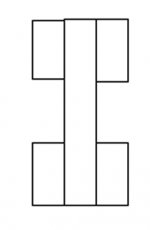
Sister in 2x4s on the sides, not underneath. I'm thinking (past midnight) Spax 5" structural screws every 12" and Weldwood Marine Resorcinol Glue to bond everything. Or is it past my bedtime?
 

Attachments

  • I-wood.jpg
    I-wood.jpg
    9.6 KB · Views: 14
Last edited:
To avoid these ads, REGISTER NOW!

Daedalus

Well-known member
Joined
Sep 28, 2009
Messages
5,949
There's always some fool resurrecting a 2year old old thread........

OK engineers, is there any benefit to this?

I've got 2x10 joists over my bi-level home's kitchen that I would like to reinforce for tile when I replace the old subfloor. I've scouted it out by "venting" some of the floor so I could use my Snap-On fiber scope to see what's in there first. I've got copper pipes, a gas pipe and electrical feeds running through the center of the joists. That would be a LOT of work to pull all that back so I could sister in additional 2x10s. Its doable, but work!

So I came across this thread and what about this? Would it do anything?

Sister in 2x4s on the sides, not underneath. I'm thinking (past midnight) Spax 5" structural screws every 12" and Weldwood Marine Resorcinol Glue to bond everything. Or is it past my bedtime?
What span and spacing? 2x10 is pretty good stuff...can't imagine new tile will break the bank on dead loading.
 

KCarGuy

Well-known member
Joined
Feb 5, 2009
Messages
2,075
Location
50 miles outside Chicago, illinois
I still dont understand why people drill holes in a 2x?? Joist to run wires, or pipe through.
I can see running it between or under, like how my house is done.
I dont have any sagging in my house, and if I did, I would jack it up, sister plywood and another 2x?? to it for strength.
When I built my Garage, I ran the conduit a curtain way, so not to cut into any joist...and keeping the strength so I could load the upstairs without fear. (Loft)
But...I see it all the time....Just dont understand it.
 

snorky18

Well-known member
Joined
Oct 1, 2007
Messages
1,170
Location
Southeast Tennessee
There's always some fool resurrecting a 2year old old thread........

OK engineers, is there any benefit to this?

I've got 2x10 joists over my bi-level home's kitchen that I would like to reinforce for tile when I replace the old subfloor. I've scouted it out by "venting" some of the floor so I could use my Snap-On fiber scope to see what's in there first. I've got copper pipes, a gas pipe and electrical feeds running through the center of the joists. That would be a LOT of work to pull all that back so I could sister in additional 2x10s. Its doable, but work!

So I came across this thread and what about this? Would it do anything?

Sister in 2x4s on the sides, not underneath. I'm thinking (past midnight) Spax 5" structural screws every 12" and Weldwood Marine Resorcinol Glue to bond everything. Or is it past my bedtime?

The plan in general is a good one, and will add a lot of stiffness the to the 2x10 that is there as long as you have good contact and surface area for your glued surface areas. (As in, don't be stingy with it, especially around the perimeter of the 2x4.

In essesnce, you are building a beam, which is similar in shape to what most people call an I-beam. Larger amounts of material at the top and bottom (where there is more stress), and less material in the middle (where there is less stress).

I dont' know anything about the fancy glue that you mentioned. I personally like gorilla glue for this application b/c the foaming and expansion helps obtain a good bond even when the boards don't mate up perfectly (like if they are crowned).

In case no one has posted it yet, here is an excellent resource for determinig how stiff your existing 2x10 is:
http://www.johnbridge.com/vbulletin/deflecto.pl

When it says "Joist Length" what it really means is joist length between major supports. (For example, my living room floor sits on 16" I joists that are 30' long, but they are supported in the middle by doubled 2x12 sitting on piers in the crawl space, so for the calulator I would use 15' as my length).

You (and that calculator) won't be able to calc the deflection for your sistered joist, that requires a little more math and engineering background. If your 2x10 really is inadequate, post up the results of the calculator, and depending on how close you are, I can tell you how much you really need to do in terms of sistering.

Some unsolicted advice, I like overbuilding everything and having stiff floors as much (actually a lot more) than the next guy, but there's no reason to go nuts trying to go way over the required stiffness for your floor. (I say that to remind myself of the importance of that truth as much as I do to inform you of it :thumbup:)
 

snorky18

Well-known member
Joined
Oct 1, 2007
Messages
1,170
Location
Southeast Tennessee
I still dont understand why people drill holes in a 2x?? Joist to run wires, or pipe through.

Because it's generally much faster, cheaper, and easier to do it that way.

When I built my Garage, I ran the conduit a curtain way, so not to cut into any joist...and keeping the strength so I could load the upstairs without fear. (Loft)
But...I see it all the time....Just dont understand it.

If you're talking about drilling a reasonably small hole in the center of a resonably large joist, the effect of the hole on the strength of the beam is negligible. My joists came with prepunched knockouts for this exact purpose.

If you're worrying about this, you should spend more time worrying about your daily driver having 31.3 psi in the front left tire, and 31.4 psi in the right front tire. It really doesn't matter.

Now if you're talking about drilling a hole for 4"PVC to run through the center of a 2x6, the effect of the hole on the strength of the board is enorumous, especially if said 2x6 is being used as a joist and not a wall stud.
 

TooManyToys53

Active member
Joined
Mar 5, 2012
Messages
43
Location
Jersey Shore Not Seaside!
Thanks for the responses.

Snorky18,

I tend to overbuild everything, too. I lurk at Bridge’s forum for info in general and when I did Deflecto for my 14ft span 2x10s 16"oc it came up with 380, just above what is needed for ceramic and no where near what is needed for natural stone.

The tile that my wife likes is porcelain, but the pattern will require 10x10, 10x20 and 20x20 tiles. So it should be OK, but with that 20” tile and I like to prep for the next guy (who may use natural stone) I’d rather be on the stiff side. I’ll use Ditra for it’s uncoupling.

I do understand some engineering principals, although not an engineer. I got what the guy on Bridges’ site was doing right away and why I came up with building an I-beam for this situation. Although the amount of work is going to be about the same as pulling the wires, replacing the copper with Pex, and boring a hole in the exterior joist after removing siding so I can pull the gas line out of the house if doing a full sister treatment.

The reasons for pulling the subfloor are several. There is a crown across the room in both directions. My wife doesn’t notice it but I do, and it’s measured. There are squeaks, typical in every room of this house until I deck screw it down every 8” on joist, and at several points where I’ve “vented” to use the borescope the subfloor is 5/8”, under the recommended 3/4" for ceramics.

Once I start considering the deflection of the ply between the joists, the deflection of these joists, and the correction to flatness needed, I feel the need to go Neanderthal with a Sawzall and toe-kick saw.

I still need to take a closer look at the final heights to the wood floor this transitions to, as with this amount of work I’d like to have them end up level. This might give me the ability on the final build-up to double the floor ply as would be needed for natural stone per Ditra, but there is another consideration here too. If height ends up an issue I could drop down the upper reinforcement of the compression “flanges” by 1/2", 5/8", 3/4" and lay in plywood strips (faces perpendicular) for the stiffening needed, although I’d lose some of the joist stiffness I’m trying to gain, well unless that laid in ply could be counted as part of the equation.

BTW, the “2x4s” would be 2x12 DF #1 ripped down into threes, then left in the house for a month to equalize before being installed.

Resorcinol glues are actually old school with very good strength and very low stress creep properties. I’m not a Gorilla glue fan as I’m sensitive to isocyanides. Not Epoxies either due to the Bisphenol A. I also like hide glue but with a kitchen and the risk of a sink or dishwasher leak it won’t handle the wetness very well. And PVAs will creep over time as far as I know.

Clamping these tight is going to be tough for the bottom chords which is why I'm thinking of structural screws (like lags, but not lags) across the three members.

If you could check the full sistering values of 2x10s that would be helpful. Like I mentioned I don’t think there is any work savings here by the time I’m done. The problem with the 2x4 built up beams is unless I pull down the ceiling in the room below or open up the drywall between the kitchen and dining room (and not sure if that would get me there), the lower chords are going to be limited in length as I need to get them under the pipes and wires , although I’d plan any splices to sit about ¼ length of the total joist length, offset top to bottom and side to side as to minimize any stress risers.
 
Last edited:

snorky18

Well-known member
Joined
Oct 1, 2007
Messages
1,170
Location
Southeast Tennessee
You could, btw, "get by" without using structural screws, which are probably $$. The strength here comes from a good glue bond between all 5 pieces, the screws just hold it together so the glue can dry. Do note how important that good glue bond is though.

Assuming that your wood species and grade are the same (2x10 and 2x4) and everything is properly installed, i.e. you get good shear transfer from the 2x10 to the 2x4s:

For your 1.5”x9.25” joist, I get I=98.9 in^4
For your composite joist, I get I=293.9 in^4 (assuming 1.5”x3.5” on the sides)
So the composite joist you are suggesting is 2.97 times stiffer than a single 2x10 of the same material, and about 99% as stiff as three 2x10 joists sistered together. (Kcarguy - see how harmless it can be to remove material from the middle of a joist?)

Sparing you the calc, IIRC, deflection is a linear relationship that is inversely proportional to I, so you should see 2.97 times less deflection. Your previous deflection was L/380, you should now see L/1129, which is strong enough to be silly :thumbup:

Keep in mind that the actual deflection of the floor depends not just on the joists, but on the weakest link in the system. For example, if you built these super strong sistered joists then laid 3/8 plywood for your subfloor, while your joists would have very little deflection, your floor between the joists would obviously have a lot of deflection. Hence my advice not to overbuild too much; once you make one part stronger, you’re still only as strong as the next weakest link in the system.

Left unchecked, you’ll be putting in 18” tall wide flange steel beams on 12” centers and 2” thick steel plate for your floor. Then you'll be in here asking about what kind of Hilti Studs you can use to attach the plate to the beams. :bounce:
 

snorky18

Well-known member
Joined
Oct 1, 2007
Messages
1,170
Location
Southeast Tennessee
I meant to add, when I sistered our floor in our last house, I added glue, put wood up, then used clamps to ensure good firm contact, then put the screws in to hold it together. Technique here is essential.
 
Last edited:

TooManyToys53

Active member
Joined
Mar 5, 2012
Messages
43
Location
Jersey Shore Not Seaside!
There are times it's good to feel silly.

Thank you for doing that. :thumbup:

While you were, I was playing with a spreadsheet and the Deflecto numbers, although I had to come up with my own 8" OC values as Deflecto does not go that short, 10" min.

It's not sistering, but just throwing another joist in the center.

And yep understand the deflection between joists by the plywood, and the need to run the ply grain perpendicular as well as with proper thickness.

The "check" from me going too crazy is my wife, although she does allow some room before going "Can't you just build it like everyone else". Ya know, I don't happen to own any Hilti tools, yet.

And just to confirm, those values are with the 3.5" side of the 2x4 attached to the 2x10?
 

Attachments

  • Joist Graph.jpg
    Joist Graph.jpg
    92.3 KB · Views: 31
Last edited:

pitterpat

Well-known member
Joined
Jun 30, 2011
Messages
686
Location
Indianapolis
I ran across this topic on another forum & thought some of you might want to read it over for your own projects. One place it looks like it would help out in, is the garage ceiling. It might increase the ceiling joist strength so you could get an increased load capacity in attic storage.

Attaching a 2x4 to the bottom of an existing joist doesn't lose much headroom. It's also a great idea for the house too, one that is much easier & cheaper to install than sistering joists or using some other method. :thumbup:

http://www.johnbridge.com/vbulletin/showthread.php?t=54371

I've been a member of the John Bridge Forum for many years; from my experience with that forum if you are not dead on with your information they will nicely, chew you up and spit you out. I've met John several times and he is very knowledgeable and know sharp people. Great guy!
 

TooManyToys53

Active member
Joined
Mar 5, 2012
Messages
43
Location
Jersey Shore Not Seaside!
Snorky,

If I could trouble you once again for calc's, maybe more for conceptual thoughts.

In looking at the wooden I-Beam situation, the plywood subfloor panel is not taken into consideration. Given that it would be a stressed skin at the top of the beam, how would you expect the numbers to work out if 2x4's were not added to the top of the beams, just to the bottom, relying on the 3/4" plywood (screwed and glued) to act as part of the member?

Would the conceptual 3/4" x 16" wide section of plywood flange be equal to the addition of the 2x4s or close to it?
 
Last edited:

snorky18

Well-known member
Joined
Oct 1, 2007
Messages
1,170
Location
Southeast Tennessee
Being that I'm currently deprived of my computer software file I wrote to run the previous composite calcs, we'll talk in conceptual thoughts. :thumbup:

That section of plywood flange doesn't help that much compared to the 2x4 for a couple of reasons, even if you do screw and glue (which I do-more for reduced squeaking than strength).
A) The I value for a single rectangular objects is (base*height^3)/12, so it's the height (term that is cubed) that makes a big difference, and 3/4" height is pretty small.
B) Each fiber of wood can only take a certain amount of stress. The primary purpose of subfloor is to carry the load to the joists. So when you're "using up" it's strength for that primary purpose, it leaves less strength for it to lend to stiffening the underlying joists.

That being said, when you get into commercial construction and start laying steel deck over steel beams and pouring a concrete floor over the steel decking, you can in some cases/designs take credit for the additional strength the flooring adds. A few differences between that and your wooden subfloor though:
1) Concrete/steel composite "beams" are generally lot stronger than plywood of the same dimensions.
2) The steel decking is mechanically fastened to the steel beams in a manner that is strong enough to transfer load between the two. (Frequenly either Puddle welds or a whole lot of TEK screws).
3) The floor that you are taking credit for is a lot thicker than 3/4" (more like 4-6"), and remember that is the number that is cubed, so it makes a big difference.

Or another way to look at it: Believe you me, if there was a way that contractor's / builders could take credit for the strength of the subfloor and reduce the size of the underlying joists, reducing material costs, and increasing their profits, they would sure have tried it.
 

TooManyToys53

Active member
Joined
Mar 5, 2012
Messages
43
Location
Jersey Shore Not Seaside!
Thank you, thank you, thank you.

I saw it the same way but wanted a confirmation. You had it nailed by the second paragraph. Certainly did not want to give you more work.

I hope this thread in the future helps other people who are trying to stiffen up some joists.
 
OP
O

Old Moparz

Well-known member
Joined
Jan 21, 2005
Messages
1,171
Location
Newburgh, NY 12550
I had forgotten about this thread. :lol:

And with all my house projects, re-roofing, insulating, siding & more, I never got around to the floor fix to try this method out. :eyecrazy:


There's always some fool resurrecting a 2year old old thread........

OK engineers, is there any benefit to this?

I've got 2x10 joists under my bi-level home's kitchen that I would like to reinforce for tile when I replace the old subfloor. I've scouted it out by "venting" some of the floor so I could use my Snap-On borescope to see what's in there first. I've got copper pipes, a gas pipe and electrical feeds running through the center of the joists. That would be a LOT of work to pull all that back so I could sister in additional 2x10s. Its doable, but work!

So I came across this thread and what about this? Would it do anything?

Sister in 2x4s on the sides, not underneath. I'm thinking (past midnight) Spax 5" structural screws every 12" and Weldwood Marine Resorcinol Glue to bond everything. Or is it past my bedtime?


I think adding 4 pieces of wood to the existing joist will be overkill & way more work than you expect.
 

Steinmetz

Well-known member
Joined
Oct 11, 2012
Messages
2,274
Location
Washington State
I still dont understand why people drill holes in a 2x?? Joist to run wires, or pipe through.
I can see running it between or under, like how my house is done.
I dont have any sagging in my house, and if I did, I would jack it up, sister plywood and another 2x?? to it for strength.
When I built my Garage, I ran the conduit a curtain way, so not to cut into any joist...and keeping the strength so I could load the upstairs without fear. (Loft)
But...I see it all the time....Just dont understand it.

make sure the holes are near the neutral axis of the beam, and away from the end supports and you should be OK with transverse penetrations through beams.
 

theoldwizard1

Well-known member
Joined
Feb 22, 2011
Messages
43,072
Location
SE MI
I've done a lot of framing and this goes against everything I"ve ever been taught or read before.

It would help only in that it would provide resistance in TENSION for the bottom chord.

How well a 2by works when nailed onto a joist is another question.r

Sorry for jumping in late and this may have been already covered.

Both of the above are correct as is the original post. It is just that important details have been left out.

As rcayot and scott37300 have said simply nail a 2x4 to the bottom of a joist is not going to do much. What you have to understand is the basic theory of how an I beam works.

When a load is placed in the center of any beam, as the beam deflects, the top of the beam is in compression and the bottom of the beam is in tension (trying to stretch). If you can make just the top and bottom of a beam more resistant to this compression and tension then you would have more overall strength.

If you have a 2x10 and you NAIL AND GLUE a 2x4 flat to the bottom of the 2x10 BEFORE IT IS INSTALLED then you will have significantly increased the load capacity, even without doing anything to the top.

For a retrofit installation, I would thing you need to take all of the load off of the 2x10 and then nail and glue the 2x4 to the bottom. The glue needs to cure completely.

I will also say that if that glue bond ever breaks, there is a possibility that the 2x10 could fail catastrophically ?

Interesting footnote: The new "bottom" does not have to rest on the wall !
 
OP
O

Old Moparz

Well-known member
Joined
Jan 21, 2005
Messages
1,171
Location
Newburgh, NY 12550
Interesting footnote: The new "bottom" does not have to rest on the wall !


I don't recall the correct terminology, it's been 30 years since college, but it doesn't rest on the wall for the same reason the bottom of this steel truss joist doesn't. It's a part of the joist, but it's part of how it's ties together to form a system & not intended to be the bearing portion of it.
 

Attachments

  • Steel Truss Joist.jpg
    Steel Truss Joist.jpg
    8.7 KB · Views: 23

theoldwizard1

Well-known member
Joined
Feb 22, 2011
Messages
43,072
Location
SE MI
I don't recall the correct terminology, it's been 30 years since college, but it doesn't rest on the wall for the same reason the bottom of this steel truss joist doesn't. It's a part of the joist, but it's part of how it's ties together to form a system & not intended to be the bearing portion of it.

I think the correct terminology is "bottom chord".

Any beam (a general term for a horizontal load carrying member), be it solid (2x10), or made as a truss like the picture, works on the principles I described in my other post. The top cord is in compression, the bottom chord is in tension. The parts in the middle are there simple to permanently and continuously attach the top to the bottom.

You can put the bottom chord of an I-beam on the support wall, but then the top chord is much higher.
 

buening

Well-known member
Joined
Dec 17, 2007
Messages
1,338
Location
Decatur, IL
Correct oldwizard. The top chord bearing on the wall is easier since the flooring is typically close to the top of the basement wall. In order for the bottom chord to be utilized in bearing, you would have a bearing pocket further down the wall....which makes it a pain to form and construct.

If you look at how wood I-joists are constructed, they dado a groove in the top and bottom flanges and then glue the joint and place the web (which is chipboard/plywood) into the glued joint. By adding 2x members onto existing timber joists, its not as easy for the DIY person to dado every single 2x they plan on using for the bottom flange....thus the addition of nails to both hold the glue joint tight until the joint is cured, as well as provide a small benefit in stress transfer from the web to the flange. The benefit of the dado joint is it provides more surface area for the glue. Since the wood I-joists use a thin web, simply providing glue on the end would not be sufficient. Since this post is in regards to existing 2x joists, the glue surface area should be sufficient.

Regarding whether one can consider the flooring as part of the top flange, that is somewhat debatable. If you look at how a bridge is constructed, you have the concrete deck atop a steel beam which has metal studs protruding into the deck. This system acts as one. However, unless provisions are made when you build the subfloor to properly glue and screw the subfloor to the joists, then little benefit is added by the subfloor. I personally wouldn't account for any strength from the subfloor on my designs, but in reality they will help some depending on how its constructed.

Regarding Snorky's post about I values, yes the height does increase the I values quicker but if you are restricted on height then you must provide wider flanges to increase your I value (which in turn increases your strength and decreases your floor deflections). The wider flange also makes the beam stronger in the weak axis, or anotherwords if you overload a beam it will typically want to sway to the side and twist. A wider flange makes it more stable and more prone to deflect downwards instead of swaying. HTH
 

theoldwizard1

Well-known member
Joined
Feb 22, 2011
Messages
43,072
Location
SE MI
Thanks buening for some additional great information !

...By adding 2x members onto existing timber joists, its not as easy for the DIY person to dado every single 2x they plan on using for the bottom flange....thus the addition of nails to both hold the glue joint tight until the joint is cured, as well as provide a small benefit in stress transfer from the web to the flange. The benefit of the dado joint is it provides more surface area for the glue. Since the wood I-joists use a thin web, simply providing glue on the end would not be sufficient. Since this post is in regards to existing 2x joists, the glue surface area should be sufficient.

Just emphasizing what I had said before, for all of you DIYers who want to try is on a retrofit installation.

  1. The load needs to be removed so that the bottom of the existing joist is no longer in tension. This would include partition walls, cabinetry, appliances, furniture, etc. until the glue is fully cured.
  2. The new bottom chord needs to be continuous ! Any joint/slice will be under a lot of tension and likely fail
 
To avoid these ads, REGISTER NOW!
Top Bottom