My parents have a 200amp main panel and there used to be a 100amp wire feeding the subpanel in the garage but they renovated the kitchen and the electrician suggested to have a subpanel installed in the house as the main panel was full, so I looked at his work and he took the 100amp cable going to the garage and cut it and used it as the feeder for the 100amp kitchen subpanel and then added a 40amp double pole breaker to feed the garage. Everything was fine in the summer but when winter came around and electric heat kicked in, the 40 amp breaker started to pop sometimes. So I was wondering, would there be a way to restore 100amp service to the garage? I guess a 100 amp subpanel cannot feed another 100 amp subpanel? Unless some circuits were moved from the main panel to the subpanel to make room, then we could lower the kitchen subpanel to 60amp, and use the 100 amp just for the garage if we run a new wire? I am not sure what total load is allowed to be.

You are using an out of date browser. It may not display this or other websites correctly.
You should upgrade or use an alternative browser.
You should upgrade or use an alternative browser.
Subpanel feeding another subpanel how much amperage is allowed?
- Thread starter johnnyh55
- Start date
Innovate1
Well-known member
I don't think there is any rule that a 100A panel can't feed a 100A panel but it doesn't make much sense in most cases as that would mean there isn't any excess for loads on the first one. What are the actual loads on the kitchen panel and the garage panel? How far apart are the panels - is it easy to run a cable from the main panel to the garage? Panels are cheap compared to labor to move them so I wouldn't be trying to save money by moving the 100A panel. You might change the size of the breaker feeding it depending on how you change things.
dave*99
Well-known member
There are a number of options. I take it the main and sub panels are next to each other in the house and there is another sub in the garage fed from the newly installed sub in the house.My parents have a 200amp main panel and there used to be a 100amp wire feeding the subpanel in the garage but they renovated the kitchen and the electrician suggested to have a subpanel installed in the house as the main panel was full, so I looked at his work and he took the 100amp cable going to the garage and cut it and used it as the feeder for the 100amp kitchen subpanel and then added a 40amp double pole breaker to feed the garage. Everything was fine in the summer but when winter came around and electric heat kicked in, the 40 amp breaker started to pop sometimes. So I was wondering, would there be a way to restore 100amp service to the garage? I guess a 100 amp subpanel cannot feed another 100 amp subpanel? Unless some circuits were moved from the main panel to the subpanel to make room, then we could lower the kitchen subpanel to 60amp, and use the 100 amp just for the garage if we run a new wire? I am not sure what total load is allowed to be.
How long ago was this done? Is there an option to call the electrician back and have him fix it? Dropping your garage feed to 40A without good justification seems a bit off.
What is the load in garage and the new subpanel in the house? The fix may be as simple as upsizing the 40A breaker feeding the garage.
Perhaps the electrician only had a 40A breaker on the truck and intended to come back and change it out??? I never get that lucky...
Panels typically have a rating label for how large a circuit they can subfeed, or a max breaker size per bus stab. It is specific to a panel, not universal.
Amongst some of my panels, my 200A can take up to 125A, and the 100A can take up to 70A.
Amongst some of my panels, my 200A can take up to 125A, and the 100A can take up to 70A.
This...What is the load in garage and the new subpanel in the house?
Zeke
Well-known member
Yeah, what's in the new kitchen is the deciding factor. It could be all electric and close to capacity, theoretically. I never seem to run the kitchen hard except for a holiday meal. That would not be a good time to be out in the garage with heat, air compressor. and a table saw.
Otherwise, can't he bump up the breaker to the garage assuming when he said the electrician "cut" the original feed but didn't downsize it anywhere?
Anywhere being the key word. There could be a JB somewhere that the 40 amp feeds with a #8 wire. IDT that will fly.
Otherwise, can't he bump up the breaker to the garage assuming when he said the electrician "cut" the original feed but didn't downsize it anywhere?
Anywhere being the key word. There could be a JB somewhere that the 40 amp feeds with a #8 wire. IDT that will fly.
wyliesdiesels
Well-known member
you most definitely can feed a sub from a sub.
as others have pointed out, we really need to know the loads on each panel and a proper load calc shouldve been done
as others have pointed out, we really need to know the loads on each panel and a proper load calc shouldve been done
How do you do the load calc? The 20amp receptacles in the kitchen are all hooked to this subpanel and the electric kitchen range is connected there as well and a dishwasher, fridge and the houses electric hot water tank.you most definitely can feed a sub from a sub.
as others have pointed out, we really need to know the loads on each panel and a proper load calc shouldve been done
dave*99
Well-known member
Here is one way.How do you do the load calc? The 20amp receptacles in the kitchen are all hooked to this subpanel and the electric kitchen range is connected there as well and a dishwasher, fridge and the houses electric hot water tank.
dave*99
Well-known member
What about the electric heat in the garage? Total Watts.....How do you do the load calc? The 20amp receptacles in the kitchen are all hooked to this subpanel and the electric kitchen range is connected there as well and a dishwasher, fridge and the houses electric hot water tank.
alfredeneuman
Well-known member
Unless the heater has a cord and plugs in, Wattage X 1.25 (125%)What about the electric heat in the garage? Total Watts.....
Is the old wire still going to to the garage that previously supported the 100 amp panel? If so you MAY be able to just replace the 40 amp breaker with something larger. This all depends on the wire size that is currently going from the 40 amp breaker to the garage. Just a swag, your electrician had a 40 amp breaker avaiable so that is what he used.
lg
no neat sig line
lg
no neat sig line
Yes it did, it was just that wire that was cut and used as the feeder for the new subpanel and then and the remaining slack going to the garage was connected to the 40a breaker he added.Is the old wire still going to to the garage that previously supported the 100 amp panel? If so you MAY be able to just replace the 40 amp breaker with something larger. This all depends on the wire size that is currently going from the 40 amp breaker to the garage. Just a swag, your electrician had a 40 amp breaker avaiable so that is what he used.
lg
no neat sig line
Innovate1
Well-known member
Sounds like the wire feed to the garage panel is good for 100A and only fed with 40. If so you could just replace that 40 with a larger breaker. 100A may be bigger than needed, not as available, and more expensive so could go for anything between 40 and 100. Might be limited on size by the panel ratings so look that up before you get a new breaker. An easy fix!
dave*99
Well-known member
I'm sticking with my statement in post #3.The fix may be as simple as upsizing the 40A breaker feeding the garage.
Perhaps the electrician only had a 40A breaker on the truck and intended to come back and change it out??? I never get that lucky...
ok so I was over at my parents yesterday and looked how everything is installed, so the feeder comes into to the new subpanel supplying 100a, then there is all the loads in the subpanel and a 40a breaker for the garage and then a wire that leaves the side of the panel and goes to a junction box right under the subpanel and that wire is connected to the 100a wire going to the garage(the wire that was cut to supply the subpanel). So the electrician probably only had 40a breaker and 8 AWG wire when he did this 8 years ago so that's why he did it that way. My parents didn't really notice as they didn't really use the garage as their workshop back then.
So to solve it, I bought a 70a double pole breaker, and I need 4 AWG wire to connect the breaker to the other wires in the junction box but I am wondering what to use to join the 4 AWG wire with the 100a wire going to the garage, I have 2 hots and 1 neutral and the ground. I seen you can use split-bolts but I was wondering is there something better? I seen there polaris connectors or different from Burndy. Any suggestions? The load in the subpanel are 40a for electric kitchen range, 40a for garage, 30a for water heater, 15a double pole for 3000w electric heat in the entrance, and all other single pole are receptacles on the kitchen counter and kitchen island.
Here are some pictures
So to solve it, I bought a 70a double pole breaker, and I need 4 AWG wire to connect the breaker to the other wires in the junction box but I am wondering what to use to join the 4 AWG wire with the 100a wire going to the garage, I have 2 hots and 1 neutral and the ground. I seen you can use split-bolts but I was wondering is there something better? I seen there polaris connectors or different from Burndy. Any suggestions? The load in the subpanel are 40a for electric kitchen range, 40a for garage, 30a for water heater, 15a double pole for 3000w electric heat in the entrance, and all other single pole are receptacles on the kitchen counter and kitchen island.
Here are some pictures
Attachments


Zeke
Well-known member
Just as I suspected. I can't advise on the make up. Maybe there's a terminal block you can buy. Stay tuned for better info.
sparky 1971
Well-known member
Since you probably don't have access to a large enough crimper, these would work. I've used them a few times in places I couldn't get my crimper to fit or on a job and realized too late that I didn't have any crimp sleeves. Any box store should carry them.ok so I was over at my parents yesterday and looked how everything is installed, so the feeder comes into to the new subpanel supplying 100a, then there is all the loads in the subpanel and a 40a breaker for the garage and then a wire that leaves the side of the panel and goes to a junction box right under the subpanel and that wire is connected to the 100a wire going to the garage(the wire that was cut to supply the subpanel). So the electrician probably only had 40a breaker and 8 AWG wire when he did this 8 years ago so that's why he did it that way. My parents didn't really notice as they didn't really use the garage as their workshop back then.
So to solve it, I bought a 70a double pole breaker, and I need 4 AWG wire to connect the breaker to the other wires in the junction box but I am wondering what to use to join the 4 AWG wire with the 100a wire going to the garage, I have 2 hots and 1 neutral and the ground. I seen you can use split-bolts but I was wondering is there something better? I seen there polaris connectors or different from Burndy. Any suggestions? The load in the subpanel are 40a for electric kitchen range, 40a for garage, 30a for water heater, 15a double pole for 3000w electric heat in the entrance, and all other single pole are receptacles on the kitchen counter and kitchen island.
Here are some pictures
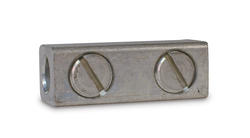
Gardner Bender 14-2 AWG Aluminum Splicer Reducer - 2 Count
The Gardner Bender 14-2 AWG Aluminum Splicer-Reducer is designed to splice similar-gauge conductors or reduce the gauge from a larger wire diameter to a smaller one. This pack includes two splicer reducers.
 www.menards.com
So with those, would you use the same process as the split bolts, you make the connection then you wrap them in that special super elastic rubber tape and then you finish with regular black electrical tape over it?Since you probably don't have access to a large enough crimper, these would work. I've used them a few times in places I couldn't get my crimper to fit or on a job and realized too late that I didn't have any crimp sleeves. Any box store should carry them.
Gardner Bender 14-2 AWG Aluminum Splicer Reducer - 2 Count
The Gardner Bender 14-2 AWG Aluminum Splicer-Reducer is designed to splice similar-gauge conductors or reduce the gauge from a larger wire diameter to a smaller one. This pack includes two splicer reducers.
sparky 1971
Well-known member
Correct. I use rubber splicers tape first then Scotch 33 on the outside.So with those, would you use the same process as the split bolts, you make the connection then you wrap them in that special super elastic rubber tape and then you finish with regular black electrical tape over it?
BreeStephany
ALLIANCE MEMBER
Provided there is adequate space in the junction box, I would recommend insulated polaris splices for splicing the feeders to the garage panel.I seen you can use split-bolts but I was wondering is there something better? I seen there polaris connectors or different from Burndy. Any suggestions?
Here are some pictures
Get polaris splices rated for the size of the large conductor and ensure that they are also rated for the 4ga conductor.
I've seen a lot of incorrect makeup of subpanels in the past so when you make this up, ensure that the neutrals are on one their own neutral bus that is NOT bonded to ground within the sub panels and ensure that there is a grounding conductor to the subpanels and that it is connected a ground bar in each subpanel and also make sure it is bonded to the metal junction box as well. It is likely done correctly, but it never hurts to double check the work that was previously done.
Incorrect grounding / bonding in panel can cause a lot of issues with fault currents and neutral currents finding an alternative path to ground through plumbing, metal structural members, etc. (Long story short I once saw fault current from a short on a 240V circuit use the ceiling grid in a bathroom as a path to ground because the grid was touching duct work and copper plumbing and had found a less resistive path to ground through the grid because there was not a grounding conductor between the two subpanels... needless to say, I was called in because the property owner saw their ceiling grid intermittently glowing and sparking)
dave*99
Well-known member
Free hot water.

Zeke
Well-known member
^^^^wow.
acer66
Well-known member
That is the position light of your water heater.