To avoid these ads, REGISTER NOW!

Super Efficient HRV retrofit with smoke filter for $300?

OP
D

Denwood

Well-known member
Joined
Sep 22, 2014
Messages
4,224
Location
Thunder Bay, Ontario, Canada
@PoorUB , yes, I've retrofitted an older HRV by removing the single inefficient internal fan (about 350 watts) and replacing with two external ED fans (about 30 watts typical) which can be automated for speed control etc. Typically the outside air is pretty good, but in Spring heavy with pollen, and at times in the summer (as we're quite North) wildfire smoke is an issue for air quality. Often the smoke issue is not wildfires, but urban back yard camp fires. I would not call MERV 13 "extreme" filtration..HEPA is more in that category. There are more and more studies out there with regard to PM2.5 as the particles are small enough to bypass membranes in your lungs and end up in your bloodstream, so again, it's good to aware. I've figured that a larger carbon canister outside on the intake (only in play when needed) makes more sense than trying to stuff smaller units inside the HRV casing.

Radon is an issue for just about everyone and in fact passive radon venting is now code for new construction in many parts of Canada.

Overall, we've gone from about 30 CFM max (with a small Panasonic ERV that was 90% in exhaust mode only in cold weather) to a system that varies from 50 to 90 CFM, and provides make up air for our kitchen exhaust. If you toss all the automation and sensors etc., the more important indicator is that wife has not complained once about the house being "stuffy", or mentioned odours when coming in from outside etc. We have a solid 7 months where temps are well below below 20 C, so windows are not open a lot.

Yes, we could just open windows, but then we'd take a signification hit on energy use. From the efficiency perspective, our 100+ year old home (1800 sq/ft 2 story with 900 sq/ft basement) ranks in the 94th percentile when compared to similar homes in our area. We use NG for on demand water heating and central heating.

Untitled.jpg
 
To avoid these ads, REGISTER NOW!

PoorUB

Well-known member
Joined
Mar 29, 2021
Messages
11,730
Location
Fargo, ND
yes, I've retrofitted an older HRV by removing the single inefficient internal fan (about 350 watts) and replacing with two external ED fans (about 30 watts typical) which can be automated for speed control etc. Typically the outside air is pretty good, but in Spring heavy with pollen, and at times in the summer (as we're quite North) wildfire smoke is an issue for air quality. Often the smoke issue is not wildfires, but urban back yard camp fires. I would not call MERV 13 "extreme" filtration..HEPA is more in that category. There are more and more studies out there with regard to PM2.5 as the particles are small enough to bypass membranes in your lungs and end up in your bloodstream, so again, it's good to aware. I've figured that a larger carbon canister outside on the intake (only in play when needed) makes more sense than trying to stuff smaller units inside the HRV casing.
Thanks, that is what I suspected.

As for extreme filtration, MERV 13 is extreme compared to the 1/8" foam pads many units have!
 

u3b3rg33k

Well-known member
Joined
Dec 18, 2017
Messages
4,051
@Denwood I almost wish you sold this (maybe a bit tidier). I'm looking at the Broan (also carrier branded for more $) B160E75RS, which is a dual ECM self-balancing unit (perfect for DIY rubes), so you KNOW it's got internal 0-10V fans, but does it have a way to wire up a 0-10V input? OF COURSE NOT!

this is all I want. an off-the-shelf home sized ERV with 0-10V input and a dry contact for max speed, so I can wire it to demand for bathroom ventilation and a CO2 sensor so it'll step up the ventilation as needed. using CO2 and humidity should nearly remove the need for an unoccupied shutdown - it'll ventilate until there's no CO2 to care about and drop to off/minimum.

iO HVAC Controls sells a thermostat-style wall control that has 0-10V output and a dry contact with user configurable setpoints for humidity, temp, and/or CO2

why can't I buy this? will you sell it to me?
 
OP
D

Denwood

Well-known member
Joined
Sep 22, 2014
Messages
4,224
Location
Thunder Bay, Ontario, Canada
@u3b3rg33k, I was thinking the same thing actually. A simply core package (ERV or HRV) and fans integrated. My business days are done though :) I built this setup pretty much as there was no way to buy it, so you're bang on in that department. I've been posting here and over at the Hubitat forum on 0-10V control so the next person would have a lot easier time sorting a similar setup. Having developed, manufactured and sold products worldwide in my previous life, I completely understand that manufacturers want a system that is simple, bulletproof and could be configured by someone with a pretty basic skill set. That said, I am 100% confident that you will see what I've built here offered at some point in the near future as companies like AirThings are increasingly partnering up with HVAC companies to build smarter HVAC systems.

UltimateAir actually did make a unit with the 0-10V speed control option, the UltimateAir® 200DX RecoupAerator. See page 33 of this manual: https://d3pcsg2wjq9izr.cloudfront.net/files/41746/download/712491/50.pdf
This could not unbalance the unit, but it did allow setting anywhere from 36 to 195 CFM in 15 steps so would be an ideal unit to integrate to automation, or external sensors as you'd like.

I'm pretty sure you could find what you want in the higher end commercial products. Broan's AI system at some point should have external sensors for humidity and Co2 to control that unit...but again, no provision for some makeup air.

On another note, wildfires are all over western Canada, which means that we'll potentially see wildfire smoke showing up here at some point soon. Time to fire up that external charcoal filter setup...
 
Last edited:

u3b3rg33k

Well-known member
Joined
Dec 18, 2017
Messages
4,051
I'm aware of that unit, but no amount of money will buy me one. the Zehnder I was looking at can do CO2 based ramping, but I think it was around $3.5k vs $1.5k for the broan.
 
OP
D

Denwood

Well-known member
Joined
Sep 22, 2014
Messages
4,224
Location
Thunder Bay, Ontario, Canada
We had our first episode of wildfire smoke (Alberta wildfires, 2000 kms away!!) so I have a few observations on smoke mitigation as it pertains to the air exchanger (HRV). Outside the air was hazy and the smoke smell obvious.

1. MERV13 filtration on the fresh air intake reduced PM2.5 particulate from a high outside of 20 ug/m3 to 9 ug/m3 inside. Our normal inside PM2.5 numbers are ~1.5 ug/m3.

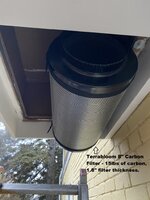
2. Using a Terrabloom carbon canister (8" duct) works extremely well to take care of any VOCs, so smoke smell inside was about zero. This is easiest to deploy attached via an 8" duct collar installed over your HRV/ERV intake, outside. You just need to keep rain off the carbon canister. I'll post pics once I've set up a permanent outside housing for the setup...the carbon canister will only be in play when needed.
 

u3b3rg33k

Well-known member
Joined
Dec 18, 2017
Messages
4,051
Does the carbon canister 'exhaust' its smoke capture ability if you just leave it on all the time?

I ask because... reasons. I'm (foolishly) considering doing a whole house economizer/DCV setup, and while the main filter (merv13) is both large enough and good enough to filter pollen, etc, I wouldn't want to be able to "smell" when it's pulling OA, should a neighbor be string trimming with a 2 smoke, or has a backyard fire going, etc.

a v-box filter with 2" 24x24" should provide enough airflow, and these exist:
Screen Shot 2023-05-19 at 13.19.02.png

but they're rather expensive, and if their VOC capture life is short, it's not viable.


I'm more seriously thinking of doing this (sans odor filter) on my garage with a separate thermostat and dual enthalpy controller (so I don't bring in humidity), just with dampers and a fan. tight climate control is less important in a garage, but having it not be 90 out there at night on the cheap would be nice.
 
OP
D

Denwood

Well-known member
Joined
Sep 22, 2014
Messages
4,224
Location
Thunder Bay, Ontario, Canada
The 8” duct Terra-Bloom carbon canister will eventually be reduced in effectiveness based on the air flow through it, and how contaminated that air is. Using it only when necessary, and only at 50-90 CFM (they rate it up to 750 CFM), I figure 3-5 years. You can refill them, but it will take 15 lbs of activated charcoal. The MERV 13 filter on my setup does not address smoke or skunk spray at all..but the larger carbon filter 100% does. It’s 1.8” thick (carbon layer) and 90 CFM gives the air enough time in contact with the carbon layer to be very effective.

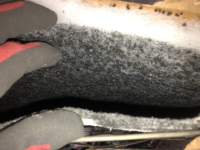
The carbon impregnated media filters are a waste of money based on my testing swapping in 14x14x4 carbon filters into my setup. The commercial carbon VOC reduction systems I’ve researched mostly use bulk activated carbon in 1-2” thick layers. The Terrabloom 8” filter has the right amount of carbon, (15lbs, 1.8” thick) and surface area to provide relatively low resistance at 90 CFM, and excellent performance on the smell/VOC test too.
 
Last edited:

u3b3rg33k

Well-known member
Joined
Dec 18, 2017
Messages
4,051
The 8” duct Terra-Bloom carbon canister will eventually be reduced in effectiveness based on the air flow through it, and how contaminated that air is. Using it only when necessary, and only at 50-90 CFM (they rate it up to 750 CFM), I figure 3-5 years. You can refill them, but it will take 15 lbs of activated charcoal. The MERV 13 filter on my setup does not address smoke or skunk spray at all..but the larger carbon filter 100% does. It’s 1.8” thick (carbon layer) and 90 CFM gives the air enough time in contact with the carbon layer to be very effective.

The carbon impregnated media filters are a waste of money based on my testing swapping in 14x14x4 carbon filters into my setup. The commercial carbon VOC reduction systems I’ve researched mostly use bulk activated carbon in 1-2” thick layers. The Terrabloom 8” filter has the right amount of carbon, (15lbs, 1.8” thick) and surface area to provide relatively low resistance at 90 CFM, and excellent performance on the smell/VOC test too.
15 lbs (6.8kg) is a lot more than the 1.2kg that's in the panel filters. the "standard" carbon filters are .04kg each by comparison. 30x difference. The manual for the TB filters says 0.5" static, but no curve is provided. that's enough I'd need a booster fan (and probably controls for it) to negate the static. a curve would be nice. I'm not familiar enough to know what two filters in parallel would do (cut in half?), or oversized ones would be.
 
Last edited:
OP
D

Denwood

Well-known member
Joined
Sep 22, 2014
Messages
4,224
Location
Thunder Bay, Ontario, Canada
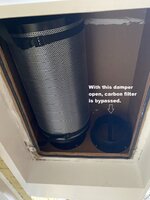
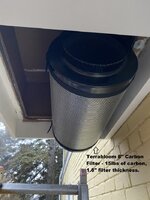
Here's a trial setup of the carbon filter on the outside of the house. For now, I just removed the 4" hood and connected things up with 4" duct. This will be replaced shortly by 6" ducting. My intention is to build a box to shield the filter from weather and incorporate a 16x25 filter at the base as well so I can use the intake system minus the carbon filter when not needed. Right now the carbon filter is wearing a sock provided by Terrabloom to filter out dust etc. before it gets to the activated carbon filter. I removed the HRV internal filter (on fresh air supply only) and tested the flow rates to find that at the HRV's 50, 65, 75 and 95 CFM profiles, flow has actually increased about 5%. The large carbon filter and sock is less restrictive than the internal (small) HRV filter.

This corner of the house is hidden from view by a tall hedge, so the aesthetic is not an issue.

IMG_9189.JPG
 
OP
D

Denwood

Well-known member
Joined
Sep 22, 2014
Messages
4,224
Location
Thunder Bay, Ontario, Canada
I finally got around to redoing my wall exhaust/intake for 6" diameter hoods, and started work on the external filter box that will hold the carbon canister, and a 16x24x4" prefilter. Going from 4" to 6" ducting on the building penetrations picked up about 20 CFM on the intake so I was able to dial back the ECM fan settings. In other words, increasing duct sizes allowed me to reduce power use by the fans by about 10% for a given CFM, but also gave me about 20 CFM more max flow on the fresh air intake.

The other update was to increase the HRV exhaust (stale air) EC fan from 4" to 6" along with 6" ducting to pull out stale air from the house. Now both intake and exhaust fans are 6" AC Infinity Cloudline EC fans. These are quiet, crazy efficient and cost all of $99 USD each.

I've updated the automation to include 6 balanced CFM profiles, from 50 to 110 CFM. Previously I could only get to 90 CFM due to the 4" wall hoods.

1697655875553.png

There are now air quality sensors on each floor. Ventilation rates are set by average CO2 across all the sensors, but high radon levels, or high VOC levels will overide the C02 settings. If the kitchen exhaust fan (again, inline EC) fires up with the induction cook top, then the HRV goes into "make up air mode" to deliver about 100 CFM, offsetting the kitchen exhaust. I've also added a bit of code so that the kitchen exhaust fan itself changes speed based on power use by the induction cook top. This works quite well and keeps the kitchen exhaust fan at the lowest/quietest setting, ramping up as more pots/higher power levels are in use.

Below are the air quality sensors controlling everything:

1697656293399.png
 

u3b3rg33k

Well-known member
Joined
Dec 18, 2017
Messages
4,051
Sweet!

btw I just saw there's a new automatically activating range hood (with NG). apparently burning methane emits a fair amount of UV, so it watches the cooktop and activates on UV light, then uses thermals to adjust fan speed.

seems like it'd be easy to trigger it with a UV LED driven by whatever you wanted.
 
OP
D

Denwood

Well-known member
Joined
Sep 22, 2014
Messages
4,224
Location
Thunder Bay, Ontario, Canada
Sweet!

btw I just saw there's a new automatically activating range hood (with NG). apparently burning methane emits a fair amount of UV, so it watches the cooktop and activates on UV light, then uses thermals to adjust fan speed.

seems like it'd be easy to trigger it with a UV LED driven by whatever you wanted.

With all the attention on air quality these days, I’d expect more and more of these products to launch in the next few years. Our old “dumb” exhaust hood was nearly never used as the girls simply did not switch it on. Now, it just works as it should, ramps to use, and turns off 3 minutes after the induction stove power use drops below 5 watts. Makeup air via the HRV is a bonus, and pretty trivial once you are controlling the stale/fresh EC fans.
 
OP
D

Denwood

Well-known member
Joined
Sep 22, 2014
Messages
4,224
Location
Thunder Bay, Ontario, Canada
Working on some updates to the house air exchange system, specifically removing the internal HRV (restrictive filters) for external filters. This is the setup on the stale air intake. The intake filter system will go on the outside of the house to manage carbon filtration as well during wild fire smoke events.

Pulling the HRV internal stale air filter (approx 9x14) and replacing with an external 16x25x1 (Filtrete MPR 1000/MERV11) and filter box increased air flow from the previous balanced value of 110 CFM to 142 CFM. In other words, with the stale fan running at the same power level, we picked up 32 CFM by switching the small filter for the larger one. The increase is less at lower CFMs, measuring about 10 CFM increase when the unit is running at the lowest current flow profile at 50 CFM. This makes sense given a typical fan's resistance/flow curve. Once I finish the exterior filtration box (with a 16x25x4 MPR1000) and re-balance the system for the 50,60,75,90,100 and 110 CFM profiles I should be able to reduce power use by the fans by up to 30%. That is significant considering the unit is running pretty much 24/7.

Filter box frame:

48443_1702760770_IMG_9909.JPG-700x525.jpg


Filter frame for 16x25x1 air return, purchased from these guys: https://hvacpremium.com/products/16...amped-face-white-outer-dimensions-185w-x-275h

48443_1702760798_IMG_9912.JPG-rotated-700x933.jpg


48443_1702760786_IMG_9911.JPG-rotated-700x933.jpg


48443_1702760778_IMG_9910.JPG-700x525.jpg


Mounted in the basement stair well where stale air is pulled out of the house via the HRV:

48443_1703016978_IMG_9922.JPG-rotated-700x933.jpg


Internal filter (now removed) vs 16x25x1 filter:

48443_1703016985_IMG_9923.JPEG-700x434.jpg
 

u3b3rg33k

Well-known member
Joined
Dec 18, 2017
Messages
4,051
Can you talk a bit about the heating power of the HRV vs tempering heat? you mentioned it in another thread that I didn't want to derail.
 
OP
D

Denwood

Well-known member
Joined
Sep 22, 2014
Messages
4,224
Location
Thunder Bay, Ontario, Canada
Can you talk a bit about the heating power of the HRV vs tempering heat? you mentioned it in another thread that I didn't want to derail.

Sure. If you look at this pic, you can see that 29.3 F air has been heated to 60.8 F …and this is before it hits the PTC inline heaters to bring the air closer to the target set at 65 F. The system is calling for fairly low air exchange right now at 50 CFM. So 50 CFM heated 30 F works out to 499 watts of heat provided by the outgoing air’s heat energy, exchanged in the core. The sweet spot seems to happen around 75 CFM with outside temps just below freezing…recovered heat jumps up to 650 watts or so.

IMG_9924.png

The automation system dials up power to the two PTC heaters based on an equation that takes the current CFM and temp difference into account and spits out a dimmer setting. I measured actual power use by the heaters at different dimmer switch settings to figure out that equation To take the 60.8 F air at 50 CFM and bring it up to ~65 F requires about 77 watts, and the system is showing a calculated 82 watts…pretty close. The two heaters are pretty close to 100% efficient, so we can calculate the power being used pretty accurately.

IMG_9925.png

Hope that makes sense?
 
Last edited:

u3b3rg33k

Well-known member
Joined
Dec 18, 2017
Messages
4,051
That's great. 500W seems like a crazy amount of heat for the airflow when you don't think about it hard.

I'm wondering how much heat energy I'll "save" by going ERV, significant (steam) humidifier loads here in the winter.
 
OP
D

Denwood

Well-known member
Joined
Sep 22, 2014
Messages
4,224
Location
Thunder Bay, Ontario, Canada
That's great. 500W seems like a crazy amount of heat for the airflow when you don't think about it hard.

I'm wondering how much heat energy I'll "save" by going ERV, significant (steam) humidifier loads here in the winter.

When you look at efficiency vs watts, you really see the reason to go to a more efficient core. This usually directly equates to size of the core for efficiency. I’d really like to move to an ERV core but the one that I’d like to get (from RenewAire EV premium L) is nearly 22” deep so won’t fit in the space I have available. Their ERV using that core is rated at 88% efficient at 60 CFM.

As far as savings on steam humidification, just based on random tests when I was capturing condensate, maybe 2-3 litres of water per day would be recovered by an ERV, assuming around 80 CFM, family of four, and very dry winter air. Lots of variables there…but recovery would even higher if you’re running higher ventilation rates.
 

u3b3rg33k

Well-known member
Joined
Dec 18, 2017
Messages
4,051
When you look at efficiency vs watts, you really see the reason to go to a more efficient core. This usually directly equates to size of the core for efficiency. I’d really like to move to an ERV core but the one that I’d like to get (from RenewAire EV premium L) is nearly 22” deep so won’t fit in the space I have available. Their ERV using that core is rated at 88% efficient at 60 CFM.

As far as savings on steam humidification, just based on random tests when I was capturing condensate, maybe 2-3 litres of water per day would be recovered by an ERV, assuming around 80 CFM, family of four, and very dry winter air. Lots of variables there…but recovery would even higher if you’re running higher ventilation rates.
an ERV core doesn't require condensation to move moisture either, so the rate should be a lot higher.

most of the ones I'm looking at have two options, a 2/3% and a 75% efficient core. (the Zehnder I'd like is probably out of my budget). I do want to try to find a source for their style of stud-bay friendly flex tubing. it seems pretty common in the EU/UK but I've not seen it in any supplyhouses here.
 
OP
D

Denwood

Well-known member
Joined
Sep 22, 2014
Messages
4,224
Location
Thunder Bay, Ontario, Canada
@u3b3rg33k , take a good look at the RenewAire EV Premium L. It is near the top of the heap with regard to efficiency, 88%@ 60 CFM, using only 21 watts to do this. It's good to 278 CFM at .4" w.g. It has ECM motors, and quite a large core...which is why it is so efficient. It's pretty simple and the price is decent too. You can see them all rated here: https://www.hvi.org/hvi-certified-products-directory/section-iii-hrv-erv-directory-listing/

If I was looking to buy one, I'd get that one based on the price to performance ratio. I will likely end up converting my setup over to use their core at some point but it's not cheap at $790 USD.
 
To avoid these ads, REGISTER NOW!
OP
D

Denwood

Well-known member
Joined
Sep 22, 2014
Messages
4,224
Location
Thunder Bay, Ontario, Canada
I ran a few tests today in the warmer weather. I checked supply (fresh) air flow over the core with a few different filter configurations, at a reference of 110 CFM. The HRV interior filters are completely removed as they are quite restrictive.

1. Removing the exterior MERV11 pre-filter entirely had less than 5% effect on flow.
2. Toggling the Carbon canister "on" and adding the MERV 11 outside pre-filter back into system had very little impact on flow. I'd say less than 10 CFM (less than .01"w.g), so about 7-8%.
3. Removing the warm side supply filter (14x14x4, MERV13) had almost zero impact.
4. The biggest single pressure hit (other then the core itself) is the PTC heater array. If I leave the interior filter door open (bypassing the heaters) flow increases from 110 to 130 CFM. This is with a 6" ECM fan (AC Infinity CLOUDLINE A6) fan running at 75% speed.

It would be safe to conclude that if you add an outside/exterior filter box like this using a 25x16x4 pre-filter and the Terrabloom 8" carbon canister (and remove the OEM HRV/ERV supply side filter) you would see very little pressure drop at 110CFM, less than .01"w.c.

The system rarely runs at 110 CFM as CO2/VOC/Radon levels are kept under thresholds with the system running at 60 or 75 CFM, 90-95% of the time in our home with four occupants, two cats :) It would be hard to measure any difference in flow at these lower CFM values. I did not test the 25x16x5 MERV16 filter in the pre-filter slot yet, however I would not predict any change as these filters have a lot more surface area than the MPR 1000 and may actually flow better. If using this filter, I'd remove the warm side 14x14x4 MERV 13 filter.
 

u3b3rg33k

Well-known member
Joined
Dec 18, 2017
Messages
4,051
@Denwood with about 1800CFM, 3x 20x25x2" "strong odor" carbon filters (300g/sqft carbon), i see 0.5" static across the filters:
tempImageRKQ2oy.png

absolutely NO smell gets through, but they do need a pre-filter for particulates in dusty environments.
 
OP
D

Denwood

Well-known member
Joined
Sep 22, 2014
Messages
4,224
Location
Thunder Bay, Ontario, Canada
@u3b3rg33k , thanks for posting that. It looks like a great setup with the mounted magnehelic. No guessing there! 300g/square foot sounds really good. Would you have a link to those filters for curious minds? Are the filters in series, or paralell to each other?
 

u3b3rg33k

Well-known member
Joined
Dec 18, 2017
Messages
4,051
@u3b3rg33k , thanks for posting that. It looks like a great setup with the mounted magnehelic. No guessing there! 300g/square foot sounds really good. Would you have a link to those filters for curious minds? Are the filters in series, or paralell to each other?

as you can see in the picture there are no pleats (there's actually a wire rod frame backing). I cut one open (after it got clogged) and it's basically merv 7 media (think the cheap blue stuff but a bit denser) absolutely packed with carbon pellets. unlike the cheap "odor filters" that are basically black mesh, you cannot see light through these.
tempImagexnAjLy.png
 

u3b3rg33k

Well-known member
Joined
Dec 18, 2017
Messages
4,051
Interesting...it's really hard to find filters like these that are not just coated. That 300g carbon/sq foot is key.
you turned me on to the idea with your snorkel smoke filter box.
I'm guessing you could do a V bank with 2" filters and have acceptable static at your low CFM.

with standard filters, this pulls 1.35kW at 60Hz, 0.66kW at 50Hz. 3HP belt drive reverse curve fan.

these filters will eat 500W of ozone production to un-nose-able levels. for whatever that's worth.

i needed to know what was inside: it's basically just mats of activated carbon pellets.
tempImageApMFHS.png
 
OP
D

Denwood

Well-known member
Joined
Sep 22, 2014
Messages
4,224
Location
Thunder Bay, Ontario, Canada
@u3b3rg33k , if I had seen these (before the carbon canister) I would have sorted a 4" stacked setup outside using these filters...they are easier to package. That said, the Terrabloom 8" canister I'm using has 15lbs of activated charcoal, over a surface area of 6 square feet and runs $129 per unit. It should be good for a few years at the low volumes and use interval it will see.

How often are you changing those filters? At 1800 CFM they are being worked pretty hard.
 
Last edited:

u3b3rg33k

Well-known member
Joined
Dec 18, 2017
Messages
4,051
Well it was going fine for a month until it ate heavy particulate for a few days. Went from .5” to off the scale in 3 days. Source control prefilter has been installed and I’ll see how it does next time.

I’ll also be trying a couple other applications and find out how long they last at source control, but with a prefilter from the get go. That housing holds 4” so it’ll be 2” pleated in front of one of these.
 
OP
D

Denwood

Well-known member
Joined
Sep 22, 2014
Messages
4,224
Location
Thunder Bay, Ontario, Canada
A quick update as we had our first major wild fire smoke event yesterday for 2024. The X7762 filter (MERV16, 16x25x5) on the HRV intake along with the Terrabloom 10" carbon canister worked extremely well for the 16 hours or so of heavy smoke. I've attached the inside PM2.5 values, along with outside PM2.5 about 12 hours in. The HRV was running at 60 to 75 CFM during the event. VOC levels ranged (inside) from 46 to 106 PPB, so not elevated at all relative to the typical values we see. The filtration all happens outside the house, in this box. It's on the side of the house hidden by trees/hedge so is not visible from the street or back yard.

IMG_2023-12-22-090050.jpeg

Outside reported IAQ during wild fire smoke:

IMG_0327.JPEG

PM2.5 and PM10 levels inside the home, about 12 hours in, with above reported conditions outside:

IMG_0328.JPEG

Air from outside hits this Lennox X6672 MERV 16 filter,

48443_1703707754_X6672_Lennox_16x25x5_ef2933b5-4142-49e3-916e-fd526f04f53c_2048x.jpg

...then passes through the Terrabloom carbon canister, before entering HRV. The system is working better than I had expected.

48443_1703259668_IMG_9933.JPG-700x933.jpg
 
Last edited:

u3b3rg33k

Well-known member
Joined
Dec 18, 2017
Messages
4,051
I guess I didn't realize you had that X6672 prefilter before. are you happy with it? does its carbon amount to anything beyond a gimmick?
 
OP
D

Denwood

Well-known member
Joined
Sep 22, 2014
Messages
4,224
Location
Thunder Bay, Ontario, Canada
The X6672 filter is just coated with carbon. Given that the carbon layer is so thin, I did not bother testing it for VOC etc with wildfire smoke. I believe they designed it more for odour reduction when used in the typical HVAC application with repeated passes. It does work very well as a filter though as flow is not restricted at all (my max is 110CFM) and PM2.5 levels in the house are in the .5 to 1.5 ug/m3 range without smoke outside, and 5-7 ug/m3 in pretty dense smoke outside.
 
OP
D

Denwood

Well-known member
Joined
Sep 22, 2014
Messages
4,224
Location
Thunder Bay, Ontario, Canada
OP
D

Denwood

Well-known member
Joined
Sep 22, 2014
Messages
4,224
Location
Thunder Bay, Ontario, Canada
Cross post but placed here for google...

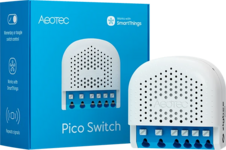
A little tech stuff here. I wanted to add power monitoring for my HVAC system, so installed one of these Aeotec Pico relays in a junction box that feeds the system.

1760488526801.png

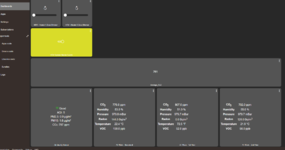
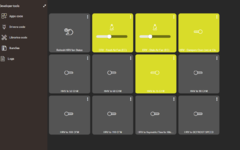
This unit is pretty tiny ( 44 x 40 x 21.5mm ) and would easily fit behind any standard light switch. This allows a "dumb" switch to be connected, but also override that switch with automation. You can use these to switch up to 15 amps in NA. The Pico switch also reports power, and allows me to reset the HVAC system remotely as well if needed. This is my Hubitat dashboard that monitors the system. Having power monitoring is quite handy as I also have two PTC heaters that are dialed in to deliver tempered fresh air. The heaters are on, and you can see at 50 CFM total power use with the two ECM fans, HRV damper control, and two PTC heaters totals 50 watts right now. With the heaters off, and CFM at 110 CFM, total power use is only 82 watts. Kind of crazy considering the HRV when using the old fan motor (now removed) used over 300 watts to move 90 CFM.

aeotec pico.jpg

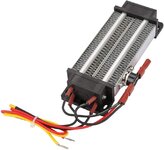
All of this came about when I realized in testing a few days ago that one of the PTC heaters has failed. It's pulling wattage, but not heating anything. If anyone knows much about PTC heaters...all ears on this one! Temps are just getting down close to freezing at night so the heaters are just now coming into play for the winter season :-( I'm using two of these 500 watt heaters in a metal housing placed inline to the fresh air delivery duct. Cost is all of $25 per unit.

616wBkxPg5L._AC_SX679_.jpg
 
OP
D

Denwood

Well-known member
Joined
Sep 22, 2014
Messages
4,224
Location
Thunder Bay, Ontario, Canada
So. I guess I need to read up on EESM motors now. Not sure why they haven’t done this already as modern alternators use similar theory on the other side of the equatioon.

On the PTC issue I have one heater that is behaving oddly as it is pulling wattage as the Zen72 dimmer ramps up, but the temp sensor confirms very little heater output is occurring. confirmed this with a with a killawatt as well. Because I have two identical circuits, temp sensors after the heaters, and two zen72 dimmers (up to 500 watts each resistive) it’s relatively easy to troubleshoot. Not sure on the failure mode yet but will know soon once I pull everything apart. I am relocating the heater housing for easier access. This is now possible as all filtration is being done outside so I can remove the 14x14 inline filter box inside.

The concept of exterior filtration is so prevalent in the commercial world, I’m a bit surprised it’s not done more in the residention side of things.
 

jlv03

Well-known member
Joined
Jan 19, 2020
Messages
349
Location
SE IA
How does a PTC heater consume watts and not put out any heat? Or is it just pulling a fractional amount of watts that isn't translating to a temp rise?
 

u3b3rg33k

Well-known member
Joined
Dec 18, 2017
Messages
4,051
So. I guess I need to read up on EESM motors now. Not sure why they haven’t done this already as modern alternators use similar theory on the other side of the equatioon.

On the PTC issue I have one heater that is behaving oddly as it is pulling wattage as the Zen72 dimmer ramps up, but the temp sensor confirms very little heater output is occurring. confirmed this with a with a killawatt as well. Because I have two identical circuits, temp sensors after the heaters, and two zen72 dimmers (up to 500 watts each resistive) it’s relatively easy to troubleshoot. Not sure on the failure mode yet but will know soon once I pull everything apart. I am relocating the heater housing for easier access. This is now possible as all filtration is being done outside so I can remove the 14x14 inline filter box inside.

The concept of exterior filtration is so prevalent in the commercial world, I’m a bit surprised it’s not done more in the residention side of things.
all i can think of for the heater is it's lost its bond to the fins and is pulling wattage on startup until it hits the PTC self-limiting temp and the wattage drops off a cliff.

I have a little "100W" PTC heater that starts off at like 600W when powered up, and can drop to as little as 50W if mounted sideways (heatsink fins go the long way).
 
OP
D

Denwood

Well-known member
Joined
Sep 22, 2014
Messages
4,224
Location
Thunder Bay, Ontario, Canada
How does a PTC heater consume watts and not put out any heat? Or is it just pulling a fractional amount of watts that isn't translating to a temp rise?
Good question but I’d have to assume (and I’m no expert) but a failure to ground in the PTC element itself is all I could think of. I’ll do a post mortem…
 
To avoid these ads, REGISTER NOW!
Top Bottom