That's how mine works. It knocks down a step at a time.
No need to apologize. The wings are called all sorts of different things. A picture is usually the only way to sort it out.
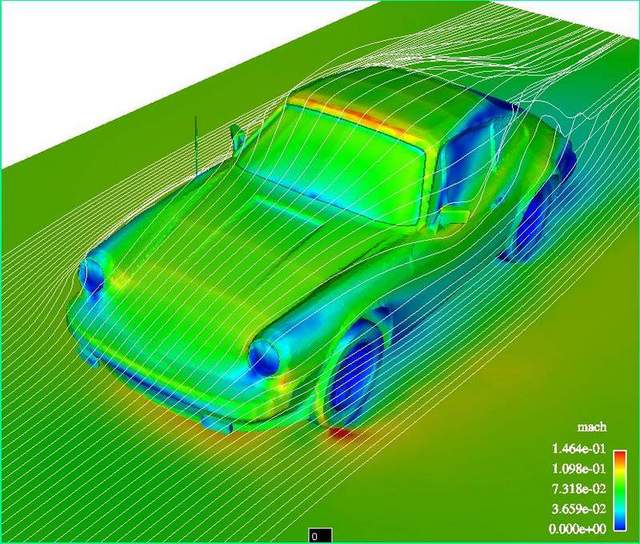
The ducktail is probably working in my favor. I say that not with a whole lot of knowledge to back it up, but because it's the way the factory is doing it on the current 911 race models.
And I apologize for the off-the-garage-topic stuff eating up space, but I love this stuff, and there actually are some ways to test what the wing is doing -- even when wind tunnel rental time is not in the budget. I use wool tufts to track where the air is moving -
- but the more-useful tool is a pair of 1995 Lincoln Continental ride-height sensors, scored for $5 each on Ebay and attached to my front and rear suspension components. They let me track differences in the ride height of the car with the little computer in my car's data logger.
Here's a graph from the data logger. This was when I found a very remote stretch of empty highway where I could bring the car up to a set speed (100 mph) for a few seconds -- then exit at the next exit and do the same thing in the other direction. So the graph shows two 100-mph pieces (the top section is car speed, the lower two sections are front and rear ride height), and also some not-useful data in between where I'm speeding up, slowing down, or turning around at the exit. But I repeated this with the wing set at different angles, so I could see if the wing was changing the car's ride height with the different wing angles at the 100-mph test speed.
Here's a detail segment where I've labeled the different wing angles.
Once I get the support structure issues worked out again for these new uprights, I want to go out and do the same type of testing with this newer wing and the four different angles it can run at.
But back to the new uprights.
I think it might make sense to add some cables, so that the allthread will really only be asked to work in tension (not compression), and a horizontal cable will also eliminate any squat-and-spread between the rear 'legs' of the uprights when the wing is pushing down the most.
Any stuff I can put right behind the ducktail would (I assume) come with less of a drag penalty. So one idea is to try and keep the new diagonal on the lower part of the upright, like this:
Option A
But that might mean too much of a compromise in terms of strength. So another way to go would be to take the drag hit and run it in the strongest position.
Option B
But then, that gets me thinking that maybe I eliminate the allthread and its weight, and just go with two cables, each providing strength in tension -- and crossed over each other so that compression is less of an issue.
I like the idea of using a tape wrap to create something like an aerodynamic shape for the cable, but in thinking about it I also imagine it could flap like crazy in the wind and actually produce more drag. But then, I don't actually know very much of this stuff. Maybe the drag from a 1/8" (or thinner) wire rope would simply not be worth worrying about.
Opinions?

 Fascinating stuff. You may end up with a wing design to patent.