To avoid these ads, REGISTER NOW!

The Bicycle (Specialty) Tools Thread

To avoid these ads, REGISTER NOW!

GirchyGirchy

Well-known member
Joined
Nov 14, 2011
Messages
9,830
Location
Central Indiana
College in '02? Young'un! The rubber washer in my Silca pump started rotting in 1977 :) I think the hose on it broke in half last time I tried to use it. I'm currently using a new pump (Bontrager? Don't recall) and it's fine. But that's purely a business relationship. Those old Silcas are like old girlfriends to me. Okay, well, not quite.

Rick "wearing a Movado Datron chronograph today" Denney
Yeah, the leather washer's been replaced once, check valve started leaking a few years later. Silca sent free replacement parts from Italy each time. Glad I bought mine when I did, they're $200 now!

Nice choice! I have my Yema Speedgraf on today. :)
 

rdenney

Well-known member
Joined
Mar 30, 2022
Messages
142
Yeah, the leather washer's been replaced once, check valve started leaking a few years later. Silca sent free replacement parts from Italy each time. Glad I bought mine when I did, they're $200 now!

Nice choice! I have my Yema Speedgraf on today. :)
I bought one of those mecaquartz Speedgrafs, too. Really cool vintage panda style.

Rick "not expecting anything free from Italy these days" Denney
 
OP
N

neersighted

Well-known member
Joined
Jun 17, 2021
Messages
46
The modern Silca still sells parts for vintage pumps, and the leather gaskets are made from scraps from the same leather company in Italy.
 

teicher

Active member
Joined
Dec 14, 2010
Messages
29
I've found PBT to be very hit or miss for professional use, but I think their stuff is likely fine for home mechanics who aren't demanding of their tools. I didn't list them mostly because I haven't used their tools a ton personally (and the ones that made it to the shop didn't seem to last that long), and my personal low-cost choices are Super-B and Lifu. That being said, if you want to write up a blurb I'd be happy to add them to the list.
I would agree with that, I only have the torque wrench set and chain checker and both are good for someone like me, a DIYer who takes care of our families bikes, plus any that my neighbors roll over and ask for help with. Looking around their website, I think I would probably lean towards other brands for some tools, but I wouldn't rule PBT out if I had a chance to see the tool in person before buying it and it looked to be of good quality.

While you can get this torque wrench set from other brands (I considered the Tekton version, too), I opted for the PBT set because it was the most recommended one across various bike repair forums for the price and use case. Comes in a small blow molded case with all of the hex bits I would ever need for bike repairs, and the torque wrench has held up well for the time I've used it. If you are just tightening up bolts for stems, derailleurs, etc., it's a good option.
 

aggiegrads

Well-known member
Joined
Jan 14, 2019
Messages
61
Location
Oregon
With regard to Silca chuck gaskets, EVT makes a better-than-current-Silca replacement (though I'm not sure how it measures up to the truly old stuff) as they originally sourced parts from Silca for their shop inflators.
I agree that the current chuck gasket is better than the old black Silca gaskets, but I don’t ever recall the inflators coming with gaskets from Silca. I’ll ask Monday, as I will be there meeting one of the new folks and looking at his processes. I do know that he is very particular about the gaskets. He has rejected batches that were too hard and still has a quality check on each gasket that results in a few gaskets getting tossed.

If you haven’t tried an EVT inflator because you think that it is a kludge of parts, you are missing out. The pieces that are not off the shelf add real value and the total value is more than the sum of the parts.

I know that Josh Poertner sourced parts from the original Silca vendors when he resurrected the line, but I don’t think that EVT did.
 

mepstein

Well-known member
Joined
Sep 17, 2010
Messages
1,281
Yeah, the leather washer's been replaced once, check valve started leaking a few years later. Silca sent free replacement parts from Italy each time. Glad I bought mine when I did, they're $200 now!

Nice choice! I have my Yema Speedgraf on today. :)
$200 - Wow! I have a box of them from guys whe didn’t realize they needed maintenance. They would bring them in the shop and tell me they were frustrated with the pump. I showed them our silca maintenance kit. It had every replacement part, even new stickers. They would say they wanted something maintenance free and adaptable so their wife, girlfriend, kids could use it with their schrader tubes. I would sell them a regular pump and they would often leave their silca pump with me. I have two in regular use. The others have been in a box since I left the shop in the mid 90’s.
 

AdAstra

Well-known member
Joined
Aug 27, 2021
Messages
195
Overthinking my decision on a bottom bracket socket for a BBR60 (Ultegra R8000).

Anyone have first hand experience with any of these? The steel factory tools seem like they'll be stronger, especially given how small the splines look, but then again, aluminum is a better flexibility match for the aluminum BB, so might make better contact and end up marring less?

Finalists:
-Shimano TL-FC37 (factory tool, steel, are the splines machined or net cast?)
-Abbey Tools Bottom Bracket Socket - Shimano (7075 Aluminum, machined, also does DuraAce, has additional crank bore locating feature)
-IceToolz M093 (steel, are the splines machined or net cast?)

Ruled out:
-Park BBT-59.x seems be be just a more meh and less flexible version of the Abbey with weaker 6061 Aluminum (actually alloy is not called out in description of this tool, but a similar BB tool they make does say it.)

-Any I'm missing?
 
Last edited:

Grant Gunderson

Well-known member
Joined
May 17, 2013
Messages
2,318
Location
Bellingham, WA
Overthinking my decision on a bottom bracket socket for a BBR60 (Ultegra R8000).

Anyone have first hand experience with any of these? The steel factory tools seem like they'll be stronger, especially given how small the splines look, but then again, aluminum is a better flexibility match for the aluminum BB, so might make better contact and end up marring less?

Finalists:
-Shimano TL-FC37 (factory tool, steel, are the splines machined or net cast?)
-Abbey Tools Bottom Bracket Socket - Shimano (7075 Aluminum, machined, also does DuraAce, has additional crank bore locating feature)
-IceToolz M093 (steel, are the splines machined or net cast?)

Prob ruled out:
-Park BBT-59.x seems be be just a more meh and less flexible version of the Abbey, Aluminum grade not specified.

-Any I'm missing?
Abbey makes the BB tool for Chris King, and they are very nice. All of my BB tools are Park, with the exception of the CK one (light grey in this pic).
IMG_7670.jpeg
The quality of the Park ones is pretty poor in my mind, plus they are mostly designed to be used with a wrench and not a ratchet which is idiotic in my mind. Especially since you should be using a torque wrench when installing.
IMG_7673.jpeg
Most of the BB tools I use these days are E-bike specific, so once Abbey releases their E-bike ones this fall, I will be switching over to a full set of those.
IMG_7672.jpeg
As you can see here, the machining on the Park ones is quite rough compared to the CK/Abbey one. Plus the CK Abbey one has way nicer broaching. It would be nice however if Abbey would stray from their standard green and color code the BB tools with anodizing.
 
Last edited:

Grant Gunderson

Well-known member
Joined
May 17, 2013
Messages
2,318
Location
Bellingham, WA
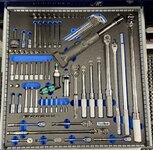
Hey guys, I've been wanting to join in on this thread, but I've been away on a shoot. We where shooting the promo imagery for the new bike park thats opening up at a Lee Canyon, just 45 minutes outside of Las Vegas.

Here is a my home setup.
A8A27F38-A86F-47AF-8281-2FC9B20FDF91.jpg
Top drawer is stuff I tend to use a lot. I've ditched the park cable cutters in favor of the Felco. The Var 17 tool is specifically for crimping on cable ends. I dont use it a ton as most of what I work on these days is electric shifting. I've replaced the Park chain pliers with the Union. They are way nicer. The short PB Swiss handle is for battery doors for Sram shifters. The Pedros tire lever is really nice, and it gets used mostly for removing fork wipers. I haven't found a tool that works better for that. The Pedro's cassette tool used to be my go to, but I tend to just use the Abbey chain whip these days. Their crombie is a must have for any mechanic in my mind, and their crombie socket is all a top of the list tool for me. One nice thing about the Abbey chain whip is you can nest the crombie tool in it, or when I'm traveling I've nested an 8mm wrench in it to break stubborn pedals free.
IMG_5269.jpeg
Second drawer is mostly for suspension / hydraulics. I had the Park suspension cap sockets and immediately returned them, they where way too loose fitting. The Abbey's are top notch. For suspension rebuilding, I have a bunch of brass and plastic o-ring picks, and I also use the mayhem seal removers as well. The Unior strap wrench is nice for serving air cans. The park internal cable routing tool can be a life saver, especially when replacing dropper posts on e-bikes as they cables get routed between the motor and the frame.
IMG_6293.jpeg
These long forceps are also super useful for that purpose and have saved me hours on that task.
IMG_2455.jpeg
The Park cone wrenches rarely get used. I have a full set of Snapon wrenches (this is my metric drawer) and mostly use the Low-Torque wrenches in the top left corner.
image.jpeg
Park Cone on L, low-torque middle and regular Snapon on Right.
IMG_4745.jpeg
I have a full set of Snapon Crow feet for servicing suspension parts, but sometimes, being able to use the Park Cone wrench as a low-profile Crowfoot is the only way to do it.
image.jpeg
That technique is actually the only way to properly setup the Vorspring Smashpots.
IMG_5284.jpeg
While on the topic of suspension, I have a full set of Wiha snapping pliers. I like them as the tips are angled and notched, so the rings dont go flying.
IMG_3917.jpeg
I also have a selection of specialty ones from Knipex and Wilde / Proto for specific types of rings.
4DD83427-6F8A-4952-8E5A-BBECCA82DB25.jpg
This drawer houses my various bearing tools. The Park suspension press gets used more than the Abbey, as it's cup system is often the only way to do the job, but the quality of the press shaft is quite low as they didnt harden it. Once I'm done with my lathe rebuild, I'll probably make similar cups for the Abbey press, or just make a new setup all together that combines the best features of each. The black T handles are made by Unior specifically for pulling dust caps off of hubs.
 

Grant Gunderson

Well-known member
Joined
May 17, 2013
Messages
2,318
Location
Bellingham, WA
IMG_5272.jpeg
Bottom drawer is mostly various shaft clamps and my crown race puller. I almost never use the Park derailleur hanger tool.
IMG_2439.jpeg
My ratchets are all Nepros and Snapon. My Torque tools are all Snapon wit the exception of one CDI and the Wera torque driver (its good for cockpit stuff or mounting ski bindings). The hex and Torx sockets are all PBSwiss and Snapon, with my preference being PBSwiss. The Wera hex heys are there Stainless Steel Torx-plus that I use only for fasteners that someone has previously mangled as they will often remove them when nothing else will.
IMG_6511.jpeg
I've color coded the hex drivers with heat shrink to match the rest of my PBSwiss hex tools.
IMG_6514.jpeg
For assembly work, I am a really big fan of the PBSwiss Swiss-grip drivers.
IMG_6321.jpeg
For inflation, I have an old stainless Lenzye dirt drive that just wont die. I also use
IMG_6530.jpeg
I also really like my Milton digital inflator and the Act-guage Presta gauge.
IMG_2449.jpeg
I also tend to use a lot of picks. I really like the Snapon ones, but my go to are these Hue-Friedly dental pics. Having good tweezers also come in handy, I got a bunch of Knpix and Dumont ones, including a set of ball bearing ones that are must haves.
IMG_7552.jpeg
For washing bikes, I really like using a Surest sprayer filled with simple green. You charge the sprayer with compressed air.
IMG_7554.jpeg
Most bike brand brushes are garbage in my mind, this one from Adam's works really well.
 

Attachments

  • IMG_7552.jpeg
    IMG_7552.jpeg
    603.2 KB · Views: 30
OP
N

neersighted

Well-known member
Joined
Jun 17, 2021
Messages
46
If you haven’t tried an EVT inflator because you think that it is a kludge of parts, you are missing out. The pieces that are not off the shelf add real value and the total value is more than the sum of the parts.
My EVT 3-in-1 is everything I ever wished the Park or similar competitors was, and actually more ergonomic. 100% made in the USA as well as I recall.

I know that Josh Poertner sourced parts from the original Silca vendors when he resurrected the line, but I don’t think that EVT did.
I thought they did before Bret started having his own made, but I admit that was nearly a decade ago and it wasn't my 3-in-1 -- I just had to order the part for my boss. Maybe the EVT was out of stock and I was told the Silca part was a drop in fit -- my memory could have fuzzed the details.
 

AdAstra

Well-known member
Joined
Aug 27, 2021
Messages
195
The quality of the Park ones is pretty poor in my mind, plus they are mostly designed to be used with a wrench and not a ratchet which is idiotic in my mind. Especially since you should be using a torque wrench when installing.
Yep! That really turned me off the Park cassette socket... having it interface with a square drive ratchet/torque wrench is the proper design choice. (Could still have external hex/flats too, it's not either-or.)

And the external hex they picked isn't even metric like other bike tools, it's 1", which ironically isn't even a standard hex size for inch fasteners (they go 15/16" then 1-1/8"). They could have gone 15/16" and enabled 24 mm sockets to work too. Designer was just phoning it in.
 
OP
N

neersighted

Well-known member
Joined
Jun 17, 2021
Messages
46
Yep! That really turned me off the Park cassette socket... having it interface with a square drive ratchet/torque wrench is the proper design choice. (Could still have external hex/flats too, it's not either-or.)

And the external hex they picked isn't even metric like other bike tools, it's 1", which ironically isn't even a standard hex size for inch fasteners (they go 15/16" then 1-1/8"). They could have gone 15/16" and enabled 24 mm sockets to work too. Designer was just phoning it in.
Consider that the tool design was originated decades ago before lightweight components and torque wrenches as a standard bicycle tool.

The use of a 1" hex interface was based on the use of 1" hex stock as the base of the tool during their early days of manufacturing, as I understand it.

Certainly, it would be nice to add a square drive interface, but within the context of the bike world a 1" socket is standard fare for using Park cassette/freewheel tools with a torque wrench, and Park makes by far the most readily available cassette tools. SRAM (under the RockShox brand) makes a cassette tool with a 3/8" square drive and 24mm outer hex flats, and Shimano makes a similar tool with a 1/2" square drive and the same 24mm outer hex flats.

The Shimano and Abbey tools have the best fitment in my experience. Granted, fitment isn't critical on on cassettes and rotor lockrings, but the same splines are used on some suspension components (SRAM fork top caps, Trek rear pivot bolts) in very shallow aluminum, and there the differences in fitment make themselves very obvious very quickly.

Finally, consider that few mechanics make use of a torque wrench on cassette lockrings -- because of the serration of the interface, as you approach final torque there are lots of little stops and starts. The rapid switch between dynamic and static friction makes getting a consistent torque reading difficult to impossible. As such most of us go for "feel" based on the type of lockring and the feedback from the serrations.

You can test the repeatability of indicated torque on a cassette for yourself by marking the smallest cog and the lockring, and using a torque wrench to reinstall multiple times. The last time I did this (when I was a new mechanic a decade ago), I was shown variance of over 90 degrees on an average 'service quality' (read: brand name, low to medium cost) cassette.
 
Last edited:

AdAstra

Well-known member
Joined
Aug 27, 2021
Messages
195
Consider that the tool design was originated decades ago before lightweight components and torque wrenches as a standard bicycle tool.

The use of a 1" hex interface was based on the use of 1" hex stock as the base of the tool during their early days of manufacturing, as I understand it.

Granted, it would be nice to add a square drive interface, but within the context of the bike world a 1" socket is standard fare for using Park cassette/freewheel tools with a torque wrench, and Park makes by far the most readily available cassette tools. SRAM (under the RockShox brand) makes a cassette tool with a 3/8" square drive and 24mm outer hex flats, and Shimano makes a similar tool with a 1/2" square drive and the same 24mm outer hex flats.

The Shimano and Abbey tools have the best fitment in my experience. Granted, fitment isn't critical on on cassettes and rotor lockrings, but the same splines are used on some suspension components (SRAM fork top caps, Trek rear pivot bolts) in very shallow aluminum, and the differences in fitment make themselves very obvious very quickly.

Finally, consider that few mechanics make use of a torque wrench on cassette lockrings -- because of the serration of the interface, as you approach final torque there are lots of little stops and starts. The switch between dynamic and static friction makes getting a consistent torque difficult to impossible. As such most of us go for "feel" based on the type of lockring and the feedback from the serrations.

You can test the repeatability of torque on a cassette for yourself by marking the smallest gear and the lockring, and using a torque wrench to reinstall multiple times. The last time I did this (when I was a new mechanic a decade ago), I was shown variance of over 90 degrees on a average 'service part' (read: brand name, low-medium cost) cassette.
Thanks for the context and input. That must help explain why the torque spec for my cassette is so wide at 30-50 N•m.
 
OP
N

neersighted

Well-known member
Joined
Jun 17, 2021
Messages
46
Finishing thoughts about cassette tools and the industry, most of the time in shop environments tools with fixed handles are used. When I was new and learning the Park FRW-1 was the go-tool tool (usually with a FR-5 installed in it semi-permanently). These days, the Abbey Crombie is the benchmark, and Park makes their own heavier (but with replaceable parts) version as the FR-5.2H.

Almost every other brand catering to professional mechanics/shops makes some sort of fixed-handle cassette tool, so in modern shop usage, handle-less tools like the Park versions in question are mostly for less commonly encountered interfaces, or torque wrench use (e.g. with disc rotor lockrings).
 

Bigblue&Goldie

Well-known member
Joined
Mar 12, 2009
Messages
10,666
Location
AZ
I'd rather deal with a Park cassette tool than screwing around with a 32mm(?) wrench to tighten a thin, aluminum, ultra fine thread lock ring on a BMX hub. Dumb.

20220828_164612.jpg

At least this hub uses an external bottom bracket tool...

20220828_164637.jpg
 
OP
N

neersighted

Well-known member
Joined
Jun 17, 2021
Messages
46
Overthinking my decision on a bottom bracket socket for a BBR60 (Ultegra R8000).

Anyone have first hand experience with any of these? The steel factory tools seem like they'll be stronger, especially given how small the splines look, but then again, aluminum is a better flexibility match for the aluminum BB, so might make better contact and end up marring less?

Finalists:
-Shimano TL-FC37 (factory tool, steel, are the splines machined or net cast?)
-Abbey Tools Bottom Bracket Socket - Shimano (7075 Aluminum, machined, also does DuraAce, has additional crank bore locating feature)
-IceToolz M093 (steel, are the splines machined or net cast?)

Ruled out:
-Park BBT-59.x seems be be just a more meh and less flexible version of the Abbey with weaker 6061 Aluminum (actually alloy is not called out in description of this tool, but a similar BB tool they make does say it.)

-Any I'm missing?
The quality of the Park ones is pretty poor in my mind, plus they are mostly designed to be used with a wrench and not a ratchet which is idiotic in my mind. Especially since you should be using a torque wrench when installing.

As you can see here, the machining on the Park ones is quite rough compared to the CK/Abbey one. Plus the CK Abbey one has way nicer broaching. It would be nice however if Abbey would stray from their standard green and color code the BB tools with anodizing.
With regard to external bottom bracket sockets, keep in mind the ones referenced by Grant are older cast steel versions and the BBT-59.x is CNC machined aluminum. The modern steel tool, the BBT-19.2 is much more refined/precise and has a 3/8" square drive.

When it comes to bottom bracket sockets, I tend to classify tools as being for removal or install. For removal, I favor a quality steel socket (preferably impact rated) or a steel wrench. Removal can often be a difficult task (especially if the BB threads were questionable and not chased, anti-seize or quality grease was not used -- more on this later) and using a durable tool that lets you put lots of torque in without fear of damaging it is best.

The only impact-rated BB sockets I am aware of come from Shimano (which are precision cast as best I can tell), and they are excellent tools that fit precisely and handle impacts well. Impact tools are unconventional for use on bikes, but I've found that when using a socket-style tool on an aluminum bottom bracket, impact is much less likely to damage/strip the splines compared to a breaker bar/long ratchet as there is no cam-off force.

If you don't have a low-torque 1/2" impact gun or are uncomfortable using power tools on bikes, the next best thing for removal is a steel wrench. Lots of brands make these -- the Pedro's are nice as they have a 3/8" square drive, but Park also makes examples, and there is a 4-in-1 Bikehand that I think may be ideal for the home mechanic (I would not suggest it for shop use however as they tend to bend after repeated use on stubborn BBs). The wrench-style tool is great for stubborn BBs as the plane of the tool is as close as possible to the threads, almost completely mitigating cam-off.

Install-focused tools are optional for home/portable use, but are a must for the shop where you are installing customers parts and do not want to marr the soft aluminum bottom bracket. Here, any aluminum socket used on a quality BB and not exceeding normal install torque will last for years. I prefer the Park options as they are color-coded, comprehensive, and have a excellent warranty (though they do not warranty against abuse -- if you use a 18" breaker bar and cam off/damage the tool trying to remove something that is stuck, they will tell you to buy a new one. If the tool gets damaged during install with a torque wrench, they will replace it no questions asked).

The Abbey sockets are good as well, but the lack of color coding and their nature as bulkier/heavier tools have kept them out of my home and portable kits. If they ever do color code I will likely upgrade to them, and demote my current Park tools to the portable box.

Unior has some nice aluminum BB sockets as well, but they are priced nearly the same as Abbey, have no color coding, and lack the nice finger-splines of the Abbey. Enduro/Sonny's make probably the most refined (but still not color coded) BB sockets, but they are nearly double the price of the Abbey.

An increasing problem with modern bikes is the move to T47 inboard bottom brackets as an alternative to press-fit on road bikes. While much more maintainable in the long run, the thin flanges required by the inboard-but-threaded design are very difficult to turn without damage. The best solution to this I have seen is the Wheels MFG kit, which is comprehensive, fast for shop use, and very precise. The new Park BBT-**.3 tools plus their own retaining system (the BBT-RS) are another option that requires less investment (if you're already buying their sockets) and less storage space, but it's not nearly as refined/the torque is further from the threads putting more strain on the sockets.

Two final thoughts on bottom brackets:

The use of powered impact tools on bicycles as mentioned above is likely quite controversial. However, the experienced mechanic knows ultimately you are required to and responsible for understanding how much force you are putting into any interface, and if that force is excessive or likely to cause damage. You can damage a bicycle just as easily with misused hand tools, and you can do precision work with power tools -- it's all based on understanding what you are working on and good judgement.

I personally have switched to using a low torque 1/2" impact after cracking a weld on a vintage steel frame removing a seized GXP bottom bracket early in my wrenching career. The same BB was removed with no further damage to the weld by using the impact gun. This is because the high but momentary torque of an impact gun can often be more gentle on the frame and part (as well as your body) than using a cheater pipe on a breaker bar.

Finally, I mentioned seized BBs above. They are very common in bicycles for a variety of reasons, most of them easily avoided. The first tip is always using a quality lubricant when installing a BB, and to use an anti-seize compound on mixed metal interfaces. A tenacious waterproof grease (even Lucas Red n' Tacky) on the BB threads should be the bare minimum, and is good enough for aluminum-on-aluminum (which would be the majority of modern bikes). For aluminum-on-steel (e.g. modern BBs in a cheaper or vintage bike, or Phil Wood in a modern frame) you should be using a anti-seize compound to prevent galvanic corrosion, which will happen and ruin your day (or even frame) if left unaddressed.

I prefer copper over aluminum anti-seize as it still does the job for aluminum-steel interfaces while being optimal for titanium. Aluminum (commonly called 'silver') anti-seize is sometimes not up to snuff when it comes to preventing galvanic corrosion with titanium parts, but is on paper the better choice for aluminum-on-steel.

The other common issue with stuck bottom brackets is the use of poor quality/worn tooling at the factory, or bad manufacturing practices (e.g. cutting the BB threads before all welds are complete, or using a prethreaded shell and not chasing after welding) causing a poor thread fit. BBs are very prone to bad thread fits causing issues later as the threads are very fine relative to the bore size, mixed metals are often in play (see above), and the BB is exposed to all manner of sweat from the rider, water entering the frame from above and pooling, and contaminated water splashing onto it from the road.

A BB should go in very smoothly and uniformly. If you feel any resistance/difficulty that is not related to the factory-applied threadlocker/nylon patch (which should increase required torque but not make it a struggle to thread in), you should take your frame to a shop. The face of the bottom bracket shell should also be smooth and flat (with no uneven paint or similar) -- if there is any doubt, bring it in to the shop. In either case your bottom bracket will need to be chased and faced -- any properly equipped shop should offer this service, though not all may have the tools for the newer T47 standard on hand yet.
 
Last edited:

Kuma601

Well-known member
Joined
Dec 24, 2020
Messages
960
Location
Cali
Any recommendations for a well spec'd 32mm headset wrench? The later Park wrenches I've had, have oversized tolerances.

The Park HW-2 is decent but feel it could have better spec. The various 32mm tried all wiggle enough that applying torque I don't want to leave gouges on the headset.
 
To avoid these ads, REGISTER NOW!

Grant Gunderson

Well-known member
Joined
May 17, 2013
Messages
2,318
Location
Bellingham, WA
My EVT 3-in-1 is everything I ever wished the Park or similar competitors was, and actually more ergonomic. 100% made in the USA as well as I recall.


I thought they did before Bret started having his own made, but I admit that was nearly a decade ago and it wasn't my 3-in-1 -- I just had to order the part for my boss. Maybe the EVT was out of stock and I was told the Silca part was a drop in fit -- my memory could have fuzzed the details.
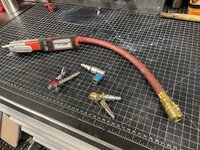
I need a new presta adapter. I've looked at the EVT 3in1, but just cant justify purchasing something for that price, that quite frankly looks like it was hobbled together in someone else's garage.... its just not very refined. Especially when it mostly uses off the shelf parts from Milton.
IMG_7741.jpeg
The Milton digital inflator I am using is really, really nice. I love it. Especially with the quick release on both ends of it to quickly change adapters. The standard Milton schrader is front in center. Middle is a cheap Presta adapter I've been using. It worked great when new, but quickly deteriorated. The lever actuated is an original Hiro. I'm not a fan, its just too damn big, its clunky, its also fiddly to get it to actually lock on. So I'm thinking of something like the Silca Presta chuck, the Silca Mini Chuck, The Presta cycle chucks. Thoughts?

Consider that the tool design was originated decades ago before lightweight components and torque wrenches as a standard bicycle tool.

The use of a 1" hex interface was based on the use of 1" hex stock as the base of the tool during their early days of manufacturing, as I understand it.

Certainly, it would be nice to add a square drive interface, but within the context of the bike world a 1" socket is standard fare for using Park cassette/freewheel tools with a torque wrench, and Park makes by far the most readily available cassette tools. SRAM (under the RockShox brand) makes a cassette tool with a 3/8" square drive and 24mm outer hex flats, and Shimano makes a similar tool with a 1/2" square drive and the same 24mm outer hex flats.
Park used to use a 1" standard for most of its tools and they always had that little detent to secure there handles to them. I always found that to be fiddly at best. It always sucked as it was never as secure as a one piece wrench, and quite frankly a ratchet works better.
With their E-bike BB tools they have moved to a new 36mm standard for the wrench flats on these. Thats not even consistent as some just have a ⅜ broach.
IMG_7734.jpeg
I cant think of a single time, I'd rather use wrench over a ratchet for this, plus their solution is to use their 36mm Crowfoot... which if you are going to do that, then a standard ⅜ broach is a better way to go.
IMG_7736.jpeg
On top of that, their Crowfoot is way to thin to work well with the BB tools. The one on the right is a Snapon. I just use a 36mm socket instead.

While on the topic of BB's I am a big fan of the ChrisKing ones. Here in Bellingham most riders usually need to replace a BB once a year at least. I've been able to get 5+ years out of the standard Chris King ones (I've switched to the ceramic ones, so we will see how long they last but so far they are great), by regularly opening them up, cleaning them with the Ultrasonic, flushing with Isopropyl then reinstalling and re-lubing.
IMG_7718.jpeg
The CK grease adapter is the best way to do this, and a Dulco grease pump with a lockNlube attached to it, makes for a completely mess free setup with no grease drips.
IMG_7719.jpeg
It's also rigid enough that it stays put by itself too.
The Shimano and Abbey tools have the best fitment in my experience. Granted, fitment isn't critical on on cassettes and rotor lockrings, but the same splines are used on some suspension components (SRAM fork top caps, Trek rear pivot bolts) in very shallow aluminum, and there the differences in fitment make themselves very obvious very quickly.
I'd argue that the fitment does matter. I've seen a lot of the cassette lock rings that where pretty mangled from the sloppy fitting park tool. The Park tool with the guide pin, helped, but those tend to fall out.
IMG_7569.jpeg
The Abbey ones are better made, fit better, and so far have proven that they will last longer too.
Finally, consider that few mechanics make use of a torque wrench on cassette lockrings -- because of the serration of the interface, as you approach final torque there are lots of little stops and starts. The rapid switch between dynamic and static friction makes getting a consistent torque reading difficult to impossible. As such most of us go for "feel" based on the type of lockring and the feedback from the serrations.

You can test the repeatability of indicated torque on a cassette for yourself by marking the smallest cog and the lockring, and using a torque wrench to reinstall multiple times. The last time I did this (when I was a new mechanic a decade ago), I was shown variance of over 90 degrees on an average 'service quality' (read: brand name, low to medium cost) cassette.
Any mechanic that claims they can do a better job getting consistent torque without a torque wrench is kidding themselves. Back in the day when I managed a shop, I used to ask would be employees if they had enough experience to not use a torque wrench. Anyone that said they did, didnt get hired. Granted its pretty common practice to not tighten these with a torque wrench, but thats incorrect. It's also why loose cassettes seem to be pretty common issues. The proper way to tighten, is to tighten past where you feel the serrations click in, then use a torque wrench to verify you are at full torque spec. The breakaway force for those locking notches has a lot of availability to it, Especially if they are dirty. Thats why anytime I ma installing a cassette thats not brand new, it gets a bath in the ultrasonic.
IMG_7571.jpeg

So just getting it snug by feel is general not fully tight. This also a great example, of where cheap torque wrenches ****, as you generally dont get as pronounced of a click with them. The Park ones and most "bike branded" are particularly bad for this.
IMG_7572.jpeg
The XX1 cassettes don't have the lock ring interface and I have noticed a lot of varability in how snug they are to turn, so a torque wrench is mandatory for those. With E-bikes is a bit like going back into the stone ages with multi piece cassettes and the notched lock rings, but cheap steel cassettes are the only thing that last on them.
 
Last edited:

Grant Gunderson

Well-known member
Joined
May 17, 2013
Messages
2,318
Location
Bellingham, WA
The use of powered impact tools on bicycles as mentioned above is likely quite controversial. However, the experienced mechanic knows ultimately you are required to and responsible for understanding how much force you are putting into any interface, and if that force is excessive or likely to cause damage. You can damage a bicycle just as easily with misused hand tools, and you can do precision work with power tools -- it's all based on understanding what you are working on and good judgement.


Finally, I mentioned seized BBs above. They are very common in bicycles for a variety of reasons, most easily avoided. The first is always to use a quality lubricant when installing a BB, and to use an anti-seize on mixed metal interfaces. A tenacious waterproof grease (even Lucas Red n' Tacky) on the BB threads should be the bare minimum, and is good enough for aluminum-on-aluminum (the majority of modern bikes). For aluminum steel (e.g. modern BBs in a cheaper or vintage bike, or Phil Wood in a modern frame) you should be using an anti-seize compound to prevent galvanic corrosion, which will happen and ruin your day (or even frame) if left unaddressed.

I prefer copper to aluminum anti-seize as it still does the job for aluminum-steel interfaces while being optimal for titanium. Aluminum (commonly called 'silver') anti-seize is sometimes not up to snuff when it comes to preventing galvanic corrosion with titanium parts, but is on paper the better choice for aluminum-steel.

The other common issue with stuck bottom brackets is the use of poor quality/worn tooling at the factory, or bad assembly practices (e.g. cutting the BB threads before welding, or using a prefab shell and not chasing after welding) causing a poor thread fit. BBs are very prone to bad thread fits causing issues later as the threads are very fine relative to the bore size, mixed metals are often in play (see above), and the BB is exposed to all manner of sweat from the rider, water entering the frame from above and pooling, and contaminated water splashing onto it from the road.

A BB should go in very smoothly and uniformly. If when you are installing a BB you feel any resistance/difficulty that is not related to the factory-applied threadlocker/nylon patch, you should take your frame to a shop and have them chase your bottom bracket shell. It's also worth checking that the face of the bottom bracket shell is smooth and flat (with no uneven paint or similar) -- if it is not, most shops will face the shell as part of the chasing operation ('chase/face' has been one job at every shop I've been at).
IMG_7683.jpeg
I've yet to come across a BB where my long ⅜ snapon ratchet wouldn't remove, as long as a good quality BB socket was being used. The Al ones are fine for removal in my mind as long as they are of very high quality and singly fit. In this case you can see the CK one fits well enough it will hang in position. I also know a lot of guys that use a long off set ratchet just for this purpose, as it keeps the force in line with the tool. I just keep inward pressure on it with my left hand when removing to prevent it from slipping.
IMG_7711.jpeg
Ultra Tef-Gel is the best antisieze I have found. Its way sticker than the standard AL and Copper based stuff, its fully waterproof and it has no issues with Galvanic corrosion with carbon frames that AL would.
IMG_7713.jpeg
For small screws, instead of applying it to the male threads, I like to use a syringe to apply it to the female threads.
IMG_7729.jpeg
 

Grant Gunderson

Well-known member
Joined
May 17, 2013
Messages
2,318
Location
Bellingham, WA
Any recommendations for a well spec'd 32mm headset wrench? The later Park wrenches I've had, have oversized tolerances.

The Park HW-2 is decent but feel it could have better spec. The various 32mm tried all wiggle enough that applying torque I don't want to leave gouges on the headset.
I have a set of Snapon Low-Torque wrenches. They are about halfway in thickness between a cone wrench and a Standard one.
IMG_7742.jpeg
I've seen new in the box sets on E-bay for less than a ⅓ of retail. Not cheep, but they are also my go to for any suspension work.
 
OP
N

neersighted

Well-known member
Joined
Jun 17, 2021
Messages
46
I need a new presto adapter. I've looked at the EVT 3in1, but just cant justify purchasing something for that price, that quite frankly looks like it was hobbled together in someone else's garage.... its just not very refined. Especially when it mostly uses off the shelf parts from Milton.
I know the EVT doesn't look like much, but it's by far the most refined inflation tool I've used, including that digital Milton. Granted digital is nice for accuracy at low pressures -- my workflow usually relies on a secondary low pressure analog gauge, or a digital gauge to bleed down to final pressure.

The Milton digital inflator I am using is really, really nice. I love it. Especially with the quick release on both ends of it to quickly change adapters. The standard Milton schrader is front in center. Middle is a cheap Presta adapter I've been using. It worked great when new, but quickly deteriorated. The lever actuated is an original Hiro. I'm not a fan, its just too damn big, its clunky, its also fiddly to get it to actually lock on. So I'm thinking of something like the Silca Presta chuck, the Silca Mini Chuck, The Presta cycle chucks. Thoughts?
I'm prefer my Silca slip-on chuck, but I keep the Hiro around for disc wheels. The Prestacycle is collecting dust in my spare/disliked tools bin pending donation.

Park used to use a 1" standard for most of its tools and they always had that little detent to secure there handles to them. I always found that to be fiddly at best. It always sucked as it was never as secure as a one piece wrench, and quite frankly a ratchet works better.
With their E-bike BB tools they have moved to a new 36mm standard for the wrench flats on these. Thats not even consistent as some just have a ⅜ broach.
They still use the 1" standard, much to the chagrin of some people up-thread. I don't think it's accurate to say they're moved to a 36mm standard -- more that they have made use of it when necessary for tool designs. The tools with 36mm hex flats are that way so that a crank axle can fit through them. The original 36mm tools were the BBT-32 and BBT-18, which were lower cost BB tools meant for use with an adjustable wrench. When they needed to design tools for newer parts with a similar over-axle fitment concern, they just re-used the existing size as those of us that preferred the non-socket style tools likely already had a 36mm crowfoot for use with a torque wrench.

IMG_7734.jpeg
I cant think of a single time, I'd rather use wrench over a ratchet for this, plus their solution is to use their 36mm Crowfoot... which if you are going to do that, then a standard ⅜ broach is a better way to go.
The more modern tools pictured (LRT-2 and LRT-4) need to fit over axles, and the older none-socket tools were designed for home use. The shop-grade older tools pictured there (the BBT-19 and the BBT-22) were designed with 32mm wrench flats an an extra way to turn them as far as I know -- the 1" hex interface on the BBT-22 is for use with the FRW-1.

On top of that, their Crowfoot is way to thin to work well with the BB tools. The one on the right is a Snapon. I just use a 36mm socket instead.
Agreed -- I think it's made from plate steel to avoid sticker shock for home mechanics. I actually called at one point about it, preferred tools for shop use (from Park themselves) are are quality 36mm crowfoot from a quality manufacturer, or a socket when the over-axle fitment issues are not present. I personally use a low-profile oil filter socket in those situations in order to reduce stack height/cam-off force.

I'd argue that the fitment does matter. I've seen a lot of the cassette lock rings that where pretty mangled from the sloppy fitting park tool. The Park tool with the guide pin, helped, but those tend to fall out.

The Abbey ones are better made, fit better, and so far have proven that they will last longer too.
Fair enough -- I haven't had a lot of issues with lockring interfaces barring XD cassettes, but I also use Abbey exclusively for my own cassette tool needs.

Any mechanic that claims they can do a better job getting consistent torque without a torque wrench is kidding themselves. Back in the day when I managed a shop, I used to ask would be employees if they had enough experience to not use a torque wrench. Anyone that said they did, didnt get hired. Granted its pretty common practice to not tighten these with a torque wrench, but thats incorrect. It's also why loose cassettes seem to be pretty common issues. The proper way to tighten, is to tighten past where you feel the serrations click in, then use a torque wrench to verify you are at full torque spec. The breakaway force for those locking notches has a lot of availability to it, Especially if they are dirty. Thats why anytime I ma installing a cassette thats not brand new, it gets a bath in the ultrasonic.
100% -- your perception of torque is definitely not nearly as accurate and measuring tools are important. I simply have not found torque wrenches on traditional serrated cassette lockrings to be very accurate at all because of the unique design of the interface (see above regarding the start/stop nature of the serrations plus the additional difficulty in feeling the click) -- though you are right, many newer mechanics chronically undertighten the cassette due to 40Nm being one of the highest torques on a bicycle. Using the feedback from the lockring has been the most repeatable for me and mechanics I train, but you have to also make sure people are aware of the two types of lockring (plain serrated and serrated-with-an-aluminum-glider).

For XD cassettes, rotor lockrings, etc a torque wrench is definitely a critical tool to ensure proper tightening in the shop.

When I am teaching new mechanics, I like to divide things into torque-critical and torque-sensitive. A cassette, lockring, etc is generally what I refer to as torque-sensitive -- it is critical not to undertighten as a lockring backing off could have devastating consequences for the rider. Overtightening could easily damage parts and cause similar consequences, as fine threads and aluminum are usually in play. That being said, there is a wide range of acceptable torques that would not cause damage or failure.

Another classic example would be modern (so-called lightweight) stems -- the pinch bolts need to be tight enough to hold preload on the headset, and not twist under steering input, but not so tight as to damage the stem or the fastener's hex interface. I would not fault someone for not using a torque wrench when it's not available/convenient (e.g. on the trail, at the trailhead, as a home mechanic), but
using a torque wrench in the professional shop simply makes a lot of mistakes much less likely.

Torque-critical parts would be suspension pivots or similar where a precise engineered torque is required to keep parts properly aligned, and avoid premature bearing wear or frame damage due to improper preload.

The XX1 cassettes don't have the lock ring interface and I have noticed a lot of varability in how snug they are to turn, so a torque wrench is mandatory for those. With E-bikes is a bit like going back into the stone ages with multi piece cassettes and the notched lock rings, but cheap steel cassettes are the only thing that last on them.
Agreed (and given the aluminum lock sleeve I also like using a high quality cassette tool) -- though the vast majority of bikes sold today still use many of these parts, and many of the most avid and committed riders I work with (high school racers) are riding said stone-age parts due to their budgets.
 
OP
N

neersighted

Well-known member
Joined
Jun 17, 2021
Messages
46
I've yet to come across a BB where my long ⅜ snapon ratchet wouldn't remove, as long as a good quality BB socket was being used. The Al ones are fine for removal in my mind as long as they are of very high quality and singly fit. In this case you can see the CK one fits well enough it will hang in position. I also know a lot of guys that use a long off set ratchet just for this purpose, as it keeps the force in line with the tool. I just keep inward pressure on it with my left hand when removing to prevent it from slipping.
I suspect you deal with significantly better maintained bikes than the average shop mechanic -- you absolutely can use the aluminum sockets for removal when things are in good condition (and I usually do to avoid marring before breaking out the steel tools). However when you get a real ******* of a BB -- say a cheap Origin-8 that has been in the frame for 7 years and it's been on the trainer daily, you will damage the tool. Usually in those situations BB damage is not a concern, and nothing gets them out (or instills confidence) like the steel tools/impact.

The threaded retention systems are great with the BBT-22 and similar (I like the Pedro's) -- socket drive are great for use with a long handle like a ratchet/breaker bar, but the tall tool and shallow splines cause extreme cam-off. Pressure can often make do, but for a stubborn internal-spline BB I'd much rather have the threaded tool or use an impact tool so I don't have to worry about retention.

Ultra Tef-Gel is the best antisieze I have found. Its way sticker than the standard AL and Copper based stuff, its fully waterproof and it has no issues with Galvanic corrosion with carbon frames that AL would.
I've never tried a non-metallic anti-seize as my preference has been one "good enough" option that is readily available, especially when training others who may not be willing to go as far/spend as much for something they think may be unnecessary. That being said, I am intrigued -- is it sufficient to prevent corrosion with titanium-steel and titanium-aluminum?
 
Last edited:
OP
N

neersighted

Well-known member
Joined
Jun 17, 2021
Messages
46
Any recommendations for a well spec'd 32mm headset wrench? The later Park wrenches I've had, have oversized tolerances.

The Park HW-2 is decent but feel it could have better spec. The various 32mm tried all wiggle enough that applying torque I don't want to leave gouges on the headset.
I have a set of Snapon Low-Torque wrenches. They are about halfway in thickness between a cone wrench and a Standard one.

I've seen new in the box sets on E-bay for less than a ⅓ of retail. Not cheep, but they are also my go to for any suspension work.
Depends on if you're asking for an upper or lower wrench. For lower a thin but non-specialty wrench whenever possible is the way to go (the Park is good enough for when it is not) -- the Snap-on above are great, and I personally use a Stahlwille 10 series wrench (not quite as thin, but a lot cheaper). Unior makes a very nice 32mm thin wrench if you want something nicer than the Park for headsets where you really need the extra slim tool.

For an upper wrench (where most of the torque happens as the lower wrench is just for holding the bearing cone from turning) a 8-sided/flare-nut-wrench-ish design is the way to go to prevent damage. The vintage Wrench Force (made by Snap-on) is inexpensive and the best cheap tool (available on eBay), and for something in current production I have a set of Stein I have been very happy with.
 
Last edited:

Grant Gunderson

Well-known member
Joined
May 17, 2013
Messages
2,318
Location
Bellingham, WA
I suspect you deal with significantly better maintained bikes than the average shop mechanic -- you absolutely can use the aluminum sockets for removal (and I usually do to avoid marring before breaking out the steel tools). However when you get a real ******* of a BB -- say a cheap Origin-8 that has been in the frame for 7 years and it's been on the trainer daily, you will damage the tool. Usually in those situations BB damage is not a concern, and nothing gets them out like the steel tools.
Yo are probably right. I mostly work on new bikes for catalog shoots, or prepping ahtlete bikes for shoots etc ( its amazing how many of the higher end athletes are not set up or dont know how to wrench on their own stuff). That being said I do get the occasional neighboor kids bike, or the B-ham local that swings by for help and some beers.... Some of those can be in really bad shape!
The threaded retention systems are great with the BBT-22 and similar (I like the Pedro's) as they are great for use with a long handle like a ratchet/breaker bar, but the tall tool and shallow splines cause extreme cam-off. Pressure can often make do, but for a stubborn internal-spline BB I'd much rather have the threaded tool.
I agree on the threaded tool. I haven't had a ton of need for it, and at this point, almost everything I am seeing is E-bike. Which back to those E-bike BB tools I posted, makes that design to allow the shafts to pass through even dumber, as none of the bikes that those fit, have a shaft that needs to pass through. I am really hoping that Abbey gets it right with the E-bike BB tools, but the whole E-bike thing is like the early days of snowboarding, so we are just at the cusp of starting to see a lot of inovation, and thus specialty tools coming into play for it. Some of that will be total flops and others will morph into standards.

I've never tried a non-metallic anti-seize as my preference has been one "good enough" option that is readily available, especially when training others who may not be willing to go as far/spend as much for something they think may be unnecessary. That being said, I am intrigued -- is it sufficient to prevent corrosion with titantium-steel and titanium-aluminum?
I originally picked it up specially for Ti hardware. So yes, it does prevent corrosion with the interfaces. It just so happens that it works better than the standard stuff, so I have pretty much switched to it. Its not cheap, so doesn't make sense for general bike shop use, but for the right applications, it is the best stuff. It is also really good here in Bellingham where we are usually dealign with a ton of moisture.

An added use I have found for it, is for installing those finicky cone washers many suspension pivots use these days. Its sticky enough that it actually keeps them in place during install (better than grease) and it acts as a water proof grease as well, so it helps to protect the bearings as well. I still use waterproof grease on the shafts.
 

AdAstra

Well-known member
Joined
Aug 27, 2021
Messages
195
+1 on Tef-Gel, have used it extensively as a standard dissimilar material anti-seize on aircraft and marine R&D applications, where it is almost industry standard. For spacecraft, we use Braycote 600/601 EF extensively as a default assembly grease, which as far as I can tell is very similar stuff to Tef-Gel.
 
Last edited:

rdenney

Well-known member
Joined
Mar 30, 2022
Messages
142
Vintage crank arms need a torque wrench, but should never be retightened without being loosened first.

Rick “a troublesome mechanical design” Denney
 

aggiegrads

Well-known member
Joined
Jan 14, 2019
Messages
61
Location
Oregon
While on the topic of BB's I am a big fan of the ChrisKing ones. Here in Bellingham most riders usually need to replace a BB once a year at least. I've been able to get 5+ years out of the standard Chris King ones (I've switched to the ceramic ones, so we will see how long they last but so far they are great), by regularly opening them up, cleaning them with the Ultrasonic, flushing with Isopropyl then reinstalling and re-lubing.
IMG_7718.jpeg
The CK grease adapter is the best way to do this, and a Dulco grease pump with a lockNlube attached to it, makes for a completely mess free setup with no grease drips.
IMG_7719.jpeg
It's also rigid enough that it stays put by itself too.
Just out of curiosity, do you replace the outer seals and snap rings whenever you use the CK grease tool or have you found a technique that doesn’t extrude the seals?
I race ‘cross and commute year round in the PNW so annual BB maintenance is a minimum. My hit rate is about 50% for flushing spent grease without extruding the seal no matter how careful I am. Maybe I use grease that is too think…
 

Grant Gunderson

Well-known member
Joined
May 17, 2013
Messages
2,318
Location
Bellingham, WA
Just out of curiosity, do you replace the outer seals and snap rings whenever you use the CK grease tool or have you found a technique that doesn’t extrude the seals?
I race ‘cross and commute year round in the PNW so annual BB maintenance is a minimum. My hit rate is about 50% for flushing spent grease without extruding the seal no matter how careful I am. Maybe I use grease that is too think…
I've had good luck with waterproof grease. I tried the red and tacky stuff once and it was a disaster. I mostly just use the CK stuff as a friend gave me a full tub of it. I'm pretty sure its just Mobile Synthetic, but not totally sure exactly what it is. On the topic of grease it is widely accepted that Sram Butter / Slick Honey is just rebranded Slikoleum.

Typically with the CK BB's I can get buy with just pumping new grease in regularly and it flushes the old stuff out. You have to make sure the seals are clean and free of grit before you do it. Only time I've had issues with it pushing the seals out was using the red and tacky stuff, or with really old seals. About once a year I give them a full flush as described bellow. Note the rubber seals are quite flimsy and should be replaced every few years at least.

I just posted the technique for how I clean the CK BB's in my garage thread, but I'll re-post it bellow.

The drive train and BB had picked up a bunch of grit from all of the small rock fines in the Lee Canyon soil, so I stripped it down for a good clean in the ultrasonic.
image.jpeg
You can see all of the **** thats built up from just a few days.
image.jpeg
Into the ultrasonic it all goes, with the exception of the BB cups and bearings, I'll get to those in a minute. Note I do put the CK fit plastic cups in.
image.jpeg
I just use water and Dawn dish soap for the cleaning agent. I have found that in the Ultrasonic simple green will strip the anodizing right off.
image.jpeg
The Chris King BB's are all fully service and unlike cheap BB's I have gotten 5+ years out of them. This one in particular uses ceramic bearings, so its worth it to give it some TLC a few times a season. First, I use a Hu-Friedly dental pic (scaler) to remove the snap ring that holds the seal in place. The rubber seal then comes right off. Note: There is a big difference between these medical grease ones and the cheap ones you would get at a HW store, etc. These actually have small blades on the ends and they are hardened. They last for ever and are one of the most used tools I have in the shop. I keep 3 different versions on hand.
image.jpeg
I keep spares for the seals and the retaining rings on hand.
IMG_7699.jpeg
I've found that I can generally re-use the rubber seals if I just wet them with simple green and pat them dry to remove the grease. Dont try to rub them or you will tear / distort them. They are pretty thin and weak. At this point, the cups with bearings and retaining rings, goes into the Ultrasonic with heat. Do not try to ultrasonic clean the rubber seals.
IMG_7704.jpeg
Once out of the Ultrasonic, I flush them with a bath of Isopropyl.
image.jpeg
The rubber seal gets inserted, and I use a splunger tool to make sure its under the outer lip. They do NOT get pushed under the inner lip, as thus us wear the injector tool pushes the old grease out from.
image.jpeg
The snapping then gets inserted to hold the seal in. Next I prep the BB threads with Ultra Ted-Gel its the best anti-seize I've found for bikes and is super water proof too. The BB then gets inserted and torqued.
 

Attachments

  • IMG_7699.jpeg
    IMG_7699.jpeg
    355.5 KB · Views: 16
Last edited:

Grant Gunderson

Well-known member
Joined
May 17, 2013
Messages
2,318
Location
Bellingham, WA
To grease the bearings now that they have been fully flushed, I use a Chris King grease injection tool. I instal it onto a Dulco grease gun with a lockNlube couple. This is a very rigid and leak proof setup.
image.jpeg
The grease then gets injected into the BB bearing on each side Make sure the tool is fully seated, or you will have issues.
image.jpeg
You should rotate the injector as you pump. This helps to make sure the grease is evenly distributed all the way around.
IMG_7723.jpeg
While off the excess, then install the fit kit plastic cups.
IMG_7725.jpeg
Finally, prep the spindle with the same BB grease on the contact areas. You dont need much.
 

Grant Gunderson

Well-known member
Joined
May 17, 2013
Messages
2,318
Location
Bellingham, WA
+1 on Tef-Gel, have used it extensively as a standard dissimilar material anti-seize on aircraft and marine R&D applications, where it is almost industry standard. For spacecraft, used Braycote 600/601 EF extensively as a default assembly grease, which as far as I can tell is very similar stuff to Tef-Gel.
That Cstrol Braycote 600/601 EF is Stupid expensive! That being said, its going see temp flux that we will never need to deal with on bikes.

Most bike industry branded grease / lubes is just industrial stuff re-branded. There are a lot of snake oil sells man in the bike lube business.

Enduro specs the following for its Bike bearings: Mobil XHP 222 is typically used for most ABEC 3 and 5 bike bearings, Almagard 3752 for MAX and headset bearings, and then Kluber Isoflex for Ceramic and Stainless Steel bearings. The Kluber isoflex stuff seems to be more like a heavy oil then grease.
 
Last edited:
OP
N

neersighted

Well-known member
Joined
Jun 17, 2021
Messages
46
It's worth noting that CK has discontinued the grease injection tools and now suggests manual repacking at 50% density. When I asked them about it, it was explained as a combination of seeing too much damage to the seals from over-injecting, and their new proprietary ("Silver") grease performing much better to the point where they suggest its use exclusively. I assume they don't see people packing their grease guns with their factory grease due to cost.

Also with regard to repacking bearings, note that I would strongly suggest against preventative repacking of any cartridge bearing that isn't CK -- Chris King bearings are designed for seal removal without damage and spares are available. Just about any other cartridge seal rubber bearing isn't, and if the bearing is in good condition preventative repacking is more likely to do harm to the seal than good. If the cartridge is approaching the end of its life due to running out of grease, it could be worth a shot (since otherwise you'll need to replace it anyway), but I certainly wouldn't in good consciousness charge someone money for it.
 
Last edited:
OP
N

neersighted

Well-known member
Joined
Jun 17, 2021
Messages
46
Most bike industry branded grease / lubes is just industrial stuff re-branded. There are a lot of snake oil sells man in the bike lube business.

Enduro specs the following for its Bike bearings: Mobil XHP 222 is typically used for most ABEC 3 and 5 bike bearings, Almagard 3752 for MAX and headset bearings, and then Kluber Isoflex for Ceramic and Stainless Steel bearings. The Kluber isoflex stuff seems to be more like a heavy oil then grease.
Regarding greases I agree most of the time, but their are exceptions. Generally I use five 'greases' on a bike:
  • A cheap general-purpose shop grease -- it can be anything really, for assembly, holding pivot spacers, and serving as a moisture barrier.
  • A washout-resistant, high pressure grease for bearings (hubs, headsets, bottom brackets, etc).
  • A carbon assembly compound/paste for interfaces that clamp on composite parts -- you can DIY this but it's cheap enough that getting the uniformly blended stuff is just more time efficient.
  • A anti-seize compound. This has always been copper since it can be used universally with any part/material on a bike and it's cheap, but @Grant Gunderson is convincing me to try some of the fancy synthetics (McMaster has Saf-T-Eze Food-Safe which I may try).
  • An assembly lube -- historically Permatex 81950 as it's cheap, but Trek makes one that has a better applicator bottle under the Bontrager brand. I find an assembly lube to be preferable to grease for threads.
Chain lubrication is an entire holy war that I'd rather not start in this thread -- but personally I tend to go for simple, inexpensive (and not necessarily bike-specific) lubricants that are applied frequently with all excess thoroughly wiped off. It works for most people, but there are certainly other styles of lube that make sense for different kinds of rider (maintenance-adverse, people who encounter a lot of water or lots of salt water, racers, etc etc).

On the topic of special greases, there are plenty of cases where specialized lubrication is important, even if you don't necessarily need to use the manufacturer's grease:
  • DT Swiss star ratchet freehubs require their specialized grease or a factory-certified grease like Dumonde Tech. This is because too light a grease/a grease without additives causes premature wear, and too heavy a grease causes chipping of the ratchet teeth. They will not warranty damage due to incorrect grease.
  • Shimano derailleur clutches require their roller brake grease or their new derailleur-specific grease to consistently achieve the correct forward-rotation-torque within the limited clutch tension adjustment range. The derailleur-specific stuff makes less of a mess and is easier to apply.
  • Shimano roller brakes can use greases other than the suggested grease, but it needs to thin-ish (NLGI 1), very resistant to high-temperatures (500C+), high pressure (think Moly), and not prone to running out. Given these brakes are on e-bikes, it cannot be overstated how important the proper grease is. The most readily available reasonably priced product is the factory grease in my experience -- one brake takes about 10ml so the 100ml tube is good for five bikes usually.
  • Shimano 12-speed freehub seals need a special grease to avoid squeaking/odd noises. I don't know why it is, but I've tried half a dozen and have not had 100% factory-fresh operation with anything but the Shimano special grease.
  • Mavic freehubs have an inverted pawl design, and are incredibly sensitive to overlubrication. They also tend not to capture really thin oils well -- while I've seen people lube them with Shimano mineral oil or similar, it doesn't last over the entire season. Dumonde Tech freehub oil is the only oil I've seen last for a good long time and not cause issues with the ratchet engaging.
  • In general, using a Freehub-specific grease noticeably increases the service life of the internals (including the non-replaceable ratchet ring), especially on mid-priced Taiwanese hub designs like Formula hubs (including rebrands such as SRAM, Bontrager, etc).
If you're going to pick up one specialty lubricant for bicycles, make it the Dumonde Tech freehub products (no affiliation, just have had excellent results in my bikes and customer bikes for a decade) -- they are factory-approved in almost every design and are not terribly expensive given the quantities needed.

Likewise, SRAM Butter/Slick Honey are just Slickoleum and there is no point buying a version marketed specifically for bicycles. Also keep in mind the manufacturer's recommendations when applying them -- for instance Fox no longer suggests using Slick Honey; instead they prefer coating the seals in the lubricant used in the suspension part. RockShox still specs SRAM Butter for many parts, but on the Reverb has switched to their PTFE-based 'Dynamic Seal Lube' (included in most service kits) as they believe the use of SRAM Butter contributes to Reverb IFP bypass/sag issues.
 
Last edited:

rdenney

Well-known member
Joined
Mar 30, 2022
Messages
142
The green Shimano stuff is similar to the venerable Phil Wood grease.

I still have a kilo tub of Campagnolo grease, half full from decades past, which is a heavy white lithium grease like Lubriplate. For vintage open loose-ball bearings, it’s great.

I have been known to use Valvoline Synpower—a high-temp moly-fortified pure synthetic automotive grease. But then when it comes to bearings, ball or roller, my preference is that any grease is better than no grease.

I’ve used everything for chains at one time or another. I rather like motorcycle chain lube, which is a medium grease suspended in a volatile carrier so it can be sprayed. It runs into the rollers and then the volatiles evaporate, leaving the grease. But for me chains are cheap while chainrings and freehub cassettes are not, so I tend to replace chains as soon as the factory lube (which is soaked in under heat) goes away. I am a fair-weather cyclist, however. When I’ve let it go too long and been caught out in a rainstorm, I’ve been known to dribble oil from the drain bucket at a service station onto the chain to quite squeaks. The detergent in waste oil is usually used up.

(All my bottom brackets are conventional internal types. I recognize the superiority of outboard bearings, but my stuff is too old. No through axles, either. Or disk brakes.)

But my bikes are not assisted by motors other than my legs. A bike that uses a motor that does not require pedaling is, for me, called a motorcycle. Nothing I ride spins up all that fast.

Rick “who has one product-specific grease injector for Speedplay pedals” Denney
 

Kuma601

Well-known member
Joined
Dec 24, 2020
Messages
960
Location
Cali
Depends on if you're asking for an upper or lower wrench. For lower a thin but non-specialty wrench is the way to go -- the Snap-on above are great, and I personally use a Stahlwille 10 series wrench (not quite as thin, but a lot cheaper).

For an upper wrench (where most of the torque happens as the lower wrench is just for holding the bearing cone from turning) a 8-sided/flare-nut-wrench-ish design is the way to go to prevent damage. The vintage Wrench Force (made by Snap-on) is inexpensive and the best cheap tool (available on eBay), and for something in current production I have a set of Stein I have been very happy with.

That Wrench Force looks good! I'd be using this for the lower adjustable race with the Campy Record and Athena headsets. The Record comes in at 31.95mm and the Athena 31.88mm. The Park wrenches were fairly sloppy so after adjusting the Athena headset I wasn't pleased to find that it it slightly rounded the edge and left marks. Those bikes are due for some maintenance and didn't want to touch the Record headset until a thin wrench could be found that had a better fit.
 

Grant Gunderson

Well-known member
Joined
May 17, 2013
Messages
2,318
Location
Bellingham, WA
It's worth noting that CK has discontinued the grease injection tools and now suggests manual repacking at 50% density. When I asked them about it, it was explained as a combination of seeing too much damage to the seals from over-injecting, and their new proprietary grease performing much better to the point where they suggest its use exclusively.

Also with regard to repacking bearings, note that I would strongly suggest against preventative repacking of any cartridge bearing that isn't CK -- Chris King bearings are designed for seal removal without damage and spares are available. Just about any other cartridge seal rubber bearing isn't, and if the bearing is in good condition preventative repacking is more likely to do harm to the seal than good. If the cartridge is approaching the end of its life due to running out of grease, it could be worth a shot (since otherwise you'll need to replace it anyway), but I certainly wouldn't in good consciousness charge someone money for it.
I am willing to bet, (even more so after looking up the MSDS) that the only thing proprietary about their grease is the label. Its highly likely it is just Mobilux EP2 repackaged.

Most likely CK discontinued the grease injectors due to the cost of making them and the poor sell through as most people wont spend the money on the tool. IMOP, the tool is best after a full flush, as it forces the grease in from the backside, something thats way more difficult to do with a hand pack. Plus I found the only way to get those seals back in correctly is when there is no grease in there. Doing its with grease in the bearing makes them very difficult to properly seat.

I agree not to repack cartridge bearings, they are cheap enough it isn't worth the hassle. I mostly posted the info about the Enduro bearing grease to prove my point that none of the bike branded stuff is any sort of special snake oil.... its all run of the mill industrial sourced lubricants.

Chain lubrication is an entire holy war that I'd rather not start in this thread -- but personally I tend to go for simple, inexpensive (and not necessarily bike-specific) lubricants that are applied frequently with all excess thoroughly wiped off. It works for most people, but there are certainly other styles of lube that make sense for different kinds of rider (maintenance-adverse, people who encounter a lot of water or lots of salt water, racers, etc etc).

On the topic of special greases, there are plenty of cases where specialized lubrication is important, even if you don't necessarily need to use the manufacturer's grease:
  • DT Swiss star ratchet freehubs require their specialized grease or a factory-certified grease like Dumonde Tech. This is because too light a grease/a grease without additives causes premature wear, and too heavy a grease causes chipping of the ratchet teeth. They will not warranty damage due to incorrect grease.
  • Shimano derailleur clutches require their drum brake grease or their new derailleur-specific grease to achieve the correct forward-rotation-torque.
  • Shimano drum brakes can use greases other than the suggested grease, but it needs to very high-temperature resistant and not prone to running out. Given these brakes are on e-bikes, it cannot be overstated how important the proper grease is. The cheapest and most readily available suitable grease is the factory grease in my experience.
  • Shimano 12-speed freehub seals need a special grease to avoid squeaking/odd noises. I don't know why it is, but I've tried half a dozen and have not had 100% factory-fresh operation with anything but the Shimano special grease.
  • Mavic freehubs have an inverted pawl design, and are incredibly sensitive to overlubrication. They also tend not to capture really thin oils well -- while I've seen people lube them with Shimano mineral oil or similar, it doesn't last over the entire season. Dumonde Tech freehub oil is the only oil I've seen last for a good long time and not cause issues with the ratchet engaging.
  • In general, using a Freehub-specific grease noticeably increases the service life of the internals (including the non-replaceable ratchet ring), especially on mid-priced Taiwanese hub designs like Formula hubs (including rebrands such as SRAM, Bontrager, etc).
If you're going to pick up one specialty lubricant for bicycles, make it the Dumonde Tech freehub products (no affiliation, just have had excellent results in my bikes and customer bikes for a decade) -- they are factory-approved in almost every design and are not terribly expensive given the quantities needed.

Likewise, SRAM Butter/Slick Honey are just Slickoleum and there is no point buying a version marketed specifically for bicycles. Also keep in mind the manufacturer's recommendations when applying them -- for instance Fox no longer suggests using Slick Honey; instead they prefer coating the seals in the lubricant used in the suspension part. RockShox still specs SRAM Butter for many parts, but on the Reverb has switched to their PTFE-based 'Dynamic Seal Lube' (included in most service kits) as they believe the use of SRAM Butter contributes to Reverb IFP bypass/sag issues.
I am willing to bet just about every one of these is repackaged off the shelf industrial lubes. The questions is finding what one it is, so many times, its easier, albeit more expensive to buy the bike branded ones. A good way to get an idea of what one of the lubricants actually is, is to look at the MSDS sheets.
IMG_7746.jpeg
For example, the Shimano cable grease is actually a synthetic White Lithium.

The Shimano hub grease is a calcium grease.

Agreed about Dumont tech FreeHub oil, is what just about everything gets outside of a DTSwiss hub as its that good.
 
OP
N

neersighted

Well-known member
Joined
Jun 17, 2021
Messages
46
I am willing to bet just about every one of these is repackaged off the shelf industrial lubes. The questions is finding what one it is, so many times, its easier, albeit more expensive to buy the bike branded ones. A good way to get an idea of what one of the lubricants actually is, is to look at the MSDS sheets.
Some of them don't have any analogue (the pink DT Swiss with moly and a chapstick-like consistency), but the majority of them are likely just standard industrial greases, yeah. I think what I was trying to convey was that there are applications where a specialized grease is required and you cannot get away with some bog standard NGLI 2 lithium-complex or similar.

Regarding substitutes, I strongly feel that it's likely not worth your time to find an industrial version which may be cheaper but only available in absurd quantities for the use case (or just more expensive due to distribution/target customer) -- seems like you might be in a similar boat. For instance I sourced alternate roller brake grease for a while, but it was only available by the 16oz tube and was hard to transfer into a smaller/more appropriate applicator due to viscosity.
 
Last edited:
To avoid these ads, REGISTER NOW!
Top Bottom