Cruzan80
Well-known member
Doesn't seem too hard. A few cylinders with holes, a ring, and a large flat piece on the bed ...
Oh wait, you didn't mean the white part!
Oh wait, you didn't mean the white part!

Doesn't seem too hard. A few cylinders with holes, a ring, and a large flat piece on the bed ...
Oh wait, you didn't mean the white part!

I've been really happy with the H2D. I only print ABS in it. It just churns out my production parts.Fedex surprised me and delivered this today, a day ahead of tracking
Now to find some time to unbox it as the day was already planned for me....
What material are you printing?
petgWhat material are you printing?
Then I gotta ask. What is it? And is it supposed to look rough, wet, blurpy, and warped, or is that the camera and lighting?petg
Then I gotta ask. What is it? And is it supposed to look rough, wet, blurpy, and warped, or is that the camera and lighting?

I'm an investor at 60k...In case anyone is curious. 3 filament lines and hoppers runs about 84k

I'm an investor at 60k...
As in give you $60k for a stake in the businessas in i get my line cost down to 60k?
As in give you $60k for a stake in the business
Bambu themselves said it would be fiscally better to wait for the H2C than to get the upgrade, historically this has been the case with most printers.Anyone care to guess what an H2S or H2D to H2C conversion kit might cost? I'm thinking about getting my first Bambu soon and all three printers are potential options.
Your next purchase?
Your next purchase?
Bambu themselves said it would be fiscally better to wait for the H2C than to get the upgrade, historically this has been the case with most printers.
Unless you are dying for a new printer today I would wait for the H2C to drop. It's actually got me looking at bambu options again as we continue to expand.

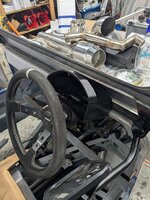
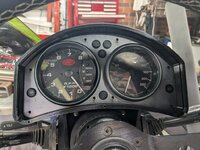


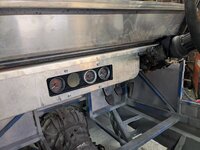
I've only had my 3D printer for a couple of months (Bambu P1S) but this thing is ridiculously useful.
I can see me 3D printing every part that I possibly can to speed up my hot rod build!
The best part is it's literally zero effort and the cost is so low that if you need another part with a slight tweak you just hit go and collect it in the morning - truly amazing.
Absolutely, every day I think of something else I could printWelcome to the addiction!
Everything will start to look like a nail. Then if you haven't already, you'll start wanting/needing to learn about CAD.
 I've used CAD for years and use it every day for work, so that part's easy. Those bits I posted pictures of are all modelled by me and have recessed sections for adding acrylic shields, as well as hex holes to hold the M6 bolts for assembly - amazing stuff.
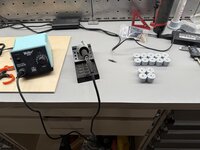
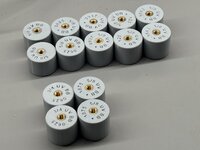
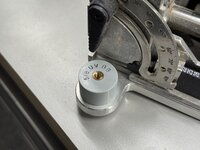
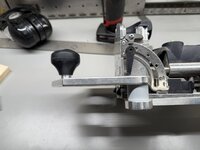

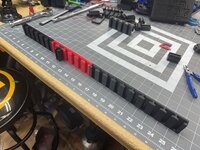


Yup. 3D printers have a ton of uses. I've been using mine a bunch to print stuff that I plan to remake on the mill out of metal. It's great to help validate my designs for function and sizes. I do have to occasionally remember that PLA and some of the other plastics shrink when they cool.I've only had my 3D printer for a couple of months (Bambu P1S) but this thing is ridiculously useful.
I can see me 3D printing every part that I possibly can to speed up my hot rod build!
The best part is it's literally zero effort and the cost is so low that if you need another part with a slight tweak you just hit go and collect it in the morning - truly amazing.
I printed off a bunch of clamps to hold my 3/4" airlines into unistrut. Sure beats the $7/per that Lowe's wants for them.
You may also want to check out the used market, I got mine for $100 (A1 Mini). Othereise, ordering as a package means the AMS Lite is $150 extra vs $279 afterwardsGot started with the Flashforge Adventurer 5M, but had a few headaches (plus somewhat pricey, and hard-to-find parts that only came from a couple of places--can't easily find some of them), and I hated the amount of cheap Dollar Tree grade plastic everywhere. I've had a number of problems with it--mostly owing to its cheap build quality. I also never got along with their software.
Since a buddy of mine has a Bambu (he mostly prints nylon CF--so I assume it's a higher-end model), I'm looking at the A1s. I also hear Bambu printers are more idiot-proof....
I'm leaning more towards the A1 Mini--I rarely needed the entire 250mm build surface of the AD5M, and it gives me more room to work around. It's also only about $250--barely more than I paid for the AD5M. $260 counting shipping from Bambu... Anything more is a bit more of a dent in my current budget than I'd like.
Lower maintenance, and an easier to work on design--plus no strangely placed LCD....
The purge wiper alone is a nice feature--as is the fail detection. The lack of both led to most of my problems with the AD5M. I had to partially disassemble it to get a piece of support got stuck under the bed, and that led to one problem after another.
Camera was something I was looking at for my AD5M, but it's included.
I am wondering about going with a basic model and adding AMS vs. just spending the extra cash on an AMS-capable A1 Mini. It's a feature I can see useful for adding detail to miniatures without painting--as well as making tags and such. I'd prefer to just add the feature later on.
I'm surprised you had issues with the 5M. Mine's been trouble free and no issue with build quality either. I think the only service I've done is clean the build plates. You can add a camera to it for something like $30. I have had a scrap of plastic get between the build plate and magnetic sheet. It creates a high spot that will cause a nozzle crash if you don't auto level before each print. I consider that a me failure, not a printer issue. I've also lost a part under the whole platform which can then cause a failure if the plate can't go all the way down. Again a me failure.Got started with the Flashforge Adventurer 5M, but had a few headaches (plus somewhat pricey, and hard-to-find parts that only came from a couple of places--can't easily find some of them), and I hated the amount of cheap Dollar Tree grade plastic everywhere. I've had a number of problems with it--mostly owing to its cheap build quality. I also never got along with their software.
Since a buddy of mine has a Bambu (he mostly prints nylon CF--so I assume it's a higher-end model), I'm looking at the A1s. I also hear Bambu printers are more idiot-proof....
I'm leaning more towards the A1 Mini--I rarely needed the entire 250mm build surface of the AD5M, and it gives me more room to work around. It's also only about $250--barely more than I paid for the AD5M. $260 counting shipping from Bambu... Anything more is a bit more of a dent in my current budget than I'd like.
Lower maintenance, and an easier to work on design--plus no strangely placed LCD....
The purge wiper alone is a nice feature--as is the fail detection. The lack of both led to most of my problems with the AD5M. I had to partially disassemble it to get a piece of support got stuck under the bed, and that led to one problem after another.
Camera was something I was looking at for my AD5M, but it's included.
I am wondering about going with a basic model and adding AMS vs. just spending the extra cash on an AMS-capable A1 Mini. It's a feature I can see useful for adding detail to miniatures without painting--as well as making tags and such. I'd prefer to just add the feature later on.
I completely agree regarding designing it yourself and understanding the specific characteristics of a printed part. I've found free, functional parts to be a mixed bag. Some are will designed, many aren't. I've been doing CAD for many years so I'm not afraid to design my own parts. While I've been getting 3D prints for almost that long, only in the last few years have I given FDM printers any real consideration.I'm sure this has been discussed on this thread previously, but in my fooling around in the 3D printing world, it isn't so much the printer itself that makes the difference (until we're talking batch printing and such) but rather the quality of the design. Most of the designs that are available in the "free" market, well, they ****. Even many of the paid models are just freeware that someone "licensed", and as such, not much better.
There are a few folks really doing good design work, but I see things like model makers not considering the medium when they lay out the model, thus you have shear lines that run parallel to print lines, and as soon as you exert any energy into the part, it separates. So they say things like "Well, print it out of ABS, or CF, it will be stronger". Maybe. BUT, you could get a lot more out of WHATEVER medium you use if you design the parts right to start with. Now I know that can be changed in the slicer or in the CAD software if you use it, but the reality is that most people don't.
When I first got started, it didn't take me long to realize that this is similar to track saws and garage routers (which people seem to think only exist to make shop parts and shop cabinets); most people are just using them to make more things for the printers. I'm using a Bambu P1S with AMS, and I too find it very useful for little things, not taking into account the time it takes to generate them. Once you figure out that the design is where the rubber meets the road, you realize that you will need SOME level of CAD or 3D design knowledge to get anywhere. This is my focus these days.
It's really rare to find genuinely functional and well-designed models for printing. How many folks on here make (design) their own models?
I am in the process of going through this whole almost 200-post thread, and as I find things that contradict or support what I've said, I'll link them in this post.