To avoid these ads, REGISTER NOW!

Thinking about installing a short retaining wall... Any tips?

dave_dj1

Well-known member
Joined
Feb 3, 2018
Messages
222
Location
Jackson, NY
Ive laid about 200 pallets of retaining wall blocks here. A superior solution

Looking at your drawing, you need approx 360 blocks (assuming these are 6" tall, 16" long, and you will lay one course under the grade. Staring at 2 courses above grade, (12 inches) ending at 8 courses (48").

Homedepot has these at $3.88 each. tax, title, shipping. $1700.
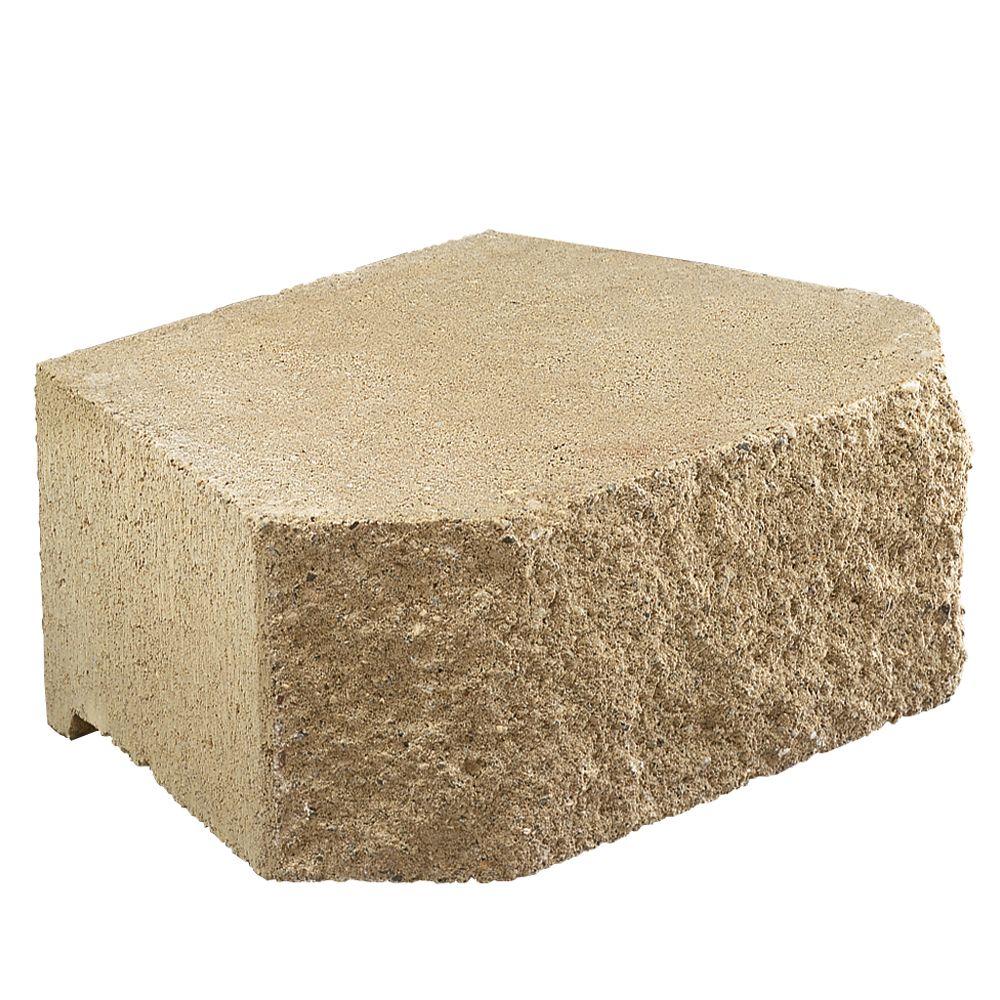
tan-pavestone-retaining-wall-blocks-82105-64_1000.jpg


https://www.homedepot.com/p/Pavesto...Concrete-Retaining-Wall-Block-82105/202188823

Couple of yards of drain rock. landscape fabric- which you need for a wood one too

Some crushed rock as the base.


You doing this or paying someone????

These are easy to lay and look nice and come in a few different colors. Be sure and follow the manufacturers install procedure. They even have a fabric you can lay in to tie it back in to the backfill to keep it from wanting to push. They build a lot of these walls on road widening projects around here.
 
To avoid these ads, REGISTER NOW!

garagelogician

Well-known member
Joined
Jan 27, 2016
Messages
453
Location
Blaine, MN
I design retaining walls and I agree with the others here, skip the wood and go with a precast retaining wall block (not CMU).

Lots of options out there. A small block product (Allan Block Classic, Versa Lok, etc) that has a void in the middle (the void gets filled with crushed stone after installation of each course) is going to be the lightest and easiest to handle by hand. If the ground below the wall face is flat, you can just bury one course.

You will need to excavate ~14" below grade (depending on block height) to put in a 6" deep crushed stone leveling pad. You could also use 3/4" minus if you don't mind bringing in another material besides the crushed stone that you will use for the corefill and the drainage zone (12" min behind the block). Install 4" perforated drainpipe within the drainage zone.

How are you going to use the space above the wall? If you are intending to park a vehicle up there (especially something heavy like a motorhome or something), you are going to want to reinforce the wall with geogrid.
 
OP
M

mroneeyedboh

Well-known member
Joined
Dec 30, 2011
Messages
459
Hey guys yes I'm only adding some new dirt, the land/hill has been there. We're going to move the fence over and neighbor *****. He's renting the house out section 8, so he doesn't care about us or the neighborhood.

The wall will actually hlep expand the backyard and it's a pain to cut the grass on that slope too.

I don't care what it looks like ,nor do I care about what he sees.
 

ddawg16

Well-known member
Joined
Jul 11, 2008
Messages
21,005
Location
S. California
Hey guys yes I'm only adding some new dirt, the land/hill has been there. We're going to move the fence over and neighbor *****. He's renting the house out section 8, so he doesn't care about us or the neighborhood.

The wall will actually hlep expand the backyard and it's a pain to cut the grass on that slope too.

I don't care what it looks like ,nor do I care about what he sees.

Then I would do concrete filled Cinder block. It will be a lot easier to keep a straight line as the grade changes.....
 
OP
M

mroneeyedboh

Well-known member
Joined
Dec 30, 2011
Messages
459
I'll call a mason I guess... Is there a way to secure it into the hillside to stabilize it
 
OP
M

mroneeyedboh

Well-known member
Joined
Dec 30, 2011
Messages
459
Cinder block will eventually tip over.

Landscape block with the lip won’t tip.
Hmm.... Okay. I mean it seems pretty simple to dig the footer by hand. The soil is very Sandy and it seems like it'll be easy to dig. Says only 4-6inches down and 12-24" wide , depending on the block size
 
To avoid these ads, REGISTER NOW!
OP
M

mroneeyedboh

Well-known member
Joined
Dec 30, 2011
Messages
459
Here is an image of the yard, a bit hard to see but you can see the stakes.
006efa55751a49ed05a5da8865690e4d.jpg


You can see the second stake is almost flat with the current grade. Not much higher.
 

Attachments

  • 006efa55751a49ed05a5da8865690e4d.jpg
    006efa55751a49ed05a5da8865690e4d.jpg
    63.8 KB · Views: 0
Last edited:

ard

Well-known member
Joined
Feb 16, 2015
Messages
4,391
Location
Sierra Foothills... California
I design retaining walls and I agree with the others here, skip the wood and go with a precast retaining wall block (not CMU).

Lots of options out there. A small block product (Allan Block Classic, Versa Lok, etc) that has a void in the middle (the void gets filled with crushed stone after installation of each course) is going to be the lightest and easiest to handle by hand. If the ground below the wall face is flat, you can just bury one course.

You will need to excavate ~14" below grade (depending on block height) to put in a 6" deep crushed stone leveling pad. You could also use 3/4" minus if you don't mind bringing in another material besides the crushed stone that you will use for the corefill and the drainage zone (12" min behind the block). Install 4" perforated drainpipe within the drainage zone.

How are you going to use the space above the wall? If you are intending to park a vehicle up there (especially something heavy like a motorhome or something), you are going to want to reinforce the wall with geogrid.

Exactly what I did. 12" deep (give or take) trench with a backhoe; backfill with crush about 6" then bury one stone the other 6"....

The critical stone/course is the first. I would do this myself, getting it precisely level front to back AND side to side (and in line and level with the prior stones), then move on. Once the first course is set, I had two guys follow and stack. At the time I paid $1 per stone.

Oh, when home depot or wherever delivers, CLEAR A PLACE so they can drive the forklift as close to the wall location as possible. have them distribute the pallets along the wall- your back will thank you. Once you start stacking, it is really very quick


'Logician-

In your experience, do these types of walls handle freeze/thaw well?


My impression is the lack of cement, just basically stacking, allows the wall to flex with these cycles. Provided you drain water from behind during wet, it should be pretty durable.
 
Last edited:

garagelogician

Well-known member
Joined
Jan 27, 2016
Messages
453
Location
Blaine, MN
'Logician-

In your experience, do these types of walls handle freeze/thaw well?


My impression is the lack of cement, just basically stacking, allows the wall to flex with these cycles. Provided you drain water from behind during wet, it should be pretty durable.

That is one of the primary benefits of this design/construction method. As long as you have proper drainage and compaction, the wall is going to do just fine through 20+ years of freeze and thaw.


Sent from my Pixel XL using Tapatalk
 

Orionrising

Well-known member
Joined
Nov 16, 2012
Messages
960
Location
Western Maine
I would recommend the large concrete waste blocks, or the fancier textured ones. Need heavier equipment to install them but they are relatively in expensive and they go in fassst.
 

JD3020

Well-known member
Joined
May 11, 2016
Messages
91
Location
Dayton, Ohio
As the others have said don't do wood. Might work out alright for a few years but will fail and cost somebody time and money. We were involved with a re-landscape project where a 7ft tall 80ft long wood retaining wall between 2 houses on a hill had to be replaced. There was roughly 15ft between foundations. The houses were built in the '90s and fairly nice houses but cheaped out on the retaining wall. I never heard final numbers for the wall but the original estimate was $90k and they ended way over that. The landscaper had to hire an out-of-state sub because nobody around here wanted to touch it.

For a wall that size with no lower access you'll want a mini excavator and a skid steer to do it properly and not kill yourself. A good laser and stringline will help keep the wall straight and level, and geogrid to hold it back. Solid blocks will save a lot of time compared to having to fill blocks.

And blocks with lips will tip if not done properly. We have several hundred lawn irrigation customers so i see a LOT of different retaining walls. Almost comical how quickly these 2ft Home Depot walls fall down because there is very little to no drainage behind them and no base under them. Theres a bit more to it than just digging a ditch and stacking block.
 

JD3020

Well-known member
Joined
May 11, 2016
Messages
91
Location
Dayton, Ohio
And whatever you do, take your time. This was one of the first retaining walls we did a few years back, learned a lot on it. Actually talked to the customer last month about doing some other work and he said the wall still looks great and is very happy. Biggest issue is we rushed the footing because we used a concrete-style material for the base, but they were calling for rain which would've made getting a concrete truck in the yard impossible for a week or two. My numbers are probably off because its been a few years but i think i originally dug back 3 or 4ft from the face of the bottom and had to dig back some more before we started laying block. Thats where rushing to get the footer poured bit me and i made a mistake with my measurements somewhere. The footer was roughly 24" wide, 6" thick, and 75ft long. One coarse of block buried. The wall ended up about 48" tall and roughly 70 ton of gravel behind it with a 4" or 6" footer drain we ran down hill. All the blocks were pinned and geogrid. Showed up at 7:30 that morning and we had the footer poured and block delivered before we went home that night.

https://scontent-iad3-1.**.fbcdn.net/v/t1.0-9/14705857_10211131325061452_7189194284447509299_n.jpg?oh=15622e3a8c13e614424f1b29e3dce25a&oe=5B3E5483

https://scontent-iad3-1.**.fbcdn.net/v/t1.0-9/14713718_10211131325301458_605328419622973087_n.jpg?oh=3510845bbcd6f24b40cabcf8bec5eaaa&oe=5B0B0A90

https://scontent-iad3-1.**.fbcdn.net/v/t1.0-9/14731381_10211131325541464_7959074003957428611_n.jpg?oh=ebe44ab7aa2d348a19afc89afa680da3&oe=5B4E3D94
 

Copymutt

Well-known member
Joined
Sep 3, 2016
Messages
3,384
Location
Colorado
I won't argue that CMU's aren't better in every aspect, except cost.
I have well over 100' of 3' tall retaining wall consisting of the old (1990) 6x6 copper arsenate treated 12 footers. Tamped a base, French drain, no deadmans. I did weave in in three areas seating benches up three courses which act as verticals stabilizers. It has built in accent lighting and two sets of stairs with sandstone 3x3 steps.
So that makes it 28 years old. There is one top 12 footer that is warped just like the day I installed it. One or two others have some interior rot but by and large it's still plumb, level and in very serviceable shape.
All that said I doubt that the chemicals used in PT now would hold up near as long.
For comparison I also have 600' of split face block walls that totaled a 95 3/4 ton Chevy with out even a crack.
Jim
 

tmcquinn

Well-known member
Joined
Oct 3, 2014
Messages
187
Location
Cincinnati
Just my two cents, which may be on the high end of its value...

I've done exactly 1 retaining wall and I felt like I was lost during most of it. I used block from Reading Rock and I did everything they told me to, including the geogrid, which I suspect helps a great deal to resist the pressure to tip over. I did not even know what a plate compactor was when I started and I sure as hell had never used a gasoline concrete saw. The material wasn't cheap but it's nearly ten years old and it's still straight and level. All I had to do was take a walk around the neighborhood to see what happens when someone tries to use the solid blocks from the big box store and go over the maximum height. They soon tilt and fall.

Twice I got stuck on an issue and their engineer helped me out on the phone. Reading Rock was great to work with.

Not sure if this link will work but here goes nothing:
https://photos.google.com/album/AF1QipNe7oX2boi-YwL7Bv5-pxDSrwfhCaJAsY7iMiUW
 

garagelogician

Well-known member
Joined
Jan 27, 2016
Messages
453
Location
Blaine, MN
Just my two cents, which may be on the high end of its value...

I've done exactly 1 retaining wall and I felt like I was lost during most of it. I used block from Reading Rock and I did everything they told me to, including the geogrid, which I suspect helps a great deal to resist the pressure to tip over. I did not even know what a plate compactor was when I started and I sure as hell had never used a gasoline concrete saw. The material wasn't cheap but it's nearly ten years old and it's still straight and level. All I had to do was take a walk around the neighborhood to see what happens when someone tries to use the solid blocks from the big box store and go over the maximum height. They soon tilt and fall.

Twice I got stuck on an issue and their engineer helped me out on the phone. Reading Rock was great to work with.

Not sure if this link will work but here goes nothing:
https://photos.google.com/album/AF1QipNe7oX2boi-YwL7Bv5-pxDSrwfhCaJAsY7iMiUW
Our company does a lot of work for Reading Rock, primarily in Indiana and Ohio. Glad to hear you had a successful build.

Sent from my Pixel XL using Tapatalk
 
To avoid these ads, REGISTER NOW!
Top Bottom