To avoid these ads, REGISTER NOW!

Thread forming taps

whateg01

Well-known member
Joined
Mar 13, 2006
Messages
11,214
Location
doo dah, kansas, usa
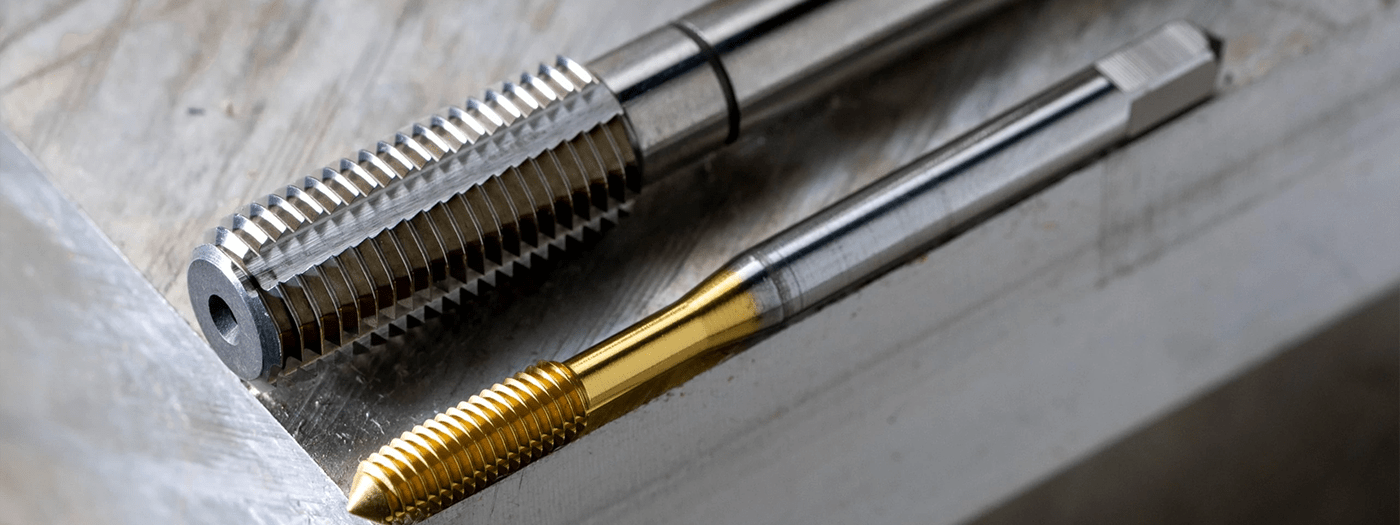
I finally decided to try thread forming taps. So I ordered one. And it arrived. I was expecting to see just a tapered thread, but this has a slot ground in it. Is that normal?

20240307_173242.jpg
 
To avoid these ads, REGISTER NOW!

Steve_P

Well-known member
Joined
Sep 15, 2010
Messages
5,182
Thread forming taps have been used a lot in production applications for at least the last 20 years. What little I know is that the hole has to be very precise in diameter- and not "I drilled this by hand, or on my drill press". A few thousandths out of nominal for a forming tap is a huge difference in comparison to a cutting tap. Which is why this isn't a thing for a normal DIYer.
 

APEowner

Well-known member
Joined
Oct 2, 2009
Messages
4,164
Location
Sunny, New Mexico
The groves are for lubrication. You need lots of it flowing in and out of the hole. Use a cutting oil not a mist. Also, you need a larger hole than a standard tap.

Drill Size = Major Diameter – [(0.0068 x desired % of thread) / Threads Per Inch]
Drill Size (mm) = Major Diameter – [(0.0068 x desired % of thread x pitch (mm)]
 

CapriMikeC

Well-known member
Joined
May 31, 2019
Messages
417
Location
AZ
The grooves are to prevent hydraulic lock in blind holes. Imagine filling a blind threaded hole with oil and running a screw in at 1000 rpm to the bottom.

Form taps exert a lot of pressure on the workpiece and require good lubrication. There are some form taps that do not have grooves because there is adequate relief for lubricant to move around.
 

MoonRise

Well-known member
Joined
Nov 5, 2010
Messages
4,028
Location
NJ
The slot is for lubrication.

That tap is a thread forming tap, not a "thread restoring tap".

Thread forming taps don't cut the material to make the threads, they "form" the threads (cold deform the material to make the threads).

Done right, formed threads are typically stronger than cut threads (because they are cold-forged into the material and not cut into the material).

Also, no chips are produced during the forming process.

But not all materials are good candidates for using thread forming taps. If the material is brittle or forms a powdery chip when machined (ahem, looking at you cast iron) or is too 'soft' (many plastics) then it is not a candidate for using a thread forming tap.

And they take more power to use than a cut tap. And can distort the material more than a cut tap, requiring either generous chamfers at the entrance and exit of the hole or clean-up after threading.

And thread forming taps require a different starting hole diameter than a thread cutting tap (because of the material flow from the thread forming process).


To avoid these ads, REGISTER NOW!
Top Bottom