To avoid these ads, REGISTER NOW!

Tig welder question

jproaster

Well-known member
Joined
Aug 26, 2018
Messages
170
Location
SE Tennessee
Seriously considering a Miller Diversion 180 tig.

Wondering what to expect *in the field with a Westinghouse igen 2200 generator. It's rated for 1800 watts.

Thanks
John

*Let me clearer- I meant in the field as in a broke down jeep or moto needing a temporary mending.

***A long-time member of this forum, who saw my post, is selling his 2 year old with 2 hours use, Diversion 180 in perfect condition. My commute to his home is 2.5+ hours. We're asking for suggestions for a fair selling price. Thanks for any help.
 
Last edited:
To avoid these ads, REGISTER NOW!

Bretny

Well-known member
Joined
Jul 31, 2017
Messages
3,918
Location
Dutchess county NY
Im prety sure those multi voltage machines have there rating cut in half when used with 120v. That generator only puts out 120v.
 

txvwnut

Well-known member
Joined
Jan 1, 2015
Messages
7,657
Location
Bedford, Texas
1800 watts will not be enough for any welder, welders and generators usually don’t play well together. If your going to be doing a fair amount of field welding get something like a Miller Bobcat or the likes there of.
 

manwithtools

ALLIANCE MEMBER
Joined
Aug 24, 2015
Messages
14,103
Location
Lebanon, TN
If you are not using it at the top of it's range it should work fine. The Diversion is rated at 11.3 to 26.5 on 120 VAC input. Welders have a duty cycle with this one at:

60 A at 12.4 V, 100% duty cycle - 11. 3 amps @ 120VAC
125 A at 15 V, 35% duty cycle - 26.5 amps @ 120VAC

1800 watt generator is 15 amps @ 120VAC, should give decent performance if you are not continuously welding, which most of us don't.
 
Last edited:
OP
J

jproaster

Well-known member
Joined
Aug 26, 2018
Messages
170
Location
SE Tennessee
*Let me clearer- I meant in the field as in a broke down jeep or moto needing a temporary mending.

Sorry for lack of clarification- I'm sure many of you have a different worksite understanding.
 

sberry

Banned
Joined
Jun 18, 2005
Messages
35,747
Location
Brethren, Michigan
It likely won't run it. Welders take a lot of poop and these machines trip a 15a breaker easy. But,, with modern machines I would have to consider an inverter and cheaper genset. They actually are designed for it and a guy could stick weld cheap in the field compared to a Bobcat. The Bobber is greedy on fuel and the inverter can run from line. A guy has to do real work to pay for an engine drive. Takes a long time for a hobby type to put a hundred work hours on one. I got a but in business, got a bobber and had 23 hours in 25 years.
 

itstippy

Well-known member
Joined
Nov 30, 2014
Messages
98
Location
Madison, WI
Using TIG to do a temporary repair on a broken Jeep in the field would be way beyond my welding abilities. Wind, dirt, inability to see, uncomfortable position, etc. would make TIG welding impossible (for me). If you get the Miller, also get a stinger cable and some rods.
 
OP
J

jproaster

Well-known member
Joined
Aug 26, 2018
Messages
170
Location
SE Tennessee
Well. Was just hoping the machine would have more flexibility with the generator. If I'm not mistaken, a standard 20 amp circuit with 12 ga wire carries about 2200 watts. So being a dual voltage machine, the 2200 watts must make a significant difference. I would assume low amps with thinner materials?

Thanks
John
 
To avoid these ads, REGISTER NOW!

sberry

Banned
Joined
Jun 18, 2005
Messages
35,747
Location
Brethren, Michigan
What work are you wanting to do? I hope the guys here can sell their machines but there is a reason you dont see 211's up for sale despite 10x the number of them out there.
 

trackwelder

Well-known member
Joined
Jun 22, 2005
Messages
2,608
Location
n.y
I do quite a bit of field work with an inverter stick welder and a Honda 6500 watt generator. My old Miller 150s use to trip the breaker on occasion even when welding low at around 90 amps. The newer Esab hasn’t tripped the breaker yet. Im really considering a 120/240 inverter mig with flux core for field work. I have a Lincoln 300 engine drive and a Miller trailblazer and rarely use them. I rarely tig weld anymore, wire is king in my opinion.
 

byoungblood

Well-known member
Joined
Apr 6, 2011
Messages
2,590
Location
Berryville, VA
That welder really isn't meant to be used for field repairs. Can't be converted to run stick electrodes at all, and takes some work to be able to use a longer lead with it.

Do you have to have AC TIG? If so, I'd probably look at a Lincoln Square Wave 200.
 

MoonRise

Well-known member
Joined
Nov 5, 2010
Messages
4,031
Location
NJ
TIG, doing a 'field' repair (actually in a field :lol: ) on a broken jeep/truck/motorcycle?

Not the usual process or machine for that type of job IMHO.

And then you want to try to run it off of a small 120V generator that maxes out at 2000W?

Nope. Again, IMHO.

The logistics of doing TIG mean you need not just the machine, and an 'appropriate' power source for THAT machine, but you also need a cylinder of argon for the shielding gas. And some TIG filler rods. And a way to CLEAN the broken part of pretty much ALL dirt, grease, mud, roadkill, rust, and anything else that is not clean bright shiny metal. And that usually means some sort of solvent(s) to remove the grease and oil, and then some grinder action with some wire brushes (to remove surface rust and dirt) and then solvent clean the part(s) again. Then some more grinder action with some sort of abrasive (flap disk, grinding wheel, etc) to get down to clean bright shiny metal. Then some more solvent cleaning. Then you start thinking about the welding. :D

Of all of the home welding processes (not going to consider plasma welding or electron beam welding or laser welding here :lol: ), TIG tolerates the least amount of dirt and crud when welding. It's just the way that process works. MIG can tolerate a little bit of non-clean metal, FCAW and SMAW can (with the appropriate selection of filler/electrode) tolerate the most amount of crud.

But you ALWAYS get the best weld when you weld actual metal. Not grease or oil or dirt or rust or paint. Clean shiny metal.

And you're going to be trying to do all this while upside down, on a trail, trying to fix a broken tie rod on the Jeep, with a breeze trying to blow your shielding gas away from the weld puddle? Nope.

Want to do 'field' repairs on a trail for a broken STEEL part on a Jeep or motorcycle?

The more preferred way to do that would be SMAW, aka stick welding.

A small inverter-based SMAW machine (for portability because of size and weight, and for electrical efficiency) and some stick electrodes and a can or two of spray solvent and a hand-powered wire brush to knock off most of the rust and dirt and roadkill and you might be able to make a field repair to enable you to get off the trail.

Real '********' trail welding fix? Two 12V batteries in series (need decent cables to connect them together) and two welding cables (stinger and work clamp) and some 60xx electrodes and one can (with some practice :lol: ) make a trial repair.

:beer:
 
OP
J

jproaster

Well-known member
Joined
Aug 26, 2018
Messages
170
Location
SE Tennessee
Thanks for the replies all. Still learning to weld myself; your wisdom is very welcome.

Since (even at 56 yo) I still like dirt bikes and "attend" hare scrambles and other outdoor activities, I started this thread wondering of the possibilities. Didn't really think this through before posting. Sorry.

John
 
OP
J

jproaster

Well-known member
Joined
Aug 26, 2018
Messages
170
Location
SE Tennessee
TIG, doing a 'field' repair (actually in a field :lol: ) on a broken jeep/truck/motorcycle?

Not the usual process or machine for that type of job IMHO.

And then you want to try to run it off of a small 120V generator that maxes out at 2000W?

Nope. Again, IMHO.

The logistics of doing TIG mean you need not just the machine, and an 'appropriate' power source for THAT machine, but you also need a cylinder of argon for the shielding gas. And some TIG filler rods. And a way to CLEAN the broken part of pretty much ALL dirt, grease, mud, roadkill, rust, and anything else that is not clean bright shiny metal. And that usually means some sort of solvent(s) to remove the grease and oil, and then some grinder action with some wire brushes (to remove surface rust and dirt) and then solvent clean the part(s) again. Then some more grinder action with some sort of abrasive (flap disk, grinding wheel, etc) to get down to clean bright shiny metal. Then some more solvent cleaning. Then you start thinking about the welding. :D

Of all of the home welding processes (not going to consider plasma welding or electron beam welding or laser welding here :lol: ), TIG tolerates the least amount of dirt and crud when welding. It's just the way that process works. MIG can tolerate a little bit of non-clean metal, FCAW and SMAW can (with the appropriate selection of filler/electrode) tolerate the most amount of crud.

But you ALWAYS get the best weld when you weld actual metal. Not grease or oil or dirt or rust or paint. Clean shiny metal.

And you're going to be trying to do all this while upside down, on a trail, trying to fix a broken tie rod on the Jeep, with a breeze trying to blow your shielding gas away from the weld puddle? Nope.

Want to do 'field' repairs on a trail for a broken STEEL part on a Jeep or motorcycle?

The more preferred way to do that would be SMAW, aka stick welding.

A small inverter-based SMAW machine (for portability because of size and weight, and for electrical efficiency) and some stick electrodes and a can or two of spray solvent and a hand-powered wire brush to knock off most of the rust and dirt and roadkill and you might be able to make a field repair to enable you to get off the trail.

Real '********' trail welding fix? Two 12V batteries in series (need decent cables to connect them together) and two welding cables (stinger and work clamp) and some 60xx electrodes and one can (with some practice :lol: ) make a trial repair.

:beer:

Appreciate the real world application know how. Good stuff.
Thanks.
 

dogdog

Well-known member
Joined
Nov 15, 2011
Messages
12,711
Not that thing is a bad welder, but if you were to take it to a trail, won't you want a multi process machine.... even with tig..you'll still have to lug around a big bottle of gas. for tig or mig... so... really only thing that make sense would be a stick welder no ? So might not be your ideal welder for the purpose...
 

WittHay

Well-known member
Joined
Jan 6, 2016
Messages
2,157
Location
Surrey, BC Canada
I do quite a bit of field work with an inverter stick welder and a Honda 6500 watt generator. My old Miller 150s use to trip the breaker on occasion even when welding low at around 90 amps. The newer Esab hasn’t tripped the breaker yet. Im really considering a 120/240 inverter mig with flux core for field work. I have a Lincoln 300 engine drive and a Miller trailblazer and rarely use them. I rarely tig weld anymore, wire is king in my opinion.

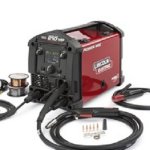
We use a Lincoln 210MP on a Onan 30KW PTO generator. the invertor is very forgiving, you can power done the tractor without shutting off the welder. One time we were welding 1/2" steel with the stick. Had the wrong PTO shaft on, starting chattering and blew the breaker. Welder was fine. You can hear a 70 hp tractor working when the welder is at max capacity.

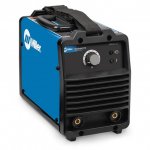
Often wondered how much you could do with the 210 mig with a normal say 7000 watt generator. The new inverter based Miller Thunderbolt 160 and 210 stick are supposed to weigh only 15 lbs. Ideal welder also for welding out in the sticks with a generator. The Lincoln weighs 40 lbs.
 

Attachments

  • Thunderbolt 210.jpg
    Thunderbolt 210.jpg
    39 KB · Views: 0
  • lincoln-powermig-210mp.jpg
    lincoln-powermig-210mp.jpg
    24.5 KB · Views: 0
  • IMG_8531.jpg
    IMG_8531.jpg
    145.9 KB · Views: 1
Last edited:
To avoid these ads, REGISTER NOW!
Top Bottom