To avoid these ads, REGISTER NOW!

Below 265 SQ/FT Tiny Tokyo Shop

All workspaces below 265 squarefeet.

jimmie jam

Well-known member
Joined
Oct 16, 2005
Messages
490
Location
fort lauderdale, fl
I'm but a pale and unworthy imitation of this giant amongst men: https://www.garagejournal.com/forum/showthread.php?t=185104

I've already arranged for a nurse to provide you IV sustenance as you are likely to be transfixed, motionless for the next few months reading that mega-thread of awesomeness.

Unfortunately your are late to the game on this one Baka. I have been in on this thread from day one. You are right, even "epic" does not quite properly describe it's awesomeness :shocking:. I've been brought back from DOA at least three times during this saga. I got hooked right away...just like your thread.:beer:
 
To avoid these ads, REGISTER NOW!

QwikKotaTx

Well-known member
Joined
Aug 10, 2013
Messages
967
Location
Seabrook, TX
Those tiles are an insane amount of work. As soon as the mosaic came apart I would be throwing in the towel. How did you get the tiles to stick to the adhesive film but keep the acrylic template from sticking? I definitely admire your dedication!

Thanks for the square footage numbers. That does sound big for Tokyo. My sister is looking at a 985 sq ft home in Sydney that has a baffling price. In her defense she is sick of paying $5500 for rent! Crazy.
 
OP
B

Bakafish

Well-known member
Joined
Feb 7, 2017
Messages
477
Location
Tokyo
Those tiles are an insane amount of work. As soon as the mosaic came apart I would be throwing in the towel. How did you get the tiles to stick to the adhesive film but keep the acrylic template from sticking? I definitely admire your dedication!

I used 4mm thick acrylic so that the tiles stood well proud of the template. I held the template flat on a powder coated steel plate using strong rare earth magnets. The film is pretty thick, it did tend to stick around the sides a bit, but I could just lift the whole thing up and pop them out from behind. The biggest issue was trying not to damage the template too much when trimming the film with a razor knife or when pushing slightly oversized tiles into place.

Thanks for the square footage numbers. That does sound big for Tokyo. My sister is looking at a 985 sq ft home in Sydney that has a baffling price. In her defense she is sick of paying $5500 for rent! Crazy.

Living in desirable metropolitans has many costs and benefits. Assuming the world doesn't go to hell, the investment is at least a safe one. In the 5 years or so we've owned our house the property value as pretty dramatically increased, and the convenience is something that is easily discounted when you are looking at the costs in a vacuum. Most of my local team lives outside of Tokyo and a 2 hour commute each way (by train of course) is pretty common, but that would drive me mad. I always felt at least 15 minutes (so you can marshall your day in your head) but no more than 30 minutes (because that's eating into precious sleep time!) is ideal.
 

QwikKotaTx

Well-known member
Joined
Aug 10, 2013
Messages
967
Location
Seabrook, TX
I used 4mm thick acrylic so that the tiles stood well proud of the template. I held the template flat on a powder coated steel plate using strong rare earth magnets. The film is pretty thick, it did tend to stick around the sides a bit, but I could just lift the whole thing up and pop them out from behind. The biggest issue was trying not to damage the template too much when trimming the film with a razor knife or when pushing slightly oversized tiles into place.


Living in desirable metropolitans has many costs and benefits. Assuming the world doesn't go to hell, the investment is at least a safe one. In the 5 years or so we've owned our house the property value as pretty dramatically increased, and the convenience is something that is easily discounted when you are looking at the costs in a vacuum. Most of my local team lives outside of Tokyo and a 2 hour commute each way (by train of course) is pretty common, but that would drive me mad. I always felt at least 15 minutes (so you can marshall your day in your head) but no more than 30 minutes (because that's eating into precious sleep time!) is ideal.

Interesting. Was the steel plate part of the wall structure or moved to a new area after tiles were placed? I have done tile and marble with my father over the years but we only used mastic and thin set. He would sometimes have a jig made for placing tiles out of welded steel but it was typically floor tiles under 12". I like the larger tiles as the floor covering goes faster. My Wife wants wood look tile in our downstairs but it is nearly 2000 sq feet and I don't have the time to lay it. Afraid to ask how much a contractor will charge.

Being in a densely packed metro area has its pros and cons but most cities will definitely allow homes to appreciate. The Sydney area seems to be in a bit of a bubble but knowing when it will burst is less than straight forward. She has to take a ferry to work as well as a bus but I think she likes the boat ride at least and has not had to pay a car note or insurance in 5 years. Her commute is not quite that bad, perhaps 45 minutes.

I like having my space and a garage (small compared to some on here) as well as vehicles but I could probably adapt if I had to. Not being able to defend myself and my little boys is probably the biggest hurdle to moving overseas. I was recently in NYC with them and it was a bit stressful, at least until we got to Central Park and they could run around.
 
OP
B

Bakafish

Well-known member
Joined
Feb 7, 2017
Messages
477
Location
Tokyo
Interesting. Was the steel plate part of the wall structure or moved to a new area after tiles were placed? I have done tile and marble with my father over the years but we only used mastic and thin set. He would sometimes have a jig made for placing tiles out of welded steel but it was typically floor tiles under 12". I like the larger tiles as the floor covering goes faster. My Wife wants wood look tile in our downstairs but it is nearly 2000 sq feet and I don't have the time to lay it. Afraid to ask how much a contractor will charge.

Ahhh, I was trying to minimize the number of photos, I see I didn't explain well. The clear acrylic template was made using 4mm thick material to allow the tiles to protrude from it, but due to its light weight and some mild warping from the laser cutting process it needed to be firmly secured to a flat surface (the picture shows it taped to a cutting mat) when putting the tiles into it as otherwise the template lifted or moved and tiles would lose their place. The magnets and small steel sheet were used instead of tape to improve rigidity and make the next step easier.

After filling the template with the tile pattern, a sheet of adhesive film (imagine of a foot wide roll of 3M clear packing tape) was stuck to the faces of the tiles, creating a "sheet" that could then be easily placed as a whole unit. I then used a urethane hand roller to really seal the tape to the colored surface as I wanted to make sure no epoxy adhesive would get on the faces. This required the template to be really solidly held in place.

I would then trim all the edges with a small razor knife and remove the magnets sandwitching the template to the backing plate, flipping the template, tiles and adhesive film over and gently push the tiles out of the template from behind, ensuring they maintained their placement on the film. The sheet could then be pretty easily moved about without too much concern.

In the photo of these sheets being staged in my tatami room you may be able to make out the shiny film that is keeping them in place. There are about 30 sheets there, carefully aligned to each other, waiting to be labeled against my master drawing so I could transfer them to the wall correctly.
 

snickers muncher

Well-known member
Joined
Feb 19, 2018
Messages
938
Location
Northeast GA
Typical guy. Says he can't read Japanese---still puts Japanese reading material in the bathroom.

In true GJ fashion it should be the Harbor Freight monthly catalog, however, allowances must be made....
 

QwikKotaTx

Well-known member
Joined
Aug 10, 2013
Messages
967
Location
Seabrook, TX
Ahhh, I was trying to minimize the number of photos, I see I didn't explain well. The clear acrylic template was made using 4mm thick material to allow the tiles to protrude from it, but due to its light weight and some mild warping from the laser cutting process it needed to be firmly secured to a flat surface (the picture shows it taped to a cutting mat) when putting the tiles into it as otherwise the template lifted or moved and tiles would lose their place. The magnets and small steel sheet were used instead of tape to improve rigidity and make the next step easier.

After filling the template with the tile pattern, a sheet of adhesive film (imagine of a foot wide roll of 3M clear packing tape) was stuck to the faces of the tiles, creating a "sheet" that could then be easily placed as a whole unit. I then used a urethane hand roller to really seal the tape to the colored surface as I wanted to make sure no epoxy adhesive would get on the faces. This required the template to be really solidly held in place.

I would then trim all the edges with a small razor knife and remove the magnets sandwitching the template to the backing plate, flipping the template, tiles and adhesive film over and gently push the tiles out of the template from behind, ensuring they maintained their placement on the film. The sheet could then be pretty easily moved about without too much concern.

In the photo of these sheets being staged in my tatami room you may be able to make out the shiny film that is keeping them in place. There are about 30 sheets there, carefully aligned to each other, waiting to be labeled against my master drawing so I could transfer them to the wall correctly.

Ok, that makes sense now. For some reason I thought you were doing the template on the wall. It came out very nice. I use some rare earth magnets from a previous job to hold my wooden vise jaw pads in place. They are insanely strong. We used them on a large plastic liner for 20' shipping containers. They held the liners to the walls for long journeys. They work great in a truck bed too for mulch hauling. Hah.
 

Guster

Well-known member
Joined
Mar 11, 2012
Messages
1,543
Location
Auckland, New Zealand
Awesome result on the mosaic tiles. Glad you managed to dodge the sanding-filling-sanding cycle of insanity. The pattern hides the little flaws well but I'd hardly call them that. Having seen enough commercial tile jobs in clean new builds that get away with much larger crimes. :thumbup:

I also know that critiquing feeling all too well. My wife insisted on using large tiles. 600mm square and in some much ways harder to compensate for flaws in evenness on the wall. A millimeter shows up like a mile with thin grout lines. Luckily I also had to put in thicker substrate to support the heavier tiles and that probably spared my sanity. Hence why I prefer 200-300mm in size. But you do the best you can to keep the ones you love happy and content. Including making the bathtub at full tile height with a platform frame to support the bath about 200mm above floor level. Bakana! :willy_nil
 
OP
B

Bakafish

Well-known member
Joined
Feb 7, 2017
Messages
477
Location
Tokyo
Awesome result on the mosaic tiles. Glad you managed to dodge the sanding-filling-sanding cycle of insanity. The pattern hides the little flaws well but I'd hardly call them that. Having seen enough commercial tile jobs in clean new builds that get away with much larger crimes. :thumbup:

Appreciate it!

I also know that critiquing feeling all too well. My wife insisted on using large tiles. 600mm square and in some much ways harder to compensate for flaws in evenness on the wall. A millimeter shows up like a mile with thin grout lines. Luckily I also had to put in thicker substrate to support the heavier tiles and that probably spared my sanity. Hence why I prefer 200-300mm in size. But you do the best you can to keep the ones you love happy and content. Including making the bathtub at full tile height with a platform frame to support the bath about 200mm above floor level. Bakana! :willy_nil

Yeah, I've seen some of the challenges with large tiles and the kinds of the tools and kits for spacing and leveling them. Some pretty clever but quite expensive solutions, I'm glad that I (don't quote me) won't be tempted to use them anywhere.

I checked out your forge, cool cool cool. This forum is just a horrific gateway drug reminding me of all the interesting things that I want to do. The space constraints I face is a blessing in disguise sometimes...keeping me focused and my neighbors free from worrying about the strange man and his hand made contraptions pouring molten metal in his driveway.
 

Guster

Well-known member
Joined
Mar 11, 2012
Messages
1,543
Location
Auckland, New Zealand
I checked out your forge, cool cool cool. This forum is just a horrific gateway drug reminding me of all the interesting things that I want to do. The space constraints I face is a blessing in disguise sometimes...keeping me focused and my neighbors free from worrying about the strange man and his hand made contraptions pouring molten metal in his driveway.

Thanks. About to add an electric kiln to the mix too. Though I think we are all predisposed to this kind of addiction. :lol_hitti

Mind you, a craftsman thinks not of what his neighbours think of him. As long as he is not too loud or obnoxious I guess. The old Chinese lady next door actually loves it. Pats me on the shoulder and tells my wife "he is so industrious" :lol:
 
OP
B

Bakafish

Well-known member
Joined
Feb 7, 2017
Messages
477
Location
Tokyo
Big pantry project coming up. The logistics involved in these projects is always the most difficult part. I've had to create my own solutions where none are locally available. One thing that has changed is there are places selling domestic Festool at below list prices here. It is still way more expensive than in the US, but I feel better about using motors designed for 100v/50Hz and picked up the small Domino and the 150mm Rotex. I've pulled the tatami mats off the floor and will build a torsion box table out of MDF. The pantry will be all Baltic Birch, it is crazy expensive here and I'm really hoping it will work properly and not warp (I'll be sealing it with water based poly.)
 

Simon

Member
Joined
Feb 22, 2008
Messages
6
That's one of the things that always struck me about Japanese houses - the almost complete lack of workable pantries!
 
OP
B

Bakafish

Well-known member
Joined
Feb 7, 2017
Messages
477
Location
Tokyo
That's one of the things that always struck me about Japanese houses - the almost complete lack of workable pantries!

Space constraints are the obvious conclusion for lack of proper pantry space, but like many things here that doesn't really get to the heart of it. The way things are set up in the cities, stockpiling of food makes little sense. ("Countryside" which most Japanese look at as primitive and unfathomable, but is much more akin to what we would call suburban, would be more familiar to most Americans. I will refrain from going off on a tangent here, but the meaning of isolation is clearly a sliding scale to humans and Japanese are poorly calibrated.)

All the portions at the grocery are extremely small (need 3 tiny asparagus stalks, a single mushroom and a carrot? No worries, that's how they are packaged) and since the supermarkets are typically part of the train station itself (and owned by the train company) everyone (okay not everyone, the Wifu, it's still a bit backwards here...) picks up what they need for that day. Because cars are not common in the big cities, and wouldn't be useful to shop with even if you had one, you buy what you can comfortably carry home (my wifu regularly carries enough weight home that I'm suspecting she's just trying to quietly intimidate me and could likely crush my skull with one hand if provoked. :scared: )

In the US I remember shopping every week or two, loading up the giant shopping cart to full capacity, packing my car to the gills. Here they use a little hand basket, no carts are even provided. So even if you have the storage space, it wouldn't really get utilized by the average Japanese household. The only reason we have one is that the builders had an awkward space adjacent to the kitchen, I think it was really just intended to be a storage closet, it is currently **** for actually trying to store food. So the cabinets will really improve the utility of it for *our* use, but given the secondary freezer, cases of liquor and mass of canned goods, most Japanese will probably think we are some kind of 'preppers' :)

Having said that, they do have Costco in a few cities now and western style consumption (and the cost benefits of buying in bulk) are slowly changing the culture. Refrigerators are growing dramatically in size for example (will cover them at some point!), and women's quality of life is becoming a bigger focus meaning the kitchens are becoming a more pleasant and larger portion of floorspace and easy access storage is more common. My favorite Japanese hardware manufacturer "Sugatsune" has some very inventive hinges and solutions for heavily space constrained areas (some of which I will demonstrate in this build.) But pantry glides (a large cabinet slide) are astonishingly not on the domestic menu in any form. So I'm shipping a nice German built unit over from the states.

Lumber comes tomorrow! ****'s about to get real...
 

Motoman1100

Well-known member
Joined
Oct 2, 2014
Messages
443
Location
GA
I sub'd your thread a long time ago and really enjoy seeing how you get creative in another country. Looking forward to the build!
 
OP
B

Bakafish

Well-known member
Joined
Feb 7, 2017
Messages
477
Location
Tokyo
Tatami_Workshop_1.png


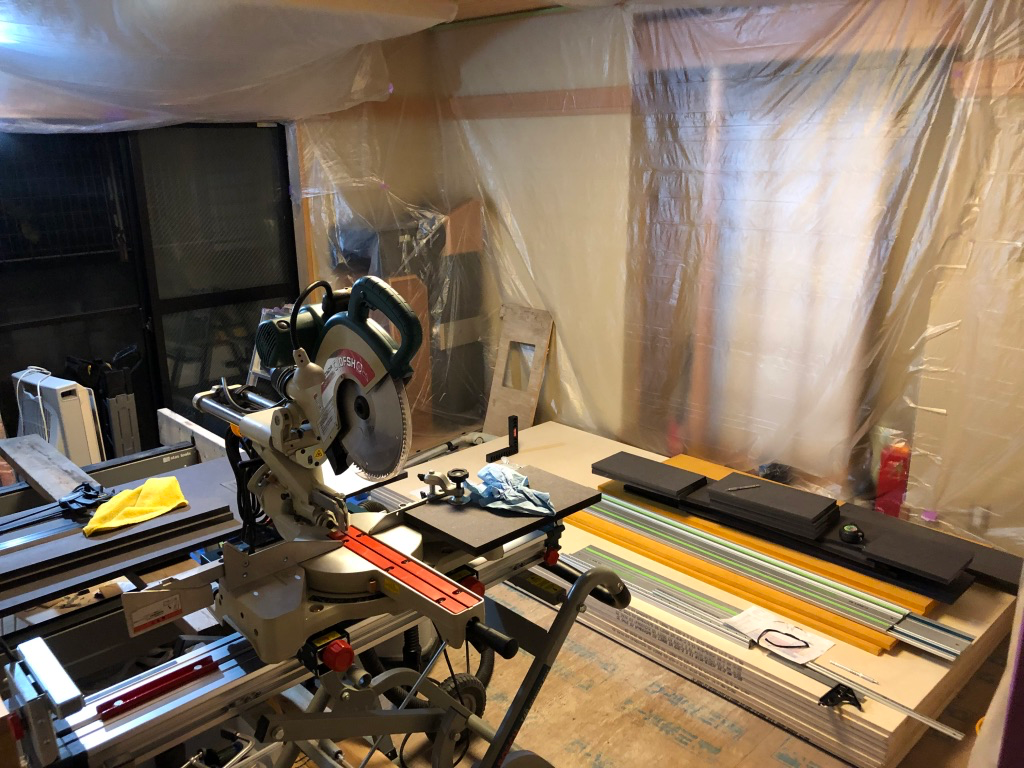
I got some "colored" MDF that is sourced from Germany to build my assembly/router table. I will be doing the whole MFT/20 hole pattern deal with it. (Workbench Drawing v5.pdf) It's going to be a lot heavier than I was hoping for, but fingers crossed that it will last and be useful over the long haul. One thing I will mention is that I've been using my ridiculously cheap (under$200) Ender 3 Chinese 3d printer to create precision router templates, and if you have the need to do super accurate routing you should really take a look.

In the foreground is a domestic market Hitachi mitre saw. I usually go Makita, but the units offered domestically are years behind the US models and as with everything here in Japan only used by professionals, super overpriced. The Festool is around $3k here so, no way I'm doing that... most of the units sold here are 165mm because they do not do the same sort of construction here, western 2-by is really uncommon. I went with the 10" since I have a bad habit of being frugal then remorsefully and begrudgingly buying the thing I wanted and ending up with 2...

It is sitting on a Bosch cart that I had shipped over from the US. They do not sell these wheeled miter saw stands here at any price, and I was thinking I was being so clever, was going to use a first floor closet, just wheel her out when needed. When I finished assembling the thing I quickly realized that it was so massive that it literally cannot fit through any of my doorways and had no chance of fitting in a closet, even with the saw removed, not even close... It may not even be able narrow enough to be wheeled through the narrow walkway to access the rear of my house where storage could conceivably be built to store it. Problem for another day, but just want to share my pain with you lucky bastards with enclosed garages...
 

moab11

Well-known member
Joined
Nov 22, 2015
Messages
553
Location
Thunder Bay, Ontario
Thank you for the updates Bakafish!
I really enjoy the insight into the Japanese culture and philosophy as to the differences in building practices. The troubles you get into over there are so unique, yet so relatable, that your thread is a must read whenever I see new updates.
 

xtremek

Well-known member
Joined
Apr 13, 2012
Messages
11,603
Location
St. Johns, Mi
I can't imagine what you go through. I usually haven't had an iside place to work, but I've always had room.
 
OP
B

Bakafish

Well-known member
Joined
Feb 7, 2017
Messages
477
Location
Tokyo
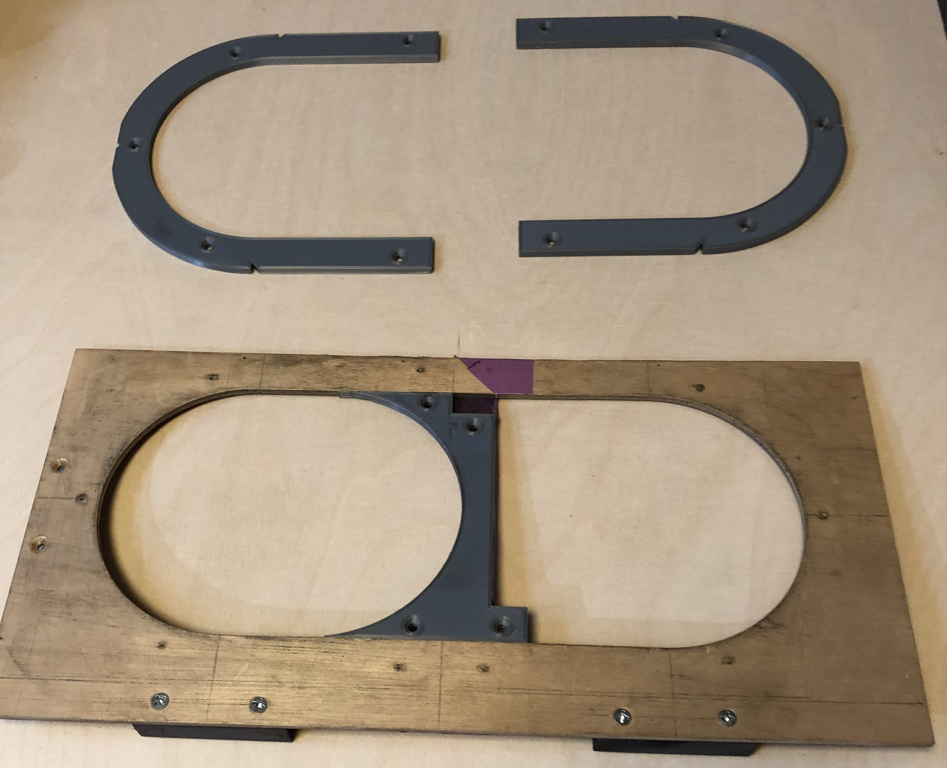
Waiting for my first glue-up on the worktable to set. I wanted to cover the 3d printed router templates a bit, since I think they are something that can really save a ton of effort. My 3d printer is relatively small, so it wasn't practical to print out the entire template. Given I had 3 different, but similar profiles, making it in several pieces wasn't a disadvantage anyway. I had a lot of scrap 5.5mm plywood sheathing, and made the templates with registration marks so that I could screw them directly to a section of it. I used a standard pattern bit with a bearing to directly transfer the profile to the plywood, so I could have a single piece. I mounted two small blocks to the bottom to register the template and provide a clamping surface. The extruded insert seen taped to the plywood template allowed me to model the smaller two "slot" profiles used in the worktable struts.

template.png


When making a template you need to account for the hole or pattern you are making, and calculate the offset using the bit radius and the diameter of the router "guide bushing" being used. The formula for the offset of an internal template like I am using here is: (Guide Bushing diameter - Bit diameter) / 2 and once you have the offset, it is pretty trivial to plug that into the "offset tool" of a Fusion 3D sketch to create the correct pattern for whatever it is you are trying to cut. The tolerances I'm getting are fractions of a mm over quite a distance, I think very complex inlays or signage are quite workable, so keep it in mind if you don't have a wood CNC.

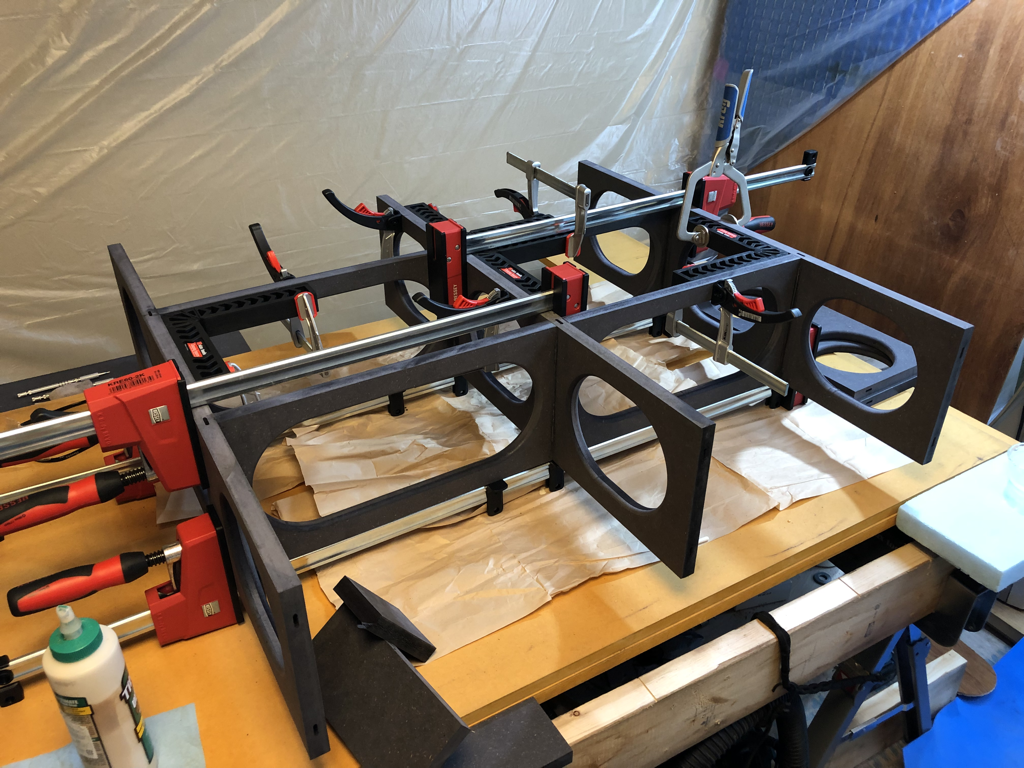
Using the Festool Domino for the first time, it is really precise and FAST. The little paddles on the sides allow quick registration that ensures the parts line up without any drama. Highly recommend it! I originally intended to use pocket screws to tie everything together while the glue did its thing, but my tests showed that they badly interacted with the MDF causing delamination and puckering at the entry preventing a tight seam. They would have required pre-drilling of the second surface (Kreg should make a bit with a longer minor bore!), so just glue and dominoes are the prescription for the table. Fortunately more Bessey clamps were delivered today, so I could get most of the guts glued up.

glue_up.png
 
To avoid these ads, REGISTER NOW!

Guster

Well-known member
Joined
Mar 11, 2012
Messages
1,543
Location
Auckland, New Zealand
Looking forward to your update on the pantry. If it is anything like the other builds it will be interesting.

Pain felt alike. Living in NZ is not unlike Alaska either. Shipping is expensive and options are limited. Least the weather is less glacial and the DIY market is big enough that we get some decent, though expensive tools in that market. The intermediate market is where there is a massive gap and often need to go with light industrial options instead. Unless you take pleasure in finding and rebuilding old machines which creates a whole different set of issues.

I have to add though, having been swept up in the traditional crafts thing on YouTube, much of the Japanese crafts remain strongly bound to tradition. Tools made the same way as they were centuries ago and materials processed the same way. With nary a machine tool in sight. Very different from Western crafts which openly adopts newer tools but explains a certain lack of demand and supply.

Nice idea using 3D printed router templates. Ender3 is a great bang for buck.

Suddenly wish we got dark MDF like that.
 

y'sguy

Well-known member
Joined
May 1, 2010
Messages
1,306
Location
Tulsa, Oklahoma
Great attitude! I just arrived here today and read thru it. Thanks for the sharing, I feel like I have learned something magical. I have the luxury of a large work space and garage. It does me good to see how things can be managed smaller and in a more efficient manner. Would also like to learn how to use a 3d program, just don't know if I have the time to take that on?

Keep up the great work!
 
OP
B

Bakafish

Well-known member
Joined
Feb 7, 2017
Messages
477
Location
Tokyo
Great attitude! I just arrived here today and read thru it. Thanks for the sharing, I feel like I have learned something magical. I have the luxury of a large work space and garage. It does me good to see how things can be managed smaller and in a more efficient manner. Would also like to learn how to use a 3d program, just don't know if I have the time to take that on?

Keep up the great work!

Autodesk Fusion 360 is free for noncommercial use, and has tons of YouTube instructional videos and support forums. I won't profess it will be easy to learn, (maybe easier for someone not having to unlearn older solutions) but I can't imagine doing any significant project without it at this point. It allows a much more efficient way of finding problems before you start cutting materials.

I've always mentally prepared things, pre-building and iterating designs in my head. Thinking about what order things needed to go together to fit in a space with no tolerance or limited access. I spend about 90% of a project in that 'design' phase, just rolling it over and over until I'm comfortable with success. Revisiting the 'show stoppers' until I have a solution. It is a bit maddening to my wife because it can seem like I'm doing nothing (but inexplicably buying random parts and tools) instead of working on the project at hand. Then once I'm happy, a quick push and a few days later it is done. "It was so fast, why didn't you just do it two months ago?!" :)

Being able to create the model in 3d and manipulate it is much easier and more accurate than keeping it all in my head. I can also easily generate the 2d part drawings with all the measurements, generate a cut list that lets me know exactly how much of each material I need, even the cut order and sheet optimization can be done. It's one of those time investments that is likely to pay off in the long term.
 
OP
B

Bakafish

Well-known member
Joined
Feb 7, 2017
Messages
477
Location
Tokyo
Went on a trip to Amami-Oshima and did a bit of snorkeling and scuba with the waifu. :bounce: A friend of ours has a Shochu factory there, the tropical fish and sea turtles are awesome and plentiful.

amami.png


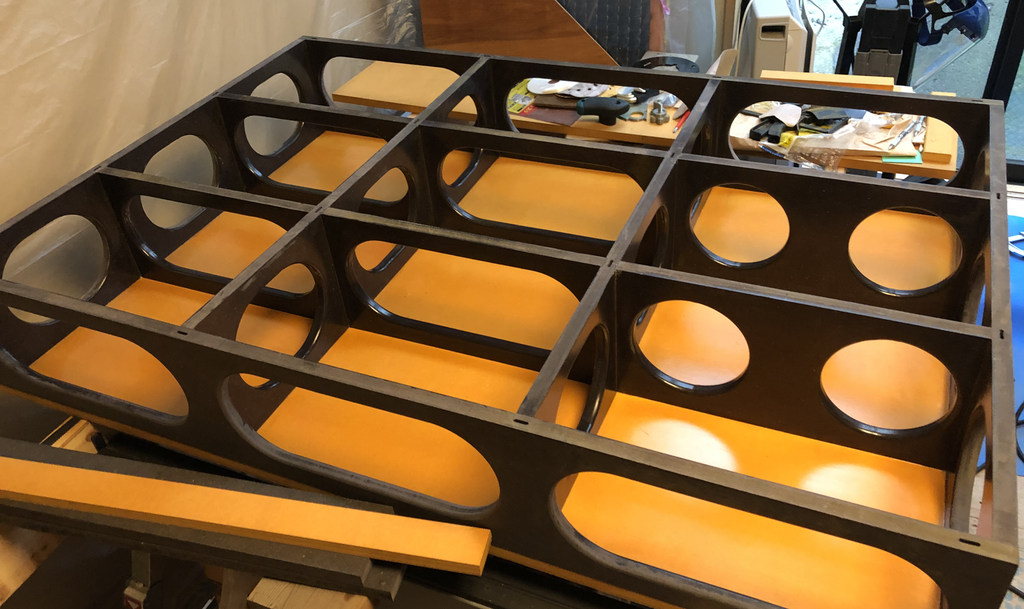
Back at home my uncompleted workbench was waiting for me. I had completed the frame and glued and dominoed the bottom.

table_guts.png


I then sealed it and applied two coats of water based poly using a domestic Japanese brand (Washin-Chemical) that worked pretty well (based on my extremely limited experience.) It is difficult when you can't tap into the reams of product feedback and testimonials available in western countries to identify good products. :(

Sanding in all those complex compartments between coats was a chore, but my Makita Multitool with the little Trigon sanding pad fitted to it saved my bacon. I hope you have one, just don't forget that you have that in your arsenal.

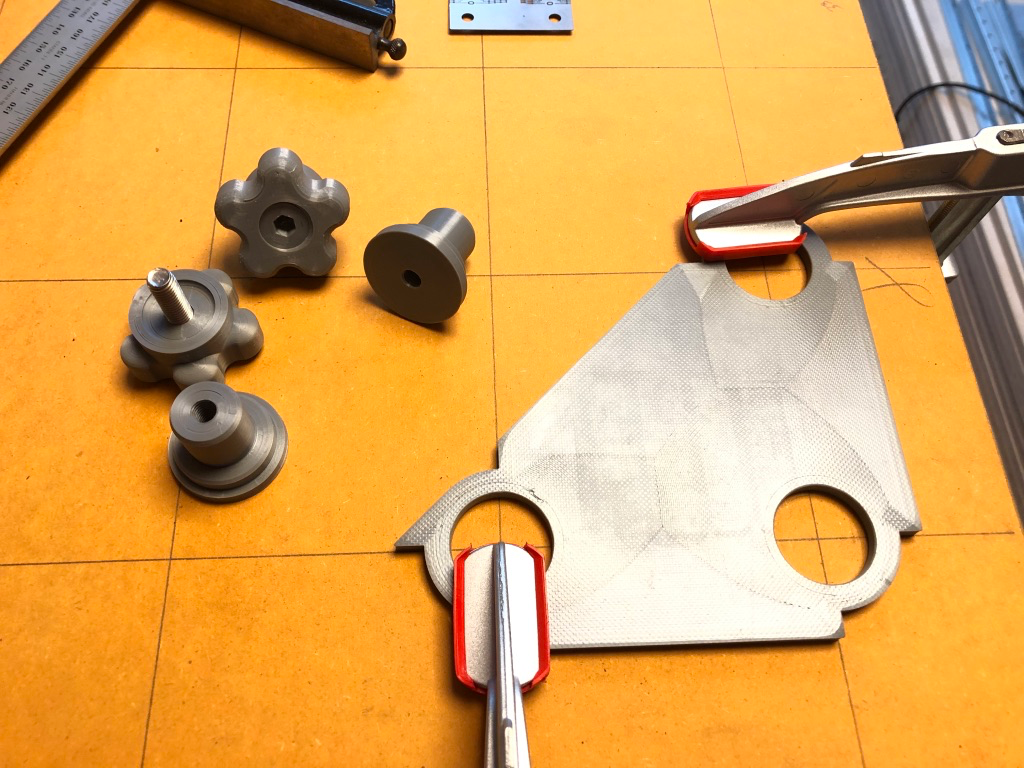
I had 3D printed out some items to help create the MFT 20mm hole pattern for the top of the bench. Basically 20mm dogs with a 30mm top and a little rim to clamp down the template. The template has three 30mm holes that were modeled 96mm center to center, with cutouts to make sure everything was centered and aligned.

20mm_template.png


My thinking behind only having 3 holes was that the dimensional error would propagate evenly on both axis, but it meant tediously moving it for every hole. Despite it being off 96mm from center to center by only 0.1mm, this propagated out to about 2mm total by the end of the bench, although it is square at least which was the real concern.

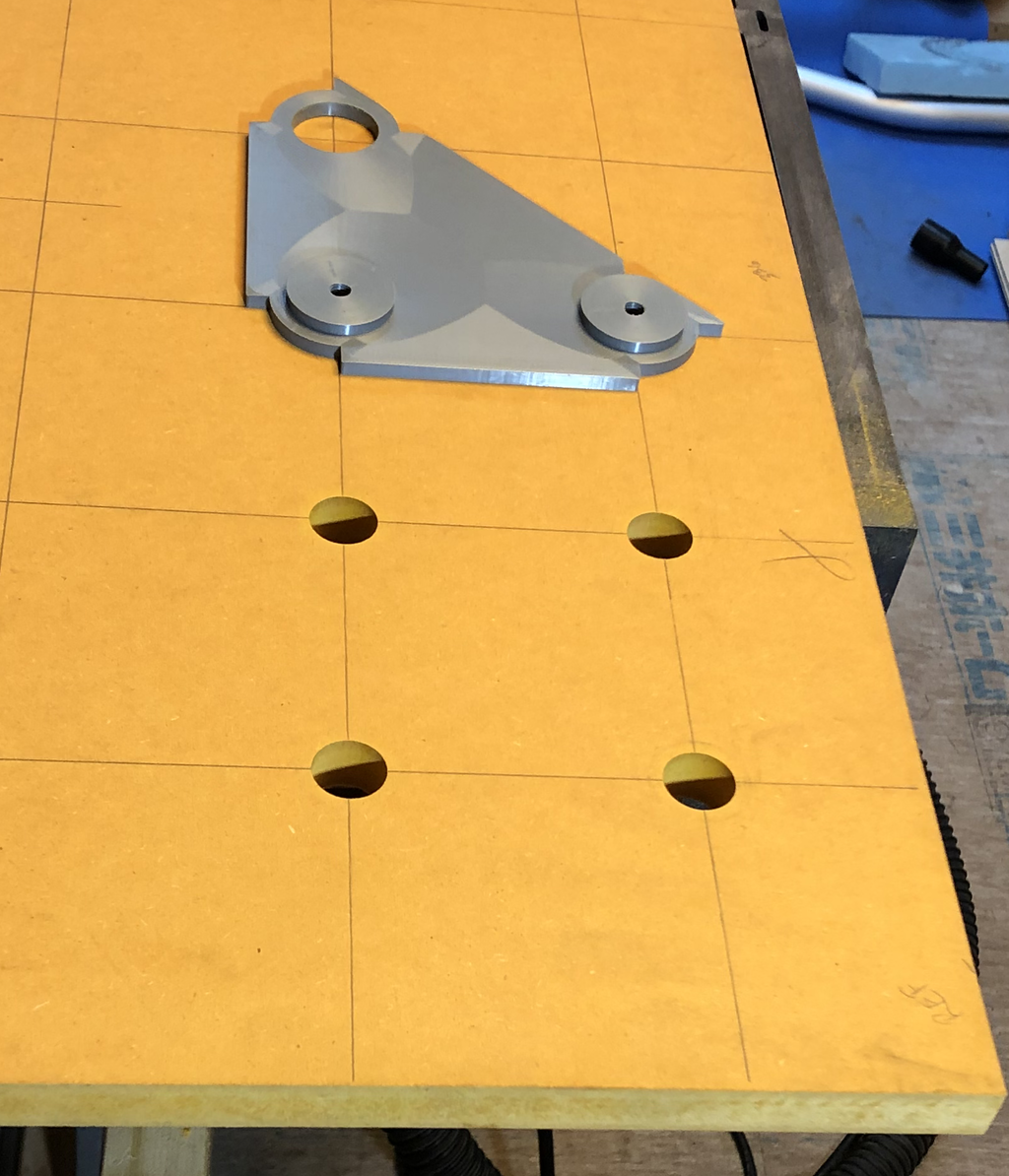
making_holes.png


I had carefully scribed all the center points, although I knew it would drift, I just wanted a sanity check. You can see how the last of the holes is several mm off from the lines. If I were to do it again I think I might reprint it with more "slop" in the hold downs and manually center the hole to the carefully scribed lines each time. I would also start from the center of the work surface instead of a corner so that any error was more evenly centered. Still, this was far cheaper at about $50 for a 20mm straight cut router bit and 30mm Guide Bushing than the $300 Parf-Guide System which is not available here anyway. The number one thing for these holes is that they are square in X & Y, and my measurements show that they are very accurate in that respect, so I'm good with it. Letting go of perfect is hard, I was really tempted to try and compensate for the deviation that I could see accumulating, but I think I made the correct call as it would have been easy to introduce more variability instead of a consistent amount of error.

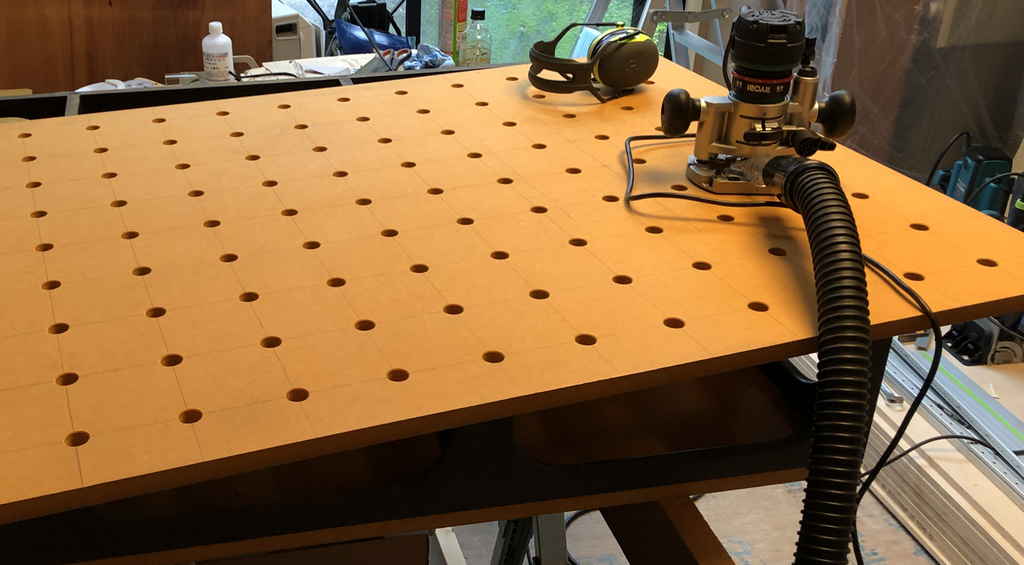
holes_done.png


I was worried that there would be a lot of horrific blowout on the opposite side of the hole since it was a big bit under a lot of force in my heavy plunge router. Not that it would be visible inside the box section, but I would know. Fortunately there was just a small bit of ragged edge that was easily removed when I chamfered the bottom sides. Those reliefs are intended to help through clamps insert a bit easier. I put really small chamfers on the top surface of the holes as well, then I taped up the glue lines on the bottom so that it would have a raw surface to join. I then sealed the bottom and have started with the poly coats. I want to minimize the amount of work I need to do inside that thing once the top is glued on, by pre-finishing this I can just run a bit of poly in the inside corners and be confident that it is nice and stable.

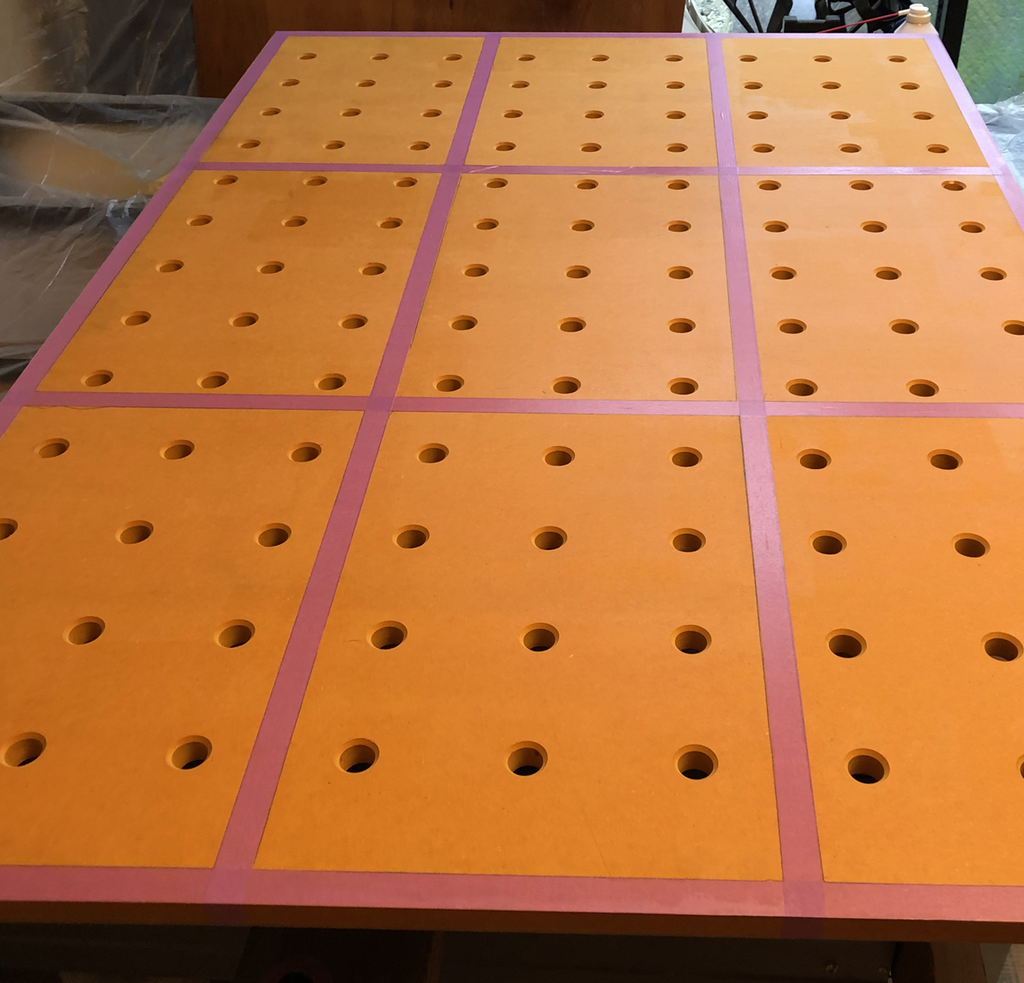
holes_bottom.png


I'll put another coat of poly on in a few hours, then remove the tape, carefully transfer and pocket out the domino locations and glue the top on to the frame and bottom (after shimming that on the sawhorses to ensure it is true and level.) Then I will need to flush trim the top and bottom, sand and chamfer all the outside surfaces. Seal and poly it, and route out the router plate hole and bottom clearance port.

This thing weighs a ton by the way. I was picturing a super light, spidery truss workbench that I could toss about, but 19mm MDF clearly isn't the right choice as far as weight is concerned. I will have to mount some casters on one end or some kind of detachable dolly :(
 

bdbecker

ALLIANCE MEMBER
Joined
Nov 18, 2015
Messages
5,542
Location
Iowa
...It is difficult when you can't tap into the reams of product feedback and testimonials available in western countries to identify good products...

Interesting... so is that another one of those differences between Japan and US? Not having customer ratings/reviews?
 
OP
B

Bakafish

Well-known member
Joined
Feb 7, 2017
Messages
477
Location
Tokyo
Interesting... so is that another one of those differences between Japan and US? Not having customer ratings/reviews?

Only from the perspective that there are few DIY people to comment on such products and if they do say anything Japanese are culturally very circumspect to state clear opinions. These products are intended for professionals who don't give up their secrets easily, and assuming such information exists it would be in Japanese, on an obscure forum and due to the language barrier impossible to vet for accuracy and bias, etc... If you do a Google search on "Best Polyurethane" or even more specific search terms, we will get a plethora of English information. The results can be overwhelming, but we can see the context, evaluate the bias and intelligence/experience of the source and come up with a few good options to research. But as is often the case those specific products are not available here, and to try and emulate that workflow in Japanese is far more difficult.

The challenge starts with having to discover what they actually call this stuff in Japanese. Like the Steve Martin quote, "The French...they've got a different word for everything!" it may come as no surprise that the Japanese exercise a lot of editorial discretion on what they call something. Google is happy to directly translate "Polyurethane" to 'ポリウレタン' but that's not what they call finishes in this context, so if you try and search for that term you will get lost in a hellscape of irrelevant results.

In this case they misleadingly call it 'ウレタン' (Urethane, pronounced oo-ray-tan) which is a very different product by Western terms, and led to several hours of confusion as I had to research the actual chemical components of the Japanese products to verify that they were in fact Polyurethane despite the incorrect terminology. It can be so frustrating knowing what something is called, but then having to battleship of all the possible ways that it might be called by Japanese (who are conversely always confused when we don't understand what to them is an English term, completely unaware of how badly it has been mutated by their transformation.)

Searching for it by the direct phonetic translation is always the first step, but it is rarely successful. This is often complicated by Chinese Alibaba companies just doing direct Google phonetic translations on everything so the right item shows up, but it isn't what it is actually called in Japan and that ends up muddying the waters. So if you are trying to find a "Slitting Saw" Google happily translates it into the Japanese phonetic equivalent, it doesn't give you the actual Japanese term for that item (they seem to call them スリワリフライス which doesn't translate to any English term I am aware of :headscrat ) and all you get are a ton of Chinese results which are useless if you are trying to locally source the item.

So Japanese either have a completely local term (usually expressed in Chinese characters) some bastardised English term, or often if the object was first introduced to Japan from a different nation they might call it by some corrupted Portuguese, German or French name. Often you are searching without knowing if it is fruitless, that they really don't have such a thing, or if you just haven't found the magical incantation that will apparate it in your Amazon search. I've spent hours trying to find little magnetic vise soft jaws, floor leveling cement, wall mud, molly bolts and a million other items that are trivial to find in English.

So now you've found it, searching for 'reviews' of said item can result in either some fascinatingly detailed rabbit hole of obsessive Japanese nerdery (a good thing) or much more likely a scattered, ambiguous mishmash of comments where the stars given and the translated review often are in opposition and from sites that you have never heard of and don't seem related to the subject matter at all. Again, luck is a big factor here, in this specific case, lacking any useful public comment I made a decision based on the breadth of product available, my perception of the intended customer (professionals) and the unusually accessible product documentation (Japanese love to typeset everything into giant images, or only give instructions on the labels, which are of course nearly impossible to translate.)
 

bdbecker

ALLIANCE MEMBER
Joined
Nov 18, 2015
Messages
5,542
Location
Iowa
Wow... I knew tracking down your bathroom system was a chore, but I never imagined it would be that difficult to get something as simple as polyurethane. You are certainly a more persistent person than I am. Thank you for sharing that - I think it will give all of us a better appreciation for this build thread!
 

Finallygotit

ALLIANCE MEMBER
Joined
Jul 6, 2013
Messages
4,076
Location
Tucson, AZ
WOW! Sounds like 3/4 research and 1/4 actual work.


I am amazed at how different things are in Japan.


Keep up the good work!


:beer:
 

humming

Member
Joined
Jul 25, 2019
Messages
18
Location
Phoenix
Just finished reading the entire thread. Love it! My wife and I desperately want to make it to Japan some day. I love all the little side tracks about peculiar aspects of Japanese culture.
Keep up the good work, I love to see the detail planning.
 

Wreckster23

Well-known member
Joined
Aug 15, 2014
Messages
369
Location
Newburgh, NY
Day well spent reading your thread. You, sir. Have a way with words. Reading your posts about Japanese culture is quite entertaining. Looking forward to what you have in store next.
 

stillp

Well-known member
Joined
May 5, 2015
Messages
428
Location
Midlands, UK
magnetic vise soft jaws, floor leveling cement, wall mud, molly bolts and a million other items that are trivial to find in English.

Then there's the whole English/American thing - try searching for a "molly bolt" in the UK, for example! Even your other 3 examples would be called something different over here.
When I was in Japan in the eighties, the locals seemed conscious that the 'English' they spoke and understood was the American version rather than British, and British English (there's a tautology for you!) was seen as more refined - I was once offered a job teaching English to young ladies who already spoke American! If I'd been single I'd have jumped at the chance...

Pete
 
OP
B

Bakafish

Well-known member
Joined
Feb 7, 2017
Messages
477
Location
Tokyo
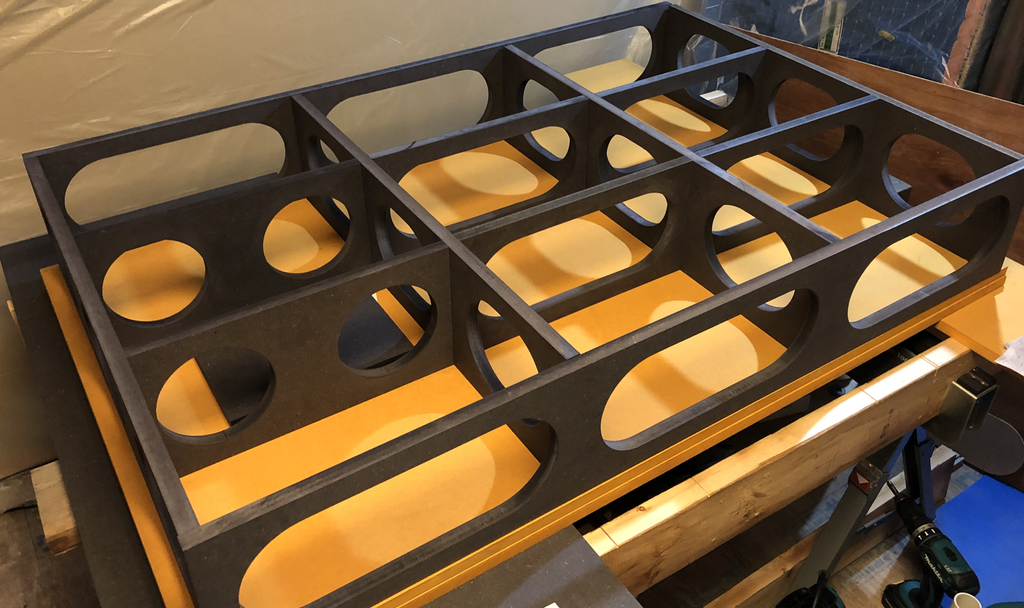
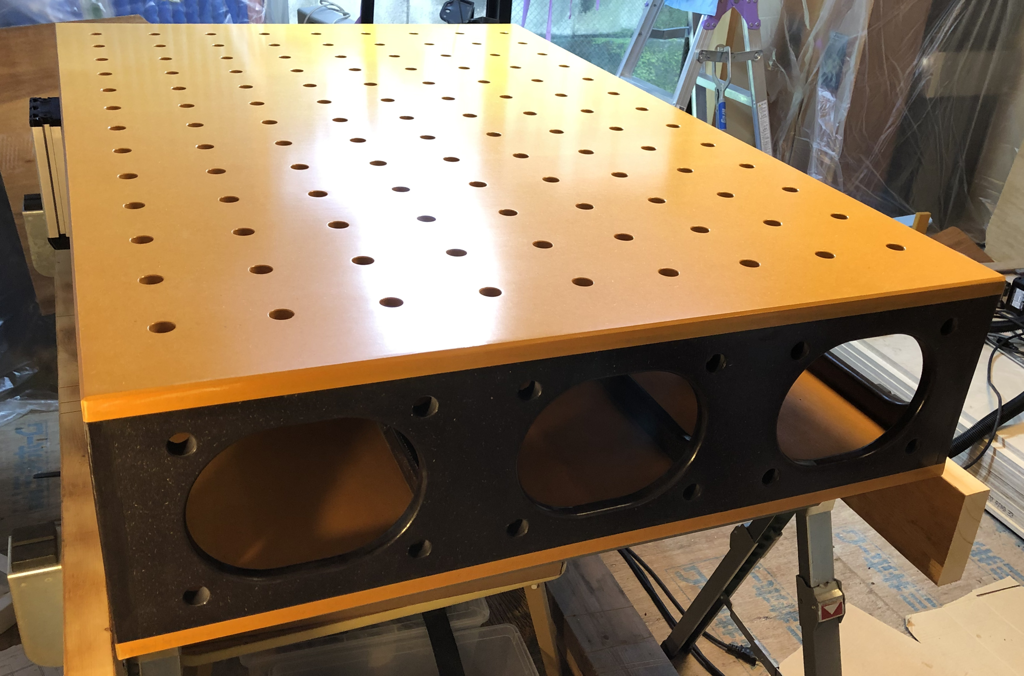
I think many makers suffer from being constantly torn between the tools of their craft and the product of their toils. I have not mastered the ability to march forward towards progress when there is a new tool to be found, made or improved somehow. I find myself spending hours optimizing something I'm likely to use a handful of times, saving maybe a few seconds in actual use... but maybe that's what being a craftsman means? Anyway, after many weeks the table I will (theoretically) use to build the cabinets is basically complete.

It's not really finished, there are several attachments I am in the final stages of design/production for, but as far as it being a complete table in and of itself, it is indeed functional as such. I will note that my color balance isn't way off, this is special German colored MDF and it is really a rich Curry Yellow. My intent was to color coordinate with some of the Incra gear, give the table a bit of pop.

Finished_Guts.png


As I mentioned, all the internal baffles were fillet and given several coats of poly. I wanted to make sure this thing doesn't sponge up moisture and warp on me. The top was then glued on and all the externals went through the same, 120 grit sanding, sealer, then 3 coats of water based poly with 400 grit sanding between layers. I wanted to get some practice on applying a clean poly finish on large surfaces, I'm feeling confident that I can do a passable job with foam brushes. I do have a Graco airless sprayer that would likely get this perfect in two passes but I'm a bit intimidated by the amount of work involved. I'm very space constrained and I feel like it only makes sense to break it all out if I'm able to spray multiple cabinets and panels at once. I will continue to ponder it.

Finished_Table.png


I decided not to mount my router plate directly in the table itself as my original design outlayed. It was a really tight fit (my fault) and required holes in both the top and bottom surfaces for clearance which just felt ugly to me. I realized that making dog holes on the side panels and making auxiliary tables made more sense. So the router table will bolt on when needed. This also makes putting in several T-slots less fraught as I can much easier rebuild the aux table if I mess up or it displeases me. Because I used the same base 32 spacing on the side holes the auxiliary table(s?) will be able to attach to any side with either top (perforated) or bottom (solid) surfaces oriented up.

Also utilizing those new holes on the sides will be the track saw arm, made from some 40X120 extruded aluminum I had laying about, custom 3D printed parts and various bits and bobs. You can see the base of one of them attached to the side there, I will detail it once it is all fabricated.
 
OP
B

Bakafish

Well-known member
Joined
Feb 7, 2017
Messages
477
Location
Tokyo
Then there's the whole English/American thing - try searching for a "molly bolt" in the UK, for example! Even your other 3 examples would be called something different over here.
When I was in Japan in the eighties, the locals seemed conscious that the 'English' they spoke and understood was the American version rather than British, and British English (there's a tautology for you!) was seen as more refined - I was once offered a job teaching English to young ladies who already spoke American! If I'd been single I'd have jumped at the chance...

Pete

Yeah, it is always jarring to hear a British/Aussie accent spoken by a local and I once was completely confused by an ex referring to eggplant as "aubergine" but we Yanks think it's more refined as well ;-)
 

nicholam77

Well-known member
Joined
Dec 18, 2016
Messages
2,655
Location
Minneapolis, MN
I think many makers suffer from being constantly torn between the tools of their craft and the product of their toils. I have not mastered the ability to march forward towards progress when there is a new tool to be found, made or improved somehow. I find myself spending hours optimizing something I'm likely to use a handful of times, saving maybe a few seconds in actual use... but maybe that's what being a craftsman means? Anyway, after many weeks the table I will (theoretically) use to build the cabinets is basically complete.

[...]

I can relate to this so hard. I've put off projects a number of times because I didn't have the "perfect" tool or most efficient way of doing it. I'm fascinated by jigs and contraptions to make a task easier, even if it means a lot more effort up front. But you're right, it doesn't really always make sense unless your going to be repeating the task a lot. Oh well, it's fun to make things for the shop, too!

Your bench is beautiful and I love the way the colors turned out. It's amazing to me how hard it is to DIY a perfect MFT hole grid without a fancy piece of kit.

Love the dog holes in the sides of the bench, looking forward to seeing how you use those in more detail. I had the thought to do the same on my (much uglier) homemade MFT but I didn't plan for it and there's not enough room. Gives you some nice vertical clamping options, too.

Can't wait to see your solution for the track saw arm. I recently picked up a Makita track saw, which I love, but have yet to really integrate into a "workflow" with the bench and whatnot.

Thanks for sharing and all the detailed information and asides! The cultural differences there when it comes to DIY are super fascinating.

:beer:
 
OP
B

Bakafish

Well-known member
Joined
Feb 7, 2017
Messages
477
Location
Tokyo
Thanks guys!

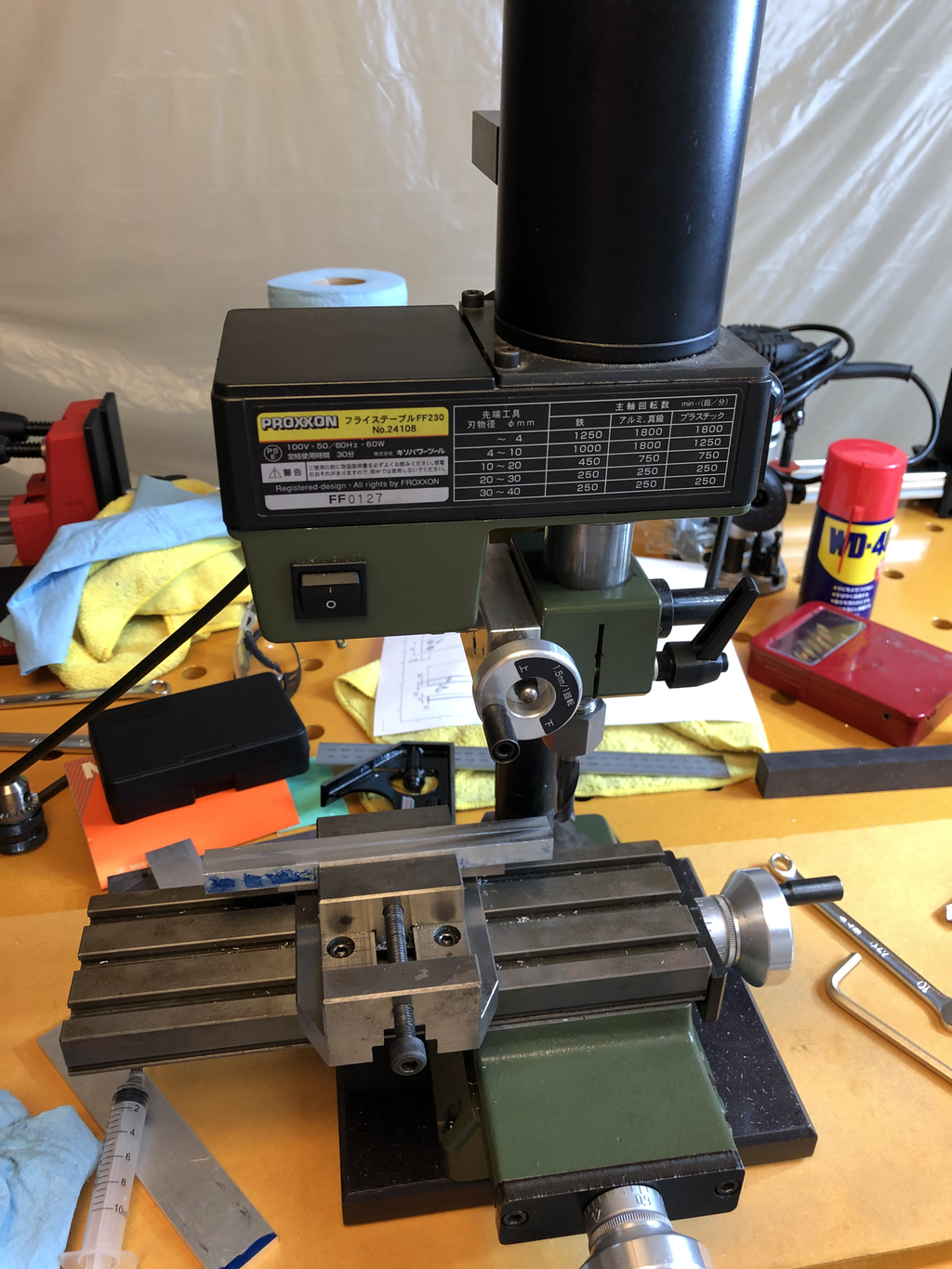
I'm still working on the MFT style track arm. I put the aluminum cutting blade on the Hitachi miter saw and pulled out the Proxxon FF230 micro-mill to machine some of the more critical parts and drill holes in the various Aluminum plate and angle parts I will use. This unit needs some love, I bought it third hand and have got it back into working order, but it needs new gibs, some digital scales, new cross-slide nuts, etc... But with a lot of patience, soft aluminum and a high tolerance for low tolerances you can make a small mound of man glitter and a half decent part.

Proxxon.png


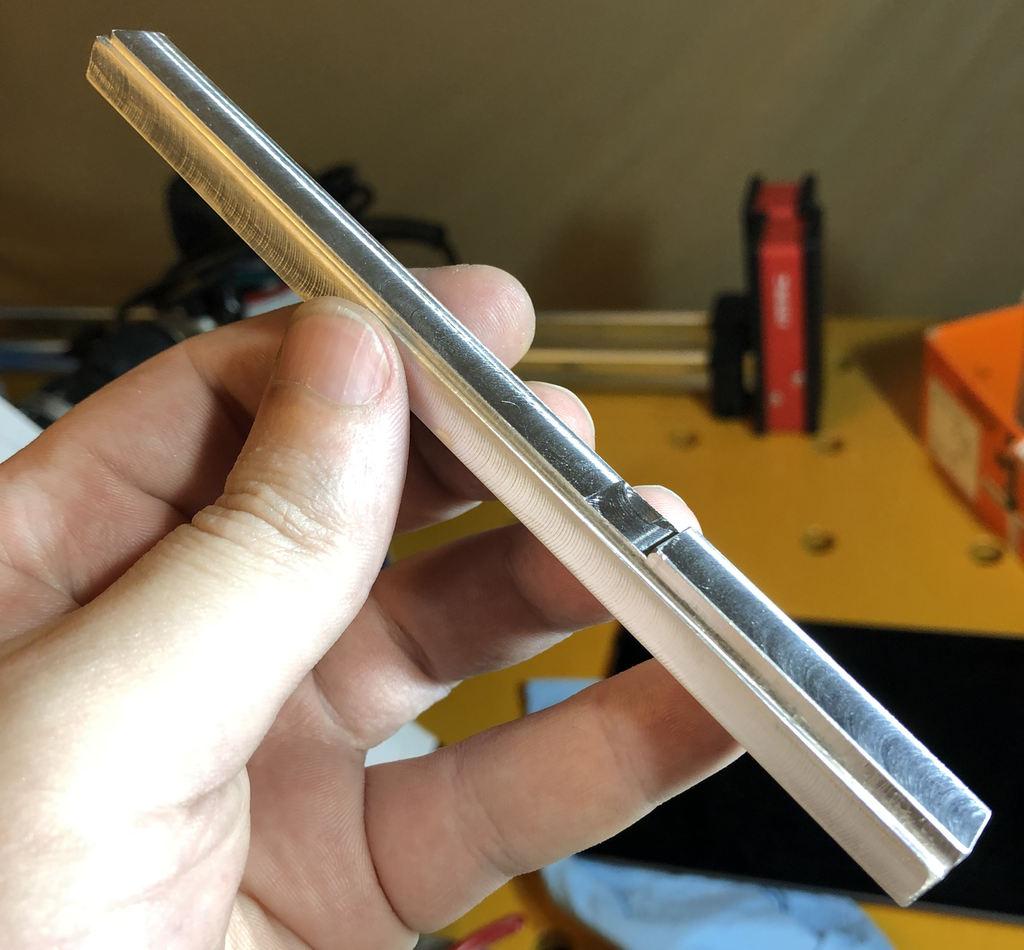
This part was machined to friction fit into the lower t-slot of the Makita 1M track I bought for the table. Even though the Makita and Festool tracks are "compatible" there are minor dimensional differences, so this will not work with a festool track without some additional clearancing. But the Makita tracks are way cheaper and easily available (although they just started selling them over here in Japan, we lag way behind on many fronts, there are a lot of Makita tools not available here...)

Brace.png


It is swelteringly hot and humid here in Tokyo right now which makes woking extremely unpleasant. I'm using the air conditioner's circuit for my power tools, so there is no reprieve, just sweating my way through it.
 
OP
B

Bakafish

Well-known member
Joined
Feb 7, 2017
Messages
477
Location
Tokyo
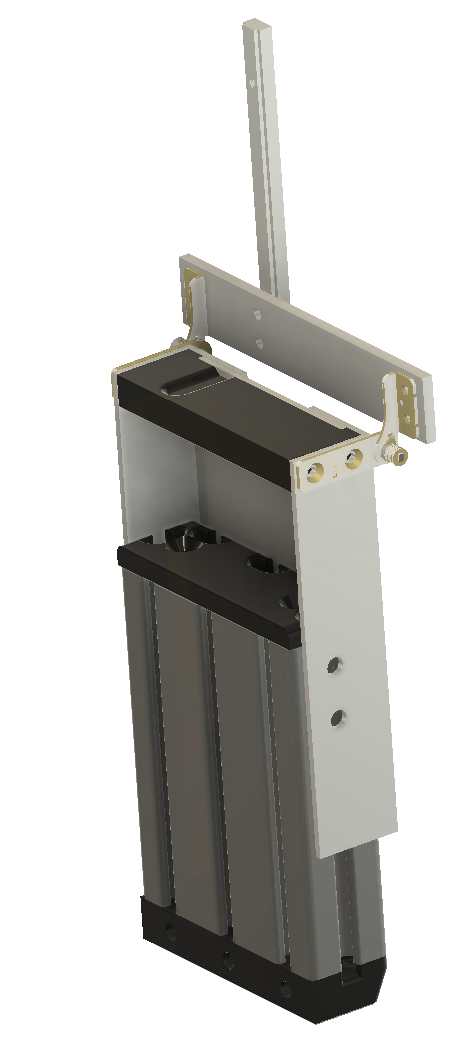
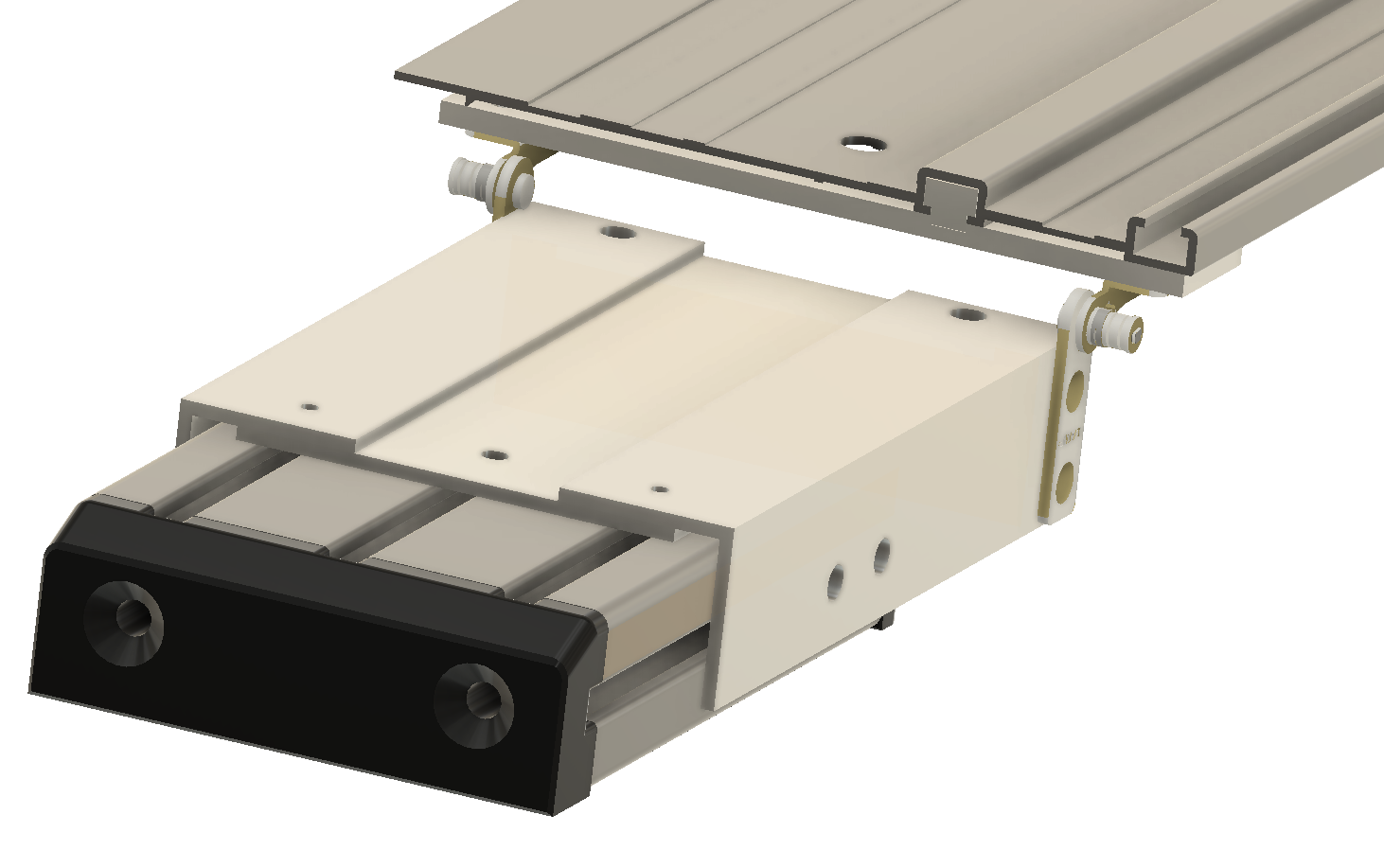
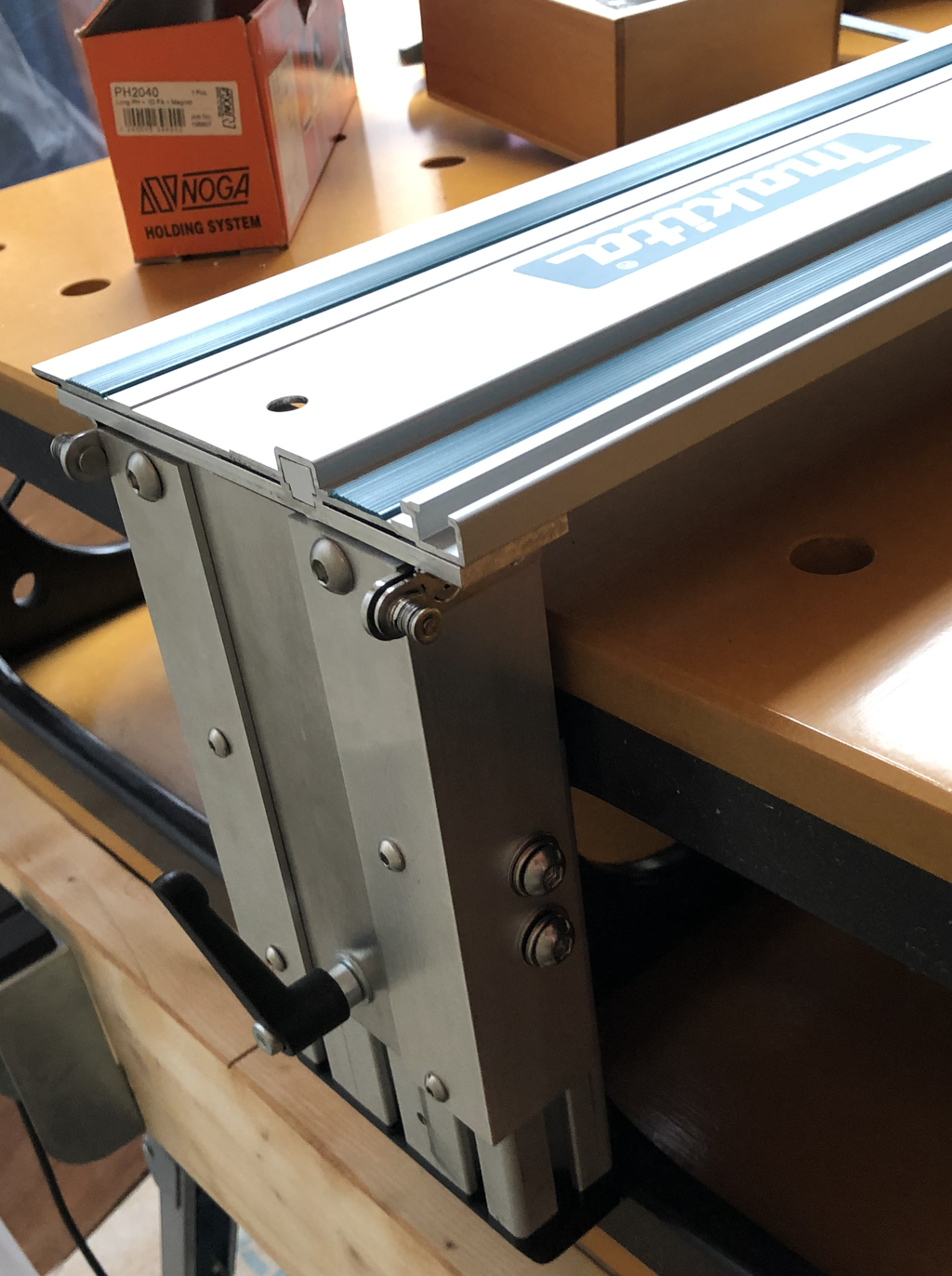
I took photos of the parts as I assembled them, but it doesn't really capture the details. So I'm showing a few renders of the components as I drafted them in Autodesk Fusion 3D.

Slider_Render.png


The two big 120x40 extrusion blocks were awkwardly screwed to the bottom of my mini-milling machine as a base when I bought it. They were filled with years of congealed oil and metal shavings and did little to improve the stability so I removed them during the cleanup. But they were a good fit for forming the basis of my MFT arm. I bought 2 friction hinges, hoping they would be stiff enough to make the guide rail more manageable, but they don't really do much until the rail is close to vertical. Ideally there would be a spring assist of some kind, but that's just my overengineering instinct, it really won't be a factor in use I think.

Slider_Render2.png


I used factory made fixtures designed for this extrusion profile for all the internals. There is a double nut plate that rides in the sides and a sliding friction nut and handle in the middle to clamp it at whatever height I need. The part I machined slides tightly into the guide rail which gets pinched tightly to the hinge plate. This seems to work well with very little play or stress on the joint.

Slider_Finished.png


I need to make the other side of the support where the front of the rail rests, which will (hopefully) be much simpler as there is no hinge involved.
 
Last edited:
To avoid these ads, REGISTER NOW!
Top Bottom