RTM
Well-known member
OK, starting a new thread, don't see anything dedicated to these on the vintage side. I mentioned back in May that I found a pair of Todd's Patent nippers, but didn't post pictures. Looking at the various posts here and elsewhere talking about the varied history of these, a maker thread seemed inappropriate, especially since mine don't have an apparent maker name on them.
The history of these nippers is interesting, patented way back in 1876 or so, made by a few people, but continued to be made, crediting the patent, for a long time afterwards. four.cycle's list of manufacturers has two who made Todd's patent nippers, including Hotchkiss and Henry B. Todd / Meriden.
These were advertised as electrical wire nippers in 1891, which was a surprise to me. I had assumed carpenters or farrier's nippers prior. I read on Progress... that ironworkers used them to cut rebar.
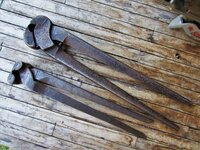
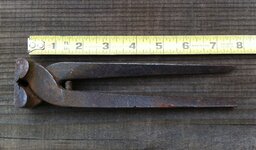
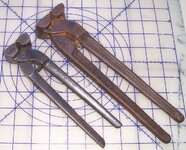
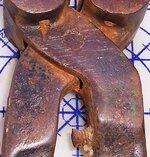
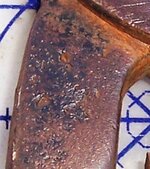
Anywhere, here the are, as recovered from an antique mall in Paso Robles, CA, at 15" long, about 5/16" jaw capacity, with the legs bent/ twisted in opposite directions.

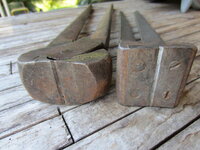
The blades were rusty, and I could not see the seams between the jaw and the blade.

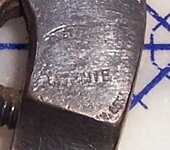
They are sporting the Todd's Patent phrase, and a hex stamp with an A inside

Fast forward a couple of months, and I've cleaned them up a bit. The jaws got dunked unto a beaker of Evaporust, and then polished on the 3M 220 radial bristle brush. Then I tried to remove the jaws to clean and sharpen them. 3 of the 4 screws came loose easily with my Grace gunsmith screwdriver, the 4th cammed out under hand strength. ****. Time to take desperate measures. These are 10-24 thread screws (so fairly modern mfg, newer than the patent.) But they had a taller head design, so I knew I could not replace them like for like easily. So its off to the screw loosening arsenal. PB blaster, nothing doing. Heat, nothing doing. PB blaster chased by heat, heat chased by PB blaster (epic fail, lotsa smoke, not sure anything stayed on the metal. heat followed by paraffin. My heat was only a propane torch, so I wasn't expecting miracle right away. I left the opposite screw and opposite jaw installed. After 2-3 heat and wax cycles, I tried the impact driver (whack w hammer version). Put a 3/8 - 1/4" adapter, a 1/4" socket, and a stout flat head hex bit, and whacked. Third whack the bit started twisting the tip. Back to the heat / wax cycles. This time I dug out a Makita hex drive flat head impact bit, and repeated the whacking. After the third hit, I swore it had moved, so hit it 2x, definitely rotated. Puled the driver up, dropped the impact bit, and it rolled under something, lost 15 minutes looking, gave up. Got out a regular screwdriver, and it twisted by hand. Victory. When I pulled it out, there was WAX!!!! on the threads. Also found wax on the other one that was previously loosened.
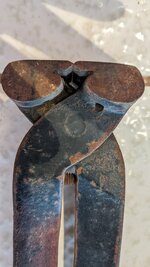
Next step was to drive the blades out of the jaws. Couple of taps with a punch and a ball pein hammer, they moved a bit, so moved to the arbor press, and pushed them the rest of the way out. Cleaned the blades up, fairly dull. Started by removing the paint / jappaning stuck to the blade, then took to the power sharpener. After a moment, it was obvious that the center of the blades was worn down more than the ends, so took some work. It was obvious these had seen more usage than was visible when they were rusty. I tried to sharpen both top and bottom equally to keep the cutting edges centered, but missed by a bit, will fix that when they next need sharpening.. Cleaned paint, rust and crud from the grooves on the jaws, one blade went in easily, the other needed to be pressed in. Readjusted the stop so the tips just contacted, will back it out a little more shortly, shown adjusted slightly open here. Found some 10g stranded wire, cut that without a concern.
Didn't completely clean up the one screw, maybe some other time. But they are ready for use. Now to clean up the KK's from earlier.


The final trick will be to bend the legs back to straight, but that will be another day, when I can clear enough space of to bring the new arbor press up off the floor.
The history of these nippers is interesting, patented way back in 1876 or so, made by a few people, but continued to be made, crediting the patent, for a long time afterwards. four.cycle's list of manufacturers has two who made Todd's patent nippers, including Hotchkiss and Henry B. Todd / Meriden.
These were advertised as electrical wire nippers in 1891, which was a surprise to me. I had assumed carpenters or farrier's nippers prior. I read on Progress... that ironworkers used them to cut rebar.
Anywhere, here the are, as recovered from an antique mall in Paso Robles, CA, at 15" long, about 5/16" jaw capacity, with the legs bent/ twisted in opposite directions.
The blades were rusty, and I could not see the seams between the jaw and the blade.
They are sporting the Todd's Patent phrase, and a hex stamp with an A inside
Fast forward a couple of months, and I've cleaned them up a bit. The jaws got dunked unto a beaker of Evaporust, and then polished on the 3M 220 radial bristle brush. Then I tried to remove the jaws to clean and sharpen them. 3 of the 4 screws came loose easily with my Grace gunsmith screwdriver, the 4th cammed out under hand strength. ****. Time to take desperate measures. These are 10-24 thread screws (so fairly modern mfg, newer than the patent.) But they had a taller head design, so I knew I could not replace them like for like easily. So its off to the screw loosening arsenal. PB blaster, nothing doing. Heat, nothing doing. PB blaster chased by heat, heat chased by PB blaster (epic fail, lotsa smoke, not sure anything stayed on the metal. heat followed by paraffin. My heat was only a propane torch, so I wasn't expecting miracle right away. I left the opposite screw and opposite jaw installed. After 2-3 heat and wax cycles, I tried the impact driver (whack w hammer version). Put a 3/8 - 1/4" adapter, a 1/4" socket, and a stout flat head hex bit, and whacked. Third whack the bit started twisting the tip. Back to the heat / wax cycles. This time I dug out a Makita hex drive flat head impact bit, and repeated the whacking. After the third hit, I swore it had moved, so hit it 2x, definitely rotated. Puled the driver up, dropped the impact bit, and it rolled under something, lost 15 minutes looking, gave up. Got out a regular screwdriver, and it twisted by hand. Victory. When I pulled it out, there was WAX!!!! on the threads. Also found wax on the other one that was previously loosened.
Next step was to drive the blades out of the jaws. Couple of taps with a punch and a ball pein hammer, they moved a bit, so moved to the arbor press, and pushed them the rest of the way out. Cleaned the blades up, fairly dull. Started by removing the paint / jappaning stuck to the blade, then took to the power sharpener. After a moment, it was obvious that the center of the blades was worn down more than the ends, so took some work. It was obvious these had seen more usage than was visible when they were rusty. I tried to sharpen both top and bottom equally to keep the cutting edges centered, but missed by a bit, will fix that when they next need sharpening.. Cleaned paint, rust and crud from the grooves on the jaws, one blade went in easily, the other needed to be pressed in. Readjusted the stop so the tips just contacted, will back it out a little more shortly, shown adjusted slightly open here. Found some 10g stranded wire, cut that without a concern.
Didn't completely clean up the one screw, maybe some other time. But they are ready for use. Now to clean up the KK's from earlier.
The final trick will be to bend the legs back to straight, but that will be another day, when I can clear enough space of to bring the new arbor press up off the floor.
Last edited: