A metal cutting blade like on the metal circular saw is what I was thinking. But instead of a circular saw, mounted in a table saw with a sled and rotating the pipe as it's cut around it's circumference. . you will need some roller set up to support and allow the pipe to rotate as cut.A toothed blade would be much better, as any kind of sparks will contaminate the SS, requiring it to be passivated if you need it to be rust-free in the long term.
Since the OP mentions this is for food processing areas, I'm thinking rust-free is important.

You are using an out of date browser. It may not display this or other websites correctly.
You should upgrade or use an alternative browser.
You should upgrade or use an alternative browser.
Tool Suggestion Needed: Cutting Large Diameter Stainless Ducts
- Thread starter dr_clyde
- Start date
Beerhippie
Well-known member
Hmm... use a machine head w/remote start on that and you're going places!Plasma cut the pipe from the inside? Put a torch on a stick clamped to something at the depth you want, and then spin the pipe. Put a catch box with water in it (like a plasma table) to catch the sparks and slag.


How do you start the tool and keep it straight?Doesn't a nibbler seem like the easiest/simplest tool for this job?
The actual physical cutting goes really, really easy with a cutoff wheel.
It's manipulating the tube, keeping the cut straight and square and not making a huge mess that is the hard part.
I like this idea.Plasma cut the pipe from the inside? Put a torch on a stick clamped to something at the depth you want, and then spin the pipe. Put a catch box with water in it (like a plasma table) to catch the sparks and slag.
I would have to figure out how to remote fire the plasma torch and control the length.
American Locomotive
Well-known member
Most plasma machines I've seen usually have some option to be remote enabled for use on CNC plasma tables. Usually it's just a kit that comes with extra torch control plug with some wires sticking out of it. Short the wires together and the torch turns on.I like this idea.
I would have to figure out how to remote fire the plasma torch and control the length.
Controlling length would be easy. Just get one of those pipe vise stands, and clamp the rod into it.
Codyboy
Well-known member
This. Make a jig or cradle to rotate the duct and use a stationary plasma cutter.plasma fixtured in a cradle
neophyte
Well-known member
Possibly, but drilling a hole would be necessary, similar to one of the shear I mentioned earlier, and the little metal chops from nibbler get stuck in rubber boot doles, and destroy the soles, particularly the round die nibblers.Doesn't a nibbler seem like the easiest/simplest tool for this job?
DaveAndStuff
Well-known member
- Joined
- Feb 3, 2026
- Messages
- 307
On the cheap you could just cradle the material using lengths of pipe and fixture a cut-off wheel underneath and up-cut. One of the pipes has a scale and a pair of vice-grips for a stop.
What is the length of the stock material, and what are the max and min cut-lengths?
16" dia 20ga duct is only about 4 lbs./ft. Rollers might be more trouble than they're worth
Sticking snug plywood "washers" in the duct will keep it more rigid. It is not spiral-duct, correct?
What is the length of the stock material, and what are the max and min cut-lengths?
16" dia 20ga duct is only about 4 lbs./ft. Rollers might be more trouble than they're worth
Sticking snug plywood "washers" in the duct will keep it more rigid. It is not spiral-duct, correct?
DaveAndStuff
Well-known member
- Joined
- Feb 3, 2026
- Messages
- 307
And nibblers are tough to keep a decent straight cutPossibly, but drilling a hole would be necessary, similar to one of the shear I mentioned earlier, and the little metal chops from nibbler get stuck in rubber boot doles, and destroy the soles, particularly the round die nibblers.
danski0224
Well-known member
This will work, have used it to cut lots of spiral ductwork:If anyone has a cool tool or idea on how to best cut these ducts, please let me know. We cut enough of them to look at a dedicated tool, but it would have to be highly adjustable as we deal with a variety of sizes.
M18 FUEL™ Metal Cutting Circular Saw (Tool Only) | Milwaukee Tool
MILWAUKEE® M18 FUEL™ 5-3/8" – 5-7/8” Metal Saw delivers the fastest cuts with the longest tool life and up to 370 cuts in ¾” EMT
 www.milwaukeetool.com
Have also used the corded version of this, has much better chip containment than the one above:
M18 FUEL™ 8" Metal Cutting Circular Saw | Milwaukee Tool
MILWAUKEE® M18 FUEL™ 8” Metal Cutting Circular Saw delivers 15A corded power and a 2-9/16" cut capacity. Designed to perform in the toughest applications
www.milwaukeetool.com
Both are quite loud in use, but there probably isn't anything better for the job. If the blade is sharp, it won't grab. Problems start shortly after the carbide teeth start breaking. No black **** like cutoff wheels.
Double cuts will work, but a starter hole is needed. A straight cut is also HIGHLY dependent on the operator of the tool. Stainless will chew up blades.
A Milwaukee Hackzall with a fine tooth blade will work. I actually prefer this method, but I have made lots of cuts and am pretty good at it. Getting fine tooth Torch blades was the hardest.
I have seen a spiral duct cutting station on a job, but it was missing the cutting implement. Pretty sure it was a Lindab SRCS2.
Full disclosure, I have been cutting spiral ductwork in some way, shape or form for a long time, on a jobsite. Definitely not every day, but i have cut a lot of it.
Last edited:
danski0224
Well-known member
I worked with someone that had the bright idea to use a plasma cutter to cut openings into a stainless steel commercial kitchen hood for the ductwork (not all of these have openings from the factory).I would have to figure out how to remote fire the plasma torch and control the length.
Yeah, it was fast. Yeah, it was easy.
But what a ******* mess.
The stuff coming out (sparks and molten metal) damaged nearby parts of the hood.
Serious fire hazard with those same sparks flying. And they go much farther than you think.
A straight cut was impossible without a guide. This plasma machine required a standoff on the torch, it couldn't touch the metal.
Also cut penetrations (outlets, pipes, etc.) in stainless wall panels that go on the wall under a commercial kitchen hood with a plasma cutter, and it was the same thing. Not quite as bad as this torch could be dragged on the metal.
Both had an air compressor built in. One was a Hobart, the other was a Hypertherm. Both 120v.
Metal cutting saw, angle grinder, reciprocating saw with the proper blade or double cut shears are really the best choices. I have used a jigsaw with the proper blade to cut round holes in stainless steel stuff like kitchen hoods.
An oscillating tool with a carbide blade can do it, but it is also super noisy, and very difficult to start cleanly.
Starter holes for double cuts need to be offset to the "waste" side of the planned cut.
A proper 24tpi Sawzall blade works wonders in thin metal, but they are not typically stocked.
I frequently use a "dull" Sawzall blade for deburring. Just run the teeth on the inside of the cut. Works great.
Last edited:
danski0224
Well-known member
I have installed product just like this for a food grade dust collection system, and there were adjustable slip pieces that were used for oddball length adjustments. A shorter piece plus the adjustable piece made up the finished dimension. It was a long time ago, and do not recall making any field cuts.This is an example of said ducting:
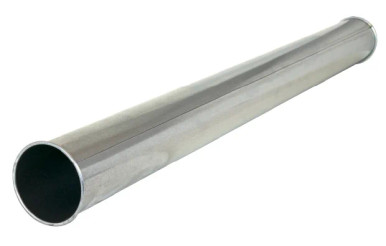
16" QF Pipe Stainless Steel (304) 20ga
8040206807 Pipe 304SS 20ga 16 QF L= 58.75 - 3200-1600-200000nordfabductwork.com
There was a type of V band with gasketing to join the factory rolled edges together, both for unmodified factory lengths and when using the adjustable length piece.
Last edited:
Maybe I missed the description of the application. Are you cutting duct work or launching space shuttles?How do you start the tool and keep it straight?
The actual physical cutting goes really, really easy with a cutoff wheel.
It's manipulating the tube, keeping the cut straight and square and not making a huge mess that is the hard part.
A carbide hole cutter gives you a start hole in less than 30 seconds.

Beerhippie
Well-known member
Has anyone else noticed that the OP appears to have left the party?
Have you ever worked with this stuff? It’s not as straightforward as it first appears.Maybe I missed the description of the application. Are you cutting duct work or launching space shuttles?
A carbide hole cutter gives you a start hole in less than 30 seconds.
It’s expensive and our customer has extremely high standards.
I know you think you were trying to make fun with the space shuttle comment, but that’s truly the way this customer would like us to approach their parts.
DaveAndStuff
Well-known member
- Joined
- Feb 3, 2026
- Messages
- 307
delete
DaveAndStuff
Well-known member
- Joined
- Feb 3, 2026
- Messages
- 307
In all fairness, when you say duct, people often think of hogging something out that gets taped over. You need to be a bit more specific about quality of cut and whatnot.Have you ever worked with this stuff? It’s not as straightforward as it first appears.
It’s expensive and our customer has extremely high standards.
I know you think you were trying to make fun with the space shuttle comment, but that’s truly the way this customer would like us to approach their parts.
Just for reference, I had to weld one of these ducts today to a 3/16” thick flange, 16” diameter.
I had to spend a fair amount of time just fitting the duct to the flange, as they wanted the duct welded on the face of the flange as a fillet weld instead of poking through and welding an outside corner. Stupid design, but it’s what they asked for.
This requires a VERY flat surface or the welding gets tricky to keep the thin sheet from burning through. I ended up making custom purge flanges and taping the seam to purge as I couldn’t get the cut flat enough to sit on the surface of the flange without some serious attention to the straightness of the cut.
Cutting the duct with a grinder works. It’s just slow, loud, not very smooth or as flat as I’d like.
Lots of good options and ideas here. I’m just reading and looking at the suggestions and discussing them with co-workers.
I had to spend a fair amount of time just fitting the duct to the flange, as they wanted the duct welded on the face of the flange as a fillet weld instead of poking through and welding an outside corner. Stupid design, but it’s what they asked for.
This requires a VERY flat surface or the welding gets tricky to keep the thin sheet from burning through. I ended up making custom purge flanges and taping the seam to purge as I couldn’t get the cut flat enough to sit on the surface of the flange without some serious attention to the straightness of the cut.
Cutting the duct with a grinder works. It’s just slow, loud, not very smooth or as flat as I’d like.
Lots of good options and ideas here. I’m just reading and looking at the suggestions and discussing them with co-workers.
danski0224
Well-known member
What do you mean by "flat"?as flat as I’d like
Outside to inside?
Or the cut line along the circumference?
DaveAndStuff
Well-known member
- Joined
- Feb 3, 2026
- Messages
- 307
I think he needs the cut on a plane, perpendicular to the center axis of the duct,What do you mean by "flat"?
Outside to inside?
Or the cut line along the circumference?
he means along the circumference. put the pipe on the ground. Does it stand up? Is it plumb? are there gaps between the pipe and the ground?What do you mean by "flat"?
Outside to inside?
Or the cut line along the circumference?
@dr_clyde Are they moving some sort of product through the tube? Does it have to be a sanitizable surface? does their way o welding prevent a place where something can get caught?
This is a good way to phrase that lol.he means along the circumference. put the pipe on the ground. Does it stand up? Is it plumb? are there gaps between the pipe and the ground?
@dr_clyde Are they moving some sort of product through the tube? Does it have to be a sanitizable surface? does their way o welding prevent a place where something can get caught?
To answer your question we don’t know exactly. But we want to weld it as though it needs to be sanitized. The customer has not provided us with that information, but they make food equipment so it’s a safe assumption that is the case. I do know they will reject parts that aren’t asthetically pleasing, scratched up or if the weld isn’t as they’d like.
I realize this isn’t ideal information, but it’s what I have. I’m not the project manager for this customer, and I don’t get to talk to them directly. I just know what the customer does and I know based on my own experiences in that industry what is generally acceptable.
I don’t think this comes in direct contact with food, but is something they use on the equipment they sell. If it DID come into contact the customer probably wouldn’t sub out the welding and if they did they’d have a lot more information about what is and isn’t acceptable.
danski0224
Well-known member
Then he is stuck with what he is doing with an angle grinder or some of the other stuff I mentioned.he means along the circumference. put the pipe on the ground. Does it stand up? Is it plumb? are there gaps between the pipe and the ground?
IMHO, trying to hold the cut line with double cuts will be too difficult to finish perfect. Not that it *can't* be done, but for those that haven't tried it... you are in for a surprise.
A plasma cut will leave a ****** edge and change the metal on the cut line.
A belt sander could be used to face the cut end, and it might be easier or faster than trying to make an absolute perfect cut. Just cut it close to the line, and bring it in with the sander. Double cuts would be fast and quiet, at least for the initial cut.