To avoid these ads, REGISTER NOW!

Tool Suggestion Needed: Cutting Large Diameter Stainless Ducts

dr_clyde

Well-known member
Joined
Jan 7, 2009
Messages
6,440
Location
Holland, MI
The shop I work at occasionally cuts these big stainless ducts.

This is an example of said ducting:
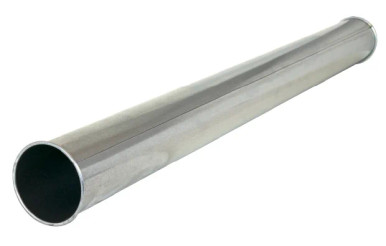

They vary in diameter, the smallest we deal with is around 6" up to 16" or so. They are very thin wall, only 20ga which is about .035 wall and they're stainless steel.

We have to cut them to length and occasionally weld flanges on the end. Unfortunately they are too large to fit in our tube laser, and even if they were small enough, the wall thickness is so thin the hydraulic chuck would just distort the tube badly.

They are a HUGE pain in the kiester to cut. We currently lay out the cut with a pipe wrap and a sharpie and hand cut them with a 6" cut-off wheel. This works well enough, but it very skill dependent. One wrong move and you've scrapped a $380 duct. It is also LOUD, makes a huge burr and makes a mess.

We have put them on a welding positioner and cut them standing upright with a plasma torch. This is much faster, but the plasma makes a huge could of sparks and fumes on the ID of the duct that requires cleaning. You can catch a lot of the dross with a shield, but not all of it. It can also get a bit dicey when the length of the cut off part is more than a few inches.

I have considered a horizontal positioner laid out like a lathe, but that still doesn't solve the messy dross on the ID problem.

The overall length tolerance isn't super fussy, but we really want a square, clean cut that requires minimal deburring.

If anyone has a cool tool or idea on how to best cut these ducts, please let me know. We cut enough of them to look at a dedicated tool, but it would have to be highly adjustable as we deal with a variety of sizes.

 
To avoid these ads, REGISTER NOW!
OP
D

dr_clyde

Well-known member
Joined
Jan 7, 2009
Messages
6,440
Location
Holland, MI
How much are you having to cut off, typically? I think I'd cobble up a deep offset tubing cutter if you don't have to remove too much.
It varies.

They range from 6" long sections to 48" long.

Basically they're using the beaded flange, then adapting the cut off end to whatever they're making.

So the lengths are not consistent.
 
OP
D

dr_clyde

Well-known member
Joined
Jan 7, 2009
Messages
6,440
Location
Holland, MI
I am trying to avoid the wheel roller style of pipe cutter, the wall thickness isn't thick enough to support it without denting in, and even if it was, they leave a rolled edge and huge burr.
 

neophyte

Well-known member
Joined
Apr 23, 2012
Messages
9,597
Location
Pennsylvannia
How much do you want to spend?

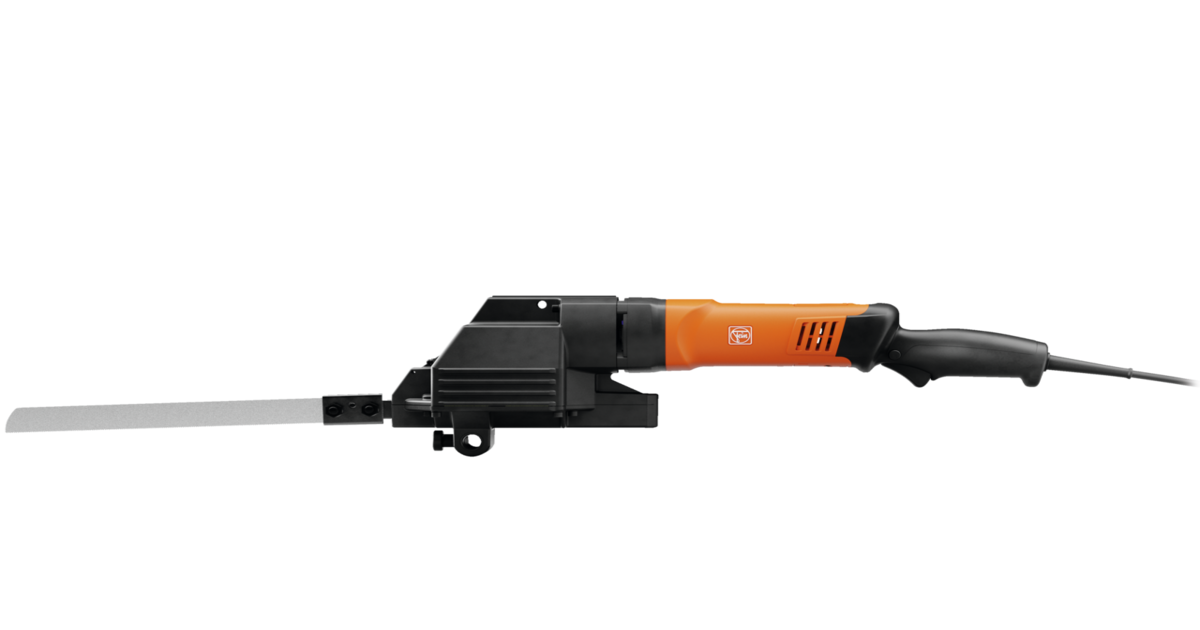
Fein manufactures portable electric hacksaws that can be used for pipe up to 24” in diameter.
There are multiple clamps that handle different diameters, that tighten like a chain vise on the pipe.
I think the saws are normally intended for higher strength materials, and there is even an I-Beam clamp, but the saws can likely be used for thinner material as well.
There is an electric and a pneumatic option.


Cost is probably several thousand dollars or more once you add the clamps and blades.
Used ones are sometimes on ebay, although you might still need to buy the clamps.
CS Unitec sells similar saws.


Attachments

  • IMG_7202.png
    IMG_7202.png
    316.5 KB · Views: 2
  • IMG_7203.png
    IMG_7203.png
    2.1 MB · Views: 3

RTM

Well-known member
Joined
May 13, 2019
Messages
13,133
Location
SF Bay Area
The shop I work at occasionally cuts these big stainless ducts.
Have you asked your supplier/ manufacturer what they use or could suggest. My HVAC supplier fabs lots of ducts for us, and unfortunately, makes them to our length, so they are cut while flat, which helps you none.

Never done this, but I'd think, if you can get an expansion plug to install just downstream from your cut, it might make some of these methods that crush the tube feasible. Get one in multiple segments, approx 1" smaller than the ID, so that when expanded it only leaves small gaps (like a WW lathe chuck that expands for bowls.)
 

neophyte

Well-known member
Joined
Apr 23, 2012
Messages
9,597
Location
Pennsylvannia
There are electric sheet metal shears that are designed for cutting down ducting.

Draco of Germany is one manufacturer, and they make a wide variety of individual models with variations for different tasks, although in some cases,I’m unsure what the changes or differences are between the individual models.
Waste would be higher than the hacksaw above.
You might need to make a jig to clamp to the duct to get really straight cuts.
The Radius Seem Shear 3514-7R is specifically made for cutting ducting, has a 2mm cutting capacity. (With shear, alway buy the higher capacity option that is still holdable).


The major downside is the cost of the blades, which are usually $100 per piece, with both center and side blades being necessary, although the blades are sharpenable. .
I have an older model, with a different model, and it works well on flat metal, but I’ve never really used it much on duct.
Fein sells a version of the Draco shear, likely with a Draco made cutting head, but it may be a different shear made for flat sheet.
Trumpf, a separate German manufacturer also makes similar strip cut shears. (I think the shear are actually made inSwitzerland, or they were, but with a bunch of German parts).
The Trumps shears seem to use blades that are more easily changed, but which may not be sharpenable.
This video is in German, but you can get the point.
Cost is in the thousands of dollars though.
The Hilti cordless shears likely use the same cutting heads, but possibly with some differences.


There is also a Trumpf shear for trimming the ends of ducts.


A simply jig could be made to cut clean and straight out of wood, with a circle cut out of the center, then clamped to the outside of the duct using a strap clamp, with the shears bring run against the edge of the jig.
You might still lose a fee inches of duct.
 
OP
D

dr_clyde

Well-known member
Joined
Jan 7, 2009
Messages
6,440
Location
Holland, MI
How much do you want to spend?

Fein manufactures portable electric hacksaws that can be used for pipe up to 24” in diameter.
There are multiple clamps that handle different diameters, that tighten like a chain vise on the pipe.
I think the saws are normally intended for higher strength materials, and there is even an I-Beam clamp, but the saws can likely be used for thinner material as well.
There is an electric and a pneumatic option.


Cost is probably several thousand dollars or more once you add the clamps and blades.
Used ones are sometimes on ebay, although you might still need to buy the clamps.
CS Unitec sells similar saws.

The problem with most off the shelf large pipe cutters are that they are designed to cut way thicker wall .

This stuff is so thin it's like trying to cut paper. It just wants to tear, bend and deflect. I worry any toothed blade will just tear and rip.

That in conjunction with being stainless makes it less than desirable. These cutters will generally muck the finish up pretty badly, as they need to clamp the OD firmly.
 
OP
D

dr_clyde

Well-known member
Joined
Jan 7, 2009
Messages
6,440
Location
Holland, MI
There are electric sheet metal shears that are designed for cutting down ducting.

Draco of Germany is one manufacturer, and they make a wide variety of individual models with variations for different tasks, although in some cases,I’m unsure what the changes or differences are between the individual models.
Waste would be higher than the hacksaw above.
You might need to make a jig to clamp to the duct to get really straight cuts.
The Radius Seem Shear 3514-7R is specifically made for cutting ducting, has a 2mm cutting capacity. (With shear, alway buy the higher capacity option that is still holdable).


The major downside is the cost of the blades, which are usually $100 per piece, with both center and side blades being necessary, although the blades are sharpenable. .
I have an older model, with a different model, and it works well on flat metal, but I’ve never really used it much on duct.
Fein sells a version of the Draco shear, likely with a Draco made cutting head, but it may be a different shear made for flat sheet.
Trumpf, a separate German manufacturer also makes similar strip cut shears. (I think the shear are actually made inSwitzerland, or they were, but with a bunch of German parts).
The Trumps shears seem to use blades that are more easily changed, but which may not be sharpenable.
This video is in German, but you can get the point.
Cost is in the thousands of dollars though.
The Hilti cordless shears likely use the same cutting heads, but possibly with some differences.


There is also a Trumpf shear for trimming the ends of ducts.


A simply jig could be made to cut clean and straight out of wood, with a circle cut out of the center, then clamped to the outside of the duct using a strap clamp, with the shears bring run against the edge of the jig.
You might still lose a fee inches of duct.
I like the shear idea, but it would require a starting hole. This would need to be drilled/punched, and while possible, that adds an operation and opportunity for something to go wrong. When we have to drill these, it can be tricky to keep the walls from distorting or tearing.

I do like the idea of the shear.
 

neophyte

Well-known member
Joined
Apr 23, 2012
Messages
9,597
Location
Pennsylvannia
I like the shear idea, but it would require a starting hole. This would need to be drilled/punched, and while possible, that adds an operation and opportunity for something to go wrong. When we have to drill these, it can be tricky to keep the walls from distorting or tearing.

I do like the idea of the shear.
Maybe use a hard wood like maple, or baltic birch type plywood, and make a bunch of outer block sets matching the outer diameters of the various pipes.
“You seem like you have access to a large lathe that might be able to machines these fairly accurately, if you have access to laser cutters.
Clamp the wood blocks on the outside of the pipe before cutting to prevent distortion.
(A dowel pin on either side to maintain alignment, and a threaded insert and bolt, to clamp). The wood blocks can be made to the proper internal diameter, and then a hundredth of an inch or so shaved off on the split surfaces that clamp together to maintain fit while not having enough room to crush the tubing.
A large round of MDF with an internal round that would fit into the pipe could be used to deburr, if fine micro graded abrasive could be used to clean up the edge if mounted on a large very slow right angle drill.
Since cutting isn’t being done with a laser or plasma, the edges should clean up easier.
 

Nobody-named-Olli

Well-known member
Joined
Jan 9, 2025
Messages
1,581
Location
North Rhine-Westphalia; Germany
This thing is cool. I wonder if I can find one stateside.

The first dealer selling Eibenstock in the US I found is “Contractors Direct”. I have no affiliation/ I don’t even know them. https://www.contractorsdirect.com/

Probably can’t hurt to inquire with them if it’s an available tool in the US.

Just for information, in Germany that is a sub 1k tool, comes without blade. The universal diamond blade needed to cut metal is about 50,-.

That’s basically the beauty of Eibenstock: Made in Germany quality & reliability, no-nonsense, at realistic/ down to earth pricing & fully suitable for commercial use.

Kind regards,
Olli
 

tarbellb

Well-known member
Joined
Apr 17, 2011
Messages
5,750
Location
Oregon
Seems like a good jig would go farther then a better cutting method?

Ideal cut is a shear or nibbler but you cant start a cut without a hole.

So now its either a hole maker and shear combo, or a spinning disc or bandsaw blade.

I would look into a custom table with large V blocks to place the duct onto, clearly marked cut line via fence/clamp or laser?
Easiest method would be a angle grinder located at the bottom of the V blocks, maybe even foot or hand activated to push up into the work. Have a way to keep the duct from moving laterally.

Even better would be a two step process with hole drilled then a shear, but I just dont see that being very easy to align and secure everything.

duct cutter.jpg
 

blackwire

Well-known member
Joined
Aug 18, 2014
Messages
334
I'm not sure it's suitable for a production environment, but a Dremel tool with metal cutting wheel is great for cutting thin metals where a delicate touch is required.
 
OP
D

dr_clyde

Well-known member
Joined
Jan 7, 2009
Messages
6,440
Location
Holland, MI
Seems like a good jig would go farther then a better cutting method?

Ideal cut is a shear or nibbler but you cant start a cut without a hole.

So now its either a hole maker and shear combo, or a spinning disc or bandsaw blade.

I would look into a custom table with large V blocks to place the duct onto, clearly marked cut line via fence/clamp or laser?
Easiest method would be a angle grinder located at the bottom of the V blocks, maybe even foot or hand activated to push up into the work. Have a way to keep the duct from moving laterally.

Even better would be a two step process with hole drilled then a shear, but I just dont see that being very easy to align and secure everything.

duct cutter.jpg
I like the idea of the foot pedal, I would like this to be useable by one guy. Having both hands free to manipulate the duct would be best. I wonder if it would be easier/safer to have the grinder on top and pull it down with the pedal to an adjustable stop, vs pushing up and potentially lifting the part.

At the moment I am looking at some sort of home brew version of what Olli linked. Adding a foot pedal would help for sure.
 
To avoid these ads, REGISTER NOW!
OP
D

dr_clyde

Well-known member
Joined
Jan 7, 2009
Messages
6,440
Location
Holland, MI
Something like this, with moving bogie beams that can pivot or move to accommodate larger or smaller tubes.

Screenshot 2026-02-24 141801.png

Then mount a grinder on top with a foot pedal and some sort of length stop.
 

tarbellb

Well-known member
Joined
Apr 17, 2011
Messages
5,750
Location
Oregon
I like the idea of the foot pedal, I would like this to be useable by one guy. Having both hands free to manipulate the duct would be best. I wonder if it would be easier/safer to have the grinder on top and pull it down with the pedal to an adjustable stop, vs pushing up and potentially lifting the part.

At the moment I am looking at some sort of home brew version of what Olli linked. Adding a foot pedal would help for sure.

I thought about coming from the top for the cut, but 2 concerns came up-
1) weight of the grinder/arm collapsing the duct
2) safety+noise from the bottom might be more bearable ?

You would want to set up some fence, likely via metal bar running from top of V leg to other leg. Simple clamp should work?

Then you have both hands to hold the duct down and then to spin.

I know its a bit taboo to use wood in a metal shop, but this would be a easy jig to build with ply or even 2x material?
 
OP
D

dr_clyde

Well-known member
Joined
Jan 7, 2009
Messages
6,440
Location
Holland, MI
I thought about coming from the top for the cut, but 2 concerns came up-
1) weight of the grinder/arm collapsing the duct
2) safety+noise from the bottom might be more bearable ?

You would want to set up some fence, likely via metal bar running from top of V leg to other leg. Simple clamp should work?

Then you have both hands to hold the duct down and then to spin.

I know its a bit taboo to use wood in a metal shop, but this would be an easy jig to build with ply or even 2x material?
I was thinking the grinder would be spring loaded so you’d have to put a fair amount of force on it.

We don’t have any sort of wood working equipment here except a sawzall. But we do have 4 lasers. So metal is the way to go here lol.
 

tarbellb

Well-known member
Joined
Apr 17, 2011
Messages
5,750
Location
Oregon
Good point. Use what you got! Plus durability is a factor in this setting im sure.
Rollerblade wheels are excellent source for a smooth grippy easy to find rollers...


Out of curiosity- how clean does the duct need stay from a marring or scratching standpoint?
 
OP
D

dr_clyde

Well-known member
Joined
Jan 7, 2009
Messages
6,440
Location
Holland, MI
Good point. Use what you got! Plus durability is a factor in this setting im sure.
Rollerblade wheels are excellent source for a smooth grippy easy to find rollers...


Out of curiosity- how clean does the duct need stay from a marring or scratching standpoint?
As clean as practical. Its going in food production equipment.
 

no704

Well-known member
Joined
Apr 27, 2016
Messages
5,212
I built a jig to cut rear bumper covers using a mold ad a bunch of destao clamps to hold it in place. Had 2 bows on it and used those wire saws with the keyrings on the end. Survival saw? With a spring on one end and a motor with on offset “pully”’on the other end.
Not saying one of those would work on ss tube. But I think you can get diamond impregnated wire rope. And do similar?
 

rust in the eye

Well-known member
Joined
Oct 2, 2017
Messages
2,762
Location
Chicagoland
Wouldn't positioning a (wooden, dense foam, etc.) plug inside the pipe allow cutting methods that would otherwise crush the pipe? This would also mitigate the cutting debris or whatnot from migrating past the cut area.
 

KnurledNut

Well-known member
Joined
Jan 28, 2011
Messages
8,116
Location
n/a
Why even spread such a video?

Kind regards,
Olli
The jig was simple and ingenious, the cut was clean, fast and controlled, there was no damage to the pipe, and it didn’t cost thousands. The grinder needs a guard and proper holddown, and a tailstop would have been beneficial, but I would have no issue doing this with the obvious safety issues addressed.
 

Nobody-named-Olli

Well-known member
Joined
Jan 9, 2025
Messages
1,581
Location
North Rhine-Westphalia; Germany
The jig was simple and ingenious, the cut was clean, fast and controlled, there was no damage to the pipe, and it didn’t cost thousands. The grinder needs a guard and proper holddown, and a tailstop would have been beneficial, but I would have no issue doing this with the obvious safety issues addressed.

Nothing ingenious about utter stupidity. And whats worse, there’s clearly two people present - so it would have been no issue at all to make that “desperately needed” cut in a way safer manner using the available tool. But they decided it was more important to showcase said stupidity and release it on YT.

The “operator” has to squint constantly, even moves his head because he realizes he’s being hit in the face - in one frame it looks like he even “ate” some debris the way he pulls his mouth/ seems he wants to spit …

And then an angle grinder fixed with a clamp that can pop off any second - and that grinder will highly likely just continue to run no matter what. I’m not even talking about the missing guard, yet.

The way he stands behind the grinder, almost bowing over. …

Reaching over that spinning wheel to shut off the grinder. …

That person has clearly no idea of how dangerous all of that is and what could go wrong.

But yeah, “ingenious jig”. …

Sorry, I hardly argue on the internet because it’s meaningless anyway. But I would not let that video stand uncommented.

Last but not least, I was under the impression the OP was looking for a solution fit for a commercial shop.

None of this “ingenious jig” would fly in a commercial setting.

And if I saw that on one of my sites, that guy would pack & go. Report submitted to his boss & CC’ed to our equivalent of OSHA - if applicable. Stuff like this needs to stop.

That’s all I have to say.

Kind regards,
Olli
 

KnurledNut

Well-known member
Joined
Jan 28, 2011
Messages
8,116
Location
n/a
Nothing ingenious about utter stupidity. And whats worse, there’s clearly two people present - so it would have been no issue at all to make that “desperately needed” cut in a way safer manner using the available tool. But they decided it was more important to showcase said stupidity and release it on YT.

The “operator” has to squint constantly, even moves his head because he realizes he’s being hit in the face - in one frame it looks like he even “ate” some debris the way he pulls his mouth/ seems he wants to spit …

And then an angle grinder fixed with a clamp that can pop off any second - and that grinder will highly likely just continue to run no matter what. I’m not even talking about the missing guard, yet.

The way he stands behind the grinder, almost bowing over. …

Reaching over that spinning wheel to shut off the grinder. …

That person has clearly no idea of how dangerous all of that is and what could go wrong.

But yeah, “ingenious jig”. …

Sorry, I hardly argue on the internet because it’s meaningless anyway. But I would not let that video stand uncommented.

Last but not least, I was under the impression the OP was looking for a solution fit for a commercial shop.

None of this “ingenious jig” would fly in a commercial setting.

And if I saw that on one of my sites, that guy would pack & go. Report submitted to his boss & CC’ed to our equivalent of OSHA - if applicable. Stuff like this needs to stop.

That’s all I have to say.

Kind regards,
Olli
As stated, “obvious safety issues” covered all that.
 

Beerhippie

Well-known member
Joined
Oct 13, 2023
Messages
9,725
Location
Far NE Oregon
plasma fixtured in a cradle

A plasma cutter not only makes a mess of the inside of the tubing, but it contaminates the stainless steel where ever that spray of molten metal touches it. If you want that tube to be stainless again, you'd need to passivate it. Passivation isn't really a field-expedient process, usually involving powerful acids like Nitric.

An angle grinder-based solution like the jig the good Doctor drew up above would be my choice. Set the depth of cut to as shallow as possible.
 

neophyte

Well-known member
Joined
Apr 23, 2012
Messages
9,597
Location
Pennsylvannia
A small toothed carbide blade on an oscillating tool would likely do a clean cut as well, but you would need some type of jig to ensure a square cut, and the jig would need to not damage or crush the tubing.
Fein traditionally sold round saw blades for the Multimaster and Supercut tools that were designed for cutting sheet metal, including automotive sheet metal, although the blades were usually a high speed steel alloy.
Diablo, (a brand owned by Bosch), makes a curved carbide blade for the oscillating tools, that may work similarly. (Carbide is routinely recommended for stainless cutting, although high speed steel would probably work, just dull way quicker).
 

neophyte

Well-known member
Joined
Apr 23, 2012
Messages
9,597
Location
Pennsylvannia
The Kett Saw with vacuum adapter might be another option, but again, you would need a custom jig to keep the cut straight.


The video is 8 years old, and I don’t know whether Kett has added blades for stainless yet.
 

Beerhippie

Well-known member
Joined
Oct 13, 2023
Messages
9,725
Location
Far NE Oregon
A small toothed carbide blade on an oscillating tool would likely do a clean cut as well, but you would need some type of jig to ensure a square cut, and the jig would need to not damage or crush the tubing.
Fein traditionally sold round saw blades for the Multimaster and Supercut tools that were designed for cutting sheet metal, including automotive sheet metal, although the blades were usually a high speed steel alloy.
Diablo, (a brand owned by Bosch), makes a curved carbide blade for the oscillating tools, that may work similarly. (Carbide is routinely recommended for stainless cutting, although high speed steel would probably work, just dull way quicker).
A toothed blade would be much better, as any kind of sparks will contaminate the SS, requiring it to be passivated if you need it to be rust-free in the long term.

Since the OP mentions this is for food processing areas, I'm thinking rust-free is important.
 
To avoid these ads, REGISTER NOW!
Top Bottom